
Quick answer
Mild dehydration in cats can sometimes be managed at home with fresh water, wet food and a cool quiet space, but moderate to severe dehydration needs a vet. Never force water. Seek urgent care if your cat is lethargic, vomiting, not eating, or has tacky gums.
Why dehydration is easy to miss in Malaysian cats
Cats are descended from desert-dwelling hunters, and they have a naturally low thirst drive. In the wild, much of their water came from prey. A domestic cat eating dry kibble may drink very little and still appear normal for a while. That is why dehydration can creep up quietly.
Malaysia's climate adds another layer. Hot, humid days increase water loss through panting and evaporation, especially for cats that live partly outdoors, sit near sunny windows, or have thick coats. Air-conditioned rooms can also dry out the air, and cats may drink less when they feel stressed by changes at home.
Common causes of dehydration in cats include:
- Not drinking enough, especially on a dry-food-only diet
- Vomiting or diarrhoea
- Fever or infection
- Kidney disease, diabetes or thyroid disease
- Dental pain that makes eating and drinking uncomfortable
- Stress, such as a new pet, moving house or a noisy renovation
- Heat exposure or lack of shade and fresh water
Older cats, kittens and cats with chronic illness are at higher risk. If your cat has a known health condition, ask your vet for a hydration plan rather than guessing.
Signs your cat may be dehydrated
Dehydration signs range from subtle to severe. Check your cat calmly and gently, and stop if they seem distressed.
| Sign | What you may notice | Urgency |
|---|---|---|
| Skin tenting | Skin at the back of the neck stays up or returns slowly | Mild to moderate: monitor and call vet if unsure |
| Tacky gums | Gums feel dry or sticky instead of slick | Moderate: contact vet |
| Sunken eyes | Eyes look less bright or slightly sunken | Moderate to severe: vet |
| Lethargy | Cat is quieter, hides more, sleeps heavily | Moderate to severe: vet |
| Loss of appetite | Cat refuses food or eats much less | Moderate: vet if over 24 hours |
| Vomiting or diarrhoea | Repeated episodes, especially with weakness | Severe: vet promptly |
| Fast breathing or collapse | Panting, open-mouth breathing, weakness | Emergency: vet now |
A simple at-home check is the skin tent test. Gently pinch the skin between the shoulder blades and release it. In a well-hydrated cat, it should snap back quickly. If it stays up or returns slowly, dehydration is possible. This test is not perfect, especially in older or overweight cats, so use it alongside other signs and your vet's advice.
Also look at the gums. Lift the lip gently. Healthy gums are moist and pink. Dry, tacky gums are a warning sign. Press gently on the gum and see how fast the colour returns; slow return can suggest poor circulation, which needs urgent vet care.
What you can do at home for mild dehydration
If your cat is bright, eating and only mildly dehydrated, these steps may help. They are not a substitute for veterinary advice, especially if your cat has a health condition.
- Offer fresh water in several places. Cats often prefer water away from food and litter. Use clean bowls and refresh water at least twice a day.
- Try a water fountain. Some cats drink more from moving water. Keep it clean and change filters as directed.
- Switch part of the diet to wet food. Wet food has a much higher water content than kibble. If you change diets, do it gradually to avoid stomach upset.
- Add a little warm water to food. A spoonful of warm water mixed into wet food can increase intake. Do not leave wet food out for hours in Malaysia's heat.
- Keep the environment cool. Provide shade, ventilation and cool resting spots. Avoid leaving cats in hot rooms or cars.
- Reduce stress. Separate cats if there is tension, provide quiet hiding places, and keep routines steady.
- Monitor closely. Watch drinking, eating, litter box use and energy. If things do not improve within a day, call your vet.
Do not add salt, sugar, honey or human electrolyte drinks to your cat's water. Do not force water into your cat's mouth with a syringe unless your vet has shown you how and advised it. Forcing fluids can cause choking and fluid to enter the lungs.
What veterinary treatment may involve
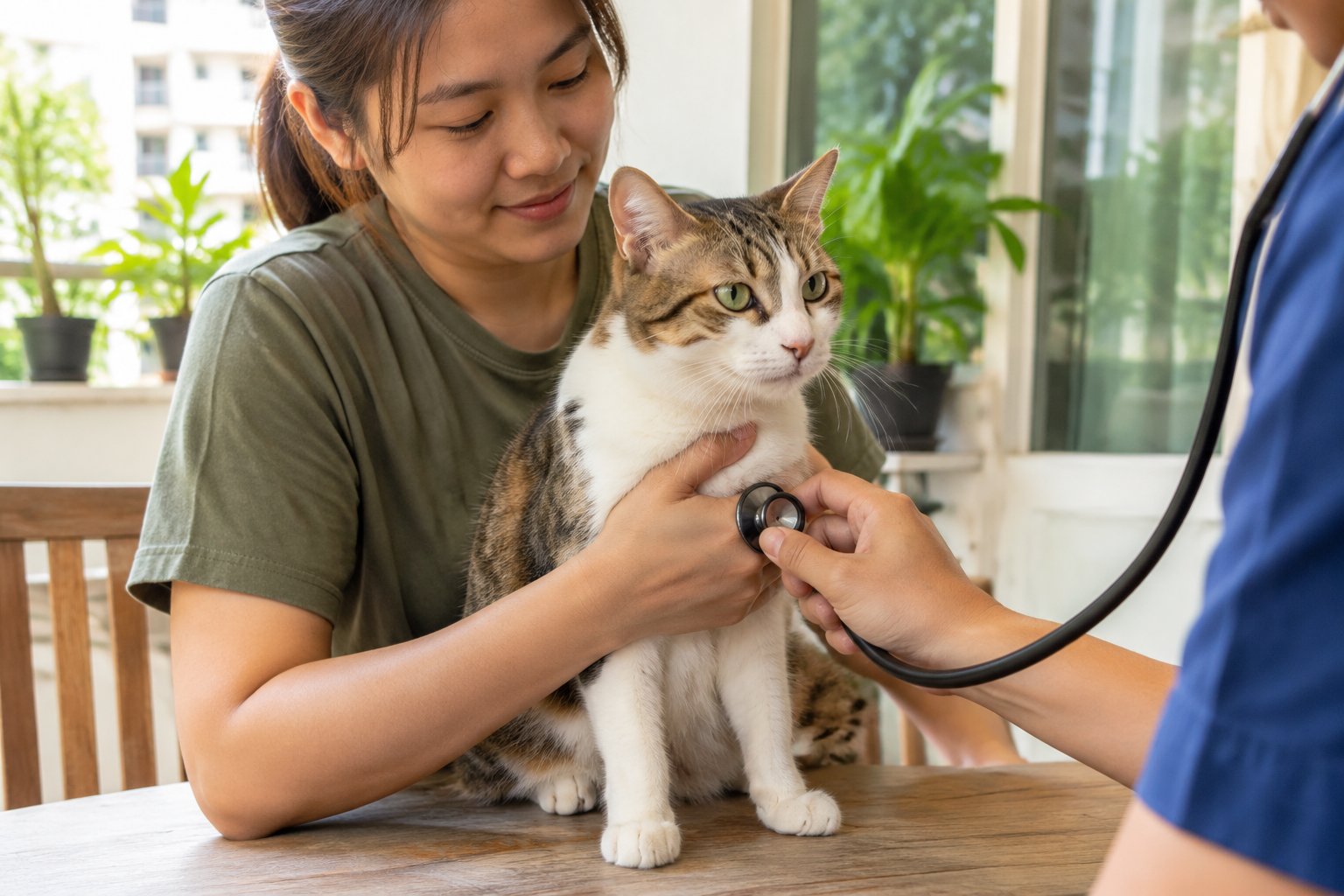
If your cat is moderately or severely dehydrated, your vet will assess hydration, check for underlying disease and decide on fluids. Treatment may include:
- Subcutaneous fluids: sterile fluids injected under the skin, often used for mild to moderate dehydration or ongoing conditions
- Intravenous fluids: given through a drip for severe dehydration, shock or when rapid correction is needed
- Blood tests: to check kidney function, electrolytes, blood sugar and other causes
- Anti-nausea or appetite support: to help your cat eat and drink again
- Treating the cause: for example, dental care, infection treatment or management of kidney disease
Your vet will explain the plan and the costs involved. Prices for consultations, fluids and tests vary between clinics and states, so ask for an estimate before treatment begins. There is no single standard fee across Malaysia.
Feeding and hydration tips for Malaysian homes
Malaysia's heat and humidity mean food and water need extra attention. Wet food spoils quickly, so serve smaller portions and remove leftovers after a short time. Wash bowls daily to prevent bacterial growth.
For cats in apartments, place water bowls in several rooms and away from noisy areas. Cats in terrace houses may roam between indoor and outdoor areas, so check that outdoor water is clean and shaded. During rainy seasons, humidity can rise and cats may drink less; keep water fresh and watch for changes in appetite.
If you travel or leave your cat with a sitter, write down feeding and water routines. Dehydration can develop quickly if a cat is stressed and hiding.
When to see a vet
Contact a veterinarian promptly if your cat:
- Has tacky or dry gums
- Shows skin tenting that returns slowly
- Is lethargic, weak or hiding more than usual
- Is vomiting or has diarrhoea
- Has not eaten for more than 24 hours
- Is breathing fast or panting
- Has sunken eyes or looks dull
- Is a kitten, senior or has a chronic illness
Seek emergency care immediately if your cat collapses, has seizures, is struggling to breathe, or cannot stand. Do not wait to try home remedies.
Prevention checklist
- Provide fresh water in multiple clean bowls
- Offer wet food or a mixed diet
- Keep water away from litter boxes
- Provide shade and cool areas
- Reduce stress where possible
- Monitor water intake and litter box output
- Book regular vet checks, especially for older cats
- Ask your vet about hydration if your cat has kidney or urinary issues
Vet disclaimer
This article is general information for Malaysian cat owners and is not a substitute for veterinary examination, diagnosis or treatment. Always consult a licensed veterinarian about your cat's health, and follow their advice for fluids, diet and medication.
Related reading
- Cat Health Guide Malaysia: Symptom Check, Red-Flag Triage & When to See a Vet
- Breathing Difficulty in Cats in Malaysia: Signs, Causes and What to Do
- Dehydration in Cats: Causes, Warning Signs and How to Care for a Thirsty Cat
- Dehydration Prevention for Cats: A Practical Guide for Malaysian Owners
- Deworming Schedule for Cats: What to Expect (Malaysia Guide)
- Excessive Thirst in Cats: Causes and Care (Malaysian Owner's Guide)
- Excessive Urination in Cats: Prevention Guide for Malaysian Owners
- How to Treat Constipation in Cats at Home: A Practical Malaysian Guide
- How to Treat Dehydration in Cats at Home: A Practical Malaysian Guide
- How to Treat Excessive Thirst in Cats at Home: A Practical Guide for Malaysian Owners
- How to Treat Excessive Urination in Cats at Home: A Practical Malaysian Guide

