
Quick answer
Excessive urination in cats means producing more urine or urinating more often than normal. Signs include larger or more frequent clumps in the litter box, drinking more, accidents outside the box, and straining. Causes range from diabetes and kidney disease to urinary tract infections and stress. See a vet promptly, especially if your cat strains or stops passing urine.
What counts as excessive urination?
Cats are creatures of habit, and their litter box use is one of the easiest health indicators you can monitor. Normal urination varies with diet, water intake, and individual metabolism, but most healthy cats urinate about two to four times a day, producing moderate-sized clumps. If you suddenly notice more clumps, larger clumps, or your cat visiting the box more often, that is a sign to pay attention.
Excessive urination, medically called polyuria, means an increase in urine volume. Pollakiuria means increased frequency of urination, often with small amounts. Both can look similar to an owner: the cat seems to pee more. The distinction matters because they point to different causes. Polyuria often links to conditions that make the kidneys produce more urine, such as diabetes or kidney disease. Pollakiuria often links to bladder irritation, such as cystitis or stones.
In Malaysia's warm, humid climate, cats may drink more, and that can increase urine output. But a sudden, sustained change is not something to brush off as weather-related. Keep a simple log for a week: note how many clumps you scoop each day, their approximate size, and how often you refill the water bowl. This record is invaluable for your vet.
Recognising the signs: a practical checklist
Use this checklist to assess your cat at home. If you tick two or more boxes, book a vet visit.
- More litter clumps than usual (for example, from two a day to five or six)
- Clumps that are noticeably larger or heavier
- Your cat visits the litter box more frequently but may produce little urine
- Drinking more water than usual and asking for fresh water often
- Urinating outside the litter box, especially on cool surfaces like tiles or in the bath
- Straining, crying, or taking a long time in the box
- Licking the genital area more than usual
- Blood-tinged urine or strong-smelling urine
- Weight loss despite a good appetite
- Lethargy or hiding
Some cats are tidy and hide signs well. Others may urinate in the sink or shower because the cool surface feels soothing. In a Malaysian apartment, a cat may choose the bathroom tiles or a balcony drain. Any new pattern of urination outside the box deserves investigation, even if it seems behavioural.
Common causes of excessive urination in cats
Many conditions can cause increased urination. Here are the most common, with brief explanations.
Diabetes mellitus
Diabetes leads to high blood sugar, which spills into urine and pulls water with it, causing increased urination and thirst. Cats with diabetes may also lose weight despite eating well. Diagnosis involves blood and urine tests. Management typically includes insulin and dietary changes prescribed by a vet.
Chronic kidney disease
Kidneys lose their ability to concentrate urine, so the cat produces more dilute urine and drinks more to compensate. Kidney disease is more common in older cats. Regular senior check-ups with blood and urine tests help catch it early.
Hyperthyroidism
An overactive thyroid speeds up metabolism and can increase thirst and urination. It often causes weight loss, increased appetite, and sometimes hyperactivity. A blood test confirms the diagnosis.
Urinary tract infections and cystitis
Bacterial infections and inflammation of the bladder (cystitis) can cause frequent, painful urination, sometimes with blood. Cats may strain and urinate small amounts frequently. Stress is a known trigger for feline idiopathic cystitis.
Bladder stones and crystals
Stones or crystals irritate the bladder and can obstruct the urethra, especially in male cats. Obstruction is a life-threatening emergency. Signs include straining, crying, and little or no urine.
Stress and behavioural causes
Stress from moving house, new furniture, a new pet, or changes in routine can lead to more frequent urination or inappropriate elimination. However, stress does not exclude medical causes, so a vet check is still important.
Medications and other conditions
Some medications, such as diuretics or steroids, can increase urination. Other causes include liver disease, electrolyte imbalances, and certain hormonal disorders. A vet will consider your cat's full history.
Comparing the clues: a quick reference table
| Sign | Possible cause | Urgency |
|---|---|---|
| Large volumes, increased thirst, weight loss | Diabetes, kidney disease, hyperthyroidism | See vet within days |
| Frequent small urinations, straining, crying | Cystitis, infection, stones | See vet promptly; emergency if no urine |
| Urinating outside the box, no straining | Stress, behavioural, or medical | Vet visit to rule out medical causes |
| Blood in urine | Infection, stones, cystitis | See vet promptly |
| Straining with little or no urine, especially male cat | Urethral obstruction | Emergency now |
How to monitor your cat at home
Home monitoring gives your vet valuable information. Here is a simple routine.
- Use clumping litter so you can see clumps clearly. Scoop at least once a day, ideally twice.
- Note the number and approximate size of clumps. A kitchen scale can weigh clumps if you want to be precise, but visual estimates are usually enough.
- Track water intake. Refill the bowl to the same level each morning and note how much you add. Some cats drink from fountains, which makes measuring harder; consider a bowl alongside the fountain for measurement.
- Watch for changes in behaviour: frequency, straining, licking, accidents.
- Keep a log for a week and bring it to your vet appointment.
In a multi-cat household, you may need to separate cats or use a litter box with a camera or motion sensor to identify which cat is urinating more. Alternatively, use different coloured litters or separate boxes in different rooms and observe.
When to see a vet
Seek veterinary care promptly if you notice any of the following:
- Straining to urinate with little or no urine produced, especially in male cats. This is an emergency.
- Crying or showing pain when urinating.
- Blood in the urine.
- Increased urination accompanied by weight loss, increased appetite, or lethargy.
- Sudden changes in urination habits that persist for more than a day or two.
- Your cat stops eating or drinking.
Do not wait to see if it resolves on its own. Urinary obstruction can become fatal within 24 to 48 hours. If you are unsure, call your vet for advice.
Practical tips for Malaysian cat owners
Malaysia's climate and housing styles present specific considerations.
- Warm weather and hydration: Cats may drink more in hot, humid weather. Ensure fresh water is always available. Wet food can help increase water intake, which is beneficial for urinary health.
- Apartment living: In a Kuala Lumpur apartment, litter boxes may be in bathrooms or balconies. Keep the box away from food and water, and clean it daily. Humidity can make litter clump less effectively, so choose a litter that performs well in humid conditions and replace it regularly.
- Terrace houses in Johor: Cats may have access to outdoor areas. Watch for urination in the garden or on cool tiles. Outdoor access can make monitoring harder, so consider keeping your cat indoors or supervised.
- Rainy season in Penang: During heavy rains, cats may be reluctant to go outside to urinate, leading to more indoor box use. Ensure the box is dry and accessible.
- Stress from renovations or new pets: Provide safe spaces and extra litter boxes. A pheromone diffuser may help some cats.
What to expect at the vet
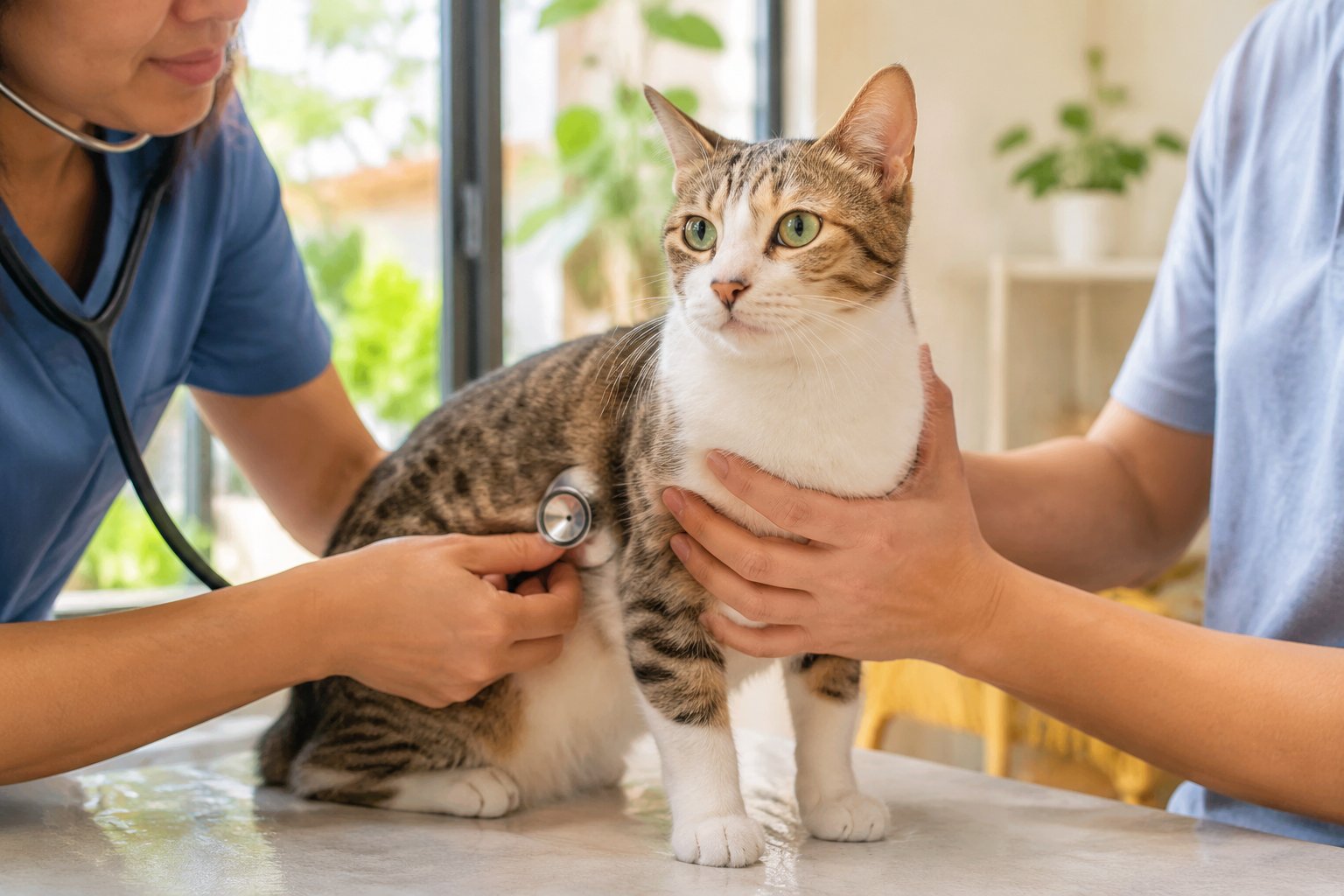
Your vet will ask about your cat's history, diet, water intake, and litter box habits. They will examine your cat, feeling the bladder and checking for dehydration. Tests may include:
- Urinalysis: checks for blood, crystals, infection, and concentration.
- Blood tests: assess kidney function, blood sugar, thyroid hormone, and electrolytes.
- Imaging: X-rays or ultrasound to look for stones or bladder abnormalities.
Treatment depends on the diagnosis. For diabetes, insulin and diet. For kidney disease, dietary management and monitoring. For infections, antibiotics. For stress-related cystitis, environmental enrichment and sometimes medication. Your vet will tailor a plan.
Prevention and long-term care
While not all causes are preventable, you can support your cat's urinary health.
- Provide fresh water daily and consider a water fountain.
- Feed a balanced diet; wet food can increase water intake.
- Keep litter boxes clean and plentiful (one per cat plus one).
- Maintain a healthy weight.
- Schedule regular vet check-ups, especially for senior cats.
- Reduce stress with routine and enrichment.
Conclusion
Excessive urination in cats is a sign that something may be wrong. By observing your cat's litter box habits and water intake, you can catch problems early. In Malaysia, where many cats live in apartments or terrace houses, monitoring requires a little effort but pays off. If you notice changes, consult your vet. Early diagnosis makes a difference.
This article is for general information only and is not a substitute for veterinary advice. Always consult a licensed veterinarian for diagnosis and treatment of your cat.

