
Quick answer
Sudden aggression in cats is usually fear, pain or overstimulation, not spite. At home, separate the cat calmly, remove the trigger, provide a quiet safe room with food, water and litter, avoid punishment, and book a vet check to rule out pain or illness. Use pheromones and enrichment only after the cat is calm.
Why a cat that was friendly suddenly turns aggressive
A cat that hisses, swats or bites without warning is communicating distress. The first step is to stop treating the behaviour as a personality problem and start looking for a cause. In general veterinary practice, sudden aggression in an adult cat is treated as a possible medical sign until proven otherwise.
Common triggers include:
- Pain or illness. Dental pain, arthritis, urinary problems, ear infections and abdominal discomfort can make a cat defensive when touched or picked up.
- Fear and startling events. Thunder, fireworks, visitors, renovation noise or a dropped object can trigger a fear response that lasts hours.
- Redirected aggression. A cat sees another cat through a window or smells an unfamiliar animal and cannot reach it, so it attacks the nearest target, often a person or another pet.
- Overstimulation from petting. Some cats tolerate only a few strokes before their tail flicks, skin ripples and they bite.
- Territorial stress. A new pet, a new baby, a move, or a change in furniture can unsettle a cat that relies on routine.
- Maternal aggression. A mother cat with kittens may defend the nest aggressively.
- Play aggression in young cats. Boredom and lack of hunting outlets can turn into ambush attacks on ankles.
A useful first question is: what changed in the last 24 to 48 hours? New soap, new visitor, new cat outside, a vet visit, a change in food, or a loud storm can all be relevant.
Safety first: what to do in the first 10 minutes
When a cat is actively aggressive, your priority is to prevent injury to people and animals. Do not try to cuddle, scruff or reason with the cat.
- Stop moving and lower your voice. Loud shouting escalates fear.
- Give space. Back away slowly and avoid direct eye contact.
- Remove the trigger if safe. Close the curtain, turn off the vacuum, or ask visitors to step outside.
- Separate pets without hands. Use a cushion, cardboard sheet or a closed door. Never pull apart fighting cats with your hands.
- Move the cat to a safe room. A small room with dim light, a litter box, water and a hiding place is ideal.
- Check for injuries. Even a small bite can become infected. If a person is bitten, wash the wound with soap and water and seek medical advice.
- Let the cat settle. Do not force interaction for at least a few hours.
If the cat is cornered and cannot be moved safely, leave the room and call your vet for advice. In an emergency where a person is trapped or badly injured, contact local emergency services first.
Set up a calm room that actually works
A safe room is not a punishment cell. It is a temporary recovery space that lowers stimulation. Choose a quiet room away from the front door, washing machine and main walkway.
| Item | Why it matters | Practical tip |
|---|---|---|
| Litter box | Prevents accidents and stress | Place away from food and water |
| Water bowl | Hydration during stress | Use a wide bowl, refresh daily |
| Food | Routine and comfort | Offer small amounts, not a full feast |
| Hiding box | Gives the cat control | A cardboard box on its side works |
| Vertical space | Lets the cat feel safe | A sturdy shelf or cat tree |
| Feliway-type diffuser | May reduce anxiety | Use only as directed; ask your vet |
| Soft bedding | Rest and scent security | Use a familiar blanket |
Keep the room dim and quiet. Visit only to change food, water and litter, and speak softly. Do not stare at the cat or pull it out of hiding. Most cats need 24 to 48 hours to decompress after a serious fright.
Rule out pain and illness with a vet check
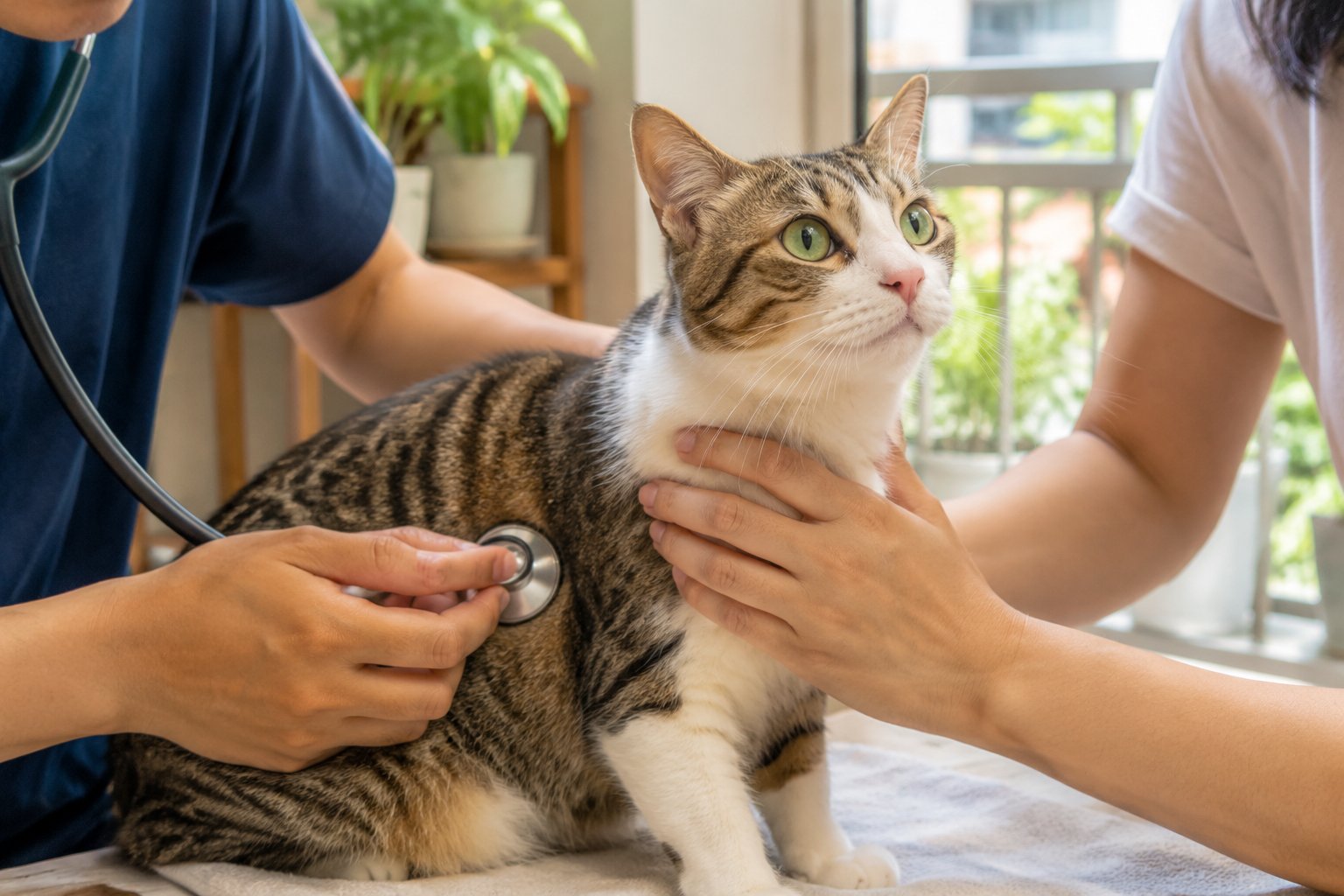
Before you build a behaviour plan, book a veterinary examination. Sudden aggression in a cat that was previously calm is a classic reason for a health check. Your vet may ask about appetite, drinking, urination, bowel movements, grooming, sleep and any changes in mobility.
Be honest about the aggression. Describe what happened, when, who was involved and whether the cat has bitten or scratched anyone. If your cat is too stressed to travel, ask the clinic whether a home visit or a quiet appointment time is possible. In Malaysia, clinic availability and fees vary, so call ahead and ask what a consultation includes.
Do not give human painkillers, sedatives or supplements to a cat without veterinary advice. Some common human medicines are toxic to cats.
Use pheromones, enrichment and routine to lower the baseline
Once medical causes are being addressed, reduce the cat's stress load. Think of this as lowering the baseline so the cat has less reason to explode.
- Pheromone products. Diffusers and sprays may help some cats. They are supportive, not curative. Ask your Malaysian vet or a reputable pet retailer which product suits your home.
- Predictable routine. Feed, play and clean at similar times each day. Cats notice small changes.
- Hunting outlets. Two short play sessions with a wand toy, ending with a small treat, can reduce play aggression.
- Food puzzles. Scatter feeding or puzzle feeders give cats something to do.
- Vertical territory. Shelves, cat trees and window perches increase usable space in flats and terraced houses.
- Scent swapping. If there are multiple cats, swap bedding so they share scent without face-to-face contact.
- Block visual triggers. Frosted film or curtains on windows can stop a cat from seeing neighbourhood cats.
Handle redirected and overstimulation aggression
Redirected aggression is common in Malaysian homes where cats can see other cats through windows, grilles or corridors. A cat may sit at the window, chatter, then attack the nearest person or pet. The attack is not aimed at you; it is a burst of frustrated arousal.
What helps:
- Block the view with curtains, blinds or window film.
- Move the cat to another room before it becomes fixated.
- Do not pick up a cat that is staring, twitching its tail or vocalising at a window.
- Use a calm voice and a treat tossed away from the trigger to redirect attention.
Overstimulation aggression happens during petting. Watch for early warning signs: tail flicking, skin rippling, ears turning back, dilated pupils and a tense body. Stop petting before the bite. Short, predictable petting sessions on the chin and cheeks are safer than long strokes down the back.
A simple behaviour plan you can start today
- Keep a log. Note the time, trigger, body language and what happened. Patterns appear quickly.
- Avoid the trigger. If visitors cause aggression, put the cat in its safe room before guests arrive.
- Reward calm. Toss a treat when the cat is relaxed near the trigger at a distance.
- Keep sessions short. Two to five minutes of calm exposure is enough at first.
- Never punish. Punishment teaches cats to hide warning signs, which can lead to bites without warning.
- Review weekly. If there is no improvement after two to three weeks, ask your vet about a behaviour referral.
When to see a vet
See a vet promptly if:
- Aggression starts suddenly in an adult cat with no obvious trigger.
- The cat is hiding, not eating, limping, vocalising or using the litter box differently.
- A bite or scratch breaks the skin on a person or another pet.
- The cat is aggressive toward a baby, child or elderly person.
- The cat cannot be handled for basic care.
- There is a sudden change in personality or the cat seems disoriented.
If your cat has a history of aggression, tell your vet before the appointment so the clinic can prepare a quiet space. In Malaysia, veterinary clinics vary in their ability to handle aggressive cats, so call ahead.
What not to do
- Do not hit, kick or spray the cat.
- Do not scruff an adult cat in anger.
- Do not lock two cats in a small space to "sort it out".
- Do not use human sedatives.
- Do not rehome the cat in a panic before a vet check.
- Do not assume the cat is "mean". Behaviour is information.
A realistic timeline
| Timeframe | What to expect |
|---|---|
| First 24 hours | Separate, reduce stimulation, observe |
| Days 2 to 7 | Vet check, safe room routine, trigger log |
| Weeks 2 to 4 | Gradual reintroduction, enrichment, pheromones |
| Weeks 4 to 8 | Review progress, adjust plan, consider behaviour referral |
Some cats improve within days once pain is treated. Others need months of consistent management. Progress is not linear, and a bad day does not mean failure.
Final thoughts
Sudden aggression in cats is a symptom, not a sentence. Start with safety, then look for pain, fear and frustration. A calm room, a vet check, predictable routine and gentle enrichment solve many cases. If aggression continues or anyone is at risk, ask your vet for a behaviour referral rather than waiting.
This article is general information for Malaysian cat owners and does not replace veterinary examination, diagnosis or treatment. Always consult a licensed veterinarian for your cat's specific situation.
Related reading
- Licking Wounds in Cats Malaysia: When It's Normal and When to Stop It
- Signs of Limping in Cats in Malaysia: What Owners Should Notice
- Signs of Weight Loss in Cats in Malaysia: What to Watch For and When to Worry
- Sudden Aggression Prevention for Cats: A Practical Guide for Malaysian Owners
- Trembling Prevention for Cats: Why It Happens and How to Reduce the Risk

