
What arthritis means for your cat
Feline arthritis, also called osteoarthritis or degenerative joint disease, is a progressive condition in which the cartilage lining the joints wears down and the joint becomes inflamed and painful. It is not simply 'old age'. It is a real source of chronic pain that changes how a cat moves, grooms, eats and interacts. Many cats over ten years old have some degree of joint disease, and overweight cats of any age can develop it.
Cats are masters at hiding discomfort. In the wild, showing weakness invites competition or predators, so a stiff cat often simply does less: jumps less, sleeps more, and quietly avoids the things that hurt. That is why arthritis is frequently missed until a cat is visibly lame or stops using the litter tray. The earlier you recognise the subtle signs, the earlier your vet can help.
This guide explains what arthritis looks like in cats, how vets diagnose it, the treatment options available in Malaysia, and the practical home changes that make a real difference.
Recognising the signs: what to watch for
Arthritis pain in cats is often behavioural rather than obvious limping. Look for changes from your cat's normal routine:
- Reluctance to jump onto beds, sofas or cat trees, or hesitation before jumping down.
- Stiffness after sleeping or resting, easing as the cat moves around.
- Slower, stiffer gait, especially in the hind legs, or a shortened stride.
- Reduced grooming, leading to matted or greasy fur, particularly near the lower back and hindquarters.
- Litter tray problems: missing the tray, urinating outside it, or crying when posturing.
- Irritability or withdrawal: not wanting to be picked up or touched on the back or legs.
- Sleeping more, hiding, or choosing soft, warm spots over favourite high places.
- Weight changes: weight gain from inactivity, or weight loss if pain affects appetite.
- Muscle loss along the spine and hind legs as muscles weaken from disuse.
A useful exercise is to note your cat's normal habits for a week, then compare. Videos of your cat walking and jumping can be very helpful for your vet, especially in a clinic where cats often freeze with fear.
How vets diagnose arthritis
There is no single blood test for arthritis. Diagnosis combines history, physical examination and sometimes imaging.
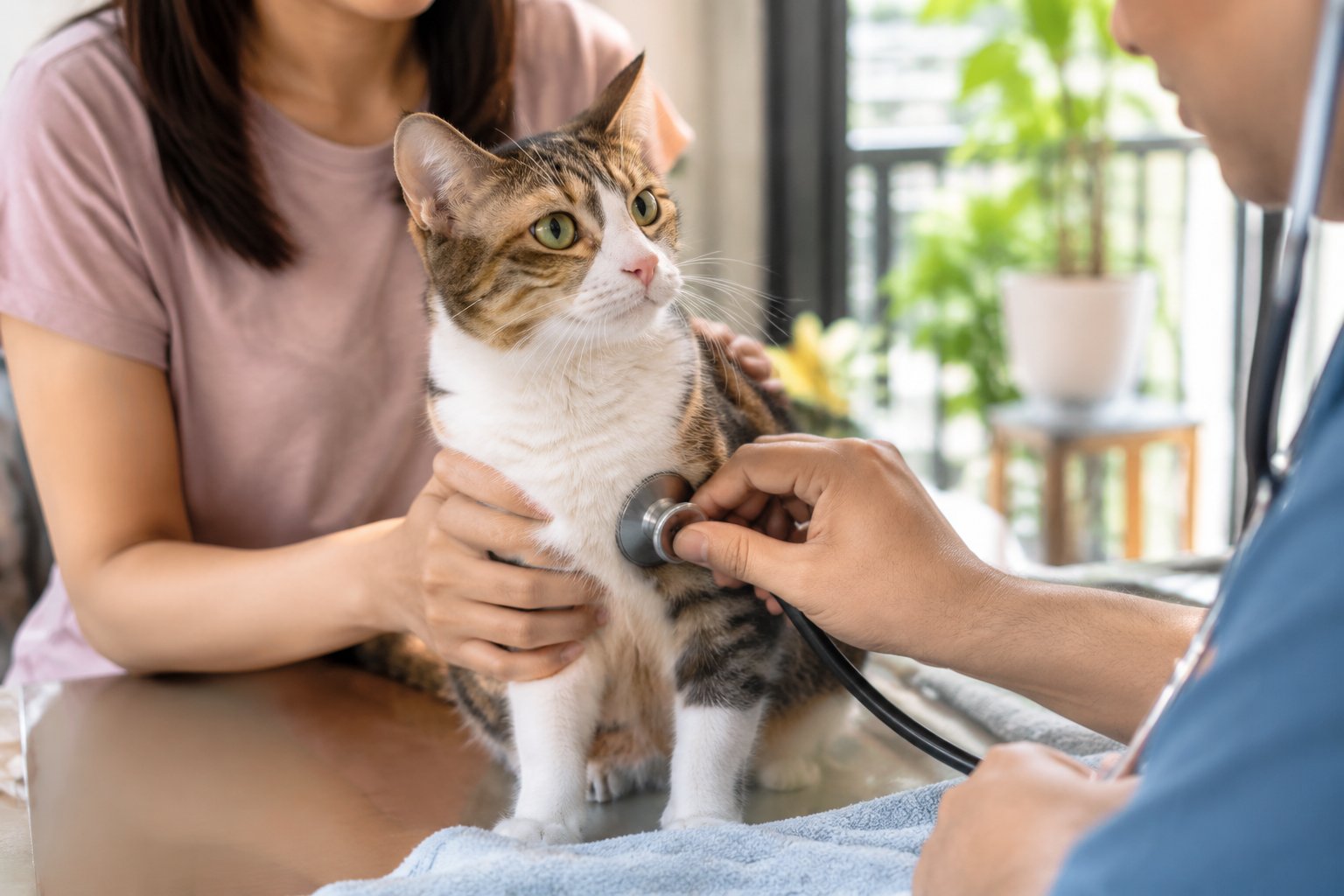
Your vet will watch your cat walk, feel the joints for swelling, thickening and reduced range of motion, and check muscle mass. They may also assess for pain by gently manipulating limbs. Because cats are stoic, the examination may need to be gentle and unhurried.
X-rays can show joint changes such as new bone formation, narrowed joint spaces and mineralisation, but the severity on an X-ray does not always match the pain your cat feels. Some cats with dramatic X-ray changes seem comfortable, while others with mild changes are clearly sore. For this reason, vets increasingly rely on a combination of examination, mobility questionnaires and response to treatment.
Your vet will also rule out other causes of stiffness or lameness, including injuries, infections, nerve problems and immune-mediated joint disease. Blood tests may be recommended before starting long-term medication, particularly to check kidney and liver function in older cats.
Treatment options your vet may discuss
Arthritis cannot be cured, but it can be managed. A good plan usually combines several approaches.
Pain relief. Non-steroidal anti-inflammatory drugs (NSAIDs) are the mainstay for many cats, but cats metabolise these drugs differently from dogs and humans, so only feline-specific products prescribed by your vet should be used. Never give human painkillers. Your vet may also consider other analgesics, including drugs that target nerve pain, depending on your cat's situation.
Disease-modifying joint support. Products containing glucosamine, chondroitin, green-lipped mussel or omega-3 fatty acids are widely used. Evidence in cats is limited and results vary, but some owners report improvement. Ask your vet which product is appropriate and check that it is formulated for cats.
Weight management. This is one of the most powerful treatments. Extra weight increases load on joints and fat tissue releases inflammatory signals. Gradual weight loss, supervised by your vet, can noticeably improve mobility.
Physiotherapy and exercise. Gentle, regular movement helps maintain muscle and joint function. Your vet may teach you simple range-of-motion exercises, or refer you to a rehabilitation practitioner where available. Short, frequent play sessions are better than long, strenuous ones.
Other options. In some cases vets may discuss injectable treatments, acupuncture or surgery, depending on the joint involved and the cat's overall health. These are decisions for your vet, based on a full assessment.
| Approach | What it involves | Key point for owners |
|---|---|---|
| Vet-prescribed pain relief | NSAIDs or other analgesics | Never use human medicines; follow dosing exactly |
| Joint supplements | Glucosamine, omega-3, green-lipped mussel | Choose cat-specific products; evidence is modest |
| Weight control | Gradual, vet-supervised loss | One of the most effective single measures |
| Physiotherapy | Gentle exercises, massage | Short and frequent; stop if painful |
| Home adaptation | Ramps, low trays, soft bedding | Small changes with big impact |
Home changes that make a difference
You can do a great deal at home to keep an arthritic cat comfortable.
Make access easy. Provide ramps or pet steps to favourite sleeping spots and window perches. If your cat loves the top of a wardrobe, consider moving a bed lower rather than expecting a painful jump.
Rethink the litter tray. Use a tray with low sides so your cat can step in without lifting a stiff leg. Place it on each floor of the home so your cat does not need to use stairs. Keep it clean and in a quiet, accessible spot.
Provide soft, warm bedding. Arthritic joints are often worse in cold, damp conditions. In Malaysia's air-conditioned homes, offer a warm, padded bed away from direct cold drafts. Older cats often appreciate a heated pad on a low setting, used safely.
Bring food and water close. Raise bowls slightly if your cat is stiff in the neck or front legs, and place water stations in several rooms.
Manage slippery floors. Tiled floors are common in Malaysian homes and can be treacherous for a stiff cat. Add non-slip mats or runners along main walkways.
Keep nails trimmed. Long nails change how a cat's foot contacts the ground and can make walking more uncomfortable. Ask your vet or groomer for help if your cat resists.
Groom gently. Arthritic cats may struggle to reach their back and hindquarters. Brush gently and check for matting, which can cause skin problems.
Maintain routine and enrichment. Predictable routines reduce stress. Food puzzles, gentle play and safe outdoor time (if your cat is used to it) keep the mind and body active.
Diet, weight and joint support
Weight is central. Ask your vet to assess your cat's body condition score and set a target weight. Weight loss should be gradual, using a measured, nutritionally complete diet. Crash dieting is dangerous for cats and can cause liver problems.
Many senior cat diets are formulated with joint support nutrients. Omega-3 fatty acids from fish oil may help reduce inflammation, though dosing should be guided by your vet. Avoid giving supplements designed for humans or dogs without veterinary advice, as some ingredients and doses are unsuitable for cats.
Fresh water is important, especially if your cat is on medication or has kidney disease, which is common in older cats. Wet food can help increase water intake.
Living with an arthritic cat in Malaysia
Malaysia's climate and housing bring particular considerations. Many cats live in apartments with tiled floors and air-conditioning, which can make joints stiffer. Provide warm, draft-free sleeping spots and non-slip surfaces. In terrace houses with stairs, block access to upper floors if your cat is struggling, or provide a litter tray and food on each level.
During rainy seasons, some cats are less active and may stiffen up. Gentle indoor play and short, frequent movement can help. If your cat goes outdoors, supervise and ensure they can return without climbing or jumping obstacles.
Heat and humidity can also affect appetite and activity. Keep water available and watch for weight changes. If your cat is on pain relief, your vet may want periodic check-ups, particularly in older cats with other health conditions.
When to see a vet
See a vet promptly if you notice:
- Sudden inability to walk or stand
- Crying out when moving or being touched
- A limp that does not improve within a day or two
- Reluctance to eat or drink
- Urinating or defecating outside the litter tray, especially if your cat seems uncomfortable
- Weight loss or muscle wasting
- Any change in behaviour that concerns you
Arthritis is progressive, so early assessment and regular check-ups allow your vet to adjust treatment as your cat's needs change. Older cats should have at least an annual health check, and more often if they are on medication.
Frequently asked questions
How can I tell if my cat has arthritis? Watch for reluctance to jump, stiffness after rest, hesitating on stairs, reduced grooming, matted fur near the back, litter tray accidents, irritability when touched, and sleeping more. Cats hide pain, so any change in movement or routine deserves a vet check.
Can arthritis in cats be cured? No, arthritis cannot be cured, but it can be managed. A vet can prescribe pain relief, advise on weight control, joint supplements and physiotherapy, and suggest home changes. With good management many cats stay comfortable for years.
Is my fat cat more likely to get arthritis? Yes. Excess weight puts extra load on joints and fat tissue itself promotes inflammation. Overweight cats are more likely to develop arthritis and to suffer more. Gradual, vet-supervised weight loss is one of the most effective treatments.
What home changes help an arthritic cat? Provide low-sided litter trays, ramps or steps to favourite spots, soft warm bedding, food and water within easy reach, and raised bowls. Keep floors non-slip, avoid stairs where possible, and keep nails trimmed so your cat grips better.
Should I give my cat human painkillers? Never. Paracetamol and ibuprofen are toxic to cats and can be fatal. Only give medicines prescribed by a vet for your cat, at the dose your vet sets. Human supplements and creams can also be harmful.
When should I see a vet? See a vet if you notice stiffness, reluctance to jump, limping, changes in grooming or litter habits, weight loss, or any sudden inability to walk. Early assessment allows pain relief and a management plan before joints deteriorate further.
Vet disclaimer
This article is for general information only and is not a substitute for veterinary advice. Arthritis diagnosis and treatment require a physical examination and, in many cases, tests. Always consult a licensed veterinarian about your cat's health, and never give medication without veterinary guidance.
Related reading
- Arthritis in Cats: Causes and Care (Malaysia Guide)
- Arthritis Prevention for Cats: A Practical Malaysian Guide
- Cat Arthritis Treatment in Malaysia: A Practical Owner's Guide
- How to Treat Arthritis in Cats at Home: A Practical Guide for Malaysian Owners
- How to Treat Diabetes in Cats at Home: A Practical Guide for Malaysian Owners

