
Quick answer
Fever in cats is easy to miss because cats are experts at hiding illness. The most reliable signs are behaviour changes: a cat that hides, stops eating, seems limp, shivers or breathes faster than usual. A normal cat temperature is roughly 38.1-39.2°C. Confirm any suspicion with a thermometer, and see a vet if the fever lasts more than a day or your cat looks very unwell.
Why fever is hard to spot in cats
Cats evolved as small hunters that needed to avoid looking weak. A sick cat often does not cry or limp. Instead it goes quiet, finds a dark corner and waits. In a Malaysian home where several cats share a space, the unwell one may simply be the cat you see least.
Fever itself is not a disease. It is a raised body temperature, usually the immune system responding to infection or inflammation. Mild fever can help fight infection, but high or prolonged fever is dangerous because it raises fluid loss and stresses organs.
The main signs of fever in cats
Watch for a cluster of changes rather than one symptom. A single warm ear means little; several signs together matter.
| Sign | What you may notice |
|---|---|
| Lethargy | Sleeping more, no interest in play, slow to respond |
| Hiding | Under the bed, in cupboards, behind furniture |
| Reduced appetite | Leaving food, sniffing then walking away |
| Reduced drinking | Water bowl untouched, dry gums |
| Warmth | Ears, paws or body feel warm, though this is unreliable |
| Shivering | Trembling even in a warm room |
| Fast breathing | Resting breathing rate above about 30-40 breaths per minute |
| Grooming changes | Matted or greasy coat, or over-grooming |
| Posture | Hunched, tucked paws, head lowered |
| Irritability | Growling or swatting when touched |
| Vomiting or diarrhoea | Sometimes present with infection |
| Third eyelid visible | A pale membrane partly covering the eye |
Behaviour changes you should take seriously
- Your cat no longer comes to the kitchen at feeding time.
- It stays in one room and resists being picked up.
- It sits in a hunched "loaf" position for long periods.
- It stops grooming, so the coat looks dull or clumpy.
- It breathes with its mouth open or its sides heave.
Signs that mean urgent care
Go to a vet immediately if you see:
- Breathing that is fast, laboured or noisy at rest.
- Collapse, weakness or inability to stand.
- Repeated vomiting or diarrhoea, especially with blood.
- A temperature above 40°C.
- Seizures or confusion.
- A kitten under eight weeks with any of these signs.
How to check your cat's temperature
Touching the nose or ears is not reliable. A cat with a dry nose can be perfectly well, and a feverish cat can feel normal. The dependable methods are:
- Rectal thermometer. This is the most accurate home method. Use a digital thermometer, apply a water-based lubricant, and insert only the tip (about 1-2 cm) into the rectum. Have a second person hold the cat gently. Stop if the cat struggles.
- Pet ear thermometer. Some vets accept ear readings, but technique matters and readings can vary. Ask your vet which model they trust.
- Vet clinic. If you are unsure or the cat is stressed, let the clinic do it. A stressed cat can also raise its temperature simply from fear, which is why vets often recheck after the cat settles.
Record the reading, the time and any other signs. This helps your vet decide whether the fever is rising, stable or falling.
What counts as a fever?
| Temperature | Interpretation |
|---|---|
| 37.8-39.2°C | Normal range for most cats |
| 39.2-39.4°C | Borderline; recheck in a few hours |
| 39.4-40°C | Fever; monitor closely and contact a vet |
| Above 40°C | High fever; urgent veterinary care |
These ranges are general guides. Kittens, seniors and cats with chronic illness may need different thresholds, so ask your vet.
Common causes of fever in cats
Fever usually points to one of several broad categories:
- Viral infections. Cat flu (feline herpesvirus and calicivirus) and feline panleukopenia can cause fever, especially in unvaccinated cats.
- Bacterial infections. Bite abscesses from cat fights are common in outdoor and multi-cat homes. Urinary tract infections and dental infections also cause fever.
- Fungal disease. Some fungal infections can cause fever and respiratory signs.
- Parasites. Severe flea or tick burdens and some internal parasites can contribute.
- Immune-mediated disease. Sometimes the immune system attacks the body's own tissues.
- Cancer. Less common but possible, especially in older cats.
- Fever of unknown origin. In many cats, no cause is found after initial tests. Vets then monitor and may run further tests.
In Malaysia, outdoor access, multi-cat households and humid conditions that favour skin and ear problems all raise the chance of infection. Keeping cats indoors, vaccinating and controlling parasites reduces risk.
What to do at home while you arrange a vet visit
You cannot "cure" a fever at home, but you can keep your cat comfortable and safe until it is seen.
- Offer water. Place bowls in several quiet spots. Some cats drink more from a running tap or a wide bowl.
- Offer tempting food. Warm wet food slightly to increase smell. Do not force-feed.
- Keep the room cool and quiet. Malaysian afternoons can be hot; a fan on low, indirect setting and a shaded resting spot help.
- Do not sponge with ice water. Cooling too fast can cause shivering, which raises temperature again. Lukewarm water on the paws and ears is gentler if your vet agrees.
- Isolate if needed. If you have several cats, separate the sick one to reduce spread and to monitor eating, drinking and litter use.
- Track everything. Note temperature, appetite, water intake, urine and stool. Photos of the litter tray help.
Never do these
- Never give paracetamol, ibuprofen, aspirin or any human painkiller. These are toxic to cats.
- Do not give leftover antibiotics or medication prescribed for another pet.
- Do not use ice baths or alcohol rubs.
- Do not delay a vet visit because the cat "seems a bit better" if other signs are worsening.
What your vet will do
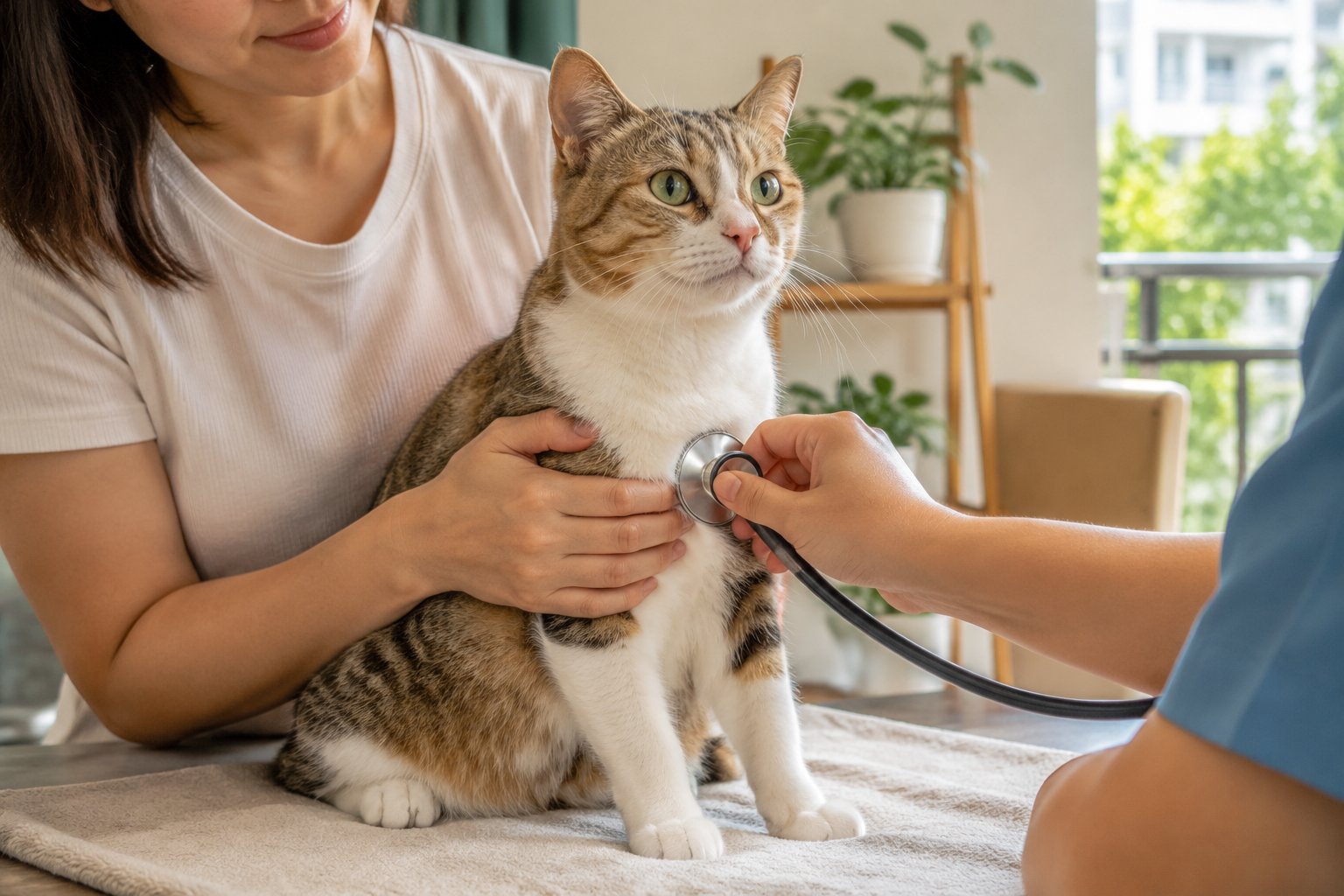
Your vet will take a history, check the temperature, listen to the heart and lungs, and feel the abdomen. They may look for abscesses, dental disease and ear problems. Depending on findings, they may recommend:
- Blood tests, including a full blood count and organ panel.
- Urine tests.
- Screening for common infectious diseases.
- Imaging such as X-rays or ultrasound if the cause is unclear.
Treatment depends on the cause. Bacterial infections may need antibiotics; viral infections are usually supported with fluids, nutrition and nursing care. Never start antibiotics without a vet, because unnecessary use harms the cat and encourages resistance.
Fever in kittens and senior cats
Kittens have immature immune systems and small bodies, so fever and dehydration escalate quickly. A kitten that stops nursing or becomes limp needs same-day care. Senior cats may have underlying kidney, thyroid or dental disease that makes fever more serious. In both groups, do not wait 24 hours; call your vet early.
Preventing fever where you can
- Keep vaccinations up to date, including kitten courses and boosters.
- Control fleas and ticks year-round; humidity in Malaysia means parasites stay active.
- Neuter cats to reduce fighting and bite abscesses.
- Keep cats indoors or in secure enclosures to reduce exposure to infected cats.
- Brush teeth or use vet-approved dental care to reduce dental infection.
- Clean and dry ears gently, especially in humid weather.
- Weigh your cat monthly; unexplained weight loss is an early clue.
When to see a vet
See a vet if your cat has a temperature above 39.4°C, if fever lasts more than 24 hours, or if it is not eating or drinking. Go urgently for breathing difficulty, collapse, repeated vomiting, seizures or a temperature above 40°C. Kittens and senior cats should be seen sooner rather than later.
Vet disclaimer
This article is general information for Malaysian cat owners and is not a substitute for veterinary examination. Fever has many causes, and only a veterinarian who examines your cat can diagnose and treat it. If you are worried, contact a licensed veterinarian promptly.
Related reading
- Constricted Pupils in Cats Malaysia: Causes, When to Worry & What to Do
- Coughing in Cats in Malaysia: Causes, When to Worry & What to Do
- Fever in Cats in Malaysia: Signs, Causes and What to Do
- Cat Constipation in Malaysia: The 48-Hour Rule, Red Flags and What Actually Helps
- Cat Constipation Treatment in Malaysia: A Practical Owner's Guide
- Cat Constricted Pupils Treatment in Malaysia: What to Do When Your Cat's Eyes Look Pinpoint
- Cat Diabetes Treatment in Malaysia: A Practical Owner's Guide
- Cat Diarrhea Treatment in Malaysia: A Practical Owner's Guide
- Cat Fleas Treatment in Malaysia: A Practical Owner's Guide

