
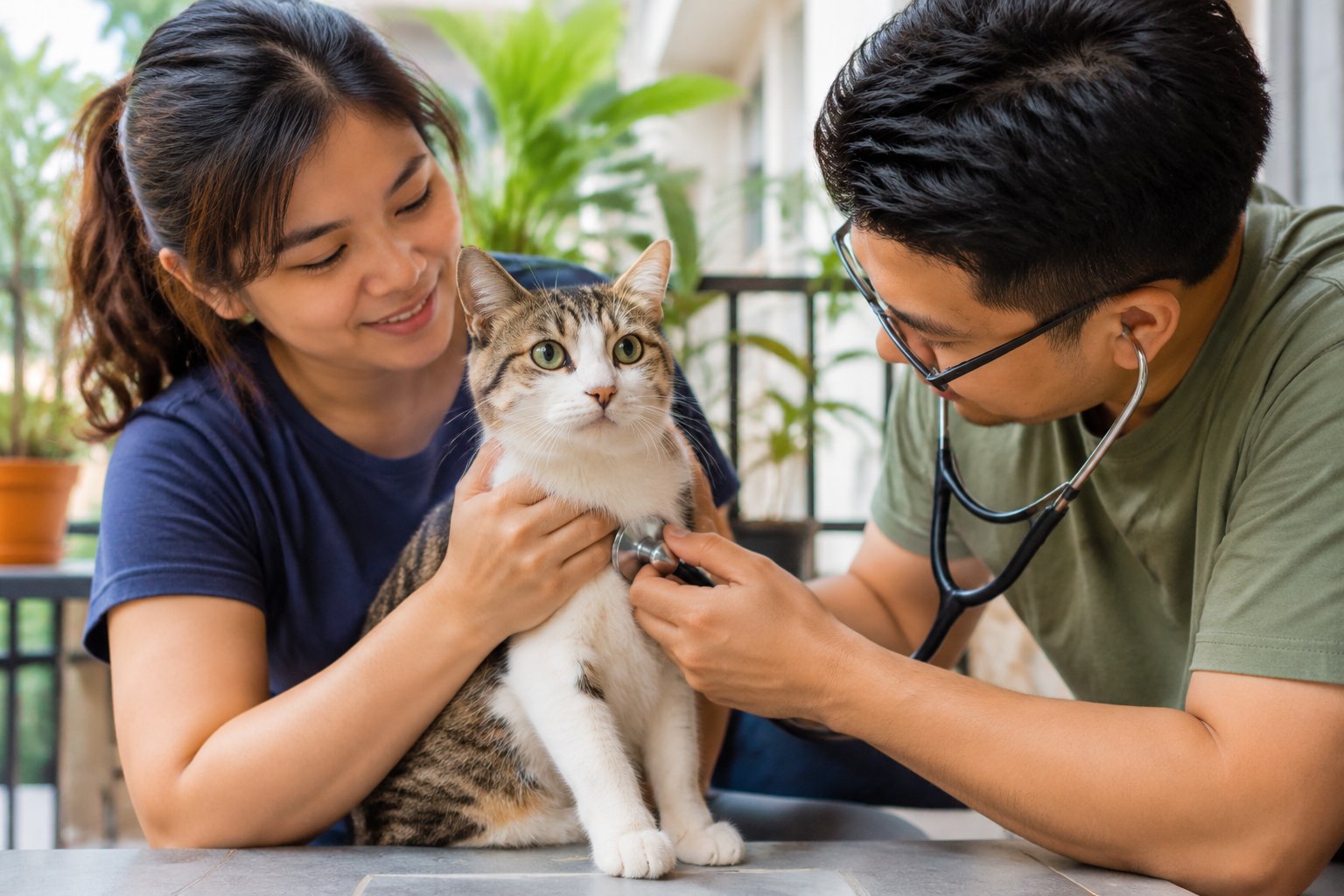
Pale gums in cats are one of the most useful at-home warning signs you can check. Healthy gums are pink because blood is circulating well. When gums look white, grey, or very light pink, it often means either fewer red blood cells (anaemia) or less blood reaching the gums (poor circulation or shock). In Malaysia, where fleas and ticks are common and some cats go outdoors, anaemia from parasites is a frequent cause. But pale gums can also signal serious internal disease, so it is always worth a vet check. This guide explains how to check gum colour safely, what causes pallor, and when to seek urgent care.
How to check your cat's gums at home
You do not need special equipment, but you do need good light and a calm cat.
- Choose natural light. Take your cat near a window or outdoors in shade. Artificial yellow light can make gums look different.
- Approach calmly. Wrap your cat gently in a towel if needed, leaving the head free. Ask someone to help if your cat struggles.
- Lift the lip. Gently lift the upper lip on one side. Look at the gum above the upper canine tooth.
- Check colour. Healthy gums are bubble-gum pink. Pale gums are lighter than normal; white gums are very pale; blue gums are a bluish tint; yellow gums are jaundiced.
- Do a capillary refill test. Press the gum lightly with a finger until it blanches white, then release. The pink colour should return within 2 seconds. If it takes longer than 2 seconds, circulation may be poor.
Record what you see and when. Take a photo in natural light if you can; it helps your vet.
What is normal? Pink gums, refill within 2 seconds, moist gums. Some cats have naturally darker gums (e.g., black or spotted gums due to pigment). In those cats, look at the inside of the eyelid or the tongue, which should be pink.
What pale gums can mean
Pale gums are a sign, not a disease. The two broad mechanisms are:
- Anaemia: low red blood cells or low haemoglobin. The gums look pale because there is less red pigment.
- Poor circulation: blood pressure is low, so less blood reaches the gums. This can happen with shock, dehydration, heart disease, or severe pain.
Other colour changes matter too:
- White gums: severe anaemia or shock.
- Blue gums (cyanosis): low oxygen; can be heart or lung disease.
- Yellow gums (jaundice): liver disease or red blood cell destruction.
- Bright red gums: inflammation or fever.
Common causes of pale gums in cats
1. Flea and tick infestation
Heavy flea burdens cause blood loss, especially in kittens. In Malaysia's warm, humid climate, fleas can survive year-round. Ticks can also cause blood loss and tick-borne disease. Use flea and tick control recommended by your vet, and check gums regularly if your cat goes outside.
2. Internal parasites
Hookworms and other intestinal worms can cause blood loss and anaemia. Regular deworming according to your vet's advice is important, especially for cats that hunt or have access outdoors.
3. Blood loss
This can be visible (e.g., bleeding from a wound, nosebleed) or hidden (bleeding into the gut or abdomen). Hidden bleeding can cause pale gums without obvious signs. Causes include trauma, bleeding disorders, or tumours.
4. Red blood cell destruction (haemolysis)
Some conditions destroy red blood cells faster than the body can replace them. Causes include immune-mediated disease, certain infections, and toxin exposure (e.g., onion or garlic in large amounts, some human medicines). Never give human painkillers to cats; paracetamol and ibuprofen are toxic.
5. Poor red blood cell production
Chronic kidney disease, chronic disease, and bone marrow problems can reduce red blood cell production. This is more common in older cats.
6. Shock and poor circulation
Shock from trauma, severe dehydration, heart disease, or anaphylaxis can cause pale gums. This is an emergency.
7. Other causes
Dental disease can cause bleeding, and some cats with oral tumours may have pale gums. Always have persistent gum changes checked.
When pale gums are an emergency
Seek emergency veterinary care immediately if you see any of these:
- Gums are white, blue, or very pale.
- Your cat is collapsed, weak, or unable to stand.
- Breathing is fast, laboured, or open-mouthed.
- There is active bleeding that does not stop.
- Your cat has had a trauma (e.g., road accident, fall).
- Your cat is having a seizure or is disoriented.
Do not wait to see if it improves. Call your vet and describe the gum colour and your cat's behaviour.
What to expect at the vet
Your vet will examine your cat, check gum colour and capillary refill, and listen to the heart and lungs. They may:
- Take a blood sample for a complete blood count (CBC) to check red blood cells.
- Check for parasites (flea dirt, faecal exam).
- Run biochemistry to assess organ function.
- Perform imaging (X-ray or ultrasound) if internal bleeding or tumours are suspected.
Treatment depends on the cause. It may include parasite control, iron supplements, fluids, blood transfusion in severe anaemia, or treatment of underlying disease. Your vet will discuss the best plan for your cat.
How to prevent pale gums
- Parasite control: Use vet-recommended flea, tick, and worm control. In Malaysia, year-round prevention is often advised.
- Regular check-ups: Especially for senior cats, annual blood tests can catch anaemia early.
- Safe environment: Keep cats indoors or in secure enclosures to reduce trauma and exposure to toxins.
- Avoid human medicines: Never give paracetamol, ibuprofen, or aspirin to cats without veterinary advice.
- Balanced diet: Feed a complete cat food. Avoid large amounts of raw fish or onions/garlic.
- Dental care: Check teeth and gums regularly; dental disease can cause bleeding.
Comparison table: gum colour and what it may mean
| Gum colour | Possible meaning | Urgency |
|---|---|---|
| Pink | Normal | Routine |
| Pale pink | Mild anaemia or poor circulation | See vet soon |
| White | Severe anaemia or shock | Emergency |
| Blue | Low oxygen (heart/lung) | Emergency |
| Yellow | Jaundice (liver or blood) | See vet urgently |
| Bright red | Inflammation or fever | See vet soon |
Practical examples for Malaysian cat owners
Kuala Lumpur apartment: A cat living entirely indoors can still get fleas from the corridor or from a new kitten. Check gums monthly. If you see pale gums, review flea control with your vet.
Johor terrace house: A cat that goes into the garden may pick up ticks. After outdoor access, do a quick tick check and look at gum colour. If gums look pale, call your vet.
Penang rainy season: During heavy rain, cats may be stressed or stay indoors more. Stress can worsen some conditions. Keep up parasite control and watch for changes.
When to see a vet
See a vet if you notice pale gums, especially if they are white or blue, or if your cat is weak, breathing fast, or bleeding. Even mild pallor that persists for more than a day should be checked. Your vet can run blood tests to find the cause and start treatment.
Frequently asked questions
What do pale gums in a cat mean? Pale gums mean less pink colour from blood. This can be due to anaemia, poor circulation, shock, or internal bleeding. It is always a sign to check with a vet.
How do I check my cat's gum colour at home? Gently lift your cat's lip in natural light. Look at the gum above the upper teeth. Healthy gums are bubble-gum pink. Press lightly and release; colour should return within 2 seconds.
Can fleas cause pale gums in cats? Yes. Heavy flea infestations cause blood loss and anaemia, especially in kittens. In Malaysia, fleas are common year-round. Use vet-recommended flea control.
Is pale gums an emergency? Pale gums can be an emergency, especially if gums are white or blue, or if your cat is collapsed, breathing fast, or bleeding. Call your vet immediately.
What should I do if my cat has pale gums? Keep your cat calm and warm, do not give human medicines, and contact your vet. If gums are white or blue, go to the nearest emergency vet.
Can pale gums in cats be treated? Yes, treatment depends on the cause. Anaemia may need iron supplements, parasite control, or treatment of underlying disease. Shock needs emergency fluids.
Vet disclaimer
This article is for general information only and is not a substitute for veterinary advice. Always consult a licensed veterinarian for diagnosis and treatment of your cat. If you suspect an emergency, contact your vet or an emergency animal hospital immediately.

