
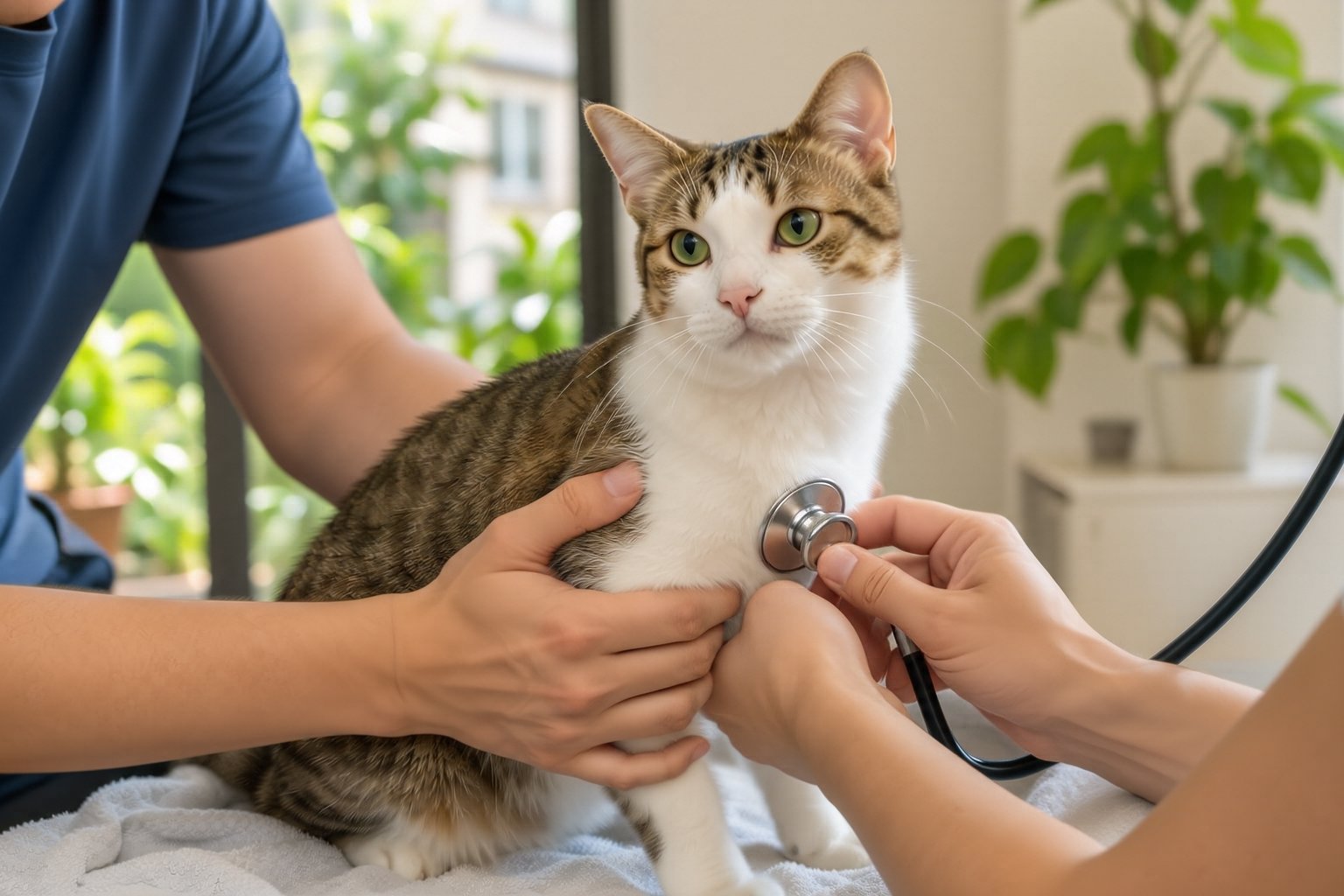
Start here: excessive thirst is a symptom, not a diagnosis
If your cat is suddenly emptying the water bowl, the first thing to understand is that you are not dealing with a thirst problem. You are dealing with a symptom. In veterinary terms, drinking too much is called polydipsia, and it usually travels with polyuria, which means urinating too much. The two go together because the body is trying to flush out something it cannot handle, or because the kidneys are losing water they should retain.
That is why the honest answer to "how do I treat excessive thirst in cats at home" is this: you can support your cat safely at home while you arrange a vet visit, but you cannot cure the cause at home. Home care buys you information and comfort. It does not replace diagnosis.
This guide walks you through what to do in the next 24 to 48 hours, what to measure, what to change, what not to do, and when to stop trying at home and go to a clinic. It is written for Malaysian cat owners living in apartments, terrace houses and kampung homes, where heat, humidity and multi-cat households all affect how much water a cat drinks and how hard it is to notice changes.
Why cats drink more: the common causes
A cat's thirst can rise for many reasons. Some are mild and temporary. Others are serious and progressive. Your vet will narrow the list using blood tests, urine tests and a physical exam, but knowing the possibilities helps you describe what you are seeing.
| Cause | Typical clues | Urgency |
|---|---|---|
| Hot weather or dehydration | Sudden increase on hot days, dry gums, lethargy | Moderate; cool the cat and offer water |
| Dry food only | Gradual increase, normal appetite and energy | Low; discuss diet with vet |
| Kidney disease | Increased drinking and urination, weight loss, poor coat, reduced appetite | High; needs blood and urine tests |
| Diabetes mellitus | Big appetite with weight loss, large urine clumps, sweet-smelling litter | High; needs urgent testing |
| Hyperthyroidism | Weight loss despite eating well, restlessness, fast heart rate | High; needs blood tests |
| Urinary tract disease | Frequent small urinations, straining, blood in urine, crying in the box | Emergency if straining produces no urine |
| Medications | Started a new drug recently, increased thirst after treatment | Moderate; call your vet |
| Stress or behaviour | New pet, moved house, changed water bowl or location | Low; observe and adjust environment |
Notice that most of the serious causes share the same early sign: more drinking and more urination. That is why a cat who seems "fine except for water" still deserves a check-up.
Step 1: Measure before you change anything
Before you adjust food, water or routine, spend two or three days measuring. This is the single most useful thing you can do at home, and it is what most owners skip.
How to measure water intake:
- Fill a measuring jug with a known amount of water and pour it into a clean bowl.
- At the same time each day, pour the remaining water into the jug and record the difference.
- Refill to the same starting amount.
- Repeat for at least three days.
If you have multiple cats, this gets complicated. Separate the cats at feeding and watering times if possible, or use a microchip feeder and waterer if you have one. Otherwise, note that the measurement is for the household, not one cat, and tell your vet.
How to measure urine output:
Use clumping litter and count clumps. Note the size: a golf ball, a tennis ball, or larger. A cat producing several large clumps a day is urinating far more than normal. Also note colour and smell. Very pale, odourless urine in large amounts is a classic sign of diluted urine from kidney or endocrine disease.
What else to record:
- Appetite: eating more, less, or the same
- Weight: weigh yourself holding the cat, then subtract your weight
- Vomiting: how often, what it looks like
- Behaviour: hiding, sleeping more, restlessness
- Coat and gums: dull coat, pale or tacky gums
A simple notebook or phone note is enough. Bring it to the vet.
Step 2: Make water easy and appealing
You cannot force a cat to drink, but you can remove barriers. These steps are safe for almost every cat and help you judge whether the thirst is behavioural or medical.
- Multiple water stations. Place bowls in several rooms, away from litter boxes and food. Cats often prefer water away from their food.
- Wide, shallow bowls. Whisker-sensitive cats dislike deep narrow bowls. Ceramic or stainless steel is easier to clean than plastic.
- Fresh water twice daily. In Malaysia's heat, water goes stale and warm quickly. Change it morning and evening.
- Try a fountain. Many cats drink more from moving water. Clean fountains weekly to prevent biofilm.
- Add water to food. A spoonful of warm water mixed into wet food increases intake without forcing anything.
- Offer ice cubes or a splash of tuna water. Use tuna water sparingly and only if your vet has not restricted salt.
If your cat drinks more after these changes, that is useful information. If your cat ignores water entirely and seems lethargic, that is a red flag.
Step 3: Review diet without making drastic changes
Diet affects water balance. Cats on dry food only take in very little water from food, so they drink more from the bowl. Cats on wet food get most of their water from meals and may drink very little. Neither is automatically wrong, but a sudden switch can confuse the picture.
If your cat has been on dry food and you want to increase moisture, transition slowly over one to two weeks. Sudden diet changes cause stomach upset and make it harder to tell what is happening.
Do not switch to a prescription kidney or diabetes diet without a diagnosis. These diets are formulated for specific conditions and can be harmful if used blindly. Ask your vet first.
Step 4: Stop extras that distort the picture
Treats, table scraps and flavoured supplements can increase thirst, especially salty foods. During your monitoring period:
- Pause salty treats such as dried fish, processed meat and cheese.
- Avoid giving milk; many cats are lactose intolerant and it causes diarrhoea.
- Do not add salt or supplements to water.
- Keep the same food and routine so your measurements mean something.
If your cat is on medication, do not stop it. Call your vet and ask whether increased thirst is a known side effect.
Step 5: Manage heat and stress
Malaysian weather is a genuine factor. A cat in a hot apartment may drink more simply because it is warm. But heat can also mask illness, because owners assume the thirst is "just the weather."
Practical steps:
- Keep one room cool and shaded with air conditioning or a fan that does not blow directly on the cat.
- Provide cool tiles or a cooling mat.
- Ensure water bowls are not in direct sun.
- Reduce stress where possible: new pets, renovations and visitors can all change drinking behaviour.
If thirst drops when the room is cooled and returns when it is hot, heat may be part of the story. It still does not rule out disease.
Step 6: Know what not to do
Some well-meaning home remedies are dangerous.
- Do not restrict water. This is the most important rule. Cats with kidney disease or diabetes need water. Restricting it can cause severe dehydration.
- Do not give human medications. Paracetamol and ibuprofen are toxic to cats. Never give human painkillers or diabetes medication.
- Do not force water with a syringe unless a vet has shown you how and given a specific amount. Aspiration into the lungs is a real risk.
- Do not rely on home urine test strips alone. They can be useful, but they do not replace a vet's tests.
- Do not wait for the cat to "look sick." Cats hide illness well. Excessive thirst is often the first visible sign.
When to see a vet
Book a vet visit promptly if your cat has increased thirst for more than a few days, especially with any of the following:
- Large urine clumps or urinating outside the box
- Weight loss despite a good appetite
- Vomiting, diarrhoea or reduced appetite
- Dull coat, weakness or hiding
- Bad breath or mouth ulcers
- A new medication started recently
Go to an emergency clinic immediately if:
- Your cat is straining to urinate and producing little or no urine, especially male cats. This can be a urethral blockage and is life-threatening within hours.
- Your cat is collapsed, breathing fast, or has pale gums.
- Your cat is vomiting repeatedly and cannot keep water down.
- Your cat has not eaten for more than 24 hours.
In Malaysia, emergency veterinary services are available in major cities, but hours vary. Save your nearest clinic's number before you need it. If you are unsure, call ahead and describe the symptoms.
What the vet will likely do
Knowing what to expect reduces anxiety. A typical work-up for excessive thirst includes:
- A full physical exam, including weight, hydration and mouth check
- Blood tests: kidney values, liver values, blood sugar, thyroid hormone
- Urine tests: concentration, glucose, protein, infection
- Blood pressure measurement
- Sometimes imaging such as ultrasound
These tests are how the cause is found. Home care cannot substitute for them, but your records make the visit faster and more accurate.
Home care after a diagnosis
Once your vet identifies the cause, home care becomes more targeted. Examples include:
- Kidney disease: increased water availability, wet food if appropriate, regular monitoring, and medications as prescribed.
- Diabetes: insulin injections, a consistent diet and feeding schedule, and glucose monitoring as directed.
- Hyperthyroidism: medication, diet or other treatment as advised, with follow-up blood tests.
- Urinary disease: increased water intake, stress reduction and prescription diet if recommended.
In every case, follow your vet's plan and keep measuring. Trends matter more than single readings.
A simple daily checklist
| Task | Morning | Evening |
|---|---|---|
| Refill and measure water | Yes | Yes |
| Count and note litter clumps | Yes | Yes |
| Check appetite and behaviour | Yes | Yes |
| Weigh cat (twice weekly) | — | — |
| Note vomiting or diarrhoea | As needed | As needed |
Keep this for at least a week before and after your vet visit. It turns vague worries into useful data.
Final word
Excessive thirst in cats is one of the most useful early warnings you will ever get. Treat it as a signal to investigate, not a problem to solve with a bigger bowl. Support your cat at home with fresh water, sensible monitoring and a calm environment, then let a vet find the cause. That combination gives your cat the best chance of a good outcome.
This article is general information for Malaysian cat owners and does not replace veterinary advice. Always consult a licensed veterinarian for diagnosis and treatment.
Related reading
- Cat Health Guide Malaysia: Symptom Check, Red-Flag Triage & When to See a Vet
- Cat Dehydration Treatment in Malaysia: Signs, Home Care and When to See a Vet
- Dehydration in Cats: Causes, Warning Signs and How to Care for a Thirsty Cat
- Excessive Urination in Cats: Causes and Care (Malaysia Guide)
- Excessive Urination in Cats: Prevention Guide for Malaysian Owners
- How to Treat Constipation in Cats at Home: A Practical Malaysian Guide
- How to Treat Dehydration in Cats at Home: A Practical Malaysian Guide

