
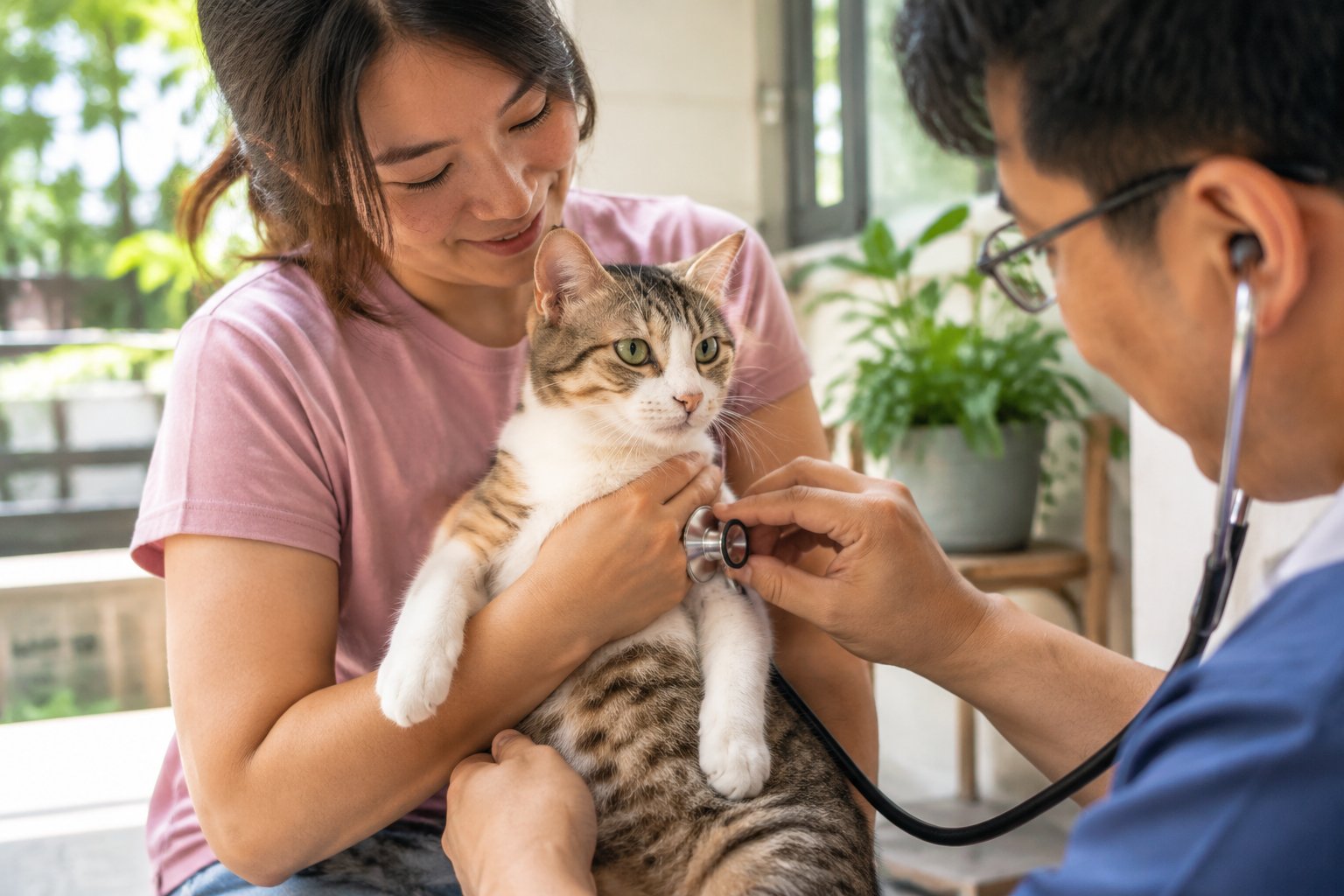
Heatstroke in cats: what every Malaysian owner should know
Heatstroke is a medical emergency that can kill a cat within minutes. It happens when a cat's body temperature rises beyond what it can control and its cooling mechanisms fail. In Malaysia's hot and humid climate, the risk is real even for indoor cats, especially in flats without air-conditioning or during a power cut. This guide explains the causes, the signs to watch for, what to do in the first critical minutes, and how to prevent it.
Why cats overheat
Cats have a normal body temperature of about 38–39°C. They cool themselves mainly by panting and by losing heat through their paws and nose. Unlike dogs, cats are not built for efficient panting, so they are less able to cope with high heat. When the surrounding temperature and humidity are high, evaporation is less effective, and a cat's temperature can climb quickly.
Heatstroke occurs when the body's heat-dissipating mechanisms are overwhelmed. This can happen through:
- Environmental heat: being trapped in a hot room, car, carrier or balcony with no shade or ventilation.
- Exertion: intense play or stress in hot weather, especially in brachycephalic (flat-faced) cats.
- Medical factors: obesity, heart disease, respiratory disease, dehydration, or age extremes (kittens and seniors).
- Lack of water: a cat that cannot reach fresh water or is not drinking enough.
Common causes in Malaysian homes
Malaysia's climate means heatstroke can occur in ordinary situations. Here are common scenarios:
- A parked car: even with windows cracked, a car can become an oven within minutes. Never leave a cat in a car.
- An unventilated room: a closed room without a fan or air-conditioning can trap heat, especially on upper floors of apartments.
- A carrier left in the sun: during a vet visit, a carrier placed in direct sunlight can overheat quickly.
- A balcony or cage in direct sun: cats may not be able to escape the sun if shade moves.
- Power cuts: without fans or air-conditioning, indoor temperatures can rise fast, particularly in high-rise units.
- Hot surfaces: tiled floors and dark surfaces can become hot; cats may lie on them and overheat.
Signs of heatstroke in cats
Early recognition saves lives. Watch for:
- Panting (open-mouth breathing) — cats rarely pant, so this is a major warning sign.
- Excessive drooling or thick saliva.
- Restlessness, pacing, or seeking cool places.
- Bright red gums and tongue.
- Weakness, wobbliness, or collapse.
- Vomiting or diarrhoea.
- Tremors, seizures, or confusion.
- Rapid heartbeat and breathing.
- Body temperature above 40°C (if you have a pet thermometer; do not rely on touch alone).
If you see any of these, act immediately. Heatstroke can progress to organ failure, brain damage and death.
First aid: what to do right away
- Move the cat to a cool, shaded, well-ventilated area. If indoors, turn on a fan or air-conditioning.
- Offer small amounts of cool water to drink. Do not force water into the mouth.
- Start cooling the body. Use room-temperature or slightly cool water on the paws, belly, armpits and groin. You can use a wet towel or sponge. Fan the cat while the water evaporates.
- Do not use ice or ice-cold water. This can cause blood vessels to constrict and actually slow cooling. It can also cause shivering, which generates heat.
- Keep the cat calm and minimise handling. Stress can worsen the condition.
- Call your vet and transport the cat immediately. Continue cooling on the way if possible. Do not wait to see if the cat improves.
What not to do:
- Do not immerse the cat in ice water.
- Do not give human fever medication (e.g., paracetamol or ibuprofen) — these are toxic to cats.
- Do not delay veterinary care because the cat seems to perk up; internal damage may still be occurring.
Veterinary care and what to expect
At the clinic, your vet will assess the cat's temperature, breathing, heart rate and hydration. Treatment may include:
- Controlled cooling with water, fans and cool intravenous fluids.
- Oxygen therapy if breathing is distressed.
- IV fluids to support circulation and correct dehydration.
- Monitoring for complications such as kidney damage, blood clotting problems, brain swelling and heart arrhythmias.
- Blood tests to check organ function and electrolytes.
Some cats need hospitalisation for 24–48 hours. The outlook depends on how high the temperature rose and how quickly cooling began. Early treatment greatly improves the chance of recovery. Costs vary widely by clinic and treatment; ask your vet for an estimate.
Preventing heatstroke: a practical checklist
- Always provide fresh, cool water in multiple bowls, including one in every room the cat uses.
- Create cool retreats: tiled bathroom floors, shaded corners, a fan-cooled room, or a cooling mat (test that your cat does not chew it).
- Close curtains or blinds during the hottest part of the day (roughly 11am–4pm).
- Use fans or air-conditioning when at home; if you are out, leave a fan on low and ensure ventilation.
- Never leave a cat in a parked car, even for a minute.
- Avoid exercising or vigorous play during peak heat; play in the cooler morning or evening.
- Brush long-haired cats regularly to remove loose undercoat; do not shave without veterinary advice.
- Keep carriers out of direct sun and transport cats in an air-conditioned car.
- Check your cat's favourite spots: dark surfaces, enclosed boxes and sunny windowsills can become heat traps.
- Watch at-risk cats closely: flat-faced breeds, seniors, kittens, overweight cats and those with health conditions.
Heatstroke risk by situation
| Situation | Risk level | Why |
|---|---|---|
| Parked car, any weather | Extreme | Temperature rises rapidly even with windows open |
| Unventilated room, no fan/AC | High | Heat trapped, humidity reduces cooling |
| Balcony or cage in direct sun | High | Cat cannot escape the sun |
| Carrier in direct sun during travel | High | Small space heats quickly |
| Indoor flat with fan/AC | Low | Good ventilation and cooling |
| Shaded garden with water | Moderate | Depends on shade and humidity |
Special considerations for Malaysian homes
In Kuala Lumpur apartments, upper floors can be significantly warmer than ground level. If you live in a high-rise, keep blinds closed on the sunny side and use fans to circulate air. In a Johor terrace house, a back room or enclosed porch may become a heat trap in the afternoon; check that your cat has access to a cooler area. During the Penang rainy season, humidity can be high even when it is not blazing hot, and cats may still overheat because evaporation is less effective. Always ensure ventilation and water.
When to see a vet
Seek veterinary care immediately if your cat shows any of the following:
- Panting or open-mouth breathing
- Drooling, vomiting or diarrhoea
- Weakness, wobbliness or collapse
- Bright red gums
- Tremors or seizures
- Body temperature above 40°C
Do not wait for improvement. Heatstroke is a race against time. If you are unsure, call your vet for advice and err on the side of caution.
Frequently asked questions
What is the first thing I should do if I suspect heatstroke in my cat? Move the cat to a shaded, ventilated area, offer small sips of cool water, and start cooling with room-temperature water on the paws, belly and armpits while fanning. Then call your vet and transport the cat immediately—cooling at home does not replace veterinary care.
Can cats pant like dogs when they are hot? Cats rarely pant. Panting, especially with drooling, wobbliness or a glazed look, is a red flag for heatstroke or another serious problem. Treat it as an emergency and contact a vet.
Should I use ice or cold water to cool a cat with heatstroke? No. Ice-cold water and ice packs can constrict blood vessels and slow cooling. Use room-temperature or slightly cool water, apply it to the paws, belly and armpits, and fan the cat while you travel to the vet.
How can I prevent heatstroke in my flat in Kuala Lumpur? Keep curtains drawn during the hottest hours, use fans or air-conditioning, always provide fresh water in several bowls, and never leave a cat in a parked car or an unventilated room. Create a cool retreat such as a tiled bathroom floor.
Is it safe to shave my long-haired cat to prevent heatstroke? Shaving is not routinely recommended because the coat insulates against heat and protects skin. Instead, brush regularly to remove loose fur, provide shade and cool surfaces, and keep the cat indoors during peak heat. Ask your vet before shaving.
Which cats are at higher risk of heatstroke? Flat-faced breeds (brachycephalic), long-haired cats, kittens, senior cats, overweight cats, and those with heart or breathing disease are at higher risk. Cats with limited access to shade or water are also vulnerable.
Vet disclaimer
This article is for general information only and does not replace professional veterinary advice. If you suspect heatstroke, contact a licensed veterinarian immediately. Always consult your vet before changing your cat's care routine or trying new cooling products.
Related reading
- Cat Health Guide Malaysia: Symptom Check, Red-Flag Triage & When to See a Vet
- Cat Fever Treatment in Malaysia: What to Do When Your Cat Is Hot
- Cat Heatstroke Treatment in Malaysia: First Aid, Vet Care & Prevention
- Cat Limping Treatment in Malaysia: What to Do, What to Expect
- Cat Pale Gums Treatment in Malaysia: What to Do When Your Cat's Gums Turn White
- Cat Poisoning Treatment in Malaysia: What to Do, What to Expect, and How to Prevent It
- Cat Seizures Treatment in Malaysia: What to Do, Causes & Vet Care
- Cat Trembling Treatment in Malaysia: Causes, Home Care and When to See a Vet
- Heatstroke in Cats in Malaysia: Signs, First Aid & Prevention
- Heatstroke Prevention for Cats in Malaysia: A Practical Owner's Guide
- How to Prevent Paracetamol Poisoning Around Cats: A Malaysian Safety Guide
- How to Treat Dehydration in Cats at Home: A Practical Malaysian Guide