
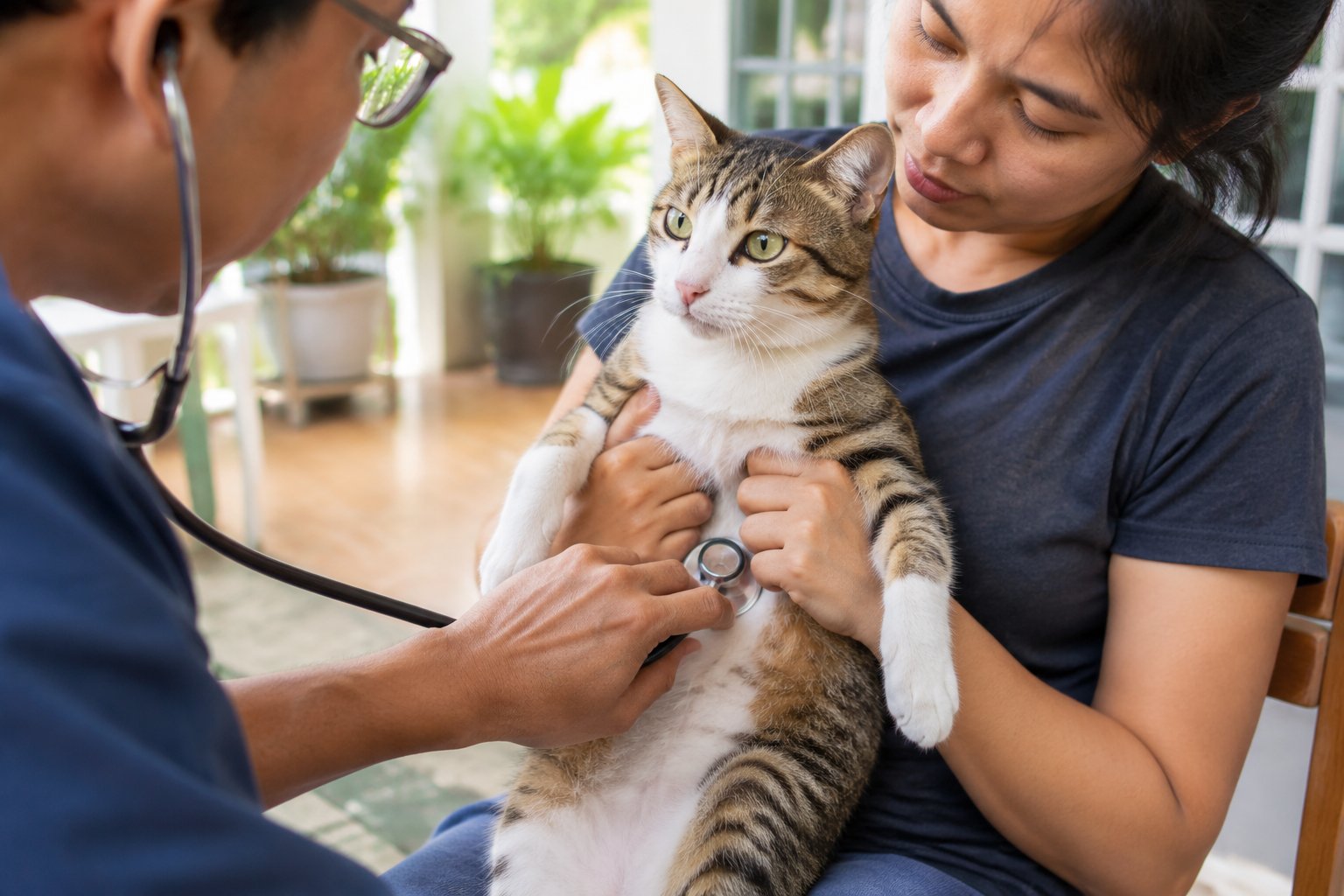
What does a swollen belly in cats mean?
A swollen belly in cats is not a diagnosis—it is a sign that something is going on inside. The abdomen can enlarge because of fat, fluid, gas, an enlarged organ, a mass, or pregnancy. In Malaysia, where many cats live indoors but still have access to balconies and gardens, owners often notice a change in belly size during grooming or play. The key is to work out whether the swelling is harmless or a warning of serious disease.
This guide covers the common causes, how to assess your cat at home, and when to seek veterinary help. It is written for Malaysian cat owners and does not replace a hands-on examination by a licensed veterinarian.
Common causes of a swollen belly in cats
1. Fluid retention (ascites)
Ascites is the medical term for fluid accumulating in the abdominal cavity. It is one of the most serious causes. The belly feels tight and fluid-filled, and the cat may have difficulty breathing because the fluid presses on the diaphragm. Common underlying conditions include:
- Heart disease, such as cardiomyopathy, which can lead to right-sided heart failure and fluid buildup.
- Liver disease, including cirrhosis or liver tumours.
- Kidney disease, especially in older cats.
- Feline infectious peritonitis (FIP), a viral disease that can cause abdominal fluid.
- Cancer affecting abdominal organs.
Ascites is not a disease itself; it is a symptom that requires prompt investigation.
2. Pregnancy
An unspayed female cat can become pregnant from around six months of age. The belly enlarges gradually over about nine weeks. Pregnancy is not a disease, but it requires good nutrition and veterinary check-ups. If you are not planning to breed, spaying is the best way to prevent unwanted litters and reduce the risk of uterine infections later.
3. Intestinal worms
Roundworms and tapeworms are common in cats, especially kittens and those that hunt or have fleas. A heavy worm burden can give a pot-bellied appearance, particularly in young cats. Other signs include a dull coat, diarrhoea, and visible worms in the stool or around the anus. Regular deworming with a product recommended by your vet is important.
4. Obesity
Overweight cats often have a pendulous belly that swings when they walk. Obesity is a growing problem in Malaysian indoor cats, especially when owners free-feed dry food and playtime is limited. Unlike fluid, fat feels soft and the belly may sag. Weight management through portion control and interactive play is key.
5. Constipation and gas
Severe constipation can cause a bloated abdomen. Cats may strain in the litter box and pass hard, dry stools. Gas can also cause temporary bloating, often related to diet changes or food intolerance.
6. Tumours and organ enlargement
Abdominal tumours, enlarged lymph nodes, or an enlarged liver or spleen can cause a visible bulge. These are more common in older cats and may be accompanied by weight loss, lethargy, or vomiting.
7. FIP (feline infectious peritonitis)
FIP is a viral disease that can cause the 'wet' form with abdominal fluid. It is more common in young cats from multi-cat households. While FIP was once considered fatal, newer antiviral treatments are available in some countries; in Malaysia, access may vary, so discuss options with your vet.
How to assess your cat's belly at home
You can do a gentle check at home, but never press hard or cause pain.
- Look at the shape. A pear-shaped belly that is wider at the bottom may suggest fluid. A uniformly round belly may be fat or gas.
- Feel gently. With your cat standing, gently place your hands on both sides of the abdomen. Fluid feels like a water balloon—tight and wave-like. Fat feels soft and doughy. Never squeeze.
- Check for other signs. Is your cat eating normally? Playing? Using the litter box? Any vomiting, diarrhoea, or breathing changes?
- Weigh your cat. Sudden weight gain over a few days is more suspicious than gradual gain over months.
- Watch the breathing. If your cat breathes with effort or pants after mild activity, seek veterinary care immediately.
If you are unsure, take a short video of your cat walking and breathing to show your vet.
Warning signs that need urgent veterinary care
Some signs mean you should not wait. Seek veterinary attention immediately if you notice:
- A sudden increase in belly size.
- A belly that feels tight or fluid-filled.
- Difficulty breathing or open-mouth breathing.
- Lethargy or weakness.
- Vomiting or diarrhoea, especially with blood.
- Loss of appetite for more than 24 hours.
- Pale gums or jaundice (yellow tinge to gums, skin, or eyes).
- Straining to urinate or defecate.
These can indicate fluid buildup, organ failure, or other emergencies.
How vets diagnose a swollen belly
Your vet will start with a full history and physical examination. They may then recommend:
- Abdominal palpation to feel for fluid, masses, or organ enlargement.
- Ultrasound to visualise organs and detect fluid.
- X-rays to check organ size and look for masses.
- Blood tests including a complete blood count and biochemistry profile to assess liver and kidney function.
- Urinalysis to check for kidney disease or infection.
- Fluid analysis if ascites is present—a sample of fluid can help identify the cause (e.g., FIP, heart failure, cancer).
- Heart evaluation such as an echocardiogram if heart disease is suspected.
These tests help determine whether the swelling is due to fluid, fat, pregnancy, or another cause.
Treatment options and what to expect
Treatment depends entirely on the cause.
| Cause | Typical approach |
|---|---|
| Pregnancy | Nutritional support, vet check-ups, prepare nesting area. Spay after weaning if not breeding. |
| Intestinal worms | Deworming with vet-recommended product; repeat as advised. Treat fleas. |
| Obesity | Calorie-controlled diet, measured meals, interactive play, regular weigh-ins. |
| Constipation | Increase water intake, wet food, vet may prescribe laxatives or enemas. |
| Ascites due to heart disease | Medications to manage heart failure, low-sodium diet, regular monitoring. |
| Ascites due to liver disease | Supportive care, special diet, treat underlying cause. |
| FIP | Antiviral treatment if available; supportive care. Discuss with vet. |
| Tumours | May require surgery, chemotherapy, or palliative care. |
In some cases, your vet may drain abdominal fluid (abdominocentesis) to relieve pressure and help diagnosis. This is a temporary measure and must be done by a professional.
Preventing a swollen belly where possible
Not all causes are preventable, but you can reduce the risk:
- Regular deworming as advised by your vet, especially for cats that go outdoors or hunt.
- Flea control, since tapeworms are transmitted by fleas.
- Spaying to prevent pregnancy and uterine infections.
- Weight management with portion control and play.
- Annual health checks for early detection of organ disease.
- Good nutrition with a balanced diet and fresh water.
- Indoor enrichment to keep cats active.
Malaysian context
In Malaysia, many cats live in apartments or terrace houses with access to outdoor areas. This can increase exposure to parasites and other cats. The hot, humid climate means fleas and worms can be a year-round problem, so regular prevention is important. Additionally, some owners may notice a swollen belly after a change in diet or during the rainy season when cats stay indoors more and exercise less. Always consult a local veterinarian for advice tailored to your cat.
When to see a vet
See a vet if you notice any of the following:
- Sudden or progressive abdominal enlargement.
- A belly that feels tight or fluid-like.
- Breathing difficulty or reluctance to move.
- Vomiting, diarrhoea, or loss of appetite.
- Weight loss despite a big belly.
- Any signs of pain when touched.
If your cat is pregnant, schedule a check-up to confirm and monitor. If you suspect worms, bring a stool sample. For any uncertainty, a phone call to your vet can help you decide whether to come in.
Frequently asked questions
Q: Can a swollen belly in cats be caused by overeating? A: Yes, a large meal can cause temporary bloating, but it usually resolves within hours. Persistent swelling is not normal.
Q: My cat has a swollen belly but is acting normal. Should I worry? A: A gradual, soft belly in an otherwise active cat may be fat or pregnancy, but it is still worth a vet check to rule out underlying disease.
Q: Are certain cat breeds more prone to swollen bellies? A: Some breeds like Maine Coons may be predisposed to heart disease (cardiomyopathy), which can cause fluid retention. Regular screening is wise.
Q: Can I treat a swollen belly at home? A: No. Do not attempt to drain fluid or give human medications. Home treatment can be dangerous. Seek veterinary advice.
Q: How much does it cost to treat a swollen belly in cats in Malaysia? A: Costs vary widely depending on the cause and required tests. Consult your local vet for an estimate.
Q: Is a swollen belly in cats contagious to other pets? A: If the cause is infectious (e.g., FIP, parasites), it can spread. Keep the affected cat isolated and consult your vet.
Vet disclaimer
This article is for general information only and does not replace professional veterinary advice. Always consult a licensed veterinarian in Malaysia for diagnosis and treatment of your cat's condition.
Related reading
- Anemia in Cats in Malaysia: Signs, Causes, and What to Do
- Blood Test for Cats: What to Expect (Malaysian Owner's Guide)
- Cat Anemia Treatment in Malaysia: A Practical Owner's Guide
- Cat Bad Breath Treatment in Malaysia: Causes, Home Care and When to See a Vet
- Cat Dental Pain Treatment in Malaysia: A Practical Owner's Guide
- Cat Ear Mites Treatment in Malaysia: A Complete Owner's Guide
- Cat Excessive Thirst Treatment in Malaysia: What to Do When Your Cat Drinks Too Much
- Cat Excessive Urination Treatment in Malaysia: A Practical Guide for Owners

