
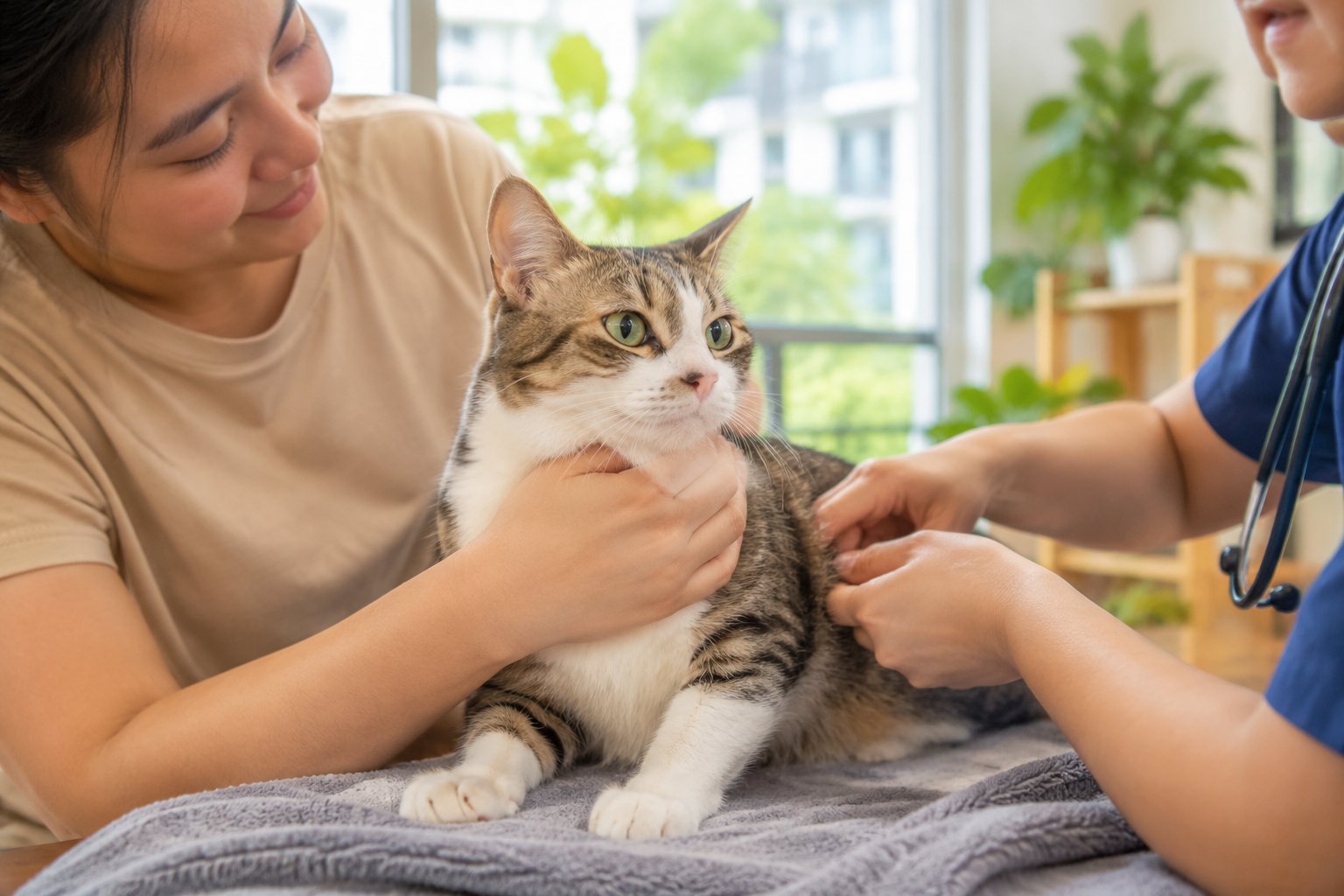
Why is your cat itching?
Itching is a symptom, not a disease. In Malaysia's warm, humid climate, fleas, mites and skin infections thrive, so itching is a common reason owners seek help. Before you try any home remedy, spend a day observing your cat: where does it scratch, how often, and are there visible signs like redness, scabs, hair loss or fleas? This information helps you choose the right approach and tells you when to stop home care and see a vet.
First, rule out fleas and mites
Fleas are the number one cause of itching in cats in Malaysia. They are small, fast and often hide in the groin, armpits and neck. You may see flea dirt (black specks) on the skin or in the bedding. Mites, such as ear mites, cause intense scratching of the ears and head. Both need specific treatment.
What to do:
- Use a vet-recommended flea product for cats. Never use dog products; permethrin in dog flea treatments is toxic to cats.
- Treat all pets in the household at the same time.
- Wash bedding in hot water and vacuum floors, sofas and carpets. Throw away the vacuum bag or empty the canister outside.
- Repeat treatment as directed by the product label or your vet. Flea eggs can survive in the environment for weeks.
If you see no improvement after two weeks of proper flea treatment, or if your cat has ear discharge or head shaking, ask your vet to check for mites.
Safe home bathing and grooming
A gentle bath can remove allergens, flea dirt and irritants from the coat. It also gives you a chance to check the skin.
Bathing tips:
- Use a shampoo made for cats. Human shampoo can dry out the skin and disrupt its protective barrier.
- Fill a basin with lukewarm water. Cats often tolerate a shallow bath better than a running tap.
- Avoid the head and ears; wipe the face with a damp cloth instead.
- Rinse thoroughly. Shampoo residue can cause more itching.
- Dry your cat with a towel and keep it in a warm room. In Malaysia's humidity, damp fur can lead to fungal skin problems.
- Bathe at most once a week unless your vet advises otherwise.
Brushing removes loose fur and dander and spreads natural oils. Use a soft brush and be gentle around sore areas. If your cat has mats, do not cut them with scissors near the skin; ask a groomer or vet.
Environmental control at home
Many cats are allergic to dust mites, pollen or mould. You cannot remove all allergens, but you can reduce them.
- Vacuum regularly, including under furniture and on curtains.
- Wash pet bedding weekly in hot water.
- Use air-conditioning or a dehumidifier in damp rooms. Keep humidity between 40% and 60% if possible.
- Avoid strong perfumes, air fresheners and harsh cleaning sprays near your cat's resting areas.
- Keep your cat indoors during haze or high-pollen periods. In Malaysia, haze season can worsen respiratory and skin irritation.
- Wipe your cat's paws and coat with a damp cloth after outdoor walks or balcony time.
Stop the scratch-itch cycle
Scratching damages the skin and lets bacteria in, which causes more itching. An Elizabethan collar (cone) prevents your cat from licking and scratching sores while they heal. Soft fabric collars are available and are often better tolerated. Use the collar only as long as needed and check the skin daily.
Keep your cat's nails trimmed to reduce damage. If your cat is very stressed by the collar, ask your vet about alternatives.
Diet and supplements: what helps, what doesn't
Food allergies can cause itching, especially around the head, neck and ears. A vet may recommend a hypoallergenic diet trial for 8–12 weeks. Do not switch foods randomly; a proper trial requires strict control of all treats and table scraps.
Omega-3 fatty acids may support skin health in some cats. Only use supplements formulated for cats and approved by your vet. Do not give human fish oil capsules without checking the dose; too much can cause diarrhoea or other problems.
Coconut oil is sometimes suggested for dry skin. A tiny amount can be soothing, but it is not a cure for allergies or parasites. Some cats develop diarrhoea after licking it. Never apply essential oils; many are toxic to cats.
What NOT to do
- Do not use human anti-itch creams, lotions or medicated shampoos. They may contain ingredients toxic to cats or in doses that are unsafe.
- Do not use dog flea products. Permethrin is highly toxic to cats.
- Do not give human antihistamines unless your vet prescribes them and gives you the correct dose.
- Do not use tea tree oil, eucalyptus oil or other essential oils. They can cause poisoning.
- Do not delay vet care if your cat is in pain, has open wounds, or is unwell.
When to see a vet
See a vet if:
- Itching lasts more than a few days despite home care.
- Your cat has open sores, bleeding, or signs of infection (pus, swelling, bad smell).
- There is hair loss, especially in patches.
- Your cat is lethargic, not eating, vomiting or has diarrhoea.
- You see fleas or mites but treatment is not working.
- Your cat is very young, elderly, pregnant or has another health condition.
- The itching started suddenly after a new food, shampoo or household product.
A vet can check for parasites, skin infections, allergies and underlying diseases. They may do skin scrapings, flea combing or allergy testing.
Comparison table: home care vs vet care
| Situation | Home care appropriate? | What to do |
|---|---|---|
| Occasional scratching, no visible skin problems | Yes | Check for fleas, brush coat, keep environment clean |
| Fleas seen, mild itching | Yes, with vet-recommended flea product | Treat all pets, wash bedding, vacuum |
| Itching with redness or small scabs | Partly | Use cone, bathe gently, see vet if no improvement in 2–3 days |
| Hair loss, open sores, lethargy | No | See a vet promptly |
| Itching after new food or product | No | Stop the product, see vet |
| Ear scratching with discharge | No | Vet check for ear mites or infection |
Practical examples for Malaysian homes
Kuala Lumpur apartment: Dust mites and indoor allergens can build up in air-conditioned rooms with carpets and fabric sofas. Vacuum weekly, wash curtains and pet bedding in hot water, and keep humidity in check with a dehumidifier. If your cat sits on the balcony, wipe its paws and coat when it comes inside.
Johor terrace house: Fleas can thrive in sandy soil and shaded gardens. Keep your cat indoors during peak flea season, treat all pets, and wash bedding regularly. Check your cat's groin and neck for flea dirt after garden time.
Building a simple home care routine
- Daily: Check your cat's skin and coat for fleas, scabs or redness. Brush gently.
- Weekly: Wash bedding, vacuum main areas, and check flea treatment schedule.
- Monthly: Weigh your cat and check for changes in appetite or behaviour. Review parasite prevention with your vet.
- Seasonally: Adjust humidity control during rainy season and haze.
Vet disclaimer
This article provides general information only and is not a substitute for professional veterinary advice. Always consult a licensed veterinarian for diagnosis and treatment of your cat's skin condition. Never give human medications or use products not intended for cats without veterinary guidance.
Related reading
- Itching in Cats: Causes and Care (Malaysia Guide)
- Worms in Cats: Causes and Care (Malaysia Vet Guide)
- Arthritis in Cats: Causes and Care (Malaysia Guide)
- Bad Breath in Cats: Causes and Care (Malaysian Owner's Guide)
- Blood Test for Cats Step by Step: What Happens at the Clinic
- Breathing Difficulty in Cats in Malaysia: Signs, Causes and What to Do
- Cat Sudden Aggression Treatment in Malaysia: Why It Happens and What to Do
- Dehydration in Cats: Causes, Warning Signs and How to Care for a Thirsty Cat