
Quick answer
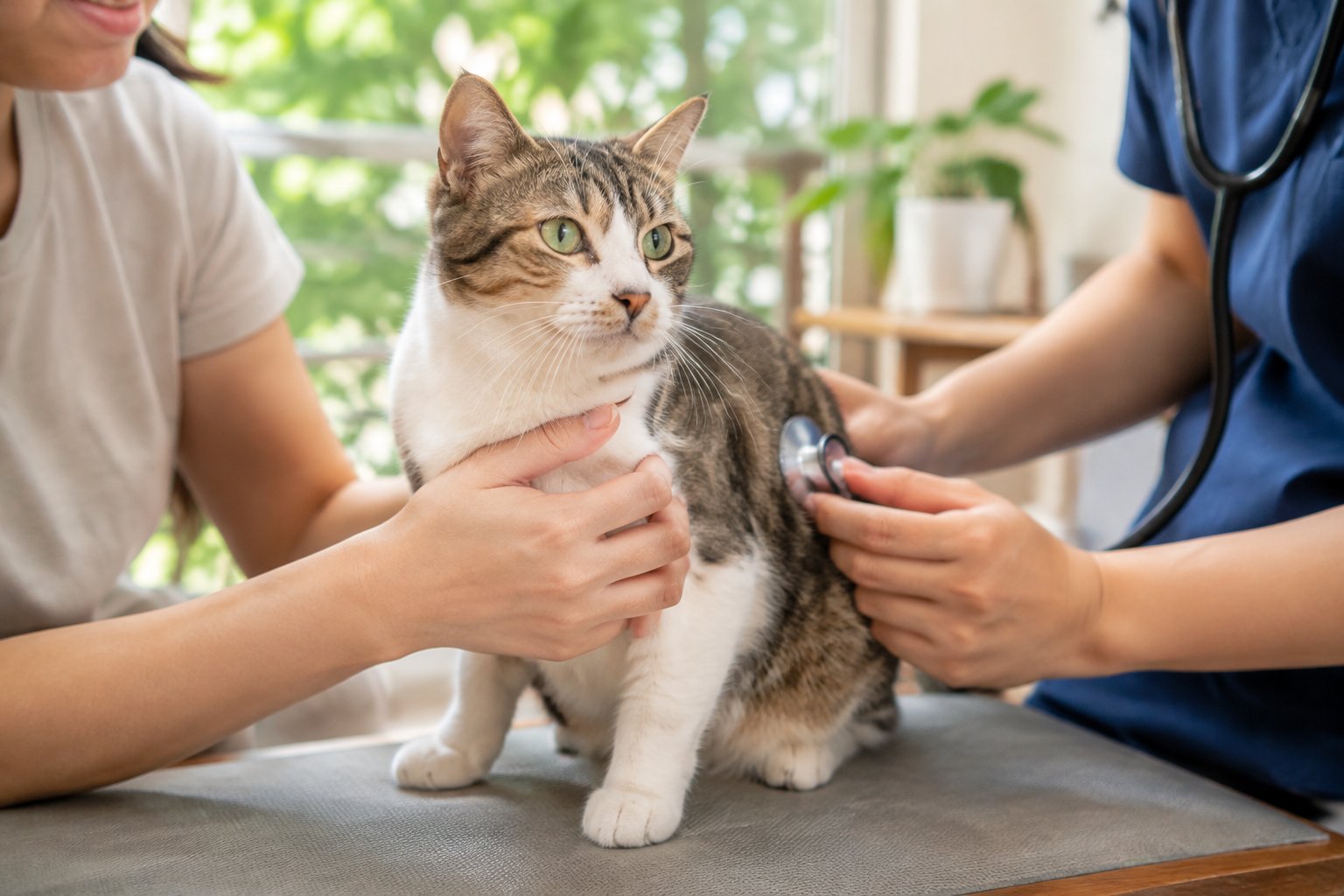
If your cat feels hot, do not reach for human medicine. Cat fever treatment in Malaysia begins with confirming a real fever using a rectal thermometer, then finding the cause with a vet. Keep the cat cool, quiet and hydrated, and seek veterinary care promptly, especially if the fever is above 40°C, lasts more than 24 hours, or comes with vomiting, breathing difficulty or collapse.
Cats run hot, so a warm cat is not always a fever
A cat's normal body temperature is higher than a person's. Most healthy cats sit between about 38.1°C and 39.2°C. That is why your cat may feel warm to the touch even when perfectly well. A true fever is generally a rectal temperature above roughly 39.2°C, and anything above 40°C is a serious concern.
This matters in Malaysia because our climate is already warm and humid. A cat that has been napping in a sunny spot, playing hard, or sitting in a stuffy room can feel hot without being ill. Stress and exercise can also raise temperature slightly. So the first practical step is not to guess from touch, but to measure properly if you can, and to look at the whole picture: appetite, energy, breathing, drinking, grooming and behaviour.
How to check your cat's temperature safely
A rectal thermometer is the only reliable at-home method. Ear thermometers made for people are not accurate in cats, and forehead strips are useless. If you have never done a rectal temperature, ask your vet or vet nurse to show you once.
A safe routine:
- Use a digital thermometer dedicated to the cat, cleaned with alcohol and lubricated with a water-based gel.
- Have a second person help wrap the cat gently in a towel, leaving the tail end accessible.
- Insert only the tip, about 1–2 cm, and never force it.
- Stop if the cat struggles badly; distress can raise the reading and risk injury.
- Wash your hands afterwards.
If you cannot do this safely, do not improvise. Note the signs instead and let the vet measure. For a cat that is already unwell, struggling at home can do more harm than good.
Signs that point to fever in cats
Fever in cats is often vague. Watch for a combination of these:
- Hiding more than usual, or withdrawing from family activity.
- Reduced appetite or refusing favourite food.
- Lethargy, weakness, or sleeping much more.
- Warm ears and paws, though this is not proof.
- Shivering or seeking cool floor tiles, which is common in Malaysian homes.
- Fast or laboured breathing.
- Vomiting, diarrhoea, or both.
- Squinting, discharge from eyes or nose.
- Dehydration: tacky gums, skin that stays tented when gently pinched, or reduced urine.
- In some cats, a dry nose is not a reliable sign either way.
Kittens, senior cats, pregnant cats and cats with existing conditions such as kidney disease or diabetes can deteriorate faster. Treat them with a lower threshold for calling the vet.
What you can safely do at home while arranging a vet visit
Home care is supportive only. It does not replace diagnosis or prescribed treatment.
- Offer water and wet food. Mild dehydration is common with fever. Fresh water in several spots, plus wet food or a little added water to food, encourages drinking. Do not force water into the mouth.
- Keep the environment comfortable. Malaysia's heat and humidity can add to a cat's load. Provide shade, quiet, and a cool tiled floor or a fan that moves air without blowing directly on the cat. Do not use ice packs, cold baths or wet towels over the whole body; rapid cooling can cause shivering and worsen things.
- Do not bundle the cat up. Unlike people, cats with fever should not be wrapped in blankets to "sweat it out".
- Encourage rest. Separate the cat from noisy children, other pets and household activity if needed.
- Track the basics. Write down temperature if measured, appetite, water intake, litter box output, vomiting or diarrhoea, and breathing rate. This helps the vet enormously.
- Never give human medicine. Paracetamol and ibuprofen are dangerous to cats. Aspirin is not a safe home fever remedy either. Only give medicine prescribed by your vet for this cat.
What not to do
- Do not give any human fever or pain tablet, syrup or supplement.
- Do not use cold water, ice or alcohol rubs to bring temperature down.
- Do not force-feed a lethargic cat; choking and aspiration are real risks.
- Do not delay because the cat "seems okay". Fever can be the first sign of something serious.
- Do not rely on online dosage charts for cats. Doses depend on weight, condition and cause.
When to see a vet
See a vet promptly, and urgently in the following cases:
- Temperature above 40°C, or a fever that has lasted more than 24 hours.
- Breathing that is fast, noisy or laboured, or gums that look pale, blue or grey.
- Repeated vomiting or diarrhoea, especially with blood.
- Refusing food and water for more than 24 hours, or any refusal in a kitten.
- Collapse, weakness, disorientation, seizures or tremors.
- A swollen abdomen, straining to urinate, or no urine.
- Fever after a tick bite, a fight wound, or contact with a sick animal.
- Any fever in a kitten under 12 weeks, a senior cat, or a cat with a chronic illness.
If you are unsure, call your vet clinic and describe the signs. Many Malaysian clinics will advise whether to come in immediately or monitor for a few hours.
How vets investigate and treat fever
There is no single "fever medicine" for cats. Treatment targets the cause and supports the cat.
Diagnosis may include:
- Full physical exam and accurate temperature.
- Blood tests: complete blood count and biochemistry.
- Urine tests.
- Tests for common infectious causes depending on risk and region, such as feline leukaemia virus (FeLV), feline immunodeficiency virus (FIV), feline coronavirus, and other pathogens your vet considers relevant.
- Imaging such as X-ray or ultrasound if the vet suspects internal disease.
- Wound checks and tick or parasite inspection.
Treatment may include:
- Intravenous or subcutaneous fluids for dehydration.
- Antibiotics only if a bacterial infection is likely; antibiotics do not treat viral fever.
- Anti-nausea and pain relief prescribed by the vet.
- Nutritional support and appetite stimulants when needed.
- Fever-reducing medicine only when the vet decides it is appropriate; this is not routine for every fever.
- Treatment of the underlying condition, such as an abscess, urinary problem, or immune-mediated disease.
Most cats with mild fever and a clear cause improve within a few days with appropriate care. Cats with severe illness, persistent fever or underlying disease may need hospitalisation, monitoring and longer treatment.
A simple comparison: home monitoring vs vet visit
| Situation | Home monitoring | Vet visit |
|---|---|---|
| Slightly warm, eating and playful, no other signs | Reasonable for a few hours; recheck temperature if possible | If fever confirmed above 39.2°C or signs appear |
| Fever 39.2–40°C, quiet but drinking | Keep cool, offer wet food, track signs | Same day or next morning |
| Fever above 40°C | Do not wait | Emergency visit |
| Vomiting, diarrhoea, breathing trouble | Not suitable | Urgent visit |
| Kitten, senior or chronically ill cat with any fever | Not suitable | Urgent visit |
| Fever lasting over 24 hours | Not suitable | Vet visit |
Living with a feverish cat in a Malaysian home
Malaysian homes vary a lot, and small adjustments help. In a Kuala Lumpur apartment, a cat may have limited cool spots, so set up a quiet room with a fan on low, fresh water in two places, and a litter box away from noise. In a Johor terrace house, doors and windows may be open more often; keep the cat indoors and away from other animals while unwell, and check for ticks after time in the garden. During the Penang rainy season, humidity rises and cats may drink less; wet food helps, and damp bedding should be changed so the cat is not lying in moisture.
Practical checklist for the first 24 hours:
- Measure temperature if you can do so safely.
- Note appetite, water intake and litter box output.
- Check breathing rate at rest.
- Offer small, frequent wet meals.
- Keep the cat indoors and quiet.
- Call your vet with the details.
- Do not give any human medicine.
Preventing fever where possible
Not all fevers are preventable, but you can lower risk:
- Keep vaccinations up to date as advised by your vet.
- Use parasite control for fleas and ticks.
- Keep cats indoors or in secure enclosures to reduce fights and infections.
- Isolate new or sick cats until checked by a vet.
- Provide clean water and good nutrition.
- Book regular check-ups, especially for senior cats.
Bottom line
A hot cat is not automatically a feverish cat, and a feverish cat is not a case for human medicine. Confirm with a thermometer if safe, support with water, wet food, shade and rest, and let a vet find the cause. In Malaysia's climate, keep cooling gentle and never use ice or alcohol. When in doubt, call your vet; fever is a sign, not a diagnosis.
This article is general information for Malaysian cat owners and is not a substitute for veterinary advice. Always consult a licensed veterinarian for diagnosis and treatment of your cat.
Related reading
- Anemia in Cats in Malaysia: Signs, Causes, and What to Do
- Blood Test for Cats: What to Expect (Malaysian Owner's Guide)
- Cat Anemia Treatment in Malaysia: A Practical Owner's Guide
- Cat Bad Breath Treatment in Malaysia: Causes, Home Care and When to See a Vet
- Cat Dental Pain Treatment in Malaysia: A Practical Owner's Guide
- Cat Ear Mites Treatment in Malaysia: A Complete Owner's Guide
- Cat Excessive Thirst Treatment in Malaysia: What to Do When Your Cat Drinks Too Much
- Cat Excessive Urination Treatment in Malaysia: A Practical Guide for Owners
- Cat Eye Infection Treatment in Malaysia: A Practical Owner's Guide
- Cat Licking Wounds: Why It Happens and How to Treat It in Malaysia
- Cat Limping Treatment in Malaysia: What to Do, What to Expect

