
Quick answer
Coughing in cats is a protective reflex that clears the airways. In Malaysia, common causes include hairballs, feline asthma, respiratory infections, and heartworm. Signs range from a dry hack to a wet productive cough. Any persistent cough lasting more than a few days warrants a vet visit.
What is coughing and why do cats do it?
Coughing is a sudden, forceful expulsion of air from the lungs. It helps clear irritants, mucus, or foreign material from the airways. Cats cough less often than dogs, so when they do, it can be a sign of an underlying problem. Unlike humans, cats rarely cough just to clear their throat; there is usually a trigger.
The cough reflex starts when sensory receptors in the airways are stimulated. This can happen due to inflammation, infection, or physical irritation. The cough may be dry or wet, depending on whether mucus is present.
Recognising the signs of coughing in cats
Many owners confuse coughing with hairballs, sneezing, or even vomiting. Here is how to tell the difference.
What a cough looks like
- Your cat may stretch its neck out and lower its head.
- The mouth opens, and the abdomen contracts forcefully.
- You may hear a dry hack, a honking sound, or a wet gurgle.
- The episode often ends with a swallow or a gag.
- Some cats produce foam or mucus.
Cough vs hairball
A hairball cough is usually a dry, hacking cough that ends with the expulsion of a cylindrical mass of hair. True hairballs are vomited, not coughed up. If your cat coughs but never brings up a hairball, it may not be a hairball at all.
Cough vs sneeze
Sneezing is a sudden burst of air through the nose, often with nasal discharge. Cats may sneeze repeatedly and paw at their nose. Coughing involves the mouth and chest, and the sound is deeper.
Cough vs vomiting
Vomiting involves abdominal contractions and brings up food or fluid. Coughing may end with a gag, but nothing comes up except maybe a little foam. If your cat brings up food, it is vomiting, not coughing.
Other signs to watch for
- Laboured breathing or open-mouth breathing
- Wheezing or whistling sounds
- Nasal discharge or sneezing
- Lethargy or reduced appetite
- Weight loss
- Changes in voice
Common causes of coughing in cats in Malaysia
Malaysia's warm, humid climate and urban living can influence the causes of coughing in cats. Here are the most common.
Hairballs
Hairballs are common in cats that groom frequently, especially long-haired breeds. In Malaysia, cats shed year-round, so hairball formation can happen anytime. A hairball cough is usually occasional and ends with the expulsion of a hairball. If your cat coughs frequently without producing hairballs, investigate further.
Feline asthma
Feline asthma is an allergic condition that causes airway inflammation and narrowing. It is triggered by allergens such as dust, pollen, mould, smoke, and aerosol sprays. In Malaysia's humid environment, mould and dust mites can be significant triggers. Asthmatic cats often have a dry, hacking cough, wheezing, and difficulty breathing. Attacks can be sudden and severe.
Respiratory infections
Cat flu (feline herpesvirus and calicivirus) and other bacterial infections can cause coughing, sneezing, and nasal discharge. These are contagious among cats, especially in multi-cat households or shelters. Vaccination helps reduce risk.
Heartworm disease
Heartworm is spread by mosquitoes, which are prevalent in Malaysia. Cats can be infected, though less commonly than dogs. Heartworm can cause coughing, lethargy, and weight loss. Diagnosis can be challenging.
Lungworms
Lungworm infection can cause coughing, especially in cats that hunt or have access outdoors. The parasites live in the lungs and can cause inflammation.
Foreign bodies
Cats may inhale grass seeds, small toys, or other objects. This can cause sudden, severe coughing and gagging. It is an emergency.
Tumours
Less common, but tumours in the lungs or airways can cause chronic cough, especially in older cats.
Heart disease
Some heart conditions can lead to fluid accumulation in the lungs, causing coughing. This is more common in older cats.
When to see a vet
Seek veterinary care if your cat shows any of these signs:
- Coughing that lasts more than a few days
- Coughing that worsens or becomes frequent
- Difficulty breathing, open-mouth breathing, or blue gums
- Coughing with blood or pink foam
- Loss of appetite, lethargy, or weight loss
- Coughing after possible exposure to toxins or foreign objects
- Any cough in a kitten or senior cat
Do not wait if your cat is in distress. Breathing difficulties are emergencies.
How vets diagnose the cause
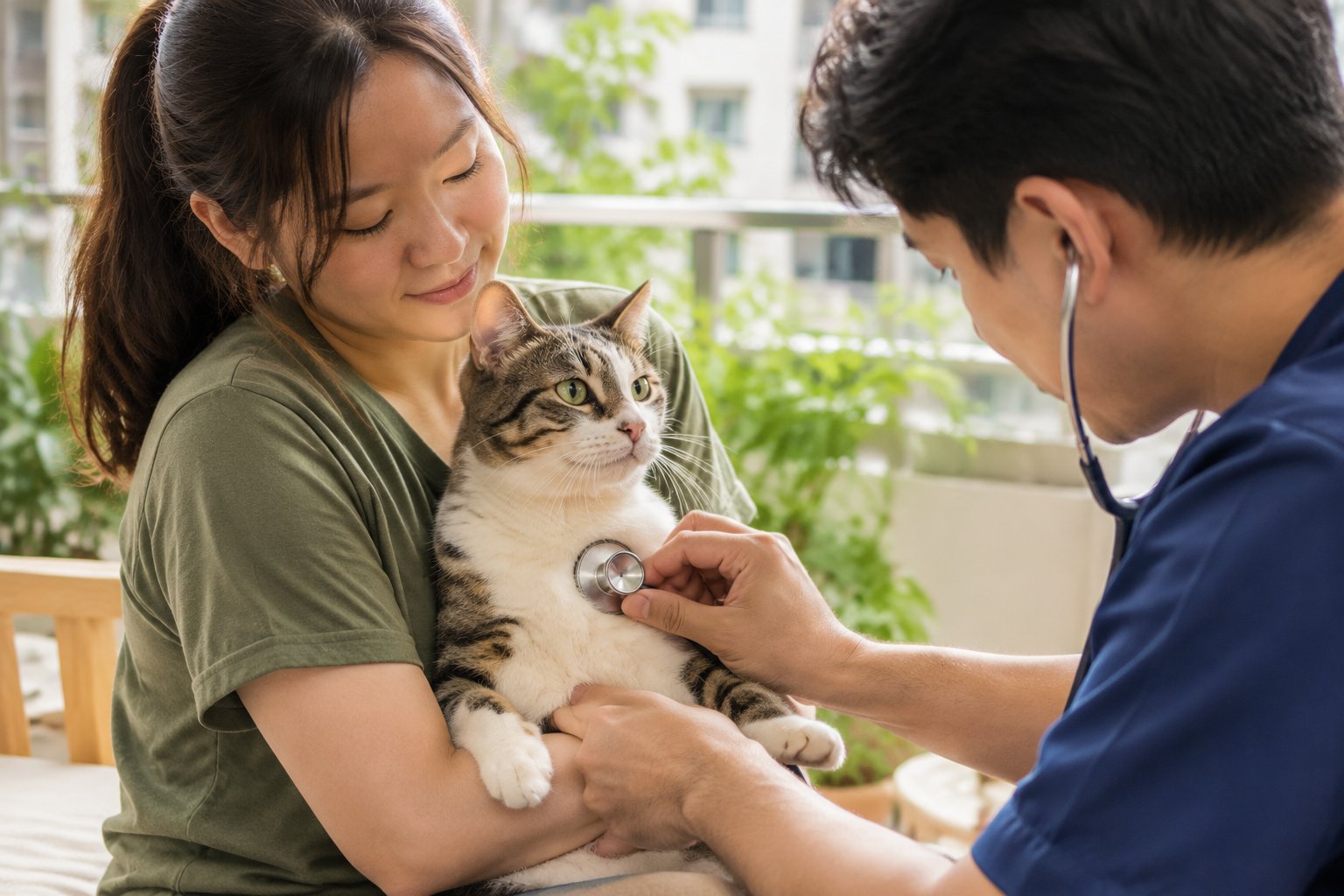
Your vet will start with a thorough history: when the cough started, what it sounds like, and any other signs. They will examine your cat, listening to the heart and lungs. Depending on findings, they may recommend:
- Chest X-rays to look at the lungs and heart
- Blood tests to check for infection or organ function
- Faecal tests for lungworms
- Heartworm testing
- Airway wash (tracheal wash or bronchoalveolar lavage) to collect cells and mucus
- Ultrasound of the heart
These tests help pinpoint the cause and guide treatment.
Treatment and home care
Treatment depends on the cause. Here are general approaches:
- Hairballs: regular grooming, hairball diets, or lubricants.
- Asthma: medications to reduce inflammation and open airways, often given via inhaler with a spacer. Avoid triggers like smoke and dust.
- Infections: antibiotics or antivirals as prescribed.
- Heartworm: specific treatment protocols; prevention is key.
- Foreign bodies: removal under anaesthesia.
Home care tips:
- Keep your cat indoors to reduce exposure to allergens and parasites.
- Use air purifiers and avoid aerosol sprays, incense, and cigarette smoke.
- Maintain a healthy weight.
- Groom regularly to reduce hairballs.
- Ensure fresh water and a balanced diet.
Prevention
- Vaccinate against common respiratory infections.
- Use monthly parasite prevention as advised by your vet, including heartworm prevention.
- Reduce stress in multi-cat households.
- Avoid smoking indoors.
- Keep windows screened to prevent escapes and exposure.
Comparison table: common causes of coughing in cats
| Cause | Typical signs | Onset | Contagious? | Prevention |
|---|---|---|---|---|
| Hairballs | Dry hack, ends with hairball | Occasional | No | Grooming, diet |
| Asthma | Wheezing, dry cough, laboured breathing | Sudden or chronic | No | Avoid triggers |
| Respiratory infection | Sneezing, nasal discharge, fever | Sudden | Yes | Vaccination |
| Heartworm | Cough, lethargy, weight loss | Gradual | No (vector-borne) | Mosquito control, prevention |
| Lungworm | Cough, poor growth | Gradual | No | Parasite control |
| Foreign body | Sudden severe cough, gagging | Sudden | No | Supervise play |
| Tumour | Chronic cough, weight loss | Gradual | No | Regular vet checks |
| Heart disease | Cough, exercise intolerance | Gradual | No | Regular check-ups |
Local considerations for Malaysian cat owners
In Malaysia, many cats live in apartments or landed homes. Here are some local contexts:
- Kuala Lumpur apartment: Indoor cats may be exposed to dust mites and mould due to humidity. Regular cleaning and dehumidifiers can help.
- Penang rainy season: Increased humidity can worsen asthma signs. Keep your cat warm and dry.
- Johor terrace house: Cats with outdoor access may encounter mosquitoes (heartworm) and lungworm. Use preventives.
Frequently asked questions
What does a cat cough sound like?
A cat cough is a sudden, forceful expulsion of air, often sounding like a dry hack or a wet, gurgling noise. It may end with a gag or swallow. It is different from a sneeze, which is directed through the nose.
How can I tell if my cat is coughing or sneezing?
Coughing involves the mouth opening and abdominal effort, often with a honking sound. Sneezing is a quick burst through the nose, usually with nasal discharge. Watch for head shaking and pawing at the nose with sneezes.
Is coughing in cats always serious?
Not always. An occasional cough from a hairball is common. But frequent or persistent coughing can indicate asthma, infection, or heart disease. Have your vet check any cough lasting more than a few days.
Can I give my cat human cough medicine?
Never give human cough medicine to cats without veterinary advice. Many human medications are toxic to cats. Only use products prescribed by your vet for your cat's specific condition.
What should I do if my cat is coughing and sneezing?
If your cat has both coughing and sneezing, it may have a respiratory infection. Keep your cat warm, ensure it eats and drinks, and see a vet promptly, especially if there is discharge or fever.
How do vets diagnose the cause of a cat cough?
Vets use history, physical exam, and tests like X-rays, blood work, and airway washes. They may also check for heartworm and lungworms. Accurate diagnosis guides treatment.
When to see a vet (summary)
Coughing can be a sign of serious illness. Seek veterinary care if your cat has difficulty breathing, a persistent cough, or other concerning signs. Early diagnosis improves outcomes.
This article is for informational purposes only and does not replace veterinary advice. Always consult a licensed veterinarian for diagnosis and treatment of your cat's condition.
Related reading
- Coughing Prevention for Cats: A Practical Guide for Malaysian Owners
- Signs of Sneezing in Cats in Malaysia: What It Means and When to Worry
- Anemia in Cats: Causes, Signs and Care (Malaysia Guide)
- Anemia in Cats in Malaysia: Signs, Causes, and What to Do
- Anemia Prevention for Cats: A Practical Guide for Malaysian Owners
- Arthritis in Cats in Malaysia: Signs, Diagnosis and Home Care
- Bad Breath in Cats in Malaysia: Causes, Home Checks and When to Worry
- Bad Breath Prevention for Cats: A Practical Guide for Malaysian Owners
- Blood Test for Cats in Malaysia: What It Checks, Costs and When You Need One
- Blood Test for Cats: What to Expect (Malaysian Owner's Guide)
- Breathing Difficulty Prevention for Cats: A Practical Malaysian Guide

