
Quick answer
A urinary blockage in cats is a life-threatening emergency. The urethra (the tube that carries urine out of the body) becomes obstructed, often by crystals, stones, or a plug of inflammatory material. Affected cats strain to urinate, cry in the litter box, and may produce little or no urine. Without treatment, a blocked cat can die within 24–48 hours. If you suspect a blockage, seek veterinary care immediately.
What is urinary blockage in cats?
Urinary blockage, also called urethral obstruction, occurs when the flow of urine from the bladder to the outside is blocked. This is different from cystitis (inflammation of the bladder) or urinary tract infections, although these can contribute to blockage. The most common cause in cats is the formation of a urethral plug made of mucus, crystals, and inflammatory cells. Bladder stones can also lodge in the urethra.
Male cats are at higher risk because their urethra is longer and narrower, making it easier to obstruct. Neutered males may be more prone, but any cat can be affected. The condition is part of a broader set of problems known as feline lower urinary tract disease (FLUTD).
When urine cannot leave the bladder, it builds up and causes severe pain. The bladder can become distended and, if untreated, may rupture. More immediately, waste products normally removed in urine (such as potassium and creatinine) accumulate in the blood, leading to electrolyte imbalances, heart arrhythmias, and death.
Recognising the signs: what to look for
Early recognition saves lives. Watch for these signs, especially in male cats:
- Frequent trips to the litter box with little or no urine produced.
- Straining to urinate – your cat may squat for long periods.
- Crying or vocalising while urinating or in the litter box.
- Licking the genital area excessively.
- Blood in the urine (sometimes visible as pinkish urine).
- Urinating outside the litter box, often in sinks, bathtubs, or on cool floors.
- Vomiting, lethargy, loss of appetite – these are signs of advanced toxicity.
- A hard, painful abdomen – the bladder may feel like a firm ball.
If your cat is showing any of these signs, especially if no urine is produced, treat it as an emergency. Do not wait to see if it improves.
Causes and risk factors
Several factors contribute to urinary blockage:
- Crystals and stones: Struvite and calcium oxalate crystals can irritate the bladder and form plugs. Diet plays a role.
- Urethral plugs: A mix of proteins, cells, and crystals that physically block the urethra.
- Stress: Stress can alter urine pH and increase inflammation. Changes in routine, new pets, or moving house can trigger FLUTD.
- Inadequate water intake: Cats evolved to get water from prey; many don't drink enough, leading to concentrated urine.
- Obesity and inactivity: Overweight cats are at higher risk.
- Dry food only: While not a direct cause, dry-only diets can contribute to low water intake.
- Age and sex: Middle-aged, neutered male cats are most commonly affected.
- Previous urinary issues: Cats with a history of FLUTD are more likely to block again.
Emergency treatment: what happens at the vet
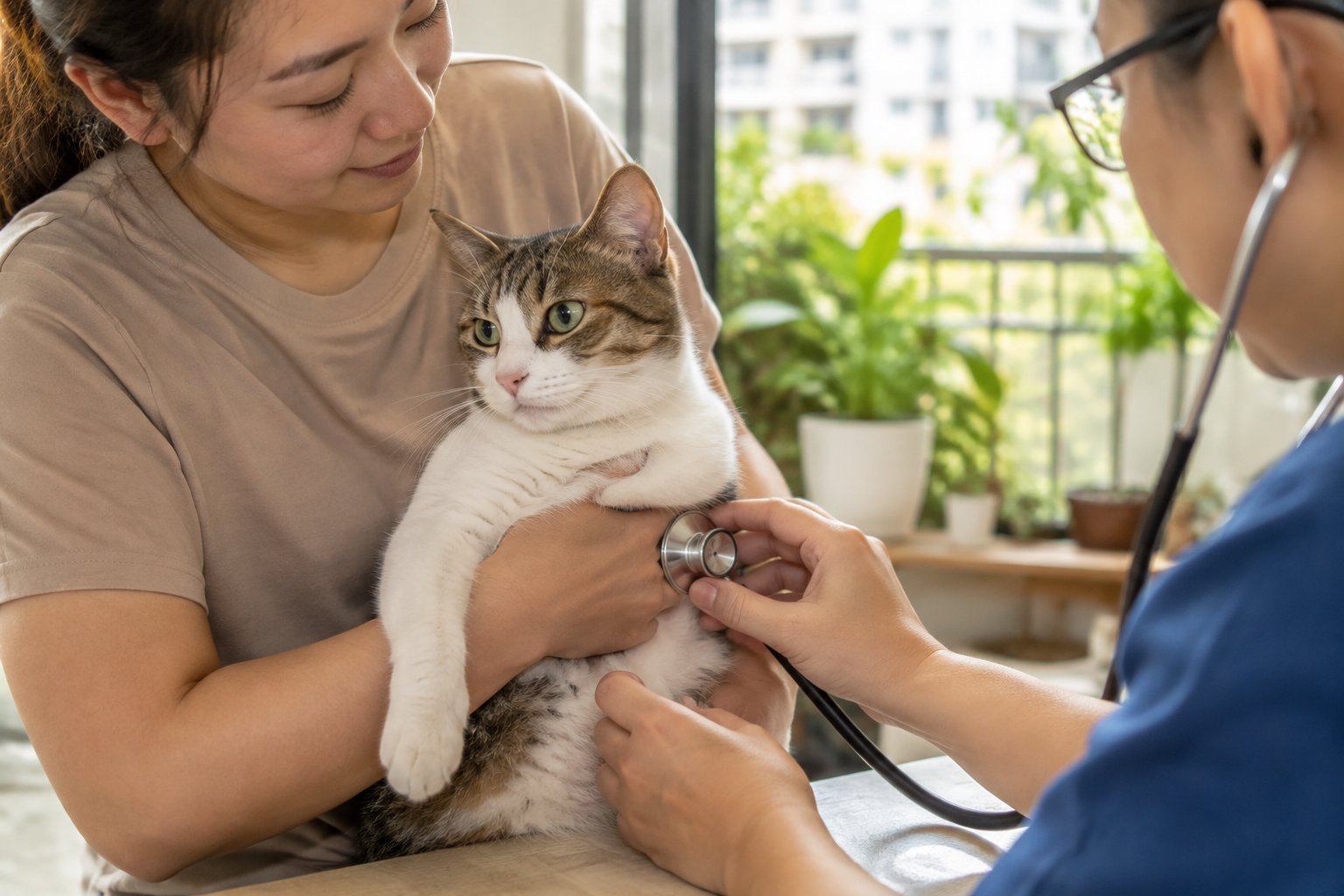
When you bring a blocked cat to the vet, they will assess the severity. The vet will feel the abdomen for a distended bladder, check for dehydration, and may run blood tests to check kidney values and electrolytes. Treatment typically involves:
- Stabilisation: Intravenous fluids to correct dehydration and electrolyte imbalances. Pain relief and anti-nausea medication.
- Urethral catheterisation: A sterile catheter is passed into the urethra to relieve the obstruction and flush out plugs. This is often done under sedation or general anaesthesia.
- Bladder flushing: The bladder may be flushed to remove crystals and debris.
- Hospitalisation: The cat is usually kept on fluids and monitored for 24–48 hours. Urine output is measured.
- Monitoring for re-blockage: Some cats re-block after the catheter is removed, so close observation is needed.
In severe cases, surgery may be required. If the blockage cannot be relieved or recurs frequently, a procedure called perineal urethrostomy (PU) may be recommended. This surgery widens the urethral opening to reduce the chance of future blockages, but it is not a cure-all and has risks.
Cost and what to expect in Malaysia
Veterinary costs for treating a urinary blockage vary widely depending on the clinic, the severity of the case, and the length of hospitalisation. In Malaysia, emergency care, catheterisation, fluids, and hospitalisation can be a significant expense. There is no fixed price; costs depend on the individual clinic and the cat's needs. It is wise to ask your vet for an estimate upfront and to consider pet insurance if available. Do not delay treatment because of cost concerns – discuss payment options with your veterinarian.
Prevention: reducing the risk
Prevention is especially important for cats with a history of urinary problems. Here are practical steps:
Increase water intake
- Feed wet food – it contains up to 80% water. If your cat eats dry food, gradually transition to wet or mix water into dry food.
- Provide fresh water in multiple locations. Some cats prefer running water; a pet fountain can help.
- Add water to food – extra water in wet food or broth (without onions or garlic) increases intake.
Manage stress
- Keep a consistent routine.
- Provide hiding spots and vertical space.
- Use pheromone diffusers if recommended by your vet.
- Keep litter boxes clean and in quiet places.
Litter box hygiene
- Scoop at least once daily; wash boxes regularly.
- Provide one box per cat plus one extra.
- Avoid scented litter if your cat is sensitive.
Weight and exercise
- Maintain a healthy weight through portion control and play.
- Encourage activity with toys and interactive play.
Veterinary check-ups
- Regular check-ups, especially for cats with a history of FLUTD.
- Follow your vet's dietary recommendations; prescription urinary diets may be advised.
Living with a cat at risk in Malaysia
Malaysia's climate and housing can influence urinary health. Here are some local considerations:
- Apartment living in Kuala Lumpur: Cats in apartments may have limited space and fewer water sources. Place water bowls in several rooms and consider a fountain. Keep litter boxes away from noisy areas. Stress from neighbours, renovations, or limited territory can contribute to FLUTD.
- Terrace house in Johor: Outdoor access can expose cats to stress from other cats. Ensure your cat has safe indoor retreats and multiple litter boxes. During rainy seasons, cats may drink less if water bowls are outdoors; keep fresh water indoors.
- Penang rainy season: Humidity and rain can affect water intake and litter box hygiene. Ensure dry, clean litter and fresh water. Watch for signs of straining, especially in male cats.
Comparison table: normal urination vs. blockage
| Feature | Normal urination | Possible blockage |
|---|---|---|
| Frequency | 2–4 times daily | Frequent trips, little urine |
| Straining | None or minimal | Prolonged straining |
| Vocalisation | Quiet | Crying or yowling |
| Urine amount | Normal stream | Drops or none |
| Behaviour | Relaxed | Restless, hiding, licking |
| Appetite | Normal | Reduced or absent |
| Abdomen | Soft | Firm, painful |
When to see a vet
Seek emergency veterinary care immediately if your cat:
- Is straining to urinate with little or no urine produced.
- Cries out while urinating.
- Has a hard, distended abdomen.
- Is vomiting, lethargic, or off food.
- Is a male cat showing any urinary signs.
Do not wait. A blocked cat can deteriorate rapidly. Call ahead to ensure the clinic can handle emergencies.
Frequently asked questions
Q: What are the first signs of a urinary blockage in cats? A: Early signs include frequent trips to the litter box, straining to urinate, crying while urinating, licking the genital area, and small or no urine output. Some cats vomit or become lethargic. Any cat, especially male cats, showing these signs needs urgent veterinary attention.
Q: How long can a cat survive with a urinary blockage? A: Without treatment, a complete blockage can be fatal within 24 to 48 hours due to toxin buildup and electrolyte imbalances. Survival depends on how quickly veterinary care is given. Do not wait to see if it resolves on its own.
Q: Are male cats more prone to urinary blockage? A: Yes, male cats are more prone because their urethra is longer and narrower, making it easier for crystals or plugs to obstruct urine flow. Neutered males may also be at higher risk. However, females can also develop blockages, though less commonly.
Q: Can urinary blockage in cats be prevented? A: Prevention focuses on increasing water intake, feeding wet food, reducing stress, keeping litter boxes clean, and maintaining a healthy weight. Regular veterinary check-ups and monitoring for early signs are also important, especially in cats with a history of urinary issues.
Q: What should I do if I suspect my cat is blocked? A: Do not wait. Contact a veterinarian immediately and bring your cat in as an emergency. Do not try to express the bladder or give human medications. Keep your cat calm and transport it safely to the nearest veterinary clinic that handles emergencies.
Q: Is urinary blockage in cats painful? A: Yes, it is very painful. Cats may cry, hide, or become restless. The pain and discomfort increase as the bladder distends. Pain relief is part of veterinary treatment, but the priority is relieving the obstruction.
Vet disclaimer
This article is for general information only and is not a substitute for professional veterinary advice. If you suspect your cat has a urinary blockage, contact a licensed veterinarian immediately. Always follow your vet's guidance for diagnosis and treatment.
Related reading
- Cat Health Guide Malaysia: Symptom Check, Red-Flag Triage & When to See a Vet
- Breathing Difficulty Prevention for Cats: A Practical Malaysian Guide
- Cat Breathing Difficulty Treatment in Malaysia: What to Do and What to Expect
- Cat Hair Loss Treatment in Malaysia: A Practical Owner's Guide
- Cat Heatstroke Treatment in Malaysia: First Aid, Vet Care & Prevention
- Cat Ringworm Treatment in Malaysia: A Practical Owner's Guide
- Cat Skin Fungus Treatment in Malaysia: A Practical Owner's Guide
- Cat Swollen Belly Treatment in Malaysia: Causes, Home Care and When to See a Vet
- Constipation in Cats: Causes, Care and When to See a Vet in Malaysia
- Dehydration in Cats in Malaysia: Signs, Causes and How to Help

