
Quick answer
Most sneezing in cats is caused by mild irritation or a common viral upper respiratory infection and improves with simple home care. See a vet if sneezing persists beyond a few days, or if it comes with nasal or eye discharge, fever, loss of appetite, or difficulty breathing.
Why cats sneeze
Sneezing is a reflex that clears the nose. It can be triggered by something as simple as dust or as serious as an infection. In Malaysia, where many cats live indoors in apartments and terrace houses, the cause is often environmental or infectious rather than exotic.
Think of sneezing as a symptom, not a diagnosis. Your job is to notice the pattern: is it occasional or constant? Is there discharge? Is your cat otherwise bright and eating? These clues help you decide whether to watch at home or book a vet visit.
Common causes of sneezing in cats
1. Environmental irritants
Dust, cigarette smoke, mosquito coil smoke, cooking fumes, perfume, aerosol sprays, and strong cleaning products can all irritate a cat's nose. Cats have a much sharper sense of smell than humans, so a scent that seems mild to you may be overwhelming to them.
In Malaysian homes, common culprits include:
- Mosquito coils and incense burned indoors
- Air fresheners and scented candles
- Dust from ceiling fans and air-conditioner filters
- Haze or smoke during dry spells
- Strong floor cleaners and bleach
If sneezing started after you cleaned, sprayed, or burned something, irritation is likely. Remove the source, ventilate the room, and watch for improvement.
2. Viral upper respiratory infections
Feline herpesvirus (FHV-1) and feline calicivirus (FCV) are the two most common viral causes of sneezing and are part of the feline upper respiratory disease complex. These viruses spread easily between cats through sneezing, saliva, and shared bowls.
Signs often include:
- Sneezing and nasal discharge
- Runny or crusty eyes
- Conjunctivitis (red, swollen eyes)
- Mouth ulcers (more common with calicivirus)
- Reduced appetite
- Mild fever and lethargy
Many cats recover with supportive care, but some develop chronic problems. Herpesvirus, in particular, can reactivate during stress, leading to repeated sneezing episodes.
3. Bacterial infections
Bacteria such as Bordetella bronchiseptica, Chlamydia felis, and Mycoplasma species can cause or complicate respiratory infections. Bacterial infections often produce thicker, coloured discharge and may need antibiotics prescribed by a vet. Never use leftover antibiotics from another pet or a previous illness.
4. Allergies
Just like people, cats can be allergic to pollen, dust mites, mould, and certain foods. Allergic sneezing is often seasonal or linked to a specific room or bedding. It may come with itchy skin, ear problems, or watery eyes. Allergy management usually involves reducing exposure and, in some cases, medication prescribed by a vet.
5. Foreign objects
A grass seed, blade of grass, small insect, or piece of toy can lodge in the nose. This usually causes sudden, violent sneezing, often from one nostril, sometimes with blood or a bad smell. Do not try to remove it yourself with tweezers or cotton buds; you may push it deeper. See a vet.
6. Nasal polyps and tumours
Nasal polyps are benign growths that can block the nasal passage, causing chronic sneezing, noisy breathing, and discharge. Tumours are less common but more serious, especially in older cats. Any cat with long-standing one-sided nasal signs should be examined.
7. Dental disease
Root infections of the upper teeth can spread into the nasal cavity, causing sneezing and nasal discharge. Cats with bad breath, drooling, or difficulty eating may have dental disease. A dental check is part of a full work-up for chronic sneezing.
8. Other causes
Less common causes include fungal infections, parasites, immune-mediated disease, and trauma. Your vet may recommend tests such as nasal swabs, blood tests, or imaging if the cause is unclear.
Comparison table: what different causes look like
| Cause | Typical signs | Usual approach |
|---|---|---|
| Irritants (dust, smoke, sprays) | Sneezing starts after exposure, no fever, cat eats normally | Remove source, ventilate, monitor |
| Viral infection (herpes, calicivirus) | Sneezing with clear discharge, watery eyes, mild lethargy, possible mouth ulcers | Supportive care, vet visit if worsening |
| Bacterial infection | Thick coloured nasal discharge, fever, poor appetite | Vet exam, possibly antibiotics |
| Allergies | Seasonal or room-specific sneezing, itchy skin or eyes | Reduce exposure, vet-guided medication |
| Foreign object | Sudden violent sneezing, often one nostril, possible blood | Vet removal |
| Nasal polyp or tumour | Chronic one-sided sneezing, noisy breathing, discharge | Vet exam and imaging |
| Dental disease | Bad breath, drooling, difficulty eating, nasal discharge | Dental exam and treatment |
Caring for a sneezing cat at home
If your cat is eating, drinking, and behaving normally, gentle home care is reasonable for a day or two.
Step-by-step home care checklist
- Remove irritants. Stop using air fresheners, scented candles, and indoor mosquito coils near your cat. Clean dusty fans and air-conditioner filters.
- Ventilate. Open windows when safe (use secure screens) and let fresh air circulate.
- Wipe the nose and eyes. Use a clean, damp cloth or cotton pad moistened with warm water. Wipe gently away from the eyes. Do not use human wet wipes with fragrance or alcohol.
- Encourage eating and drinking. A congested cat may lose interest in food because it cannot smell it. Offer warm, strong-smelling wet food. Ensure fresh water is available.
- Use steam. Run a hot shower and let your cat sit in the steamy bathroom (supervised) for 10 to 15 minutes. This can loosen nasal mucus. Do not put your cat directly in the water.
- Keep your cat warm and rested. Provide a quiet, draft-free resting spot.
- Isolate sick cats. If you have multiple cats, separate the sneezing cat and use separate bowls and litter scoops to reduce spread.
- Wash hands and bedding. Wash your hands after handling a sick cat, and launder bedding in hot water.
- Monitor daily. Note sneezing frequency, discharge colour, appetite, water intake, and energy level. This record helps your vet.
- Do not give human medicine. Never give paracetamol, ibuprofen, antihistamines, or cold remedies without veterinary advice. Many are toxic to cats.
What about supplements?
Some owners ask about lysine for herpesvirus. Evidence is mixed, and it should not replace veterinary care. Ask your vet before starting any supplement.
When to see a vet
See a vet promptly if your cat has any of the following:
- Sneezing that lasts more than a few days or keeps getting worse
- Thick yellow or green nasal discharge
- Blood from the nose
- Difficulty breathing, open-mouth breathing, or noisy breathing
- Loss of appetite or refusal to drink for more than 24 hours
- Fever, marked lethargy, or hiding
- Eye swelling, pus, or inability to open an eye
- Mouth ulcers or drooling
- Sneezing from only one nostril, especially with a bad smell
- A known or suspected foreign object in the nose
- Chronic sneezing in an older cat
- A kitten, pregnant cat, or senior cat with any of these signs
Kittens and senior cats can deteriorate quickly. Do not wait if they stop eating or seem depressed.
How vets investigate sneezing
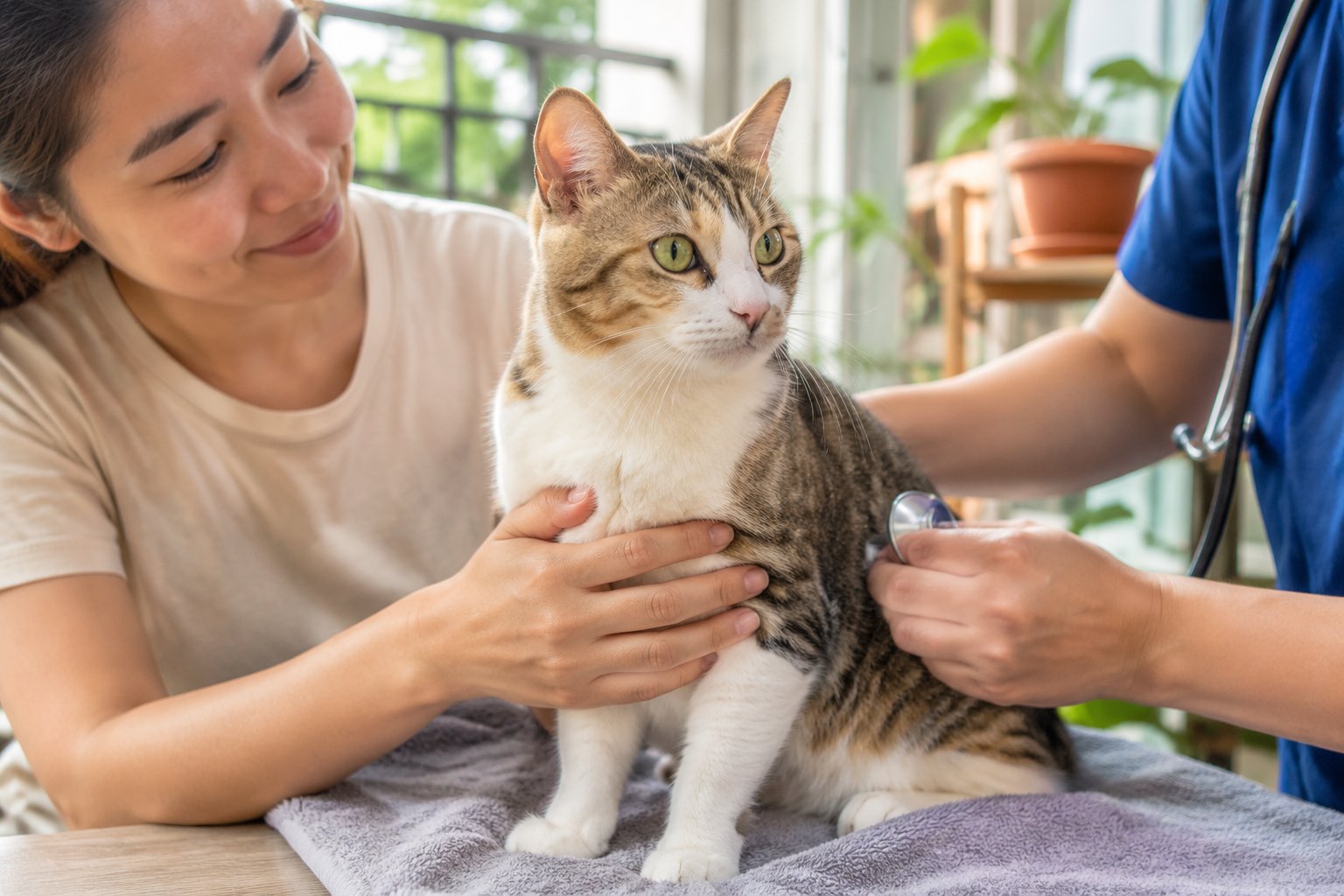
Your vet will start with a history and physical exam, including checking the mouth and eyes. Depending on findings, they may recommend:
- Nasal or eye swabs for infection testing
- Blood tests to check general health
- Dental examination under anaesthesia if dental disease is suspected
- Imaging such as X-rays or endoscopy for chronic or one-sided [signs
Treatment](/articles/skin-fungus-in-cats-malaysia "mylink") depends on the cause. Viral infections are usually managed with supportive care. Bacterial infections may need antibiotics. Foreign objects need removal. Allergies may need environmental changes and medication. Dental disease needs dental treatment.
Preventing sneezing problems
- Keep vaccinations up to date, including feline herpesvirus and calicivirus components
- Reduce dust and strong scents indoors
- Use a good-quality air purifier if haze or dust is a recurring problem
- Isolate new or sick cats until checked by a vet
- Provide a balanced diet and fresh water
- Maintain dental care
- Manage stress, which can trigger herpesvirus reactivation
Local considerations for Malaysian cat owners
Malaysian homes vary widely. A Kuala Lumpur apartment with sealed windows and air-conditioning may trap dust and fragrances, while a Johor terrace house may have more open airflow but also more exposure to outdoor smoke, haze, and insects. During the Penang rainy season, dampness can encourage mould, which may irritate sensitive cats. Adjust your home care to your environment: clean filters regularly in air-conditioned apartments, and check for damp patches and mould in humid months.
If you are unsure about vaccination schedules or travel with pets, refer to the Department of Veterinary Services Malaysia and the Malaysian Veterinary Council for guidance. Local prices for consultations, tests, and medicines vary, so ask your vet for an estimate before treatment.
Key takeaways
- Most sneezing is mild and self-limiting, but it can signal infection or another problem.
- Watch for discharge, appetite loss, breathing difficulty, and one-sided signs.
- Home care focuses on removing irritants, hydration, nutrition, and hygiene.
- Never give human medication to a cat.
- See a vet early for kittens, seniors, or worsening signs.
Vet disclaimer
This article is for general information only and is not a substitute for veterinary advice. Always consult a licensed veterinarian for diagnosis and treatment of your cat's condition.
Related reading
- Cat Breathing Difficulty Treatment in Malaysia: What to Do and What to Expect
- Cat Hair Loss Treatment in Malaysia: A Practical Owner's Guide
- Cat Ringworm Treatment in Malaysia: A Practical Owner's Guide
- Cat Skin Fungus Treatment in Malaysia: A Practical Owner's Guide
- Cat Urinary Blockage Treatment in Malaysia: What to Do, Step by Step
- Dehydration in Cats in Malaysia: Signs, Causes and How to Help

