
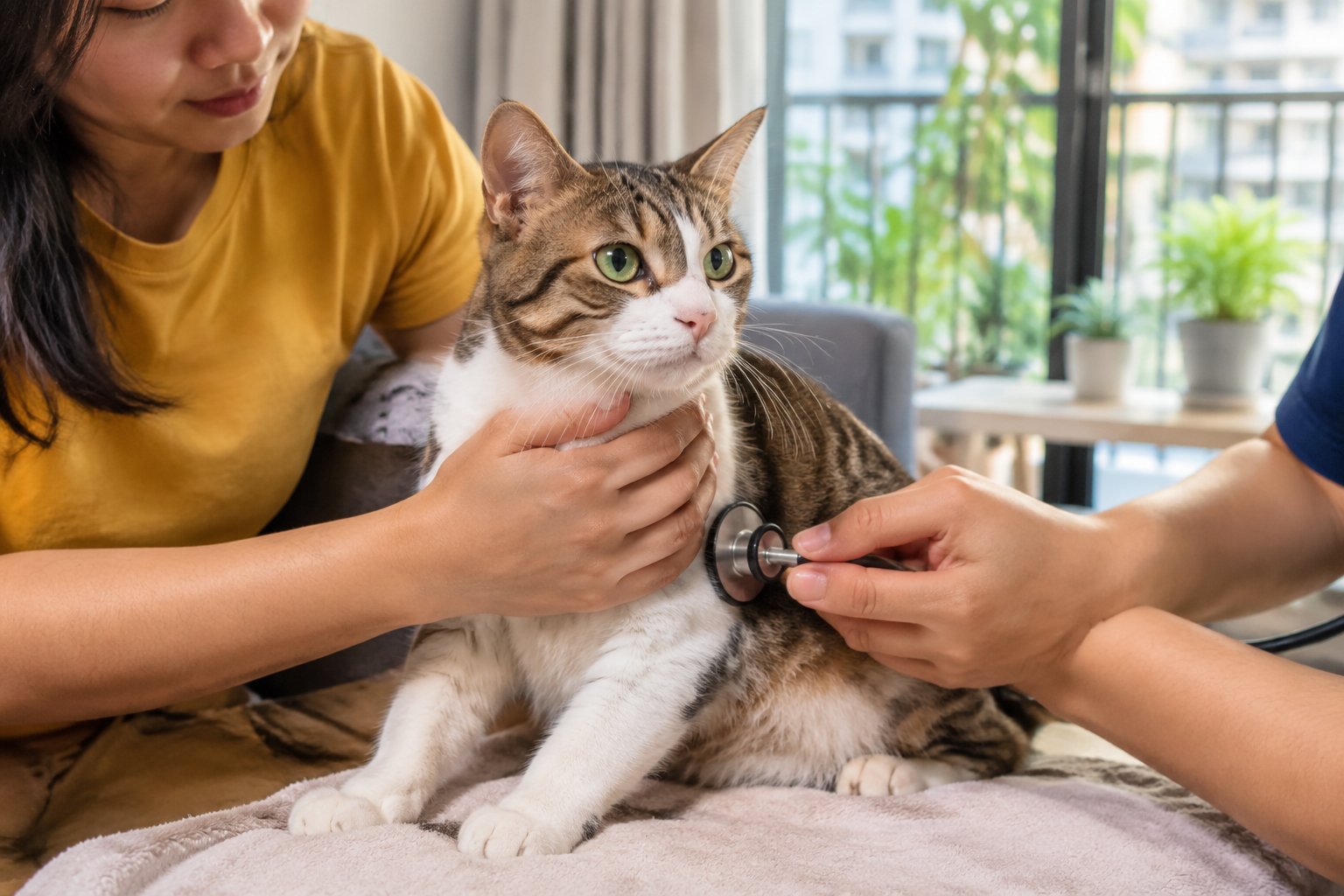
What is urinary blockage in cats?
A urinary blockage, also called urethral obstruction, happens when the tube that carries urine from the bladder to the outside becomes blocked. Urine cannot leave the body. This is not a wait-and-see problem. It is a medical emergency that can become fatal within a day or two.
In Malaysia, many cats live indoors in apartments and terrace houses, and litter box habits are easy to monitor. That is an advantage. The earlier you notice a change, the faster you can act. This guide covers the signs, the risks, what to do, and how to reduce the chance of it happening again.
Why blockage is an emergency
When urine cannot flow, the bladder stretches and pressure builds. Waste products that should be peed out stay in the blood. Potassium levels can rise, which affects the heart. The cat can become weak, vomit, stop eating, and collapse. Without treatment, death can occur. The message is simple: a cat that cannot pee needs a vet now, not tomorrow.
Recognising the signs: what to watch for
Signs can appear quickly. Some cats show mild signs for a day, then worsen suddenly. Watch for any of these:
- Frequent litter box trips with little or no urine. Your cat squats, strains, and nothing comes out, or only a few drops.
- Crying or yowling while urinating. Pain and frustration are common.
- Excessive licking of the genitals. Cats groom the area when it hurts.
- Restlessness and pacing. Your cat may go in and out of the litter box repeatedly.
- Vomiting. This is a sign the problem is becoming serious.
- Lethargy and hiding. A blocked cat often becomes quiet and withdrawn.
- A hard, painful belly. The bladder can feel like a firm ball. Do not press hard; just note it and tell your vet.
- No urine at all for many hours. This is the clearest red flag.
Some cats with partial blockages pass small amounts of urine, sometimes with blood. Do not be reassured by a little urine. A partial blockage can become complete at any time.
Quick comparison: normal vs. blocked
| Behaviour | Normal urination | Possible blockage |
|---|---|---|
| Litter box visits | A few times a day, steady stream | Many visits, little or no urine |
| Posture | Relaxed squat | Straining, hunched, tense |
| Vocalisation | Quiet | Crying or yowling |
| Belly | Soft | Hard, painful |
| Appetite | Normal | Reduced or absent |
| Energy | Normal | Lethargic, hiding |
| Grooming | Normal | Excessive licking of genitals |
If you see several items in the right column, treat it as urgent.
Why male cats are at higher risk
Male cats have a longer, narrower urethra than females. Small plugs of mucus, crystals, or stones can lodge in that narrow tube. Neutered males are commonly affected. Overweight cats, cats that eat dry food only, and cats that drink little water are also at higher risk. Stress and infrequent litter box cleaning can contribute. Any cat can block, but male cats are the classic emergency case.
What causes a blockage?
The blockage is often a plug of mucus, crystals, or small stones. Sometimes it is a bladder stone that moves into the urethra. In some cats, inflammation causes swelling that narrows the tube. The underlying condition is often grouped under FLUTD (feline lower urinary tract disease). Diet, water intake, stress, and genetics all play a part. You do not need to diagnose the cause at home. Your vet will do that.
What to do if you suspect a blockage
- Call your vet immediately. Say your cat may be blocked. Ask if you should come in right away.
- Do not wait to see if it passes. Time matters.
- Do not squeeze the belly. You can cause damage.
- Do not give human painkillers or medicines. Many are toxic to cats.
- Keep your cat calm. Put it in a carrier in a quiet room away from other pets.
- Transport safely. Use a sturdy carrier and a towel. If it is hot, keep the car cool.
- Bring information. Note when you last saw urine, what you observed, and what your cat eats.
If your regular vet is closed, call an emergency clinic. In Malaysia, emergency vet services vary by area, so save a number before you need it. If you are unsure, call and ask.
At the vet: what to expect
Your vet will examine your cat, feel the bladder, and may do tests such as urine analysis, blood tests, and imaging. Treatment usually involves relieving the blockage with a catheter, flushing the urethra, and providing fluids and pain relief. Some cats need to stay for monitoring. The goal is to restore urine flow and correct dehydration and electrolyte imbalances. Do not be surprised if your vet recommends hospitalisation. It is often necessary.
Recovery and prevention at home
After treatment, your cat may need a special diet, more water, and a calm environment. Prevention is not a guarantee, but it lowers risk.
- Increase water intake. Feed wet food, add water to meals if your vet agrees, and provide fresh water in several places. Some cats prefer a running water fountain.
- Choose the right diet. Ask your vet about urinary-friendly diets, especially if your cat has had crystals or a blockage before. Do not change diet suddenly without advice.
- Keep the litter box clean. Scoop daily and wash the box regularly. Provide at least one box per cat plus one extra.
- Reduce stress. Cats in multi-cat homes can be stressed. Provide hiding spots, vertical space, and separate feeding areas.
- Monitor weight. Obesity raises risk. Ask your vet for a healthy weight target.
- Watch the litter box. Early detection is your best tool. Note changes in frequency, volume, and behaviour.
A simple daily checklist
- Did my cat urinate today?
- Was the stream normal, or just drops?
- Did my cat cry or strain?
- Is my cat eating and drinking normally?
- Is the belly soft and comfortable?
If any answer worries you, call your vet.
Living with a cat in a Malaysian home
In a Kuala Lumpur apartment, litter boxes are often in the bathroom or balcony. Keep the box away from noisy areas and make sure your cat can reach it easily. In a Johor terrace house, cats may have more space, but they can still hide signs. Check the box daily. During the rainy season in Penang, cats may drink less or stay indoors more, so watch water intake. Hot weather can also affect appetite and activity. These are general observations, not rules. Every cat is different.
When to see a vet
See a vet immediately if your cat:
- Cannot pass urine, or only passes drops
- Cries or strains in the litter box
- Has a hard, painful belly
- Is vomiting, weak, or hiding
- Has not urinated for many hours
Do not wait for an appointment if your cat is blocked. Call ahead and go. If you are unsure, call your vet and describe the signs. It is better to be safe.
Frequently asked questions
How long can a cat survive with a urinary blockage? Without treatment, a blocked cat can deteriorate within 24 to 48 hours. Toxins build up, the heart rhythm can become abnormal, and death can occur. Treat it as an emergency and seek veterinary care the same day.
What are the first signs of a blocked cat? Early signs include frequent trips to the litter box with little or no urine, straining, crying while urinating, excessive licking of the penis or vulva, and restlessness. As it worsens, vomiting, weakness, and collapse can follow.
Are male cats more prone to urinary blockage? Yes. Male cats have a longer, narrower urethra, so plugs or stones lodge more easily. Neutered males are commonly affected. Any cat can block, but male cats are at higher risk.
Can I treat a blocked cat at home? No. A true blockage cannot be cleared at home. Do not squeeze the belly or give human medicines. Keep the cat calm, remove other pets, and transport it to a vet immediately.
What should I feed my cat to prevent urinary problems? Feed a complete wet or canned diet to increase water intake, provide fresh water daily, and ask your vet about urinary-friendly diets if your cat has a history. Avoid sudden diet changes without veterinary advice.
How can I tell if my cat is just straining or actually blocked? If your cat visits the litter box repeatedly with only drops or no urine, cries, or has a hard belly, assume blockage until a vet proves otherwise. Straining without urine is the key warning sign.
Vet disclaimer
This article is for general information only and is not a substitute for veterinary advice. If you suspect your cat has a urinary blockage, contact a licensed veterinarian immediately. Do not delay care based on what you read here.
Related reading
- Cat Heatstroke Treatment in Malaysia: First Aid, Vet Care & Prevention
- Constipation Prevention for Cats: A Practical Guide for Malaysian Owners
- Excessive Urination in Cats in Malaysia: Causes, When to Worry & What to Do
- Signs of Constipation in Cats in Malaysia: What to Watch For and When to Act
- Pale Gums in Cats: Signs, Causes, and What to Do (Malaysia Guide)
- Urinary Blockage Prevention for Cats: A Practical Guide for Malaysian Owners
- Anemia in Cats: Causes, Signs and Care (Malaysia Guide)

