
Quick answer
Cat bad breath treatment starts with finding the cause. Most cases are dental or gum disease, so a vet check and professional cleaning are often needed. Home care includes brushing, dental diets and water additives. If breath smells of ammonia or fruit, or your cat stops eating, see a vet promptly.
Why cat bad breath is not just a cosmetic problem
Bad breath (halitosis) is one of the most common reasons cat owners in Malaysia ask about dental care. It is easy to dismiss as "just cat breath", but persistent bad odour usually signals an underlying problem. The mouth is a gateway to the rest of the body: bacteria from inflamed gums can enter the bloodstream, and some causes of bad breath, such as kidney disease or diabetes, affect the whole cat.
In Malaysia's warm, humid climate, dental disease can progress quickly. Many local cats are fed a mix of dry and wet food, and some live in apartments where regular vet checks are easy to postpone. Recognising the cause early makes treatment simpler and less costly.
The main causes of bad breath in cats
1. Dental and gum disease (most common)
Plaque is a sticky film of bacteria that forms on teeth within hours. If not removed, it hardens into tartar, which irritates gums and leads to gingivitis. Over time, gums pull away from teeth, forming pockets where bacteria multiply. The result is persistent bad breath, often described as "rotten" or "metallic".
Signs include:
- Yellow-brown tartar on teeth, especially back molars
- Red or swollen gum line
- Drooling or dropping food while eating
- Chewing on one side or reluctance to eat hard food
- Pawing at the mouth
2. Tooth resorption
Tooth resorption is a painful condition where the tooth structure is broken down by the cat's own cells. It is common in middle-aged and older cats. The tooth may look pink or have a defect at the gum line. Bad breath can occur if the tooth becomes infected or fractured.
3. Oral infections and abscesses
A broken tooth or a foreign object (such as a fish bone or splinter) can lead to infection. An abscess may cause facial swelling, pain and foul-smelling discharge. This needs veterinary treatment, often antibiotics and dental extraction.
4. Kidney disease
Cats with kidney disease may develop breath that smells of ammonia or urine. This is because waste products build up in the blood. Kidney disease is more common in older cats. Other signs include increased drinking, increased urination, weight loss and poor appetite.
5. Diabetes
Uncontrolled diabetes can cause breath that smells fruity or sweet, due to ketones. This is a serious sign and requires urgent veterinary attention. Diabetic cats may also drink and urinate more and lose weight despite a good appetite.
6. Liver disease
Liver disease can cause a musty or sweetish odour, sometimes described as "liver breath". It is less common than dental disease but should be considered if other signs such as jaundice (yellow gums or eyes), vomiting or lethargy are present.
7. Gastrointestinal problems
Occasionally, bad breath is linked to stomach or intestinal disease, especially if there is vomiting, diarrhoea or poor appetite. However, true "stomach breath" is less common than mouth-related causes.
8. Diet and eating habits
Some cats develop stronger breath after eating strong-smelling wet food or fish. This is usually temporary. If your cat scavenges or eats inappropriate items, foreign material can lodge in the mouth.
9. Respiratory or sinus disease
Nasal discharge, sneezing and mouth breathing can contribute to bad odour. Cats with chronic nasal disease may have breath that smells unpleasant due to bacterial growth.
How to check your cat's mouth at home
You can do a simple mouth check at home, but never force your cat's mouth open if they resist. Wrap your cat gently in a towel and lift the lip to look at the teeth and gums. Check for:
- Red, swollen or bleeding gums
- Brown tartar on teeth
- Broken or discoloured teeth
- Sores or lumps
- Unusual drooling
If you see any of these, book a vet visit. Do not try to scrape tartar off at home; you can damage the enamel or cause pain.
What to expect at the vet
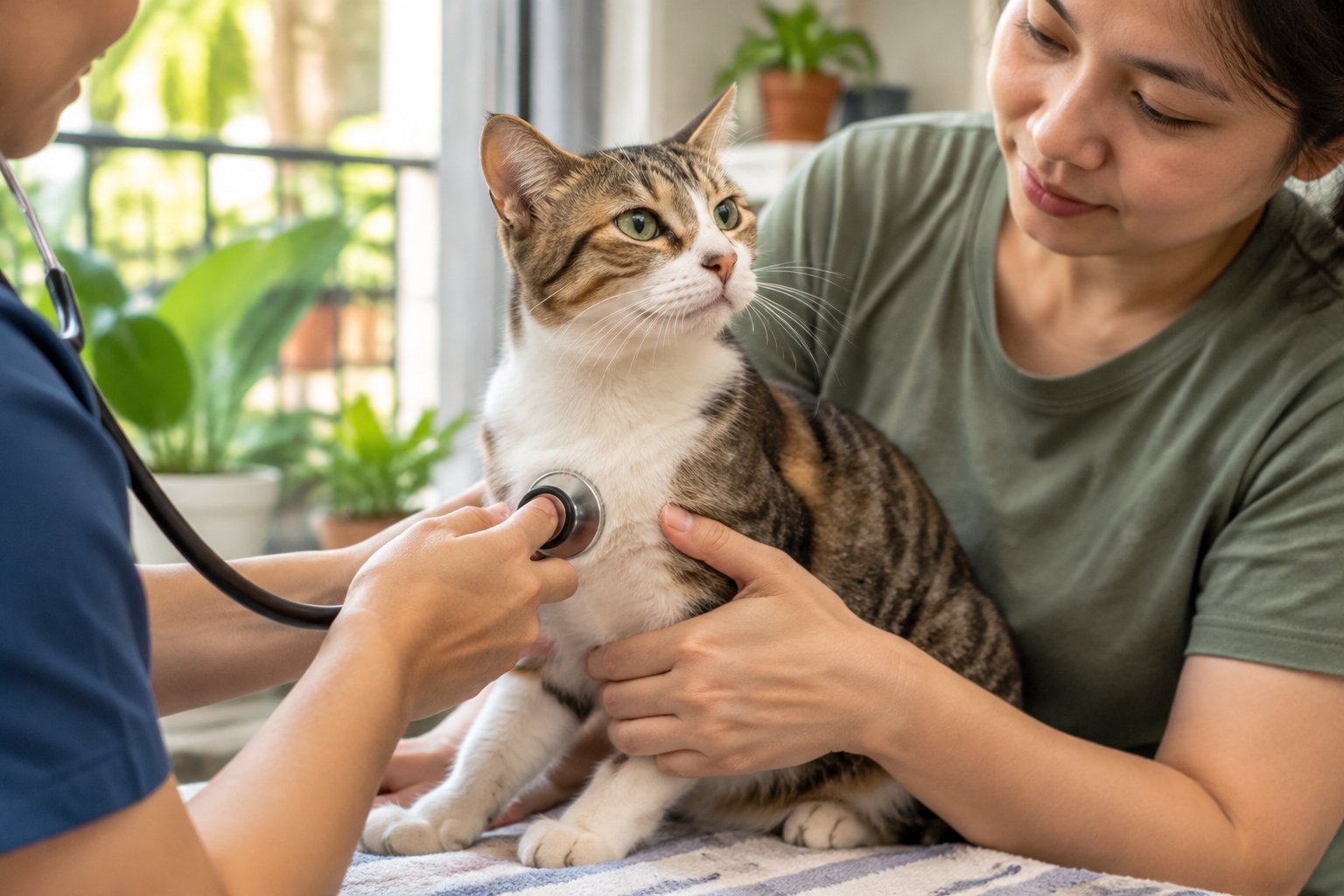
A vet will first take a history: how long the bad breath has been present, what your cat eats, whether there are other signs such as weight loss or increased drinking. They will examine the mouth, often under light sedation if the cat is painful or stressed. Blood and urine tests may be recommended, especially for older cats, to rule out kidney disease, diabetes or liver disease.
Dental cleaning under general anaesthesia is the standard treatment for tartar and gum disease. The vet will scale and polish the teeth, and may take dental X-rays to check for resorption or root disease. Extractions may be needed for severely damaged teeth.
In Malaysia, costs for dental cleaning vary widely depending on the clinic, the cat's size and whether extractions or X-rays are needed. Ask your vet for an estimate before the procedure. Do not convert prices from other countries; local fees differ.
Home care for cat bad breath
Home care is most effective when combined with professional treatment. It will not remove existing tartar, but it slows down plaque formation.
Brushing
Brushing is the gold standard. Use a soft pet toothbrush or a finger brush and enzymatic pet toothpaste. Human toothpaste is not safe for cats because it may contain fluoride, xylitol or detergents. Start slowly: let your cat lick the toothpaste, then brush one or two teeth, and build up over weeks. Aim for daily brushing; three to four times a week is a reasonable minimum.
Dental diets and chews
Some commercial diets are designed with a kibble size and texture that mechanically cleans teeth. Look for products with a dental claim. Dental chews can help, but choose ones appropriate for your cat's size and chew style. Avoid hard objects such as bones, antlers or hooves, which can fracture teeth.
Water additives
Pet-safe water additives are available in Malaysia. They can help reduce bacteria in the mouth, but their effect is modest. Never use human mouthwash.
Toys and enrichment
Some cats enjoy chewing on rubber dental toys. These can help remove plaque, but supervise your cat to prevent swallowing.
Diet and hydration
Encourage water intake, especially if your cat eats mainly dry food. Wet food can help with hydration, but it does not clean teeth. Some cats benefit from a mix of textures.
Comparison table: home care options
| Method | What it does | Effectiveness | Practical tips |
|---|---|---|---|
| Daily brushing | Removes plaque mechanically | High if done consistently | Use pet toothpaste; start slowly |
| Dental diet | Kibble texture scrubs teeth | Moderate | Choose a product with a dental claim |
| Dental chews | Chewing action reduces plaque | Moderate | Supervise; avoid hard bones |
| Water additives | Reduces oral bacteria | Low to moderate | Use pet-safe products only |
| Dental toys | Chewing action | Low to moderate | Choose appropriate size |
| Professional cleaning | Removes tartar and treats gum disease | High | Requires anaesthesia; vet procedure |
Preventing bad breath in Malaysian homes
Malaysia's climate and lifestyle can affect dental health. Here are practical tips:
- Kuala Lumpur apartment: Keep a small brushing kit near the bathroom and brush your cat's teeth after your own evening routine. Apartment cats may have less access to outdoor chewing opportunities, so dental toys and daily brushing matter more.
- Johor terrace house: If your cat has access to a garden or car porch, check for scavenging. Fish bones, chicken bones and rubbish can lodge in the mouth or cause gut problems. Secure bins and avoid feeding bones.
- Penang rainy season: Humid weather can make dental chews and treats go stale quickly. Store them in airtight containers and check for mould.
Regular vet check-ups, ideally every six to twelve months for older cats, help catch dental disease early. Ask your vet to check the mouth at every visit.
When to see a vet
See a vet promptly if your cat has:
- Bad breath that persists despite home care
- Drooling, pawing at the mouth or difficulty eating
- Facial swelling or a lump in the mouth
- Refusal to eat for more than 24 hours
- Weight loss, increased drinking or increased urination
- Vomiting, diarrhoea or lethargy
- Breath that smells of ammonia, fruit or liver
- Bleeding from the mouth
These signs can indicate serious conditions, including kidney disease, diabetes or severe dental infection. Do not wait for the next routine visit.
What not to do
- Do not use human toothpaste or mouthwash.
- Do not give human painkillers such as paracetamol or ibuprofen; they are toxic to cats.
- Do not try to remove tartar with a metal scraper.
- Do not rely on treats alone to treat existing dental disease.
- Do not ignore bad breath in an older cat; it may be a sign of systemic illness.
Frequently asked questions
What is the most common cause of bad breath in cats? Periodontal (gum) disease and tooth decay are the most common causes. Plaque and tartar build up, gums become inflamed, and bacteria produce foul odours. A vet exam can confirm whether dental disease is the cause.
Can I treat my cat's bad breath at home? You can reduce plaque with daily brushing using pet-safe toothpaste, dental diets and chews. However, home care cannot remove existing tartar or treat infected gums. A vet check is needed if the smell persists.
Is bad breath in cats ever an emergency? Yes, if it comes with drooling, pawing at the mouth, refusal to eat, facial swelling, lethargy or breathing difficulty. These signs can indicate severe dental infection or other serious illness and need prompt veterinary care.
What does ammonia-smelling breath mean in a cat? Ammonia or urine-like breath can be a sign of kidney disease. It is not a dental problem and requires veterinary blood and urine tests. Do not try to mask it with treats or mouthwash.
How often should I brush my cat's teeth? Ideally daily. If daily is not possible, aim for at least three to four times a week. Use a soft pet toothbrush and enzymatic pet toothpaste. Never use human toothpaste, which can be toxic to cats.
Do dental treats really help with cat bad breath? Some dental treats and diets have a proven mechanical cleaning effect, but they are not a substitute for veterinary cleaning. Choose products with a recognised dental claim and ask your vet which suits your cat.
Vet disclaimer
This article is for general information only and is not a substitute for professional veterinary advice. Always consult a licensed veterinarian for diagnosis and treatment of your cat's health condition.

