
The short answer: home care supports, it does not cure
Anemia in cats means the blood cannot carry enough oxygen. It is not a disease on its own; it is a signal that something else is wrong, such as fleas and other parasites, blood loss, kidney disease, infection, immune problems or cancer. Because of that, there is no safe home remedy that "treats anemia" directly. What you can do at home is nurse the cat carefully, protect it from stress and further blood loss, feed it well, and get it to a vet for diagnosis and treatment.
This guide is written for Malaysian cat owners who want to know what is realistic at home, what is dangerous, and when to stop trying at home and go to a clinic. It does not replace a veterinary examination.
What anemia looks like in a Malaysian home setting
Owners often notice behaviour before they notice colour. A cat that used to greet you at the door may now stay under the bed. A cat that jumped onto the kitchen counter may start missing the jump. In a warm, humid climate, it is easy to blame the heat for lethargy, which is why anemia can be missed for days.
Common signs include:
- Pale, grey or white gums, inner eyelids or ear flaps
- Weakness, wobbliness or reluctance to climb stairs
- Fast breathing or panting after small effort
- Reduced appetite and weight loss
- Sleeping more and hiding
- A fast heart rate you can feel when resting a hand on the chest
- In severe cases, collapse or cold extremities
Some causes produce other clues. Yellow gums or skin can point to red blood cell destruction. Black, tarry stools can suggest bleeding in the gut. A swollen belly or weight loss can point to other diseases. Flea dirt in the coat is a very common finding in Malaysian homes with outdoor or semi-outdoor cats.
How to check gums safely
Do this in daylight, not under warm indoor lighting, which can make gums look pinker than they are. Gently lift the upper lip. Look at the gum above the big canine tooth. Press the gum with a clean finger until it blanches, then release. In a healthy cat, colour returns in about one to two seconds. If it stays pale, or the gum looks white, grey or yellow, contact a vet.
Do not open the mouth forcefully. A weak cat may resist, and stress makes anemia worse. If your cat will not allow a check, stop and let the vet do it.
Step 1: Reduce stress and keep the cat warm and quiet
An anemic cat has less oxygen-carrying capacity, so its heart and lungs work harder. Stress, rough handling, visitors, loud noises and long car trips all increase oxygen demand. At home:
- Set up a quiet recovery room away from other pets and children.
- Provide a soft bed off the floor, away from draughts from air-conditioning.
- Keep the room at a comfortable temperature; avoid cold air blowing directly on the cat.
- Handle gently and briefly. Let the cat come to you.
- Keep litter, food and water close by so the cat does not have to walk far.
- Use a low-sided litter tray so a weak cat can step in easily.
In a Kuala Lumpur apartment, a small bedroom or a quiet corner away from the balcony door often works better than a busy living room. In a Johor terrace house with several cats, a spare room with the door closed prevents competition at the food bowl and reduces stress.
Step 2: Feed a complete, appropriate diet
Nutrition matters, but the right diet depends on the cause. Anemic cats often need more high-quality protein and calories to rebuild red blood cells, but cats with kidney disease may need controlled protein. Do not guess.
General safe principles:
- Offer a complete and balanced commercial cat food that suits your vet's advice.
- Warm wet food slightly to improve aroma and encourage eating.
- Offer small meals more often rather than one large bowl.
- Make sure fresh water is always available; dehydration worsens weakness.
- Do not feed raw meat, raw liver or raw eggs as a "blood-building" remedy. Raw meat carries bacteria and parasite risks, and raw liver can cause vitamin A toxicity.
- Do not add human iron tonics, multivitamins or herbal preparations unless your vet prescribes them.
If your cat will not eat for more than a day, that is a veterinary issue, not a home problem to solve with treats.
A simple home feeding checklist
| Check | Why it matters | What to do |
|---|---|---|
| Is the cat eating at least some food daily? | Appetite loss worsens weakness | Offer small warm meals; call vet if no intake for 24 hours |
| Is water intake normal? | Dehydration worsens circulation | Provide fresh water; ask vet about hydration support |
| Is the food complete? | Home-made diets are often unbalanced | Use vet-approved complete food |
| Are other pets stealing food? | The anemic cat may eat too little | Feed separately, supervise meals |
| Any vomiting or diarrhoea? | Can signal the cause or worsen dehydration | Report to vet promptly |
Step 3: Parasite control, but do it correctly
Fleas, ticks and some internal parasites can cause or worsen anemia. In Malaysia's warm climate, fleas can survive year-round, so parasite control is a genuine part of home care. However, never use a dog product on a cat, and never use a product not labelled for cats. Some dog flea treatments are toxic to cats. Ask a vet or a reputable pet retailer for a cat-safe product and follow the weight-based dose exactly.
Do not use home remedies such as garlic, onion, citrus oil or essential oils to repel fleas. Garlic and onion damage red blood cells and can make anemia worse. Essential oils can be toxic to cats.
Step 4: Hygiene and safety at home
An anemic cat is weaker and may be less careful. Simple changes reduce risk:
- Keep the cat indoors, away from roads and other cats.
- Remove hazards such as open windows without screens, dangling cables and tall furniture the cat may fall from.
- Clean litter trays daily and wash bowls regularly.
- Wash bedding in hot water if fleas are suspected.
- Keep human medicines, iron tablets and cleaning chemicals locked away.
- Do not let the cat lick surfaces cleaned with strong chemicals.
Step 5: Track progress with simple notes
You cannot measure red blood cells at home, but you can record what you see. Keep a daily note of appetite, water intake, gum colour, breathing rate at rest, activity and litter box output. This helps the vet judge whether treatment is working. A simple notebook or phone note is enough.
What not to do at home
Some well-meaning home treatments are actively dangerous:
- Human iron tablets or iron syrups: can cause vomiting, gut damage and poisoning in cats.
- Human painkillers such as paracetamol or ibuprofen: highly toxic to cats.
- Raw liver or raw meat "to build blood": risk of bacteria, parasites and vitamin A toxicity.
- Garlic, onion or herbal tonics: can destroy red blood cells.
- Leftover antibiotics or dewormers from another pet: wrong drug, wrong dose, wrong duration.
- Forcing food or water into a weak cat: risk of choking and aspiration.
- Delaying a vet visit because the cat "seems a bit better": anemia can worsen quickly.
When home care is not enough: red flags
Go to a vet promptly, or seek emergency care, if you see any of the following:
- White or grey gums
- Laboured or fast breathing at rest
- Collapse, seizures or extreme weakness
- Yellow gums or skin
- Black, tarry stools or visible blood in stool or urine
- No eating for 24 hours
- Vomiting or diarrhoea that will not stop
- A swollen abdomen
- Sudden worsening of gum colour
When to see a vet
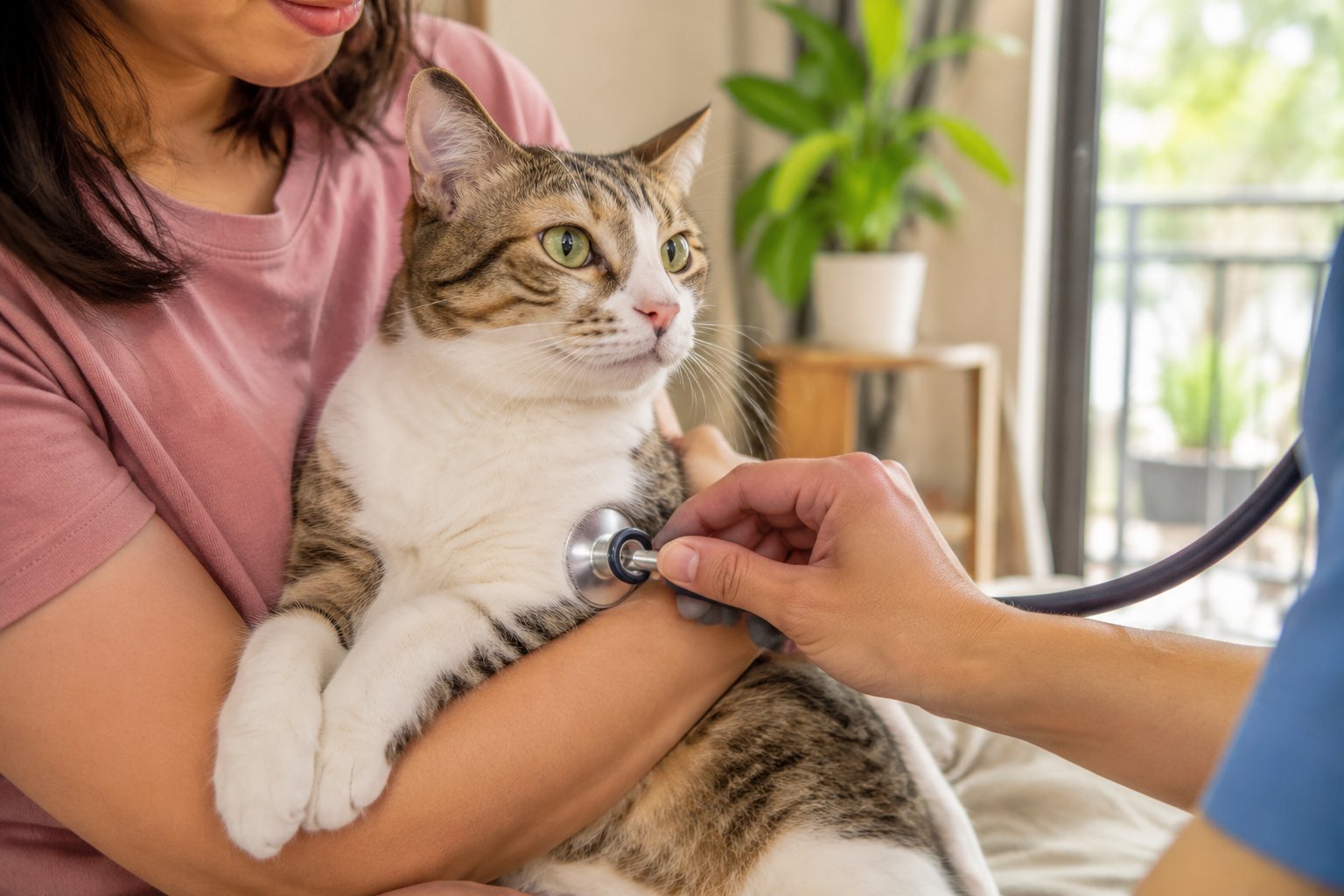
Any cat with suspected anemia should see a vet. A vet can examine gum colour, listen to the heart and lungs, check for fleas and jaundice, and run blood tests to find the cause. Treatment may include parasite control, dietary changes, iron or vitamin supplementation if prescribed, treatment of infection, management of kidney disease, or, in severe cases, a blood transfusion. Home care only works as a support alongside that plan. If you are unsure, call the clinic and describe the gum colour and breathing rate; they can advise whether to come in immediately.
A realistic home-care routine for a Malaysian household
A practical daily routine might look like this:
- Morning: check gums in daylight, note breathing rate at rest, offer a small warm meal.
- Midday: check water bowl, clean litter tray, keep the cat in a quiet room during the hottest part of the day.
- Evening: offer another small meal, note appetite and activity, check for fleas or scratching.
- Night: ensure the cat is warm and has easy access to water and litter.
- Weekly: review notes and report any trend to the vet.
In a Penang rainy season, indoor humidity can rise and cats may be less active; do not mistake this for improvement. Keep notes objective.
Working with your vet
Ask your vet direct questions: What is the likely cause? What tests are needed? What should I feed? Are supplements needed? What signs mean I should return immediately? What parasite control is safe for this cat? Write the answers down. If cost is a concern, ask about staged testing or what can safely wait. Prices vary between clinics and states, so ask your own vet for an estimate rather than relying on general figures.
A final note on expectations
Anemia in cats can improve, but recovery depends on the cause and how early it is treated. Home care is valuable for comfort, hygiene, nutrition and stress reduction. It is not a substitute for diagnosis. If you do only one thing after reading this, check your cat's gums in daylight today and book a vet visit if they are not pink.
This article is general information for Malaysian cat owners and is not a substitute for veterinary examination, diagnosis or treatment. Always consult a licensed veterinarian about your cat's health.
Related reading
- How to Treat Coughing in Cats at Home: A Practical Guide for Malaysian Owners
- How to Treat Diarrhea in Cats at Home: A Practical Malaysian Guide
- How to Treat Eye Infection in Cats at Home: Safe Steps for Malaysian Owners
- How to Treat Fever in Cats at Home: Safe Steps for Malaysian Owners
- How to Treat Sneezing in Cats at Home: A Practical Malaysian Guide
- How to Treat Vomiting in Cats at Home: A Practical Malaysian Guide
- Pale Gums in Cats: Causes and Care (Malaysian Owner's Guide)
- Signs of Dehydration in Cats in Malaysia: Early Warning Signs & What to Do

