
PetChill Pet Encyclopedia
Cat Health

Signs of Dehydration in Cats in Malaysia: Early Warning Signs & What to Do

Dehydration in cats is easy to miss until it is serious. This Malaysian guide covers the early signs, simple at-home checks, prevention in hot weather, and when to call a vet.

Published: 2026-11-08·8 min read·Author: PetChill Editorial
Signs of Dehydration in Cats in Malaysia: Early Warning Signs & What to Do

Quick answer

Dehydration in cats happens when water loss exceeds intake. Early signs include tacky gums, skin that is slow to spring back, darker urine, lethargy and reduced appetite. In Malaysia's hot, humid climate, cats can become dehydrated faster than owners expect, especially if they eat mostly dry food. Check gums and skin gently, offer fresh water and wet food, and see a vet if signs persist or worsen.

Why dehydration is a real risk for Malaysian cats

Cats evolved as desert animals and have a naturally low thirst drive. Many cats will not drink enough to compensate for water lost through urine, faeces, breathing and evaporation. In a hot, humid country, that low thirst drive becomes a problem. A cat that seems fine in an air-conditioned room can still lose water steadily, and a cat that lives in a warm apartment or spends time near windows may lose more.

Several everyday factors raise the risk:

  • Dry food only. Dry kibble contains very little water, so a cat on an all-dry diet depends almost entirely on drinking.
  • Heat and humidity. Panting, even mild, increases water loss. Cats do not sweat like people, but they lose moisture through breathing and paws.
  • Illness. Vomiting, diarrhoea, fever, kidney disease, diabetes and dental pain can all reduce intake or increase loss.
  • Age. Kittens and senior cats are more vulnerable. Senior cats may have reduced kidney function and a weaker thirst response.
  • Stress and change. A new home, a new pet or a noisy household can make a cat drink less.
  • Water refusal. Some cats dislike stale water, plastic bowls, or bowls placed next to food or litter.

Malaysian homes add their own quirks. A Kuala Lumpur apartment can be warm even with fans on, and a cat may prefer a cool tiled bathroom floor to its water bowl. A Johor terrace house with an outdoor area may have cats that drink from drains or puddles, which is not safe. Penang's rainy season can make the air humid and sticky, and cats may drink less while sleeping more. None of these are emergencies on their own, but they are reasons to watch water intake.

The early signs: what to look for at home

The earliest signs are subtle. Owners often notice behaviour changes before physical ones.

Behavioural signs

  • Drinking less than usual, or ignoring the bowl
  • Eating less, or picking at food
  • Sleeping more, hiding, or being less interested in play
  • Restlessness or pacing
  • Sitting in cool places more often
  • Reduced grooming

Physical signs

  • Tacky gums. Healthy gums are moist and pink. Dehydrated gums feel dry or sticky.
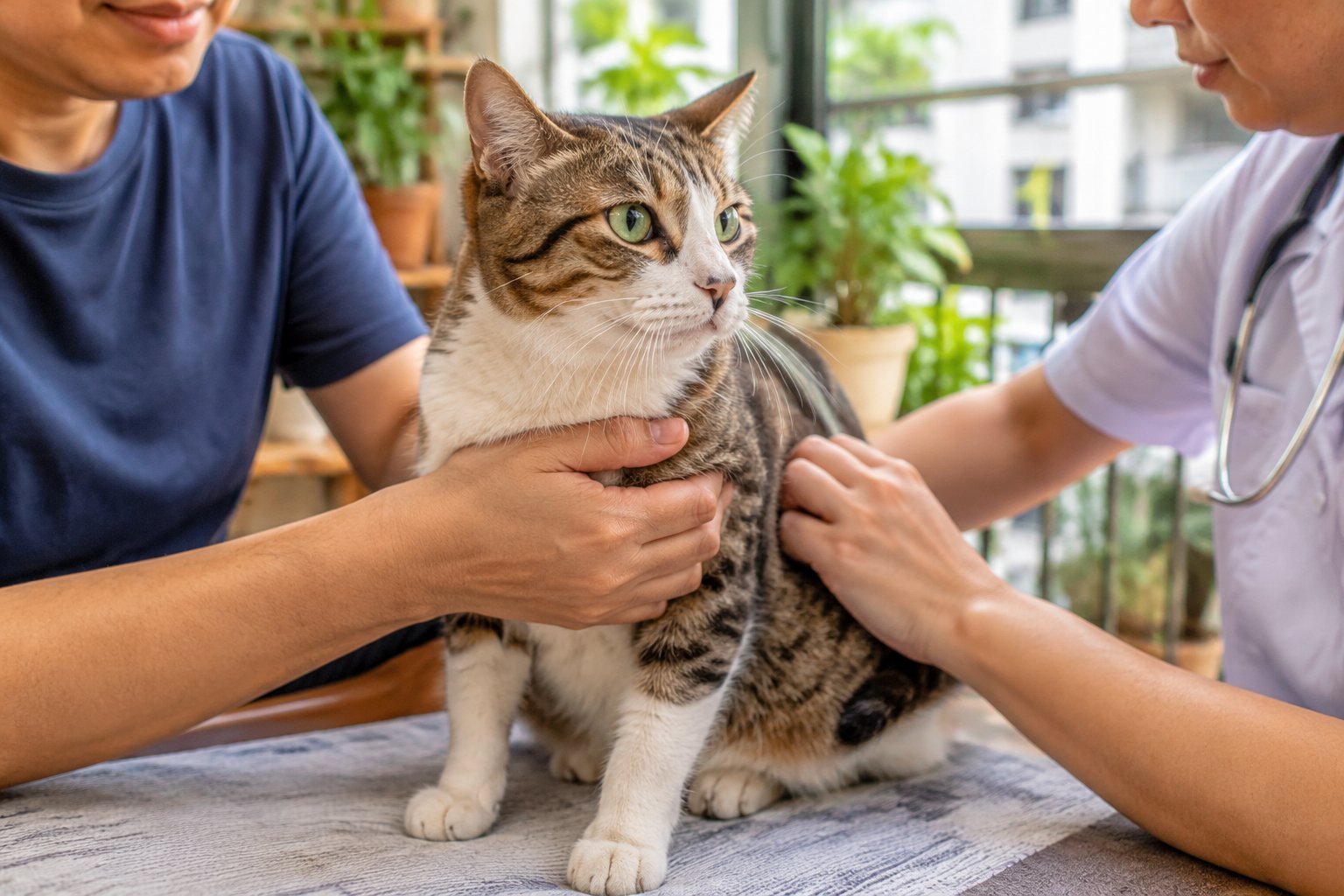
  • Slow skin tent. Gently lift the skin between the shoulder blades. It should snap back quickly. If it stays up or returns slowly, dehydration is possible.
  • Sunken eyes. The eyes may look slightly sunken or dull.
  • Darker, stronger-smelling urine. Concentrated urine is a sign the body is conserving water.
  • Dry nose or mouth. A dry nose is not reliable on its own, but combined with other signs it matters.
  • Weakness or wobbliness. This is a later sign and needs urgent attention.

A simple at-home check combines three things: gums, skin tent and general demeanour. If two or more are abnormal, treat it as a warning and act.

How to check hydration at home: a step-by-step guide

  1. Wash your hands.
  2. Check the gums. Lift the lip gently. Press a finger on the gum for a second, then release. The colour should return within about two seconds. Tacky gums and slow colour return suggest dehydration.
  3. Do the skin tent. Gently pinch the skin between the shoulder blades and release. It should spring back immediately. In older or thinner cats, skin elasticity is naturally lower, so compare with your cat's normal.
  4. Look at the eyes. They should sit normally in the sockets, not appear sunken.
  5. Check urine. Clumping litter can hide urine colour. If you can, use a non-clumping litter or a litter tray liner for a day to see colour and volume.
  6. Weigh your cat. A kitchen scale works. Sudden weight loss can accompany dehydration and illness.
  7. Note behaviour. Listlessness, hiding and refusal to eat are red flags.

These checks are guides, not a diagnosis. If you are unsure, ask your vet.

Dehydration severity: a simple comparison

Sign Mild Moderate Severe
Gums Slightly tacky Dry, sticky Very dry, pale or dark
Skin tent Returns quickly but slower than normal Returns slowly Stays tented
Eyes Normal Slightly sunken Clearly sunken, dull
Behaviour Mostly normal Quieter, less appetite Weak, wobbly, confused
Urine Slightly darker Small volume, dark Little or no urine
Action Offer water and wet food, monitor Call your vet for advice See a vet urgently

This table is a rough guide only. Cats can move from mild to severe quickly, especially kittens and seniors.

Common causes of dehydration in cats

Dehydration is a symptom, not a disease. Finding the cause matters.

  • Not drinking enough. Picky drinkers, stale water, bowl placement, or a switch to dry food.
  • Vomiting or diarrhoea. Fluid is lost directly. Persistent vomiting or diarrhoea needs a vet.
  • Fever or infection. Increased body temperature raises water loss.
  • Kidney disease. Common in older cats. Increased urination leads to dehydration if intake does not keep up.
  • Diabetes. High blood sugar causes increased urination and thirst.
  • Hyperthyroidism. Increased metabolism and activity can raise water needs.
  • Dental pain. A cat with sore gums or a bad tooth may eat and drink less.
  • Stress. Moving house, new pets, or a noisy environment can reduce drinking.
  • Heat exposure. A cat left in a warm room or carrier can overheat and dehydrate.

If your cat is drinking a lot and urinating a lot, that is a reason to see a vet, not a sign that all is well.

Prevention: practical hydration tips for Malaysian homes

Water stations

  • Place several water bowls around the home, including one away from food and litter.
  • Use wide, shallow ceramic or stainless steel bowls. Some cats dislike plastic or narrow bowls that touch their whiskers.
  • Refresh water at least twice a day. In hot weather, change it more often.
  • Consider a pet water fountain. Moving water encourages some cats to drink. Clean it regularly to prevent biofilm.

Food

  • Feed wet food daily if your budget allows. It provides significant water.
  • Add a spoonful of warm water to dry food, but discard uneaten wet food within about 30 minutes in warm weather.
  • Avoid sudden diet changes. Transition gradually over a week or more.
  • Do not restrict water before vet visits unless your vet instructs you to.

Environment

  • Provide cool, shaded resting spots. Tiled floors and raised beds help.
  • Keep fans or air-conditioning on during hot afternoons if possible.
  • Never leave a cat in a parked car, even briefly.
  • If your cat goes outdoors, provide shade and water at all times, and check for signs of heat stress.

Monitoring

  • Note how much your cat drinks and urinates. A sudden change is useful information for your vet.
  • Weigh your cat monthly. Keep a simple log.
  • During hot spells or haze, check gums and skin tent more often.

What to do if you suspect dehydration

  1. Offer fresh water in a clean bowl. Try a second bowl in a different spot.
  2. Offer wet food or add water to dry food.
  3. Move your cat to a cool area with shade and airflow.
  4. Do not force water into the mouth. It can be inhaled.
  5. Recheck gums and skin tent after 30 to 60 minutes.
  6. Call your vet if signs persist, worsen, or are accompanied by vomiting, diarrhoea, not eating, or weakness.

If your cat is severely dehydrated, weak or not drinking, veterinary fluids are usually needed. Do not delay.

When to see a vet

See a vet promptly if your cat has:

  • Very dry or tacky gums that do not improve
  • Skin that stays tented after the pinch test
  • Sunken eyes
  • Vomiting or diarrhoea that lasts more than a day
  • Not eating for more than 24 hours
  • Weakness, wobbliness, confusion or collapse
  • Little or no urine
  • A history of kidney disease, diabetes or thyroid disease
  • Heat exposure or suspected heatstroke

Kittens, senior cats and cats with chronic illness should be seen sooner. Dehydration can progress quickly, and early treatment is simpler and safer.

Vet disclaimer

This article is general information for Malaysian cat owners and is not a substitute for veterinary advice. Always consult a licensed veterinarian for diagnosis and treatment. If you are unsure about your cat's health, seek professional care.

Frequently asked questions

What are the first signs of dehydration in cats? Early signs include tacky or dry gums, slightly reduced skin elasticity, darker or stronger-smelling urine, mild lethargy and reduced appetite. Thirst and sunken eyes appear as dehydration worsens. Check gums and skin gently, and offer water or wet food.

How do I check if my cat is dehydrated at home? Gently lift the skin between the shoulder blades; it should snap back quickly. Press a finger on the gums to blanch them, then see if colour returns within about two seconds. Also check for tacky gums and sunken eyes. These checks are guides, not a diagnosis.

Why do cats get dehydrated so easily in Malaysia? Hot, humid weather increases water loss through panting and evaporation, while many cats naturally drink little. Dry food provides minimal water. Indoor cats in warm apartments may also drink less than expected. Offer fresh water in several spots and include wet food.

Should I add water to my cat's dry food? Yes, adding a little warm water to dry food is a simple way to increase water intake, as long as the food is eaten promptly and not left to spoil in the heat. Introduce it gradually. Wet food is even more hydrating. Always provide fresh drinking water too.

When should I take my dehydrated cat to a vet? See a vet if your cat has very dry gums, skin that stays tented, sunken eyes, vomiting, diarrhoea, not eating for over 24 hours, or is weak or confused. Very young, elderly or unwell cats should be seen sooner. Severe dehydration needs fluids.

Can I give my cat water with a syringe? Only small amounts, carefully, and never force water into the mouth, as it can be inhaled. Syringe feeding water is not a substitute for veterinary fluids in a dehydrated cat. If your cat is reluctant to drink or shows dehydration signs, ask your vet first.

Frequently Asked Questions

📌 Key Takeaways

  • This article covers: Quick answer, Why dehydration is a real risk for Malaysian cats, The early signs: what to look for at home, How to check hydration at home: a step-by-step guide, Dehydration severity: a simple comparison, and more
  • Jump to any section via the table of contents for the key details
  • If in doubt, consult a registered veterinarian

Explore this topic cluster

This guide belongs to a Malaysia-focused topic cluster. Read the pillar guide and related articles.

View cluster →

📚 Cat Health article index

This article is part of the Cat Health topic cluster. Explore related articles:

⭐ Pillar guide: Cat Health complete guideAnemia in Cats: Causes, Signs and Care (Malaysia Guide)→ ReadAnemia in Cats in Malaysia: Signs, Causes, and What to Do→ ReadAnemia Prevention for Cats: A Practical Guide for Malaysian Owners→ ReadArthritis in Cats: Causes and Care (Malaysia Guide)→ ReadArthritis in Cats in Malaysia: Signs, Diagnosis and Home Care→ ReadArthritis Prevention for Cats: A Practical Malaysian Guide→ ReadBad Breath in Cats: Causes and Care (Malaysian Owner's Guide)→ ReadBad Breath in Cats in Malaysia: Causes, Home Checks and When to Worry→ ReadBad Breath Prevention for Cats: A Practical Guide for Malaysian Owners→ ReadBreathing Difficulty in Cats: Causes and Care (Malaysia Guide)→ ReadBreathing Difficulty in Cats in Malaysia: Signs, Causes and What to Do→ ReadBreathing Difficulty Prevention for Cats: A Practical Malaysian Guide→ ReadCat Anemia Treatment in Malaysia: A Practical Owner's Guide→ ReadCat Arthritis Treatment in Malaysia: A Practical Owner's Guide→ ReadCat Bad Breath Treatment in Malaysia: Causes, Home Care and When to See a Vet→ ReadCat Breathing Difficulty Treatment in Malaysia: What to Do and What to Expect→ ReadCat Constricted Pupils Treatment in Malaysia: What to Do When Your Cat's Eyes Look Pinpoint→ ReadCat Coughing Treatment in Malaysia: Causes, Home Care & When to See a Vet→ ReadCat Dehydration Treatment in Malaysia: Signs, Home Care and When to See a Vet→ ReadCat Diabetes Treatment in Malaysia: A Practical Owner's Guide→ ReadCat Dry Food in Malaysia: A Practical Guide for Cat Owners→ ReadCat Excessive Thirst Treatment in Malaysia: What to Do When Your Cat Drinks Too Much→ ReadCat Excessive Urination Treatment in Malaysia: A Practical Guide for Owners→ ReadCat Fever Treatment in Malaysia: What to Do When Your Cat Is Hot→ ReadCat Food Online Store in Malaysia: How to Choose, Order and Store Safely→ ReadCat Heatstroke Treatment in Malaysia: First Aid, Vet Care & Prevention→ ReadCat Itching Treatment in Malaysia: A Practical Guide for Itchy Cats→ ReadCat Kidney Disease Treatment in Malaysia: A Practical Owner's Guide→ ReadCat Limping Treatment in Malaysia: What to Do, What to Expect→ ReadCat Obesity Treatment in Malaysia: A Practical, Vet-Led Plan for Overweight Cats→ ReadCat Pale Gums Treatment in Malaysia: What to Do When Your Cat's Gums Turn White→ ReadCat Seizures Treatment in Malaysia: What to Do, Causes & Vet Care→ ReadCat Sneezing Treatment in Malaysia: What to Do and When to Worry→ ReadCat Sudden Aggression Treatment in Malaysia: Why It Happens and What to Do→ ReadCat Swollen Belly Treatment in Malaysia: Causes, Home Care and When to See a Vet→ ReadCat Ticks Treatment in Malaysia: A Practical Owner's Guide→ ReadCat Trembling Treatment in Malaysia: Causes, Home Care and When to See a Vet→ ReadCat Urinary Blockage Treatment in Malaysia: What to Do, Step by Step→ ReadConstricted Pupils in Cats: Causes and Care (Malaysia Guide)→ ReadConstricted Pupils in Cats Malaysia: Causes, When to Worry & What to Do→ ReadConstricted Pupils in Cats: Prevention and What They Mean→ ReadCoughing in Cats: Causes and Care (Malaysia Guide)→ ReadCoughing in Cats in Malaysia: Causes, When to Worry & What to Do→ ReadCoughing Prevention for Cats: A Practical Guide for Malaysian Owners→ ReadDehydration in Cats: Causes, Warning Signs and How to Care for a Thirsty Cat→ ReadDehydration in Cats in Malaysia: Signs, Causes and How to Help→ ReadDehydration Prevention for Cats: A Practical Guide for Malaysian Owners→ ReadDiabetes in Cats: Causes and Care (Malaysian Owner's Guide)→ ReadDiabetes in Cats Malaysia: Signs, Diagnosis and Daily Care→ ReadDiabetes Prevention for Cats: A Practical Guide for Malaysian Owners→ ReadDry Cat Food in Malaysia: A Complete Guide for Cat Owners→ ReadExcessive Thirst in Cats: Causes and Care (Malaysian Owner's Guide)→ ReadExcessive Thirst in Cats in Malaysia: Causes, Warning Signs and What to Do→ ReadExcessive Thirst Prevention for Cats: A Practical Malaysian Owner's Guide→ ReadExcessive Urination in Cats: Causes and Care (Malaysia Guide)→ ReadExcessive Urination in Cats in Malaysia: Causes, When to Worry & What to Do→ ReadExcessive Urination in Cats: Prevention Guide for Malaysian Owners→ ReadFever in Cats: Causes, Care and When to See a Vet in Malaysia→ ReadFever in Cats in Malaysia: Signs, Causes and What to Do→ ReadFever Prevention for Cats: A Practical Guide for Malaysian Owners→ ReadHarga Pasir Kucing in Malaysia: What Drives the Price and How to Choose→ ReadHeatstroke in Cats: Causes, Signs and Care (Malaysia Guide)→ ReadHeatstroke in Cats in Malaysia: Signs, First Aid & Prevention→ ReadHeatstroke Prevention for Cats in Malaysia: A Practical Owner's Guide→ ReadHow to Treat Anemia in Cats at Home: What You Can Safely Do (and What You Can't)→ ReadHow to Treat Arthritis in Cats at Home: A Practical Guide for Malaysian Owners→ ReadHow to Treat Bad Breath in Cats at Home: A Practical Malaysian Guide→ ReadHow to Treat Breathing Difficulty in Cats at Home: Safe First Steps and When to Rush to the Vet→ ReadHow to Treat Constricted Pupils in Cats at Home: What You Can (and Cannot) Do Safely→ ReadHow to Treat Coughing in Cats at Home: A Practical Guide for Malaysian Owners→ ReadHow to Treat Dehydration in Cats at Home: A Practical Malaysian Guide→ ReadHow to Treat Diabetes in Cats at Home: A Practical Guide for Malaysian Owners→ ReadHow to Treat Excessive Thirst in Cats at Home: A Practical Guide for Malaysian Owners→ ReadHow to Treat Excessive Urination in Cats at Home: A Practical Malaysian Guide→ ReadHow to Treat Fever in Cats at Home: Safe Steps for Malaysian Owners→ ReadHow to Treat Heatstroke in Cats at Home: First Aid, Cooling Steps and When to Get Help→ ReadHow to Treat Itching in Cats at Home: A Practical Guide for Malaysian Owners→ ReadHow to Treat Kidney Disease in Cats at Home: A Practical Malaysian Guide→ ReadHow to Treat Limping in Cats at Home: Safe Steps for Malaysian Owners→ ReadHow to Treat Obesity in Cats at Home: A Practical Malaysian Guide→ ReadHow to Treat Pale Gums in Cats at Home: What You Can Do Safely→ ReadHow to Treat Seizures in Cats at Home: A Practical Malaysian Owner's Guide→ ReadHow to Treat Sneezing in Cats at Home: A Practical Malaysian Guide→ ReadHow to Treat Sudden Aggression in Cats at Home: A Safe, Step-by-Step Guide for Malaysian Owners→ ReadHow to Treat a Swollen Belly in Cats at Home: What's Safe, What Isn't→ ReadHow to Treat Ticks in Cats at Home: A Safe, Step-by-Step Guide for Malaysian Owners→ ReadHow to Treat Trembling in Cats at Home: A Practical Malaysian Guide→ ReadHow to Treat Urinary Blockage in Cats at Home: What You Can and Cannot Do→ ReadItching in Cats: Causes and Care (Malaysia Guide)→ ReadItching in Cats in Malaysia: Causes, Relief and When to See a Vet→ ReadItching Prevention for Cats: A Practical Guide for Malaysian Owners→ ReadKidney Disease in Cats: Causes, Signs and Care (Malaysia Guide)→ ReadKidney Disease in Cats Malaysia: Signs, Stages, Diet & Care→ ReadKidney Disease Prevention for Cats: A Practical Guide for Malaysian Owners→ ReadLimping in Cats: Causes, Care and When to See a Vet in Malaysia→ ReadLimping in Cats in Malaysia: Causes, Home Checks, and When to See a Vet→ ReadLimping Prevention for Cats: A Malaysian Owner's Guide to Keeping Joints and Paws Healthy→ ReadObesity in Cats: Causes and Care (Malaysian Owner's Guide)→ ReadObesity in Cats Malaysia: A Practical Guide for Owners→ ReadObesity Prevention for Cats: A Practical Guide for Malaysian Owners→ ReadOnline Cat Food in Malaysia: A Practical Guide to Buying Safely→ ReadPale Gums in Cats: Causes and Care (Malaysian Owner's Guide)→ ReadPale Gums in Cats in Malaysia: Causes, What to Check, and When to See a Vet→ ReadPale Gums in Cats: Prevention, Early Warning Signs and What Malaysian Owners Should Do→ ReadPasir Kucing 20kg: A Practical Guide to Buying Bulk Cat Litter in Malaysia→ ReadPasir Kucing" in English: What Cat Litter Is Called and How to Choose It→ ReadSeizures in Cats: Causes and Care (Malaysia Guide)→ ReadSeizures in Cats in Malaysia: Causes, Signs and What to Do→ ReadSeizures Prevention for Cats: A Practical Guide for Malaysian Owners→ ReadHow to Shop for Cat Food in Malaysia: A Practical Guide for Cat Owners→ ReadSigns of Anemia in Cats in Malaysia: What to Watch For→ ReadSigns of Arthritis in Cats in Malaysia: What Owners Should Look For→ ReadSigns of Bad Breath in Cats in Malaysia: What Your Cat's Mouth Is Telling You→ ReadSigns of Breathing Difficulty in Cats in Malaysia: What Every Owner Must Know→ ReadSigns of Constricted Pupils in Cats in Malaysia: What Small Pupils Mean→ ReadSigns of Coughing in Cats Malaysia: What Every Owner Should Know→ ReadSigns of Diabetes in Cats Malaysia: Early Symptoms Owners Miss→ ReadSigns of Excessive Thirst in Cats in Malaysia: When Drinking More Is a Warning→ ReadSigns of Excessive Urination in Cats in Malaysia: What's Normal, What's Not, and When to Worry→ ReadSigns of Fever in Cats in Malaysia: How to Tell and What to Do→ ReadSigns of Heatstroke in Cats in Malaysia: What to Watch For→ ReadSigns of Itching in Cats in Malaysia: How to Spot, Soothe and When to See a Vet→ ReadSigns of Kidney Disease in Cats Malaysia: Early Warning Signs to Watch→ ReadSigns of Limping in Cats in Malaysia: What Owners Should Notice→ ReadSigns of Obesity in Cats in Malaysia: How to Tell If Your Cat Is Overweight→ ReadPale Gums in Cats: Signs, Causes, and What to Do (Malaysia Guide)→ ReadSigns of Seizures in Cats in Malaysia: What Owners Need to Know→ ReadSigns of Sneezing in Cats in Malaysia: What It Means and When to Worry→ ReadSigns of Sudden Aggression in Cats in Malaysia: Why Your Cat Turned Aggressive and What to Do→ ReadSigns of a Swollen Belly in Cats: What Malaysian Owners Should Look For→ ReadSigns of Ticks in Cats in Malaysia: What to Look For and What to Do→ ReadSigns of Trembling in Cats in Malaysia: What Shaking Really Means→ ReadSigns of Urinary Blockage in Cats Malaysia: A Life-Threatening Emergency→ ReadSneezing in Cats: Causes and Care (Malaysian Owner's Guide)→ ReadSneezing in Cats in Malaysia: Causes, Home Care and When to See a Vet→ ReadSneezing Prevention for Cats in Malaysia: A Practical Guide→ ReadSudden Aggression in Cats: Causes and Care (Malaysia Guide)→ ReadSudden Aggression in Cats in Malaysia: Why Your Cat Turned on You and What to Do→ ReadSudden Aggression Prevention for Cats: A Practical Guide for Malaysian Owners→ ReadSwollen Belly in Cats: Causes, Care and When to Worry→ ReadSwollen Belly in Cats in Malaysia: Causes, Warning Signs & What to Do→ ReadSwollen Belly Prevention for Cats: A Practical Malaysian Owner's Guide→ ReadTicks in Cats: Causes and Care (Malaysia Guide)→ ReadTicks in Cats in Malaysia: What Every Cat Owner Should Know→ ReadTicks Prevention for Cats in Malaysia: A Complete Guide→ ReadTrembling in Cats: Causes and Care (Malaysian Owner's Guide)→ ReadTrembling in Cats in Malaysia: Why Your Cat Shakes and What to Do→ ReadTrembling Prevention for Cats: Why It Happens and How to Reduce the Risk→ ReadUrinary Blockage in Cats: Causes, Warning Signs and Care→ ReadUrinary Blockage in Cats Malaysia: Signs, Causes & What to Do→ ReadUrinary Blockage Prevention for Cats: A Practical Guide for Malaysian Owners→ ReadWet Cat Food in Malaysia: A Practical Feeding Guide for Owners→ ReadBlood Test for Cats in Malaysia: What It Checks, Costs and When You Need One→ ReadBlood Test for Cats Step by Step: What Happens at the Clinic→ ReadBlood Test for Cats: What to Expect (Malaysian Owner's Guide)→ ReadCat Constipation Treatment in Malaysia: A Practical Owner's Guide→ ReadCat Dental Pain Treatment in Malaysia: A Practical Owner's Guide→ ReadCat Diarrhea Treatment in Malaysia: A Practical Owner's Guide→ ReadCat Ear Mites Treatment in Malaysia: A Complete Owner's Guide→ ReadCat Eye Infection Treatment in Malaysia: A Practical Owner's Guide→ ReadCat Fleas Treatment in Malaysia: A Practical Owner's Guide→ ReadCat Hair Loss Treatment in Malaysia: A Practical Owner's Guide→ ReadCat Licking Wounds: Why It Happens and How to Treat It in Malaysia→ ReadCat Poisoning Treatment in Malaysia: What to Do, What to Expect, and How to Prevent It→ ReadCat Ringworm Treatment in Malaysia: A Practical Owner's Guide→ ReadCat Skin Fungus Treatment in Malaysia: A Practical Owner's Guide→ ReadCat Sneezing Blood: Causes, Treatment and When to See a Vet in Malaysia→ ReadCat Vomiting Treatment in Malaysia: What to Do and When to See a Vet→ ReadCat Weight Loss Treatment in Malaysia: A Practical Guide for Owners→ ReadCat Worms Treatment in Malaysia: A Practical Owner's Guide→ ReadChocolate Poisoning and Cats in Malaysia: What Every Owner Should Know→ ReadConstipation in Cats: Causes, Care and When to See a Vet in Malaysia→ ReadConstipation in Cats in Malaysia: Causes, Signs and What to Do→ ReadConstipation Prevention for Cats: A Practical Guide for Malaysian Owners→ ReadDental Pain in Cats: Causes, Signs and Care (Malaysia Guide)→ ReadDental Pain in Cats in Malaysia: Signs, Causes and What to Do→ ReadDental Pain Prevention for Cats: A Practical Malaysian Guide→ ReadDeworming Schedule for Cats in Malaysia: A Practical, Vet-Led Guide→ ReadDeworming Schedule for Cats: A Step-by-Step Plan for Malaysian Owners→ ReadDeworming Schedule for Cats: What to Expect (Malaysia Guide)→ ReadDiarrhea in Cats: Causes and Care (Malaysian Owner's Guide)→ ReadDiarrhea in Cats in Malaysia: Causes, Home Care and When to See a Vet→ ReadDiarrhea Prevention for Cats: A Practical Guide for Malaysian Owners→ ReadE-Collar Recovery for Cats in Malaysia: A Practical Guide for Owners→ ReadE-Collar Recovery for Cats Step by Step: A Practical Guide for Malaysian Owners→ ReadE-Collar Recovery for Cats: What to Expect (Malaysia Guide)→ ReadEar Mites in Cats: Causes and Care (Malaysia Guide)→ ReadEar Mites in Cats in Malaysia: Signs, Treatment and Prevention→ ReadEar Mites Prevention for Cats: A Practical Malaysian Guide→ ReadElectrical Cables and Cats in Malaysia: A Practical Safety Guide→ ReadEye Infection in Cats: Causes and Care (Malaysia Guide)→ ReadEye Infection in Cats in Malaysia: Causes, Signs, Treatment & Prevention→ ReadEye Infection Prevention for Cats: A Practical Malaysian Guide→ ReadFans and Air Conditioning for Cats in Malaysia: A Practical Comfort Guide→ ReadFlea Treatment for Cats in Malaysia: A Complete Guide→ ReadFlea Treatment for Cats Step by Step: A Practical Malaysian Guide→ ReadFlea Treatment for Cats: What to Expect (Malaysia Guide)→ ReadFleas in Cats: Causes and Care (Malaysia Guide)→ ReadFleas in Cats in Malaysia: Signs, Treatment and Prevention→ ReadFleas Prevention for Cats in Malaysia: A Practical, Year-Round Plan→ ReadGiving Pills for Cats in Malaysia: A Stress-Free Step-by-Step Guide→ ReadGiving Pills for Cats Step by Step: A Calm, Practical Guide for Malaysian Owners→ ReadGiving Pills for Cats: What to Expect (Malaysian Owner's Guide)→ ReadHair Loss in Cats: Causes and Care (Malaysian Owner's Guide)→ ReadHair Loss in Cats in Malaysia: Causes, Home Checks and When to See a Vet→ ReadHair Loss Prevention for Cats: A Practical Grooming and Health Guide→ ReadHousehold Cleaning Products and Cats in Malaysia: A Safety Guide→ ReadHow to Prevent Chocolate Poisoning Around Cats: A Practical Guide for Malaysian Homes→ ReadHow to Prevent Electrical Cables Around Cats: A Practical Safety Guide for Malaysian Homes→ ReadHow to Prevent Fan and Aircond Problems Around Cats: A Malaysian Home Guide→ ReadHow to Prevent Household Cleaning Products Around Cats: A Practical Safety Guide for Malaysian Homes→ ReadHow to Prevent Lily Poisoning Around Cats: A Practical Safety Guide for Malaysian Homes→ ReadHow to Prevent Open Windows Around Cats: A Practical Safety Guide for Malaysian Homes→ ReadHow to Prevent Paracetamol Poisoning Around Cats: A Malaysian Safety Guide→ ReadHow to Prevent Plastic Bags Around Cats: A Practical Safety Guide for Malaysian Homes→ ReadHow to Treat Constipation in Cats at Home: A Practical Malaysian Guide→ ReadHow to Treat Dental Pain in Cats at Home: Safe Relief and When to See a Vet→ ReadHow to Treat Diarrhea in Cats at Home: A Practical Malaysian Guide→ ReadHow to Treat Ear Mites in Cats at Home: A Practical Malaysian Guide→ ReadHow to Treat Eye Infection in Cats at Home: Safe Steps for Malaysian Owners→ ReadHow to Treat Fleas in Cats at Home: A Practical Malaysian Guide→ ReadHow to Treat Hair Loss in Cats at Home: A Practical Malaysian Guide→ ReadHow to Treat Licking Wounds in Cats at Home: A Practical Guide for Malaysian Owners→ ReadHow to Treat Poisoning in Cats at Home: First Aid, Safe Steps and When to Rush to the Vet→ ReadHow to Treat Ringworm in Cats at Home: A Practical Guide for Malaysian Owners→ ReadHow to Treat Skin Fungus in Cats at Home: A Practical Malaysian Guide→ ReadHow to Treat Sneezing Blood in Cats at Home: Safe First Steps for Malaysian Owners→ ReadHow to Treat Vomiting in Cats at Home: A Practical Malaysian Guide→ ReadHow to Treat Weight Loss in Cats at Home: A Practical Guide for Malaysian Owners→ ReadHow to Treat Worms in Cats at Home: A Practical, Safe Guide for Malaysian Owners→ ReadLicking Wounds in Cats: Causes and Care (Malaysian Vet Guide)→ ReadLicking Wounds in Cats Malaysia: When It's Normal and When to Stop It→ ReadLicking Wounds Prevention for Cats: How to Stop the Lick Cycle and Let Skin Heal→ ReadLily Poisoning and Cats in Malaysia: Why Every Petal Is an Emergency→ ReadOpen Windows and Cats in Malaysia: How to Keep Your Cat Safe Without Locking Up the House→ ReadParacetamol Poisoning in Cats in Malaysia: Why Even One Tablet Can Be Deadly→ ReadPlastic Bags and Cats in Malaysia: Why They're Dangerous and How to Keep Your Cat Safe→ ReadPoisoning in Cats: Causes, Symptoms and Care (Malaysia Guide)→ ReadPoisoning in Cats in Malaysia: Common Toxins, Signs and What to Do→ ReadPoisoning Prevention for Cats in Malaysia: A Room-by-Room Safety Guide→ ReadRingworm in Cats: Causes, Symptoms and Care (Malaysia Guide)→ ReadRingworm in Cats in Malaysia: Signs, Treatment and Prevention→ ReadRingworm Prevention for Cats in Malaysia: A Practical, Vet-Informed Guide→ ReadSigns of Constipation in Cats in Malaysia: What to Watch For and When to Act→ ReadSigns of Dental Pain in Cats in Malaysia: What Owners Miss→ ReadSigns of Diarrhea in Cats in Malaysia: What's Normal, What's Not→ ReadSigns of Ear Mites in Cats in Malaysia: How to Spot, Treat and Prevent Them→ ReadSigns of Eye Infection in Cats in Malaysia: What Owners Should Look For→ ReadSigns of Fleas in Cats in Malaysia: How to Spot, Check and Act→ ReadSigns of Hair Loss in Cats in Malaysia: What to Look For and When to Worry→ ReadSigns of Licking Wounds in Cats Malaysia: How to Spot Problem Licking→ ReadSigns of Poisoning in Cats in Malaysia: What to Watch For and What to Do→ ReadSigns of Ringworm in Cats in Malaysia: What Owners Should Look For→ ReadSigns of Skin Fungus in Cats in Malaysia: How to Spot Ringworm Early→ ReadBlood in a Cat's Sneeze: Signs, Causes and What to Do in Malaysia→ ReadSigns of Vomiting in Cats in Malaysia: What's Normal, What's Not, and When to See a Vet→ ReadSigns of Weight Loss in Cats in Malaysia: What to Watch For and When to Worry→ ReadSigns of Worms in Cats in Malaysia: What Owners Should Look For→ ReadSkin Fungus in Cats: Causes, Signs and Care (Malaysia Guide)→ ReadSkin Fungus in Cats in Malaysia: Ringworm Signs, Treatment and Prevention→ ReadSkin Fungus Prevention for Cats: A Practical Guide for Malaysian Homes→ ReadSneezing Blood in Cats: Causes and Care (Malaysia Guide)→ ReadSneezing Blood in Cats in Malaysia: Causes, What to Do, and When to See a Vet→ ReadSneezing Blood Prevention for Cats: Causes, Care and When to Worry→ ReadSterilization for Cats in Malaysia: A Complete Guide for Owners→ ReadSterilization for Cats Step by Step: A Malaysian Owner's Guide→ ReadSterilisation for Cats: What to Expect (Malaysian Owner's Guide)→ ReadUltrasound for Cats in Malaysia: What It Is, When It's Needed, and What to Expect→ ReadUltrasound for Cats Step by Step: What Happens, What It Costs, and How to Prepare→ ReadUltrasound for Cats: What to Expect (Malaysian Owner's Guide)→ ReadVaccination Side Effects for Cats in Malaysia: What's Normal, What's Not→ ReadVaccination Side Effects for Cats: A Step-by-Step Guide for Malaysian Owners→ ReadCat Vaccination Side Effects: What Malaysian Owners Should Expect→ ReadVomiting in Cats: Causes and Care (Malaysia Guide)→ ReadVomiting in Cats in Malaysia: When It's Normal and When to Worry→ ReadVomiting Prevention for Cats: A Practical Guide for Malaysian Owners→ ReadWeight Loss in Cats: Causes and Care (Malaysian Vet Guide)→ ReadWeight Loss in Cats in Malaysia: Causes, Warning Signs and What to Do→ ReadWeight Loss Prevention for Cats: A Practical Malaysian Guide→ ReadWorms in Cats: Causes and Care (Malaysia Vet Guide)→ ReadWorms in Cats in Malaysia: A Practical Owner's Guide→ ReadWorms Prevention for Cats in Malaysia: A Complete Guide→ ReadWound Care for Cats in Malaysia: A Practical Owner's Guide→ ReadWound Care for Cats Step by Step: A Practical Malaysian Guide→ ReadWound Care for Cats: What to Expect, Step by Step→ ReadX-Ray for Cats in Malaysia: What to Expect, Costs and Safety→ ReadX-Ray for Cats Step by Step: What Malaysian Owners Should Expect→ ReadX-Ray for Cats: What to Expect (Malaysian Owner's Guide)→ ReadArthritis Pet Care in Malaysia: A Practical Guide for Cats and Dogs→ ReadCat Arthritis in Malaysia: 5 Home Signs Your Cat Is in Pain — and What to Do→ ReadEarly Signs of Chronic Disease in Cats: 7 Daily Checks and a 4-Week Record Sheet→ ReadCat Chronic Kidney Disease in Malaysia: The Daily Care Routine That Actually Slows It Down→ ReadCat Constipation in Malaysia: The 48-Hour Rule, Red Flags and What Actually Helps→ ReadCat Dehydration in Malaysia: Home Skin-Turgor Test, 7 Causes and Emergency Signs→ ReadCat Heart Disease in Malaysia: Sleep Breathing Count, HCM Early Signs and When to Rush to the Vet→ ReadCat Kidney Disease in Malaysia: Early Signs, Prevention and Everyday Care→ ReadCat Pancreatitis in Malaysia: Symptoms, fPLI Testing, Treatment and Home Recovery→ ReadCat Ringworm in Malaysia: Signs, Treatment and Home Cleaning Guide→ ReadCat Symptom Checker Malaysia: 12 Common Signs and a Green-Amber-Red Triage Table→ ReadPet Deworming in Malaysia: How Often to Worm Your Cat or Dog→ ReadPet Gut Health in Malaysia: Probiotics, Food Transitions and Stool Troubles (Part 2)→ ReadCat Gut Health: Probiotics, Antibiotics and Food Transitions Explained (Malaysia)→ ReadPet Health Malaysia 2026: Common Cat and Dog Illnesses, Prevention Care and Vet Guidance→ ReadPet Insurance in Malaysia: How to Compare Plans Before You Sign→ ReadPet Poisoning at Home: Household Chemicals, Toxic Plants and When Not to Induce Vomiting (Malaysia)→ ReadPet Poisoning at Home: Household Chemicals, Insecticides and Toxic Plants (Malaysia, Part 1)→ ReadCat Chronic Disease Early Signs in Malaysia: 7 Daily Checks and a 4-Week Log→ ReadCat Health Guide Malaysia: Symptom Check, Red-Flag Triage & When to See a Vet→ ReadCat Ringworm in Malaysia: Symptoms, Treatment and Home Cleaning Guide→ ReadGut Health, Probiotics & Food Transition Part 2: Practical Malaysia Guide→ ReadPet Health in Malaysia: A Practical Prevention Guide for Cats and Dogs→ Read

Related products at PetChill

