
The short answer
Dehydration in cats means the body has lost more water than it has taken in. It is not a disease on its own; it is a sign that something else is happening, whether that is a stomach upset, a hot afternoon, or a long-running kidney problem. Mild dehydration can sometimes be corrected at home with wet food and easy access to fresh water, but moderate or severe dehydration needs veterinary fluids. The tricky part is that cats are built to hide thirst, so by the time you notice symptoms, the deficit may already be significant.
This guide covers the common causes, the signs you can check at home, practical care steps for Malaysian households, and the red flags that mean a vet visit today rather than next week.
Why cats dehydrate so easily
Cats evolved as desert-adapted hunters. Their bodies are efficient at conserving water, and their thirst drive is weaker than a dog's. A cat that eats mostly dry food may get only a small fraction of its daily water needs from drinking. Add vomiting, diarrhoea, fever or heat, and the balance tips quickly.
Several everyday factors make the problem worse:
- Low water intake. Some cats dislike still water, narrow bowls, or bowls placed next to food or a litter box.
- Dry-only diets. Kibble contains very little moisture compared with wet food.
- Heat and humidity. In a Malaysian afternoon, a cat may lose water through evaporation and panting without drinking more.
- Stress. A new pet, moving house, or a noisy household can reduce drinking and eating.
- Age. Kittens and senior cats have less reserve and dehydrate faster.
Common causes of dehydration in cats
The causes fall into a few broad groups. A vet will usually work through them in order.
1. Gastrointestinal losses
Vomiting and diarrhoea are the most obvious causes. A single vomit is rarely a crisis, but repeated vomiting, watery diarrhoea, or both together can drain fluid and electrolytes quickly. Hairballs, dietary indiscretion, parasites and infections are common triggers.
2. Fever and infection
A cat with a fever loses extra water through evaporation and often stops eating and drinking. Upper respiratory infections can also make smelling food difficult, which reduces appetite and intake.
3. Chronic disease
Kidney disease is a major cause in older cats: damaged kidneys cannot concentrate urine well, so the cat urinates more and drinks more, and dehydration can develop if intake does not keep up. Diabetes causes increased urination and thirst. Hyperthyroidism raises metabolism and water loss. Any of these can tip into dehydration during a flare-up.
4. Heat and environment
Cats left in hot rooms, cars or unshaded balconies can overheat. Flat-faced breeds such as Persians and British Shorthairs have more difficulty cooling themselves by panting, so they are at higher risk.
5. Reduced access to water
This is the simplest cause and the easiest to fix. A cat may avoid a water bowl that is dirty, too small, too deep, placed near food, or next to a noisy appliance. Some cats prefer running water. Others will not drink enough if they are in pain, stressed or unable to reach the bowl.
6. Medication and medical procedures
Some drugs increase urination or cause vomiting. Any cat recovering from surgery or illness may need extra support with fluids.
Signs of dehydration in cats
Early signs are subtle. As dehydration worsens, the signs become more obvious.
| Check | Normal | Possible dehydration |
|---|---|---|
| Gums | Pink, moist, slippery | Tacky or dry, pale or dark |
| Skin tent (scruff) | Springs back immediately | Stays up, or returns slowly |
| Eyes | Bright, moist | Sunken, dull, dry |
| Urination | Regular clumps in litter | Small or no clumps |
| Energy | Alert, interested | Lethargic, hiding, weak |
| Appetite | Eating normally | Reduced or absent |
| Breathing | Calm | Fast, shallow, or panting |
A skin tent test is a rough screening tool, not a diagnosis. In overweight cats the skin may return slowly even when hydration is fine, and in very thin cats it may spring back despite dehydration. Gums and overall demeanour matter just as much.
Other signs to watch for include:
- Dry nose leather (not reliable on its own)
- Constipation or hard stools
- Sunken flanks
- Cold extremities
- Collapse or seizures in severe cases
Home care: encouraging a cat to drink
If your cat is bright, eating a little, and only mildly dehydrated, these steps can help. They are not a substitute for veterinary assessment if signs are moderate or worsening.
Offer water in more than one way
- Place several water stations around the home, away from food and litter.
- Use wide, shallow ceramic or stainless steel bowls; some cats dislike plastic.
- Change water at least daily, and rinse bowls to remove biofilm.
- Try a pet water fountain for cats that prefer moving water.
- Add a few ice cubes or a splash of warm water to make the water more interesting.
Use food as a hydration tool
- Switch part of the diet to wet food, or add a spoonful of water to wet food.
- Offer a little low-sodium broth (check for onion and garlic, which are toxic to cats).
- Try a water-rich treat such as a small piece of plain cooked pumpkin or a lickable cat treat.
- Never add salt to food or water to force thirst; this can be dangerous.
Reduce stress and heat
- Provide shade, cool tiles and good ventilation.
- Keep fresh water in every room the cat uses.
- Avoid moving bowls or litter during stressful periods.
- If the cat is hiding, place water and food nearby rather than forcing interaction.
What not to do
- Do not syringe large volumes of water into the mouth; choking and aspiration are real risks.
- Do not give human electrolyte drinks, which contain sugar and salts in the wrong proportions for cats.
- Do not delay a vet visit because the cat "seems okay"; cats compensate well until they suddenly do not.
When home care is not enough
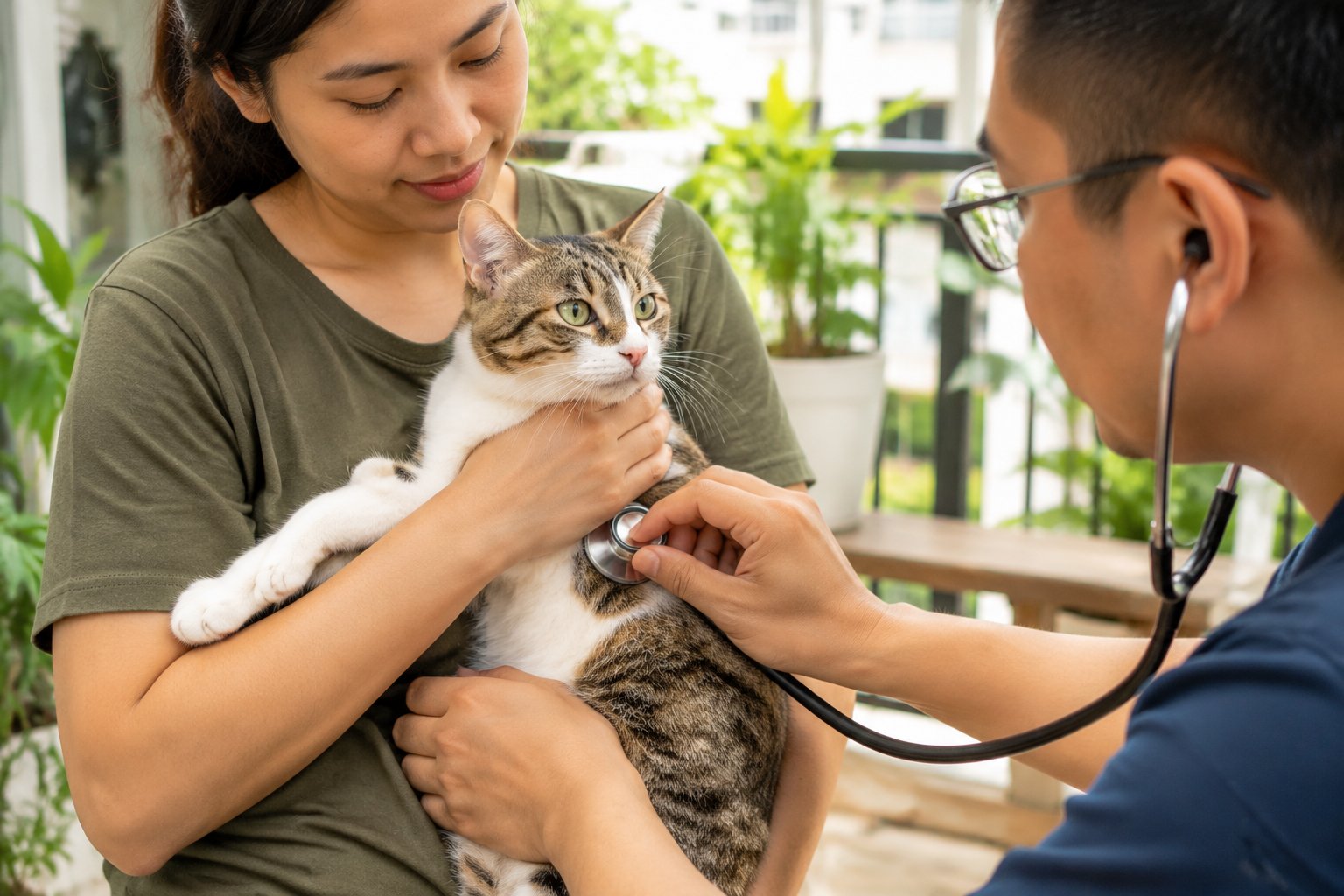
Veterinary fluids are the safest way to correct moderate or severe dehydration. A vet may give fluids under the skin (subcutaneous) or into a vein (intravenous), depending on severity. They will also look for the underlying cause, which may mean blood tests, urine tests or imaging.
Do not attempt to give subcutaneous fluids at home unless your vet has trained you and prescribed the fluids and equipment. The wrong volume or rate can be harmful, especially in cats with heart or kidney disease.
When to see a vet
Contact a veterinarian promptly if your cat shows any of the following:
- Skin tent that stays up, or gums that feel dry or tacky
- Repeated vomiting or diarrhoea for more than 12–24 hours
- Not eating or drinking for more than 24 hours
- No urine clumps in the litter box for 12–24 hours, especially in male cats
- Sunken eyes, weakness, wobbliness or collapse
- Fast or laboured breathing
- Very pale, blue or dark gums
- Known kidney disease, diabetes or thyroid disease with worsening signs
- A kitten, senior cat or pregnant cat with any of the above
Male cats that strain to urinate and produce little or no urine need emergency care; a urethral blockage is life-threatening and is not simply dehydration.
Preventing dehydration day to day
Prevention is mostly about making water easy, appealing and constant.
- Feed some wet food. Even one wet meal a day adds meaningful water.
- Keep bowls clean. Wash daily; biofilm makes water taste stale.
- Use multiple stations. One per floor, plus one near favourite resting spots.
- Watch the litter box. Fewer or smaller clumps are an early warning.
- Monitor in hot weather. During a Malaysian heatwave, check water twice a day and offer shade.
- Routine vet checks. Senior cats benefit from regular blood and urine screening, which can catch kidney disease before dehydration becomes obvious.
- Know your cat's normal. Weigh monthly and note usual drinking and urination habits; changes are easier to spot against a baseline.
A practical comparison: dry vs wet vs mixed feeding
| Feeding style | Water contribution | Pros | Watch-outs |
|---|---|---|---|
| Dry only | Low | Convenient, longer shelf life | Higher risk of low intake; monitor water and litter |
| Wet only | High | Strong hydration support | Cost, storage, dental care still needed |
| Mixed | Moderate to high | Flexible, good hydration | Measure portions to avoid weight gain |
There is no single best diet for every cat. A cat with kidney disease may need a specific therapeutic diet, while a healthy young cat may do well on a mixed plan. Ask your vet to tailor it.
Key takeaways
Dehydration in cats is common, often subtle, and usually secondary to another problem. Check gums, skin tent, eyes, urine and energy together rather than relying on one sign. Mild cases may respond to better water access and wet food, but moderate or severe dehydration needs veterinary fluids. In Malaysia's heat, and for senior or chronically ill cats, err on the side of an earlier vet visit.
This article is general information and not a substitute for veterinary advice. If you are worried about your cat, contact a licensed veterinarian.
Related reading
- Cat Health Guide Malaysia: Symptom Check, Red-Flag Triage & When to See a Vet
- Cat Dehydration Treatment in Malaysia: Signs, Home Care and When to See a Vet
- Dehydration in Cats in Malaysia: Signs, Causes and How to Help
- Excessive Thirst in Cats: Causes and Care (Malaysian Owner's Guide)
- Excessive Urination in Cats: Prevention Guide for Malaysian Owners
- How to Treat Dehydration in Cats at Home: A Practical Malaysian Guide
- How to Treat Excessive Thirst in Cats at Home: A Practical Guide for Malaysian Owners
- How to Treat Vomiting in Cats at Home: A Practical Malaysian Guide