
Quick answer
A swollen belly in cats can be harmless (fat, gas, pregnancy) or serious (fluid, organ enlargement, tumours). Watch for a hard or fluid-filled abdomen, pain when touched, vomiting, lethargy, weight loss and breathing changes. Any sudden or painful swelling needs a vet visit promptly.
Why a cat's belly swells: the main categories
A distended abdomen is a sign, not a diagnosis. Vets group the causes into a few broad buckets, and knowing them helps you describe what you are seeing.
1. Fat (obesity). The most common reason for a gradually larger belly in a settled adult cat. Fat sits under the skin and feels soft and doughy. It usually develops over weeks or months, not days.
2. Gas and gut contents. A big meal, eating too fast, a sudden diet change or mild indigestion can cause temporary bloating. This usually settles within hours.
3. Pregnancy. An intact female cat can look pot-bellied from around the third to fourth week. If your cat is not desexed and has been outdoors, pregnancy is a real possibility.
4. Worms. Heavy roundworm burdens, especially in kittens, produce a classic pot-bellied appearance. The belly feels full but the rest of the kitten may be thin.
5. Fluid in the abdomen (ascites). This is the category that worries vets most. Fluid makes the belly look pear-shaped and feel tight, and it can slosh when the cat moves. Causes include heart disease, liver disease, kidney disease, low protein levels and some cancers.
6. Organ enlargement or masses. An enlarged liver, spleen, kidneys or a tumour can push the belly outward. These tend to feel firm rather than soft.
7. Constipation or obstruction. A backed-up colon or a swallowed object can cause a firm, uncomfortable belly, often with straining or vomiting.
8. Emergency causes. In male cats, a blocked bladder causes a painful, firm lower belly and is life-threatening within hours. Bloat-like stomach distension and internal bleeding are also emergencies.
The signs to look for at home
You do not need to diagnose your cat. You need to notice patterns and report them clearly. Run through this checklist weekly, or daily if something seems off.
Shape and size
- Does the belly look rounder than usual from above? A cat in good weight has a visible waist behind the ribs.
- Is the swelling pear-shaped (wider at the bottom) or evenly spread?
- Did it appear over days or over months? Fast change is more concerning.
- Does the belly hang low and swing when the cat walks? Fluid often does this.
Touch (gently)
- Soft and doughy: more likely fat or gas.
- Tight and drum-like: gas, fluid or obstruction.
- Firm and lumpy: possible mass or organ enlargement.
- Painful: stop immediately and call a vet.
Never press hard or repeatedly. A gentle feel with flat fingers is enough to notice texture and tenderness.
Behaviour and appetite
- Eating less, or eating normally but losing weight.
- Vomiting, especially after meals or repeatedly.
- Lethargy, hiding, or not jumping up as usual.
- Straining in the litter box, or no urine at all.
- Drinking more than usual.
Breathing and gums
- Faster breathing at rest, or effortful breathing.
- Pale, grey or blue-tinged gums.
- Open-mouth breathing in a cat is always abnormal.
Coat and body condition
- A dull coat, or a cat that looks thin over the spine and hips but has a big belly.
- Weight loss despite a good appetite.
Fat versus fluid: a simple comparison
| Feature | Fat (obesity) | Fluid (ascites) |
|---|---|---|
| Speed of onset | Weeks to months | Days to weeks |
| Feel | Soft, doughy | Tight, wave-like |
| Shape | Even, pendulous | Pear-shaped, low-slung |
| Waist from above | Lost gradually | Lost quickly |
| Other signs | None usually | Lethargy, poor appetite, breathing changes |
| Response to diet | Slow change | Does not improve with diet |
This table is a guide only. Only a vet can confirm what is inside the abdomen, usually with palpation, X-rays or ultrasound.
Common causes by age and lifestyle
Kittens. Worms, coccidia and other gut parasites are common. A pot belly with a thin body is a classic pattern. Deworming and a vet check are the first steps.
Young adults. Pregnancy in intact females, dietary indiscretion, and swallowed foreign objects (string, hair ties, bones) are frequent. Constipation from dehydration or hairballs also occurs.
Older cats. Fluid from heart, liver or kidney disease, organ tumours, and hyperthyroidism or diabetes with weight change. Older cats should have regular vet checks.
Indoor-only cats. Obesity is the main cause of a gradually expanding belly. Portion control and play matter.
Outdoor or free-roaming cats. Pregnancy, parasites and injuries are more likely. Free-roaming cats also face road traffic accidents that can cause internal bleeding.
What your vet will do
Expect a structured approach rather than a single test.
- History. When did you notice it, how fast, appetite, vomiting, urination, diet, worming history, whether the cat is desexed.
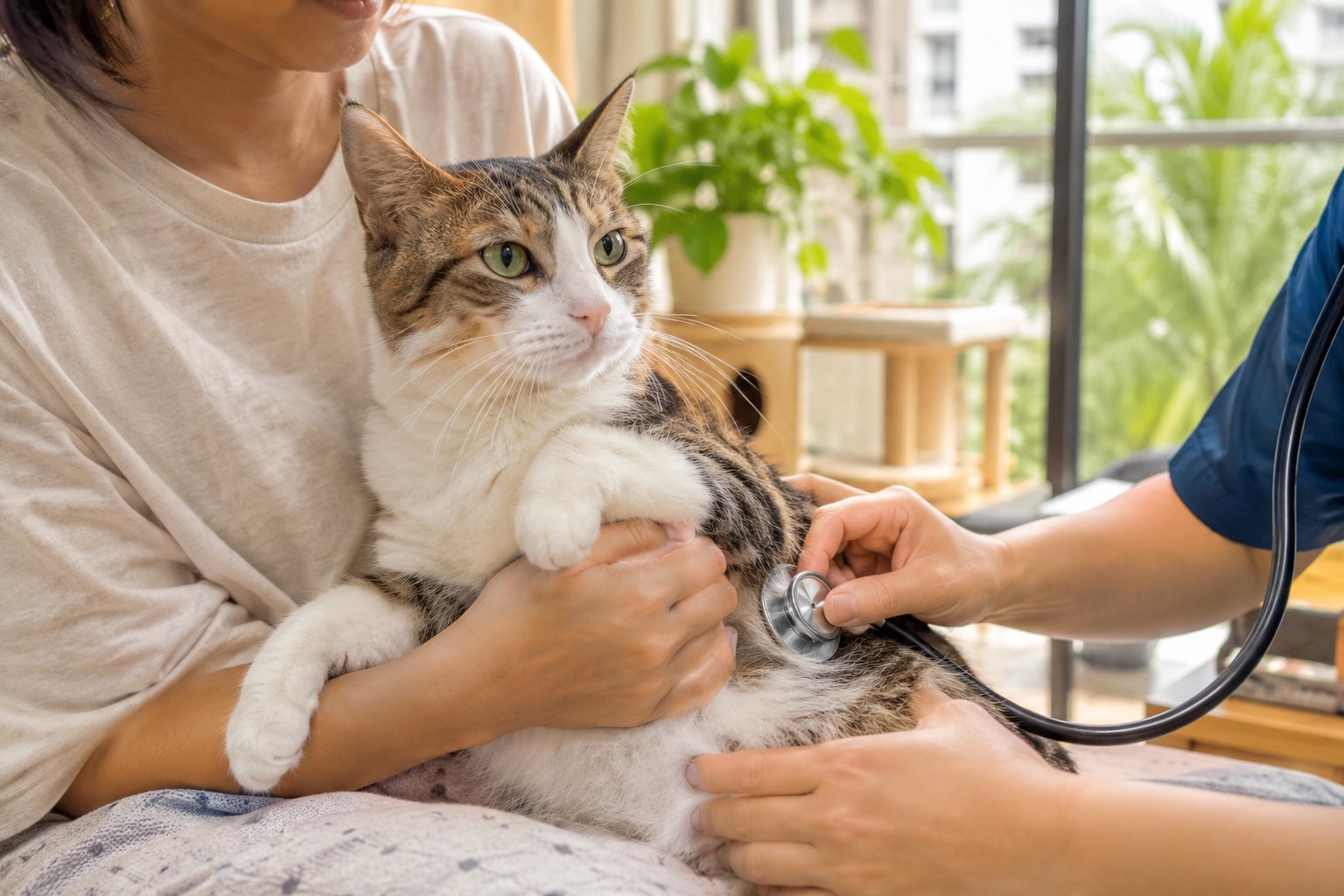
- Physical exam. Weight, body condition score, palpation of the abdomen, listening to the heart and lungs, checking gums and hydration.
- Imaging. X-rays show organ size and gas patterns; ultrasound is better for fluid and organ detail.
- Fluid sampling. If fluid is present, a small sample can be analysed to narrow down the cause.
- Blood and urine tests. To check liver, kidney, protein levels, thyroid and blood counts.
- Faecal test. To rule out parasites.
Treatment depends entirely on the cause. Deworming, diet changes, heart medication, drainage of fluid, or surgery may be involved. Your vet will explain the options and likely costs, which vary by clinic and location in Malaysia.
Home care and prevention
You cannot treat a swollen belly at home, but you can reduce risk and improve monitoring.
- Weigh your cat monthly on a kitchen scale, or weigh yourself holding the cat and subtract your weight. Record it.
- Measure portions. Use a measuring cup or scale rather than free-feeding.
- Keep a worming schedule recommended by your vet, especially for kittens and outdoor cats.
- Provide fresh water and consider a water fountain to encourage drinking.
- Limit treats and avoid human food, which is often high in salt and fat.
- Play daily with wand toys to maintain muscle and healthy weight.
- Groom regularly so you notice lumps, wounds or coat changes early.
- Photograph the belly from above and from the side monthly. Photos make subtle changes obvious.
- Keep a symptom diary of appetite, vomiting, litter box habits and energy.
When to see a vet
Go to a vet promptly, or seek emergency care, if you notice any of the following:
- Sudden swelling of the belly.
- A painful belly when touched.
- Laboured or open-mouth breathing.
- Pale, grey or blue gums.
- Collapse, weakness or inability to stand.
- Unproductive retching or a hard, drum-like belly.
- A male cat straining to urinate with no urine produced.
- Repeated vomiting, especially with lethargy.
- Weight loss despite a good appetite.
- Fluid that seems to slosh when the cat moves.
- Any swelling in a kitten, or swelling that persists more than a few days.
If you are unsure, call your vet and describe what you see. A phone call is cheaper than waiting for an emergency.
Living with a cat in Malaysia: practical notes
Malaysian homes vary widely, and that affects how you monitor your cat.
- Kuala Lumpur apartment. Space is limited, so indoor-only cats are common. Obesity is the main risk for a swollen belly here. Use vertical space, daily play and measured meals. Watch for constipation if your cat drinks little.
- Johor terrace house. Cats may roam the garden or neighbourhood. Pregnancy, parasites and road accidents are more likely. Keep intact cats indoors and maintain a worming schedule.
- Penang rainy season. Humid, wet weather can mean more time indoors and less activity. It is also a good time to check for fleas and worms, which can contribute to a pot belly in kittens.
Across Malaysia, access to veterinary care varies by town and state. If you live far from a clinic, keep a record of your cat's normal weight and behaviour so a vet can help by phone, and plan ahead for emergencies.
A simple weekly check routine
- Weigh your cat and write it down.
- Look at the belly from above and the side.
- Gently feel the belly with flat fingers.
- Check gums and breathing at rest.
- Note appetite, water intake and litter box output.
- Check for fleas, ticks and worms.
- Review the week's photos for changes.
This takes five minutes and gives your vet useful information if something changes.
Key takeaways
- A swollen belly is a sign, not a diagnosis.
- Fat, gas, pregnancy and worms are common and often manageable.
- Fluid, masses and blocked bladders are serious and need prompt vet care.
- Fast change, pain, breathing difficulty or no urine are red flags.
- Weighing, measuring food and regular worming reduce risk.
- Never drain or press a swollen belly at home.
Vet disclaimer
This article is general information for Malaysian cat owners and is not a substitute for veterinary advice. Every cat is different. If your cat has a swollen belly, especially with pain, breathing changes or lethargy, consult a licensed veterinarian for diagnosis and treatment.
Related reading
- Cat Health Guide Malaysia: Symptom Check, Red-Flag Triage & When to See a Vet
- Dehydration in Cats: Causes, Warning Signs and How to Care for a Thirsty Cat
- Signs of Constricted Pupils in Cats in Malaysia: What Small Pupils Mean
- Vomiting in Cats: Causes and Care (Malaysia Guide)
- Arthritis in Cats: Causes and Care (Malaysia Guide)
- Arthritis in Cats in Malaysia: Signs, Diagnosis and Home Care
- Bad Breath in Cats: Causes and Care (Malaysian Owner's Guide)

