
Quick answer
Occasional sneezing in cats is usually harmless, but frequent sneezing with discharge, fever, loss of appetite or breathing difficulty can signal cat flu, allergies or a foreign object. Watch for these signs and see a Malaysian vet promptly if your cat stops eating, breathes with its mouth open or has coloured nasal discharge.
Why cats sneeze: the short version
A sneeze is a reflex that clears the nose. In cats, the trigger can be as simple as a speck of dust or as serious as a viral infection. The key is pattern: a cat that sneezes once after sniffing a dusty corner is different from a cat that sneezes ten times an hour and stops eating.
In Malaysia, several everyday factors make sneezing more likely. Humid air can trap dust and mould indoors. Air-conditioning dries the nasal lining. Cooking smoke, mosquito coil smoke and strong household fragrances irritate the nose. And because many Malaysian homes have more than one cat, viral infections spread quickly through shared bowls and bedding.
The signs to look for
Use this checklist to describe what you see. Write down the answers before you call a vet; it makes the conversation faster and more useful.
| Sign | What it can mean | Urgency |
|---|---|---|
| Occasional sneeze, clear discharge, cat still eating | Dust, mild irritant, early cold | Monitor 24–48 hours |
| Frequent sneezing, clear or white nasal discharge, mild eye watering | Cat flu (herpesvirus or calicivirus), allergy | See vet within 1–2 days |
| Thick yellow or green nasal discharge | Bacterial infection, secondary to cat flu | See vet promptly |
| Sneezing with blood | Foreign object, polyp, injury, dental disease | See vet same day |
| Sneezing plus fever, lethargy, not eating | Systemic infection | See vet urgently |
| Open-mouth breathing, wheezing, blue gums | Breathing difficulty | Emergency |
| Sneezing plus bad breath or drooling | Dental disease, oral ulcer | See vet within a few days |
| Sneezing in a kitten or senior cat | Weaker immune system, higher risk | See vet earlier |
Nasal discharge
Clear, watery discharge often comes with allergies or the first day of a viral infection. White or cloudy discharge suggests more inflammation. Yellow or green discharge usually means bacteria are involved, either as a primary problem or secondary to cat flu. Any coloured discharge deserves a vet visit.
Eye signs
Cats with feline herpesvirus often get conjunctivitis: red, watery or crusty eyes, sometimes with squinting. Calicivirus can cause eye discharge too, along with mouth ulcers. If your cat is sneezing and its eyes look sore, mention both signs to the vet.
Mouth and breathing signs
A sneezing cat that starts breathing through its mouth is in trouble. Cats normally breathe through their nose; open-mouth breathing means the nose is blocked or the lungs are affected. This is an emergency. Similarly, watch for noisy breathing, wheezing or a cat that stretches its neck forward to breathe.
Appetite and behaviour
A blocked nose kills appetite because cats rely heavily on smell to decide whether food is worth eating. A sneezing cat that sniffs food and walks away is telling you its nose is blocked. Lethargy, hiding and fever are signs the problem is more than a tickle.
Other clues
- Sneezing after eating may point to dental disease or a foreign object.
- Sneezing with a bloody nose after a fall or fight needs same-day checks.
- A kitten that sneezes and has runny eyes should be seen early; kittens dehydrate quickly.
- A senior cat with chronic sneezing may have nasal polyps or dental roots affecting the nasal cavity.
Common causes in Malaysian homes
Cat flu (feline herpesvirus and calicivirus)
These two viruses cause most infectious sneezing in cats. They spread through sneeze droplets, saliva and shared bowls. Signs include sneezing, nasal discharge, eye discharge, fever, mouth ulcers and loss of appetite. Many cats recover with supportive care, but kittens and senior cats can become seriously ill. Some cats become carriers and sneeze again during stress.
Allergies and irritants
Dust, pollen, mould, cigarette smoke, mosquito coil smoke, incense, strong perfume and harsh cleaning products can all trigger sneezing. So can scented litter. If your cat sneezes mainly in one room or after you clean, an irritant is likely.
Foreign objects
Grass seeds, small bits of plastic and food fragments can lodge in the nose. A cat with a foreign object often sneezes violently, paws at its nose and may have a bloody or one-sided discharge. Do not try to remove it yourself; see a vet.
Dental disease
In older cats, infected tooth roots can spread inflammation into the nasal cavity, causing chronic sneezing and bad breath. A dental check is part of a full work-up for long-standing sneezing.
Nasal polyps and tumours
Polyps are benign growths that can block one side of the nose. Tumours are less common but possible in older cats. One-sided sneezing or discharge should always be investigated.
Dry air and air-conditioning
Long hours in air-conditioned rooms can dry the nasal lining and make it more sensitive. A humidifier or a bowl of water near a safe spot can help, but do not let the room become damp and mouldy.
What to do at home
- Keep a simple log. Note how often your cat sneezes, what the discharge looks like, and whether it is eating and drinking. A phone note is enough.
- Reduce irritants. Switch to unscented litter, stop using air fresheners and incense near the cat, and vacuum gently when the cat is in another room.
- Encourage drinking. Fresh water in clean bowls, or a little extra wet food, helps keep the nose moist.
- Warm, soft food. Gently warming wet food can make it smell stronger and easier for a blocked cat to eat.
- Clean the nose and eyes. Use a soft, damp cloth to wipe discharge. Do not push anything into the nostril.
- Isolate if you have other cats. Use a separate room and separate bowls until a vet has checked your cat.
- Do not use human cold medicine. Never give paracetamol, ibuprofen or decongestants to cats; they are toxic.
- Book a vet visit early. If signs last more than 48 hours or your cat stops eating, do not wait.
When to see a vet
See a vet promptly if your cat has any of these signs:
- Sneezing that lasts more than two days or gets worse.
- Yellow, green or bloody nasal discharge.
- Fever, lethargy or hiding.
- Loss of appetite for more than 24 hours.
- Eye discharge, squinting or red eyes.
- Mouth breathing, wheezing or noisy breathing.
- Sneezing in a kitten, a senior cat or a cat with a known illness.
- One-sided sneezing or facial swelling.
If your cat is breathing with its mouth open, has blue gums or is gasping, treat it as an emergency and go to the nearest veterinary clinic immediately.
What a vet may do
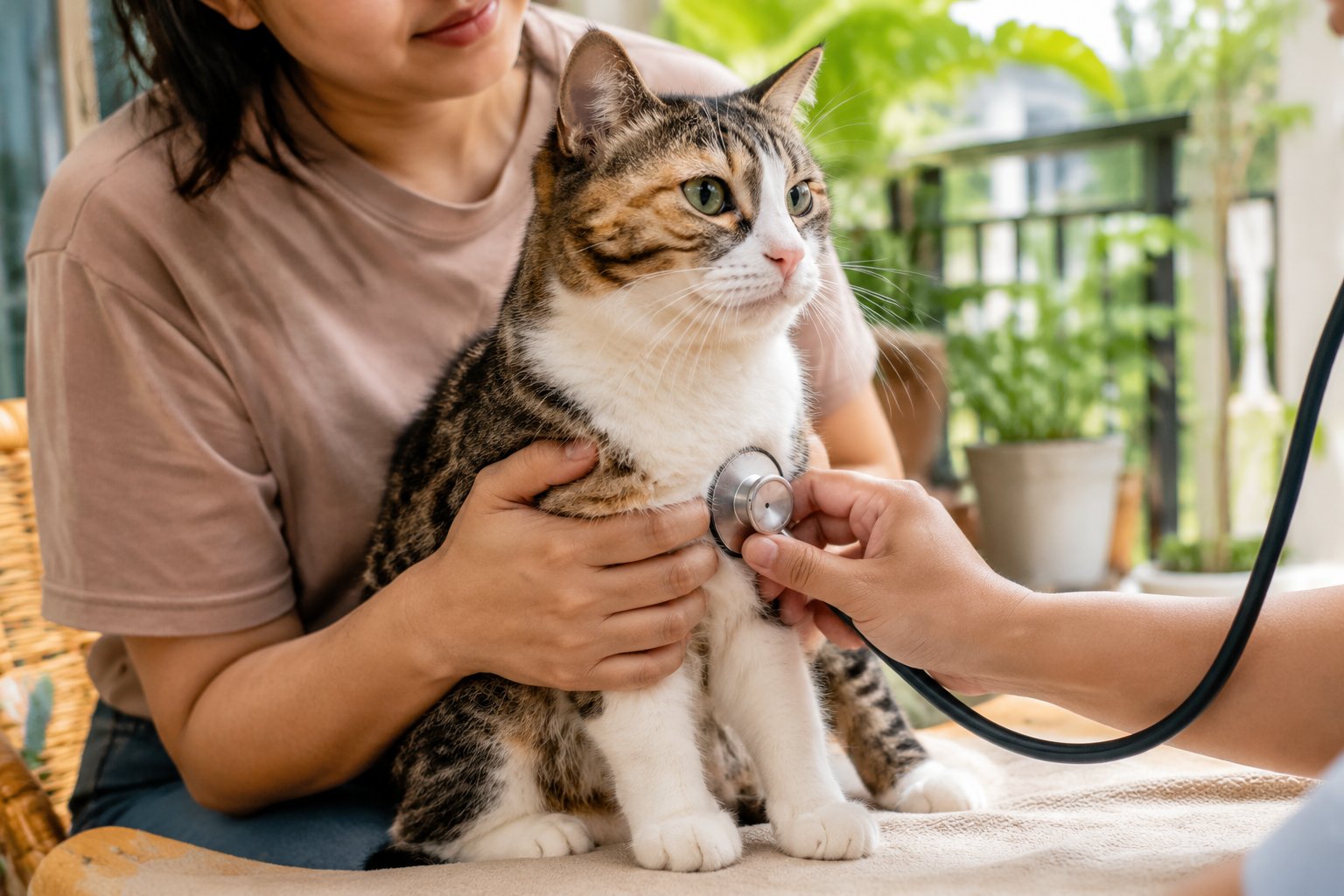
A vet will start with a physical exam: temperature, breathing rate, nose and eye inspection, and listening to the chest. They may ask about vaccination history, other cats in the home and recent changes in the environment.
Depending on findings, they may recommend:
- Supportive care for mild viral cases: fluids, soft food, steam or nebulisation, and rest.
- Antibiotics only if a bacterial infection is suspected; antibiotics do not treat viruses.
- Eye drops or ointment for conjunctivitis.
- Nasal or oral swabs if a specific diagnosis is needed.
- Dental checks or X-rays for chronic or one-sided signs.
- Blood tests for older cats or severe cases.
Ask your vet about vaccination status. Core vaccines help reduce the severity of cat flu, even if they do not always prevent infection.
Prevention in a Malaysian setting
- Vaccinate. Keep core vaccines up to date, especially for kittens and cats that go outdoors or meet other cats.
- Control dust. Wash bedding weekly, vacuum with a HEPA filter if possible, and keep the cat out of rooms being cleaned.
- Watch the air. Avoid cigarette smoke, mosquito coils and strong fragrances near your cat.
- Choose unscented litter. Scented litter is a common irritant.
- Separate new cats. Isolate a new cat for at least a week before introductions.
- Clean bowls daily. Shared bowls spread viruses.
- Manage stress. Stress can trigger herpesvirus flare-ups in carrier cats.
- Book dental checks. Dental disease is a hidden cause of chronic sneezing.
A simple comparison: mild vs serious
| Feature | Mild, likely harmless | Serious, see a vet |
|---|---|---|
| Frequency | A few sneezes a day | Many times an hour |
| Discharge | Clear, small amount | Yellow, green or bloody |
| Appetite | Normal | Reduced or none |
| Energy | Normal | Lethargic, hiding |
| Breathing | Normal, nose only | Mouth breathing, noisy |
| Eyes | Normal | Red, crusty, squinting |
| Duration | Improves in 1–2 days | Worsens after 48 hours |
Real-life Malaysian examples
Kuala Lumpur apartment. A cat living in a high-rise with air-conditioning on all day may sneeze more during the dry, hazy weeks when windows are closed and dust builds up. Switching to unscented litter and cleaning filters can reduce irritation. If sneezing continues with eye discharge, book a vet visit.
Johor terrace house. In a household with several cats and open windows, a sneezing kitten can spread cat flu quickly through shared food bowls. Isolate the kitten, wash hands between cats and see a vet early. Keep the kitten away from other cats until the vet confirms it is safe.
Bottom line
Most sneezing in cats is minor, but the pattern matters. Clear discharge and normal appetite can be watched for a day or two. Coloured discharge, fever, mouth breathing or a cat that stops eating needs a vet. In Malaysia's humid, sometimes hazy climate, reducing dust and smoke and keeping vaccinations current are the simplest ways to protect your cat's nose.
This article is general information only and is not a substitute for veterinary advice. Always consult a licensed veterinarian in Malaysia for diagnosis and treatment of your cat.
Related reading
- Cat Eye Infection Treatment in Malaysia: A Practical Owner's Guide
- Coughing Prevention for Cats: A Practical Guide for Malaysian Owners
- Eye Infection in Cats in Malaysia: Causes, Signs, Treatment & Prevention
- Signs of Constipation in Cats in Malaysia: What to Watch For and When to Act
- Signs of Coughing in Cats Malaysia: What Every Owner Should Know
- Signs of Excessive Urination in Cats in Malaysia: What's Normal, What's Not, and When to Worry

