
The short answer
Fleas are a year-round problem in Malaysia because the warm, humid climate lets them breed continuously rather than dying off in winter. Beating them takes two things at once: a safe, correctly dosed flea product on every pet, and consistent cleaning of the home to destroy eggs, larvae and pupae hiding in bedding, carpets and cracks. Most owners who "fail" at flea control simply stop too early, treat only one cat, or use a product that does not match their cat's weight.
This guide walks through how to confirm fleas, which treatment types exist, how to clean your home, how to prevent reinfection, and when a vet visit is essential.
How to tell whether your cat really has fleas
Fleas are small, fast and good at hiding, so many owners notice the symptoms before the insects. Common signs include:
- Intense scratching, especially around the neck, base of the tail and belly
- Small scabs or crusts, often called flea allergy dermatitis, which some cats develop from just a few bites
- Hair loss in patches from over-grooming
- Black specks in the coat that look like pepper
- Restlessness or irritability, sometimes with disturbed sleep
- Pale gums in heavy infestations, because fleas drink blood (a particular risk for kittens)
A simple home test: stand your cat on a white sheet of paper or a white towel, comb the coat with a fine-toothed flea comb, then wet the dark specks that fall out. If they smear reddish-brown, that is flea dirt, which is digested blood. Genuine dirt stays grey or black.
Some cats, especially long-haired breeds and older cats that groom less, carry fleas with almost no scratching. Do not assume a calm cat is flea-free.
Why fleas are so persistent in Malaysia
In temperate countries, cold winters interrupt the flea life cycle. In Malaysia, the cycle runs continuously. A flea goes through four stages:
- Egg — laid on the cat, then falls off into bedding, carpet and floor cracks
- Larva — a small, worm-like stage that hides in dark places and feeds on organic debris and flea dirt
- Pupa — a cocoon that is very resistant to cleaning products and can wait for weeks until it senses warmth and vibration
- Adult — emerges, jumps onto a host, and starts laying eggs within a day or two
Because the pupal stage survives many household treatments, a single application rarely ends an infestation. New adults keep emerging for weeks. This is why any serious flea plan runs for at least three months, and why vacuuming matters so much: vibration and warmth trigger pupae to hatch so the next treatment can kill the adults.
Treatment options for cats
Flea products fall into a few broad categories. Your vet can advise which suits your cat's age, weight, pregnancy status and health.
| Product type | How it works | Typical speed | Pros | Watch-outs |
|---|---|---|---|---|
| Spot-on | Liquid applied to skin at the back of the neck | Often within 12–24 hours | Easy, monthly, also treats some other parasites | Must be dosed by weight; do not bathe immediately after |
| Oral tablet | Flea adulticide swallowed | Can start within hours | Fast, no residue, good for cats that hate topical products | Some cats are difficult to pill; check suitability for kittens |
| Flea collar | Slow-release active ingredient | Slower, depends on product | Long-lasting, low effort | Quality varies widely; some are ineffective or unsafe |
| Shampoo | Kills fleas on contact during bath | Immediate but short-lived | Useful for heavy infestations before other treatment | No lasting protection; stressful for many cats |
| Spray | Applied to coat | Moderate | Useful for some cats | Cats often dislike sprays; dosing accuracy matters |
| Environmental spray or fogger | Treats the home | Varies | Helps in severe cases | Must be used safely with cats; follow label exactly |
A few practical rules:
- Match the dose to weight. A product for a 4 kg cat is not automatically right for a 2 kg kitten. Weigh your cat or ask the clinic to weigh it.
- Check the species on the label. Never use a dog product on a cat unless the label explicitly says it is safe for cats.
- Do not stack products without veterinary advice. Combining a spot-on and a collar with similar ingredients can overdose your cat.
- Treat every cat and dog in the household on the same day, or fleas will simply move to the untreated pet.
Prices for these products vary widely in Malaysia depending on brand, pack size and clinic, so ask your vet or a trusted retailer for a current quote rather than relying on online figures.
The home cleaning plan that actually works
Treating the cat without treating the environment is the most common reason flea problems drag on. A workable routine:
Day 1 (treatment day)
- Apply the flea product to every pet
- Strip and wash all pet bedding, blankets and washable covers in the hottest water the fabric allows
- Vacuum floors, carpets, sofa seams, under furniture and along skirting boards
- Seal the vacuum bag or empty the canister into an outside bin immediately
Days 2–14
- Vacuum daily if possible, focusing on where your cat sleeps and walks
- Keep washing bedding weekly
- Restrict your cat to easy-to-clean areas if the infestation is heavy
Weeks 2–12
- Repeat the flea product exactly on the schedule your vet recommends
- Keep vacuuming every few days
- Watch for new scratching or flea dirt, which signals emerging adults
Carpets, rugs and soft furnishings are the main reservoirs. If your home has wall-to-wall carpet and a long-standing infestation, a professional pest controller experienced with pets may help. Ask them to use pet-safe products and to tell you how long to keep cats out of treated rooms.
Prevention: the part most owners skip
Once the infestation clears, prevention keeps it from returning. In Malaysia's climate, year-round prevention is usually more sensible than seasonal treatment.
- Stay on a monthly or vet-recommended schedule. Mark it on a calendar or phone reminder.
- Treat new pets before they enter the home, and check rescue cats carefully.
- Groom regularly with a flea comb, especially in long-haired cats.
- Watch the entry points. Fleas ride in on shoes, bags, second-hand furniture and visiting pets.
- Manage strays around your home. If neighbourhood cats sleep on your porch or car, you may see fleas near doorways.
- Ask about other parasites. Many flea products also cover ticks or worms; your vet can advise what your cat needs.
Fleas and your cat's health
Fleas are not just an itch. They can cause:
- Flea allergy dermatitis — an allergic reaction to flea saliva that causes severe itching and skin damage from just a few bites
- Anaemia — heavy infestations, especially in kittens or weak cats, can drain enough blood to be dangerous
- Tapeworm — fleas carry tapeworm larvae, which cats swallow while grooming
- Bacterial skin infections — from scratching and broken skin
- Stress and behaviour changes — poor sleep, irritability, over-grooming
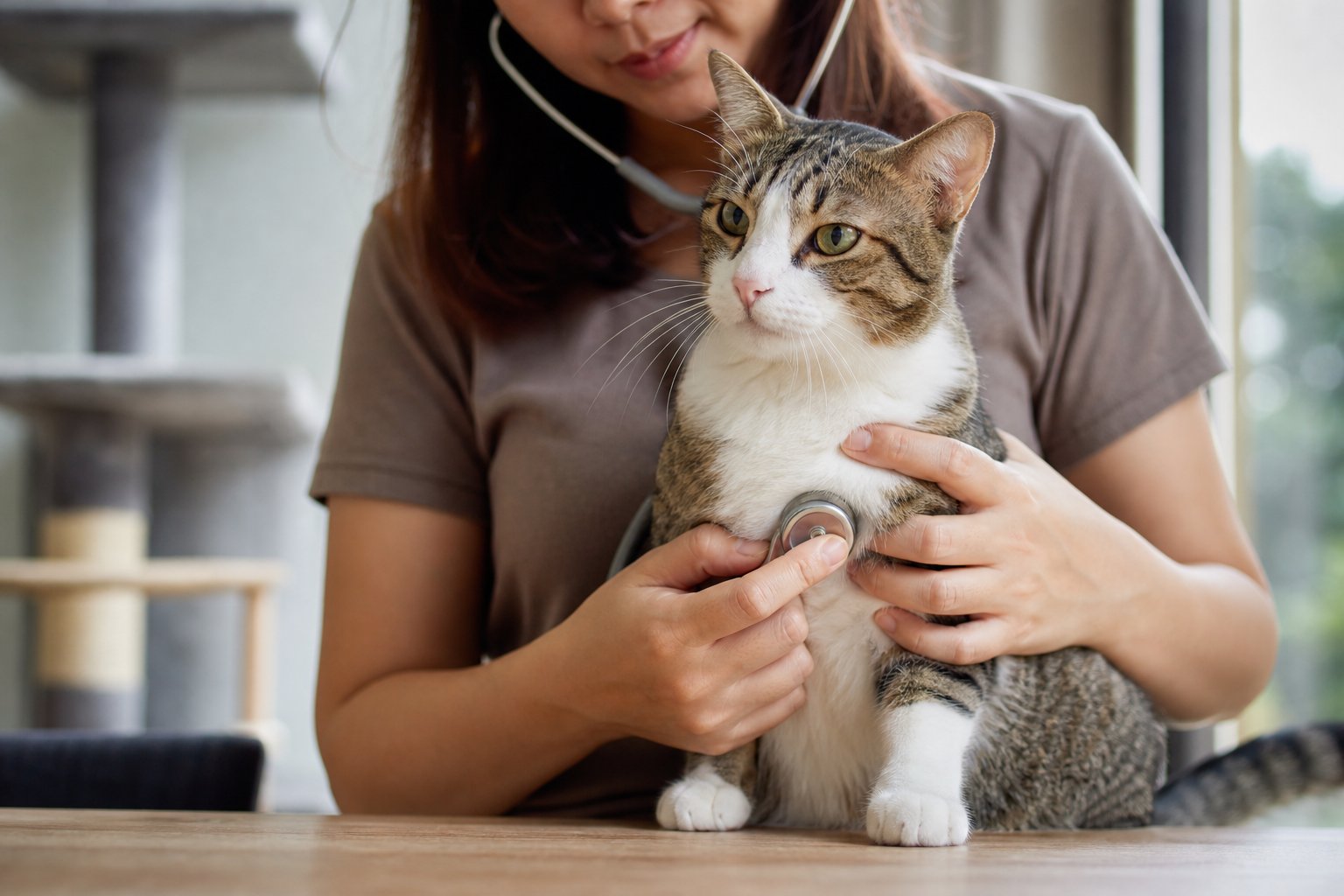
If your cat has scabs, bald patches, pale gums, lethargy or is not eating, book a vet visit rather than trying another product at home.
Special situations
Kittens. Many flea products are not licensed for very young kittens. Ask your vet before using anything, and never guess a dose.
Pregnant or nursing cats. Product choice is limited. A vet should select a safe option.
Cats with other health conditions. Cats with epilepsy, liver or kidney disease, or on other medication may need a different product.
Multi-cat households. Treat all cats on the same day. Otherwise, untreated cats act as a flea reservoir.
Cats that hate being handled. Oral products or long-acting options may be easier than weekly bathing or spraying.
When to see a vet
Contact a veterinarian if:
- You see fleas but over-the-counter products are not working after a full, correctly applied course
- Your cat has severe scratching, open sores, scabs or hair loss
- Your cat's gums look pale, or it is weak, lethargic or off food
- You have a kitten under a few weeks old with fleas
- Your cat is pregnant, nursing, or has a chronic illness
- You are unsure which product is safe, or your cat has had a reaction (drooling, wobbling, tremors, vomiting) after a flea product — this is an emergency
- You notice tapeworm segments (small, rice-like pieces) around the tail base
A vet can confirm the diagnosis, rule out other skin conditions such as fungal infections or allergies, prescribe appropriate treatment, and advise on a prevention plan for your household.
Quick checklist
- Confirm fleas with a flea comb and the wet-paper test
- Weigh your cat and choose a correctly dosed product
- Treat every pet in the home on the same day
- Wash all bedding in hot water
- Vacuum daily for the first two weeks, then every few days
- Repeat treatment on schedule for at least three months
- Watch for tapeworm and skin infection signs
- Book a vet check if symptoms persist or your cat is unwell
A note on expectations
Flea control is a marathon, not a sprint. Seeing a few live fleas in the first two to three weeks after starting treatment is normal, because pupae are still hatching. Judge success by whether the numbers are falling and whether your cat is more comfortable, not by whether you spot a single flea on day three. If things are not improving after a full course, go back to your vet rather than buying a different product every week.
This article is general information, not veterinary advice. Always consult a licensed veterinarian about your cat's health and treatment.
Related reading
- Flea Treatment for Cats in Malaysia: A Complete Guide
- Fleas in Cats in Malaysia: Signs, Treatment and Prevention
- Signs of Fleas in Cats in Malaysia: How to Spot, Check and Act
- Cat Ear Mites Treatment in Malaysia: A Complete Owner's Guide
- Ear Mites in Cats in Malaysia: Signs, Treatment and Prevention
- Fleas in Cats: Causes and Care (Malaysia Guide)
- Signs of Ticks in Cats in Malaysia: What to Look For and What to Do
- Ticks in Cats in Malaysia: What Every Cat Owner Should Know
- Ticks Prevention for Cats in Malaysia: A Complete Guide
- Dog Fleas: Practical Tips for Malaysian Dog Owners

