
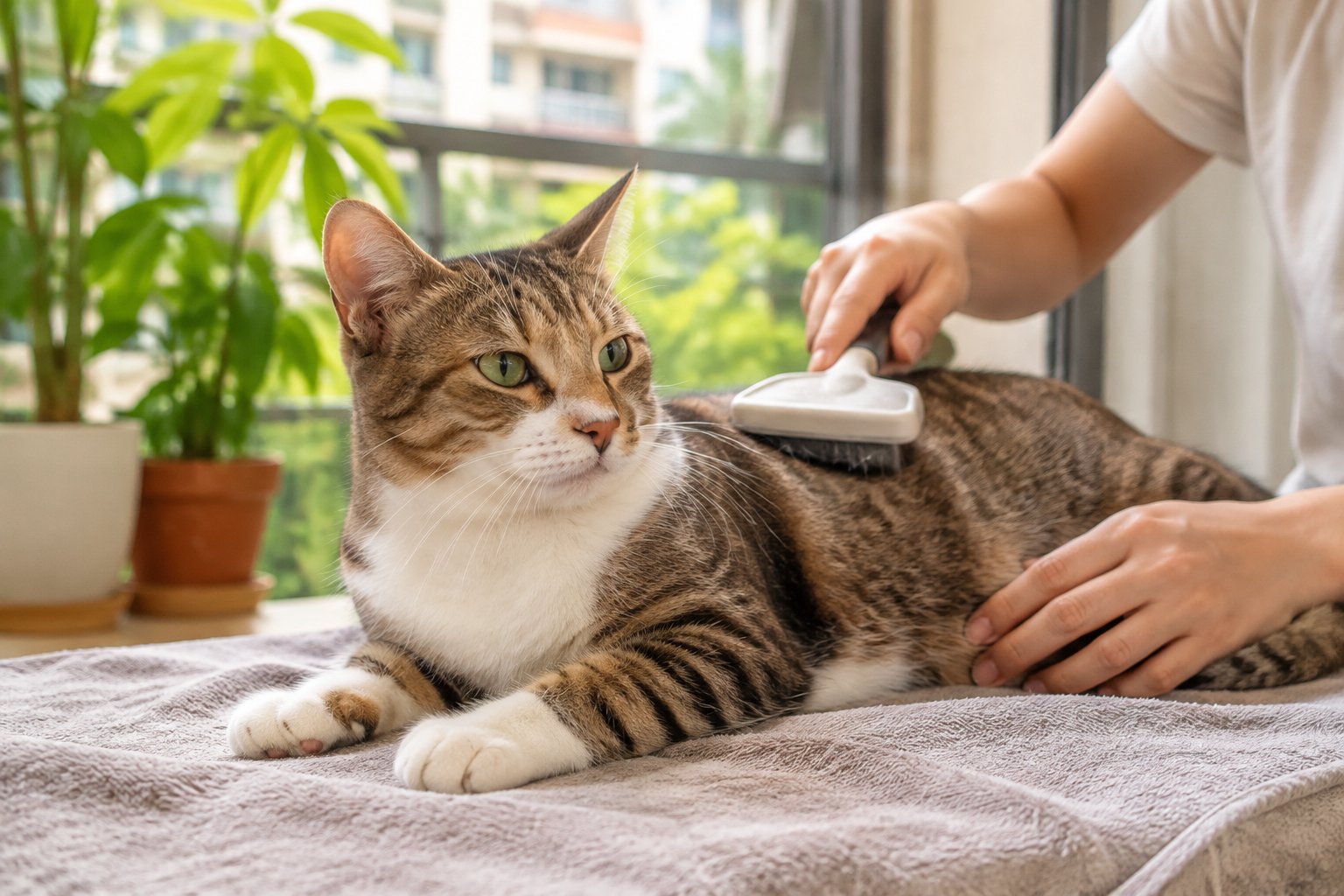
Start here: mats are a grooming problem and sometimes a health clue
Cat fur matting happens when loose undercoat hair tangles with the top coat and tightens into a felt-like clump. It is common in long-haired breeds, older cats, overweight cats and cats that dislike being brushed. In Malaysia's warm, humid climate, damp undercoat and indoor air-conditioning can make tangling worse.
The safe approach is slow and mechanical: assess the mat, soften it, separate it into smaller pieces, comb from the tip inward, and only then consider clipping. Never yank a dry mat. Never dig sharp scissors into fur near skin. And treat sudden matting in a previously well-groomed cat as a reason to check for pain, arthritis, obesity or skin disease.
This guide walks through the whole process step by step, with a comparison table, a prevention routine and clear red flags for when to see a vet.
Why cats get mats
A cat's coat is designed to shed loose hairs. When those hairs stay trapped, they wrap around growing fur and tighten. Several factors push a cat toward matting:
- Coat type. Long-haired and semi-long-haired cats, and cats with dense double coats, mat more easily.
- Age and mobility. Older cats may find twisting to groom the lower back and belly painful.
- Weight. Overweight cats physically struggle to reach their rear end and underside.
- Dental or mouth pain. Grooming involves licking and nibbling; sore teeth or gums reduce it.
- Arthritis. Stiff joints make the contortion of grooming uncomfortable.
- Skin problems. Fleas, allergies, fungal issues or wounds can make a cat avoid grooming an area.
- Humidity and damp undercoat. A coat that stays slightly damp traps loose hair.
- Grooming gaps. Brushing only the surface leaves the undercoat to pack down.
- Stress or temperament. Some cats simply will not tolerate long sessions.
Matting is not automatically neglect. A cat can be loved and well fed and still develop mats because of pain or coat type. The useful question is not "who is at fault" but "what is maintaining the tangle".
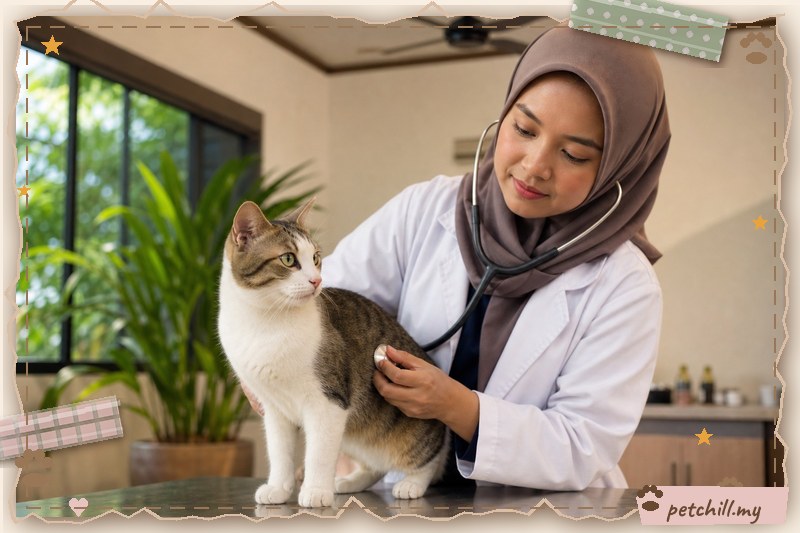
Step-by-step: how to remove cat fur matting safely
Work in a quiet room with good light. Have treats ready. Keep sessions short, especially with a cat that dislikes handling.
Step 1: Assess before you touch
Look at the mat without pulling it. Note:
- Size and tightness. A loose, pea-sized tangle is very different from a solid plate stuck to skin.
- Location. Armpits, belly, groin, behind the ears and the base of the tail are delicate.
- Skin condition. Part the fur gently. Redness, broken skin, discharge, crusting, fleas or a bad smell mean stop and book a vet.
- Your cat's mood. If your cat is hissing, hiding or snapping, stop. A vet or groomer can sedate or handle safely.
Step 2: Gather the right tools
You do not need a cupboard full of products. You need the right few:
- A wide-tooth comb and a fine-tooth metal comb
- A slicker brush for the top coat
- Blunt-ended safety scissors with rounded tips
- Pet-safe detangling spray, or plain cornstarch as a dry helper
- Treats and a towel or non-slip mat
- Good lighting, ideally daylight
Avoid sharp household scissors, human hair clippers without guards, and anything that pulls.
Step 3: Calm your cat and set a short session
Place your cat on a non-slip surface at a comfortable height. Let them sniff the comb. Reward calm behaviour before you start. Set a timer for five to ten minutes. Short, repeated sessions beat one long battle.
If your cat is food-motivated, a lick mat with a small amount of wet food can keep them occupied while you work on a rear mat.
Step 4: Loosen the mat with your fingers first
Gently pinch the mat and tease it apart with your fingertips, working from the outer edge toward the centre. Do not pull away from the skin. The aim is to break one large mat into several smaller ones, because small tangles are far easier to comb out.
Step 5: Use a detangler or cornstarch
For a dry, slightly greasy mat, a light dusting of plain cornstarch can reduce friction and make fibres separate. Work it in gently, then comb out the excess. A pet-safe detangling spray can help on damp or static-prone coats. Apply to the comb or your fingers rather than spraying directly at your cat's face. Never use human detanglers with strong fragrance or alcohol near the eyes.
Step 6: Comb from the tip inward
Hold the mat gently between your fingers to protect the skin. Start at the outer tip of the tangle and comb small sections, moving inward only as the fur loosens. Use the wide-tooth comb first, then the fine comb. If the comb snags, stop, separate the mat further with your fingers, and try again. Forcing a comb through a tight mat hurts and can tear skin.
Step 7: Clip only as a last resort, and only safely
If a mat will not loosen, clipping may be necessary. Use blunt-ended safety scissors. Slide the comb between the mat and the skin as a guard, then cut parallel to the skin, leaving a small margin. Never cut perpendicular to the skin or dig into a mat you cannot see through. If the mat is tight against skin, do not cut it at home.
Step 8: Check the skin and reward
Once the mat is gone, check for redness, cuts or tenderness. Reward your cat immediately. Clean and store your tools. If you removed a large mat, note the location so you can check it again in a few days.
Step 9: Reset the coat
Comb the surrounding fur so it lies flat and does not immediately re-tangle. A light brush-out of the undercoat in that area helps. Then plan a prevention routine rather than waiting for the next mat.
Mat severity: what to try and when to stop
| Mat type | What it looks like | Safe home approach | When to stop |
|---|---|---|---|
| Loose tangle | Small, moves freely, fur visible through it | Fingers, wide-tooth comb, light detangler | If it tightens or your cat resists |
| Medium mat | Firm clump, some skin visible at edges | Break into smaller pieces, comb from tip, cornstarch | If skin looks red or the comb snags repeatedly |
| Tight mat | Solid, close to skin, hard to lift | Do not cut blind; use comb guard only if you can see clearly | If you cannot see skin, stop and seek help |
| Skin-level mat | Felted plate, skin hidden, possible odour | No home removal | See a vet or professional groomer |
| Mat with skin damage | Redness, broken skin, discharge, smell | No home removal | See a vet promptly |
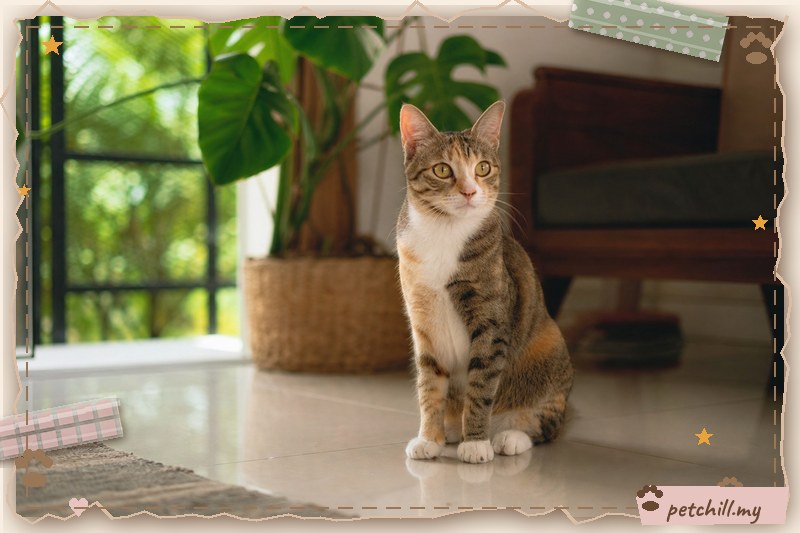
Preventing mats: a routine that fits Malaysian homes
Prevention is mostly about frequency and reaching the undercoat. A simple routine:
- Daily, two minutes. A quick comb over the back, sides and tail base.
- Every two to three days. A fuller session covering the belly, armpits and rear end, where mats hide.
- Weekly. A skin check: part the fur and look for redness, flakes, fleas or tender spots.
- After damp weather. If your cat gets wet or the air is very humid, dry the coat gently with a towel and comb the undercoat.
- During shedding periods. Increase combing to remove loose hair before it traps.
- For older or overweight cats. Check the lower back, belly and groin even if your cat seems fine, because these are the areas they cannot reach.
In a Kuala Lumpur apartment, air-conditioning can dry the coat while humidity outside keeps the undercoat slightly damp after walks on a balcony or near open windows. In a Johor terrace house, cats that spend time in the garden or on a covered patio may pick up damp fur, leaves and grit that encourage tangles. In either setting, a quick towel-dry and comb after outdoor time pays off.
Grooming tools compared
| Tool | Best for | Cautions |
|---|---|---|
| Wide-tooth comb | Starting to separate tangles | Will not remove dense undercoat alone |
| Fine-tooth metal comb | Checking for remaining tangles and undercoat | Can snag if used on a tight mat |
| Slicker brush | Top coat and loose surface hair | Can scratch skin if pressed hard |
| Undercoat rake | Heavy shedding double coats | Use gently; avoid on sensitive or thin skin |
| Blunt safety scissors | Last-resort clipping with a comb guard | Never cut blind or perpendicular to skin |
| Pet clippers | Professional or vet clipping | Risk of clipper burn and cuts; get guidance first |
| Cornstarch | Dry, greasy mats | Messy; keep away from eyes and nose |
| Pet detangler | Damp or static coats | Avoid strong fragrance; patch test |
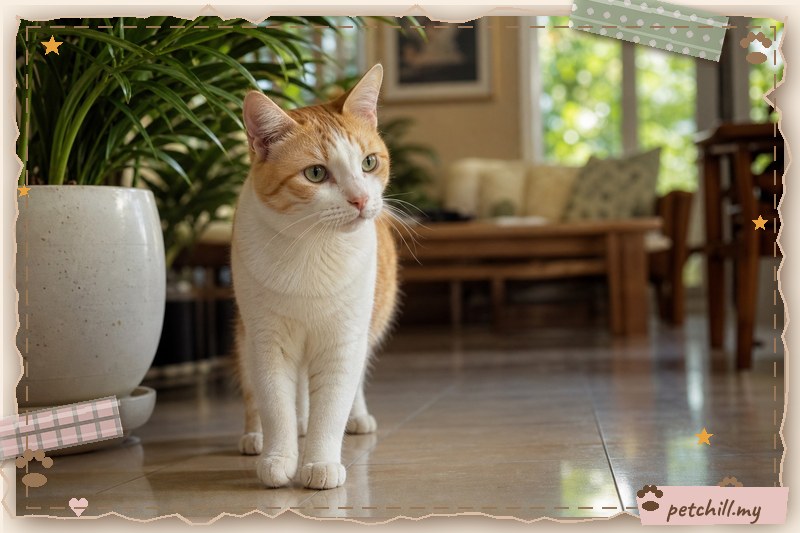
When matting is a health signal
Matting can be the first visible sign of a problem. Consider a vet check if:
- A cat that used to be tidy suddenly develops mats.
- Mats keep returning in the same spot despite grooming.
- Your cat is stiff, reluctant to jump, or slow to rise.
- Your cat is overweight or has lost or gained weight recently.
- There is bad breath, drooling or reluctance to eat hard food.
- The skin under a mat is red, broken, weeping or smelly.
- Your cat is scratching, over-grooming or losing fur.
- Your cat resists being touched on the back, belly or rear end.
These signs do not diagnose anything on their own, but they tell you where to look. A vet can check joints, teeth, skin and weight, and can safely clip a tight mat if needed.
When to see a vet
See a vet or professional groomer rather than continuing at home if:
- The mat is tight against the skin and you cannot see the skin beneath it.
- The skin is cut, red, swollen, discharging or smells unpleasant.
- Your cat is in pain, lame, off food or behaving differently.
- Your cat panics, bites or cannot be handled safely.
- You are unsure whether the mat is fur or something embedded in the coat.
- Matting is widespread or recurring.
Do not attempt to cut a skin-level mat with household scissors. The risk of cutting skin is real, especially in the armpit, groin and belly.
A realistic weekly plan
| Day | Task | Time |
|---|---|---|
| Monday | Quick comb over back and sides | 2 minutes |
| Tuesday | Undercoat check on belly and armpits | 5 minutes |
| Wednesday | Quick comb and treat reward | 2 minutes |
| Thursday | Rear end and tail base check | 5 minutes |
| Friday | Quick comb and skin check | 3 minutes |
| Saturday | Fuller grooming session | 10 minutes |
| Sunday | Rest or short handling practice | 2 minutes |
Adjust to your cat's tolerance. A cat that hates grooming may do better with two-minute sessions daily than one long weekly session.
Bottom line
Cat fur matting is best handled slowly: assess, soften, separate, comb from the tip inward, and clip only with a comb guard and blunt scissors. Prevention means reaching the undercoat regularly, checking the skin, and noticing when matting changes. If a mat is tight to skin, the skin is damaged, or your cat is painful or unwell, get help rather than improvising.
This article is general information for Malaysian cat owners and is not a substitute for veterinary advice. If your cat has matting with skin damage, pain, weight change or behaviour change, consult a licensed veterinarian.
Related reading
- Daily Care Guide Malaysia: A Practical Routine for Dogs and Cats
- Grooming Senior Cats Step by Step: A Gentle Daily Routine for Older Cats
- How to Clean a Cat's Ears Safely: A Step-by-Step Guide for Malaysian Owners
- Pet Daily Care Guide Malaysia: Brushing, Nails, Ears, Eyes, Teeth and Weight (2026)
- Best Cat Carrier for Cats in Malaysia: A Practical Buying Guide
- Best Cat Grass for Cats in Malaysia: A Practical Buying & Growing Guide
- Best Interactive Toys for Cats in Malaysia: A Practical Buying Guide
- Cat Massage: A Practical Guide for Malaysian Cat Owners
- Cat Odour Control: Practical Cat Tips for Malaysian Homes
- Cat Sitter for Cat Owners in Malaysia: A Practical Guide



