
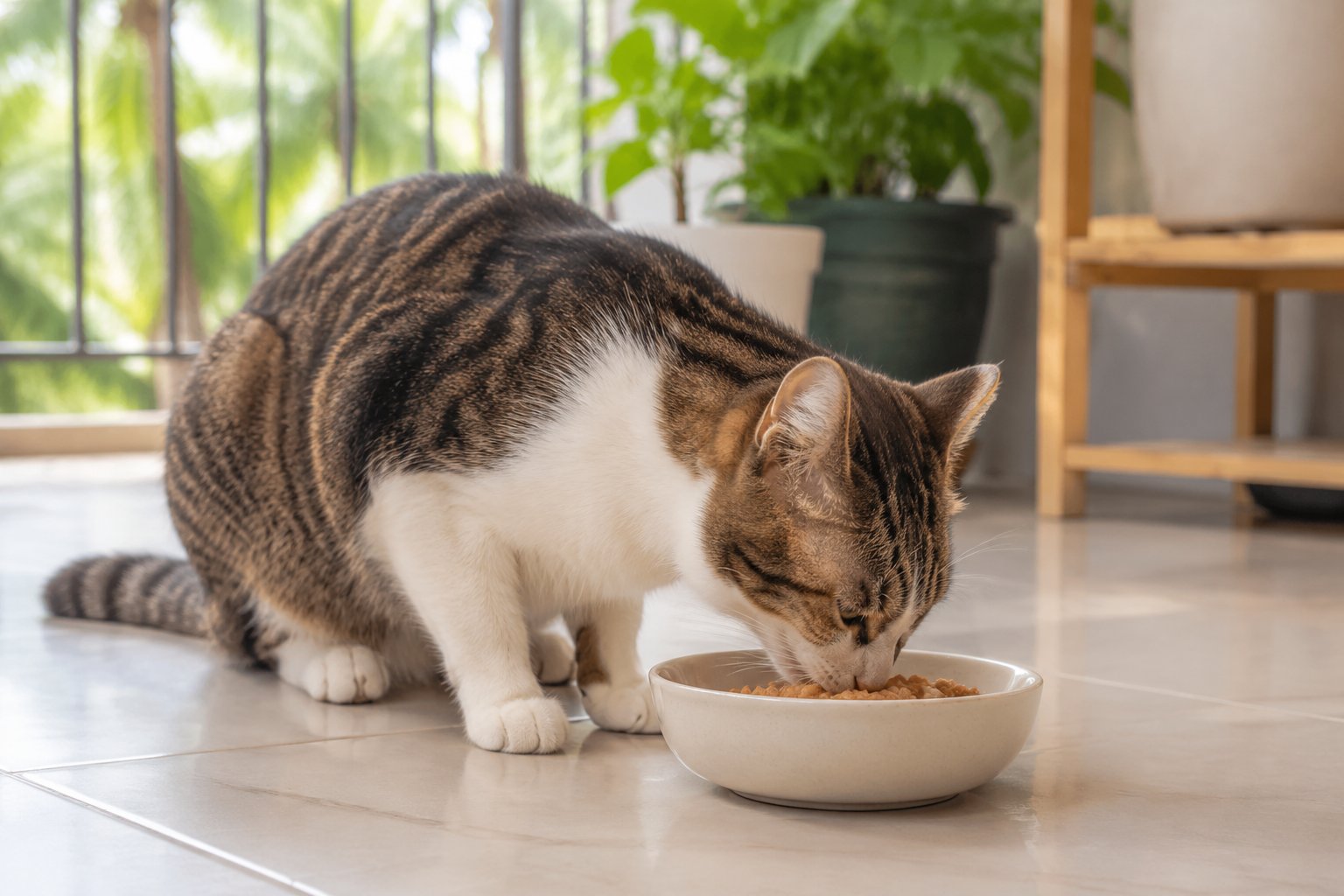
The short answer: milk is not a cat drink
Most adult cats cannot digest lactose, the sugar in milk. Giving cow's milk is likely to cause diarrhoea, vomiting and stomach pain. Kittens under about four weeks old need a proper kitten milk replacer if they are orphaned, but they should never get cow's milk. For adult cats, fresh water is the only drink they need. If you want to give milk as an occasional treat, choose a lactose-free product made for pets and offer only a small amount. Always check with a Malaysian vet before changing your cat's diet, especially if your cat has health issues.
This guide explains why milk causes problems, what to feed kittens at each stage, how to choose safe milk products in Malaysia, and when to see a vet.
Why cow's milk upsets most cats
Cats are mammals, so kittens are born with the enzyme lactase, which breaks down lactose in their mother's milk. As kittens are weaned and stop drinking milk, lactase production naturally falls. By adulthood, most cats have little or no lactase. When they drink cow's milk, the lactose passes undigested into the large intestine, where bacteria ferment it. This draws water into the gut and produces gas, leading to diarrhoea, bloating and discomfort.
Some cats retain enough lactase to tolerate small amounts of milk, but they are the exception. It is impossible to tell by looking at a cat whether it is lactose tolerant. The only reliable test is to offer a very small amount and watch for signs over the next 24 hours. Because the reaction can be messy and uncomfortable, it is safer to avoid cow's milk altogether.
Signs of lactose intolerance
- Diarrhoea, sometimes watery
- Vomiting
- Excessive gas
- Bloated or painful abdomen
- Reduced appetite
- Restlessness or discomfort after drinking
These signs usually appear within a few hours. If they occur, stop giving milk and offer fresh water. If diarrhoea is severe or lasts more than a day, see a vet.
What about kittens? The critical first weeks
Kittens are entirely dependent on their mother's milk for the first few weeks. If the mother is absent, ill, or unable to produce enough milk, you must use a commercial kitten milk replacer (KMR). Cow's milk, goat's milk, evaporated milk and condensed milk are not suitable. They do not have the right balance of protein, fat, carbohydrates, vitamins and minerals, and they can cause diarrhoea, dehydration and poor growth.
Kitten milk replacers are formulated to mimic queen's milk. They are available as powders to mix with water or as ready-to-use liquids. Follow the label instructions exactly. Do not dilute more than recommended to stretch the product, and do not add sugar or other ingredients.
Feeding chart for orphaned kittens
Use this as a general guide. Always confirm with your vet, because each kitten's needs vary with weight, health and breed.
| Kitten age | Feeding frequency | Approximate amount per feed | Notes |
|---|---|---|---|
| 0–1 week | Every 2–3 hours (including night) | 2–6 ml per feed | Warm milk to body temperature; stimulate urination and defecation after each feed |
| 1–2 weeks | Every 3–4 hours | 6–10 ml per feed | Continue stimulation; weigh daily |
| 2–3 weeks | Every 4–6 hours | 10–15 ml per feed | Eyes open; start offering a shallow dish |
| 3–4 weeks | Every 6 hours | 15–20 ml per feed | Begin weaning onto kitten food mixed with replacer |
| 4–5 weeks | 4–5 feeds per day | 20–25 ml per feed | Gradually reduce milk, increase solid food |
| 5–6 weeks | 3–4 feeds per day | 25–30 ml per feed | Most kittens can eat moistened kitten food |
| 6–8 weeks | 2–3 feeds per day | As needed | Weaning almost complete; fresh water available |
These amounts are rough guides. A kitten's stomach is small, so overfeeding can cause diarrhoea. It is better to feed slightly less and more often. Weigh the kitten daily on a kitchen scale; steady weight gain is the best sign that feeding is going well.
How to bottle-feed a kitten
- Wash your hands and sterilise bottles, teats and syringes before each use.
- Warm the milk replacer to about 38°C (body temperature). Test a drop on your wrist; it should feel neither hot nor cold.
- Hold the kitten upright or belly-down, never on its back, to prevent milk entering the lungs.
- Let the kitten suckle at its own pace. If using a syringe, push very slowly.
- Stop when the kitten's tummy is rounded but not tight, or when it turns away.
- After feeding, gently wipe the mouth and stimulate the genital area with a warm damp cotton pad to encourage urination and defecation (for kittens under three weeks).
- Burp the kitten by holding it upright and gently patting its back.
Never feed a cold kitten. Warm it gradually first. If a kitten is chilled, lethargic or not feeding, see a vet immediately.
Milk for adult cats: what are the options?
If you want to give your adult cat a milk treat, choose products that are lactose-free or specifically made for pets. These are available in some pet shops and online in Malaysia, but availability varies. Always read the label: it should state "lactose-free" or "low lactose" and be complete for pets. Avoid human milk, condensed milk, evaporated milk and plant-based milks that contain sweeteners or additives.
Comparison of milk types for cats
| Type | Lactose content | Suitable for adult cats? | Suitable for kittens? | Notes |
|---|---|---|---|---|
| Cow's milk (whole, low-fat, skim) | High | No | No | Causes diarrhoea in most cats |
| Goat's milk | Moderate to high | Not recommended | No | Still contains lactose |
| Evaporated milk | High | No | No | Concentrated lactose and fat |
| Condensed milk | Very high | No | No | High sugar; dangerous for kittens |
| Lactose-free pet milk | Very low | Yes, in small amounts | No (use KMR) | Treat only, not a meal replacement |
| Kitten milk replacer (KMR) | Controlled | No | Yes | Follow label and vet advice |
| Plant-based milks (soy, almond, oat) | None (but additives) | Not recommended | No | Not nutritionally balanced for cats; some contain sweeteners or salt |
Remember that milk is not a substitute for water. Cats need free access to fresh, clean water at all times. Some cats prefer running water, so a pet water fountain can help increase intake. This is especially important in Malaysia's hot climate.
Special cases: pregnancy, nursing and illness
Pregnant and nursing queens have higher energy and calcium needs, but they should be fed a high-quality kitten or growth diet rather than milk. Your vet may recommend specific supplements, but do not add milk or calcium without advice.
Cats with kidney disease, urinary problems or food allergies need individualised diets. Milk can worsen some conditions. Always consult your vet before offering any new food or drink to a cat with a health condition.
Common myths about cats and milk
Myth: Cats need milk for strong bones. Truth: Cats get calcium from complete cat food. Milk is not necessary and can cause digestive upset.
Myth: Kittens can drink cow's milk if it's diluted. Truth: Diluting cow's milk does not make it safe or balanced. Use a proper kitten milk replacer.
Myth: If a cat likes milk, it must be good for them. Truth: Cats often enjoy the taste of milk because of its fat and protein, but liking it does not mean it is healthy. Many cats will happily drink milk and then have diarrhoea.
Myth: Goat's milk is hypoallergenic. Truth: Goat's milk still contains lactose and can trigger the same reactions. It is not hypoallergenic for cats.
Practical tips for Malaysian cat owners
- Keep water fresh. In Malaysia's warm, humid climate, water can spoil quickly. Change it at least twice a day and wash bowls daily.
- Watch out for community cats. If you feed strays, avoid giving them milk. Provide fresh water and appropriate cat food instead.
- Store milk replacer correctly. Once mixed, kitten milk replacer should be refrigerated and used within 24 hours, or discarded according to the label. In hot weather, do not leave mixed milk out.
- Introduce new foods slowly. If you decide to try a lactose-free pet milk, offer a teaspoon first and monitor for 24 hours.
- Apartment living. In a Kuala Lumpur apartment, space is limited, so keep feeding areas clean and away from litter trays. A waterproof mat under bowls helps with spills.
- Terrace houses in Johor. In a Johor terrace house, cats may roam between rooms. Keep kitten feeding equipment in a quiet, clean area away from other pets.
When to see a vet
Seek veterinary advice if you notice any of the following:
- Diarrhoea or vomiting after drinking milk, especially if it lasts more than 24 hours or is severe.
- A kitten that is not gaining weight, is lethargic, feels cold, or refuses to feed.
- Signs of dehydration: tacky gums, skin that does not spring back when gently pinched, sunken eyes, or reduced urination.
- Blood in the stool or vomit.
- Persistent crying or signs of pain in a kitten.
- Any sudden change in appetite or behaviour in an adult cat.
If you are unsure whether your cat can tolerate milk, ask your vet. They can advise on safe treats and rule out other health issues.
Vet disclaimer
This article provides general information only and is not a substitute for professional veterinary advice. Every cat is different. Always consult a licensed veterinarian in Malaysia for diagnosis and treatment, especially before changing your cat's diet or if your cat shows signs of illness.
Related reading
- Cat Food Guide Malaysia 2026: How to Choose Dry, Wet & Prescription Food
- Best Cat Milk for Cats in Malaysia: What to Buy and What to Avoid
- Dry Cat Food Feeding Guide for Cats: How Much, How Often and How to Do It Right
- How to Choose Cat Milk for Cats: A Practical Guide for Malaysian Owners
- Wet Cat Food Feeding Guide for Cats: How Much, How Often and How to Switch
- Best Food Transition for Cats in Malaysia: A Step-by-Step Guide
- Best Grain-Free Cat Food for Cats in Malaysia: What to Look For
- Best Hairball Control Food for Cats in Malaysia: A Practical Buying Guide
- Best High-Protein Cat Food in Malaysia: How to Choose (2025 Guide)
- Cat Care in Malaysia: A Complete Guide for New and Experienced Owners

