
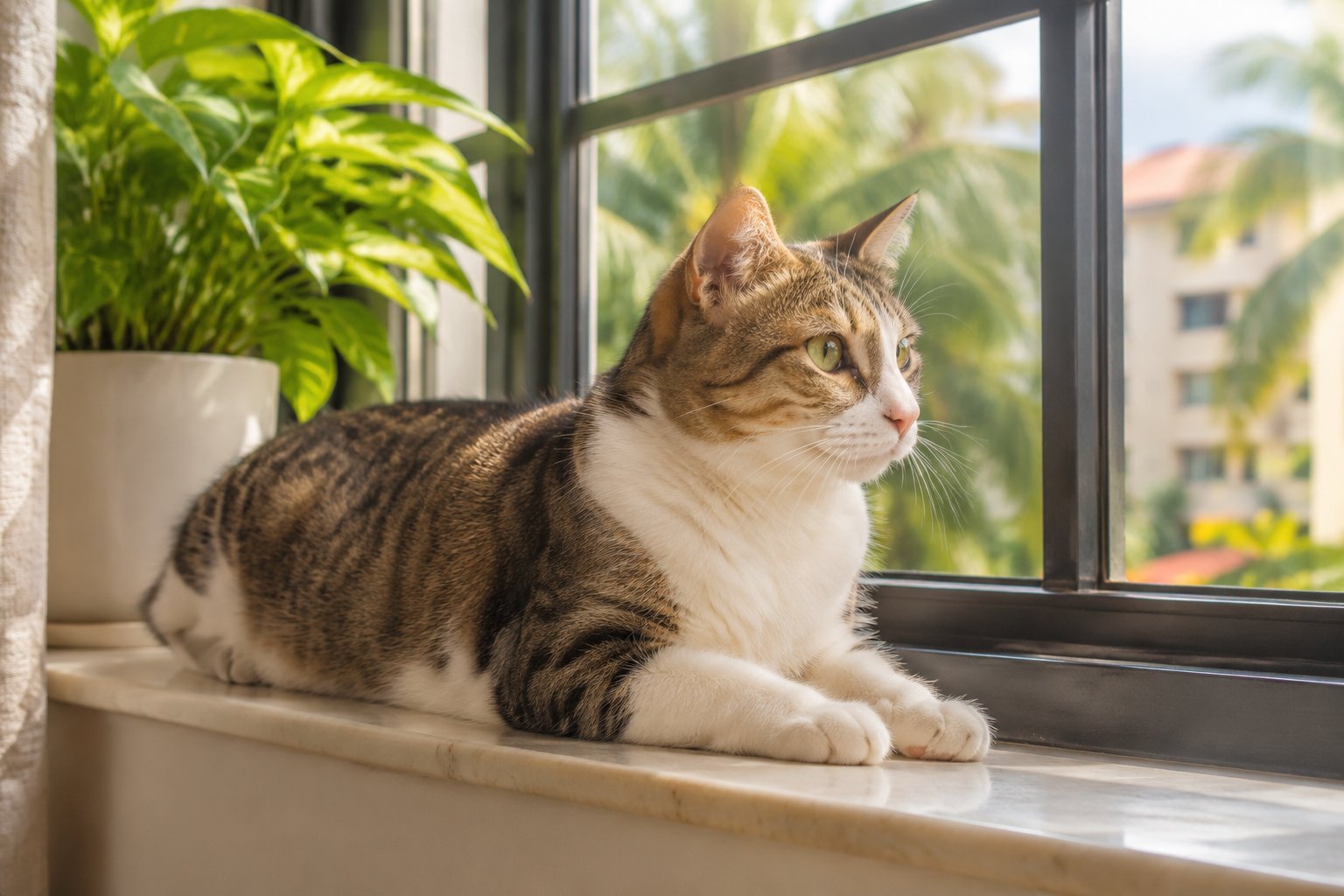
What cat spraying actually is
Cat spraying is a scent-marking behaviour. A cat backs up to a vertical surface, holds its tail high and often quivers the tail tip, then releases a small amount of urine. The amount is usually much smaller than a normal pee. The cat may do this on walls, door frames, furniture legs, curtains, plastic bags, or even the side of a litter box.
Spraying is communication. Cats use urine scent to leave information about themselves in a space. It is not the same as a litter box accident, and it is not revenge. Understanding that difference is the first step to fixing it.
Spraying vs peeing outside the box: how to tell them apart
Many owners use the words interchangeably, but the two behaviours look different and often have different causes. Use this table as a quick guide.
| Feature | Spraying (scent marking) | Peeing outside the box |
|---|---|---|
| Posture | Standing, tail up, often quivering | Squatting or sitting |
| Surface | Vertical (wall, door, furniture leg) | Horizontal (floor, bed, sofa, rug) |
| Amount | Small, often a few drops to a small patch | Larger volume, similar to a normal pee |
| Frequency | Can be repeated on the same spots | Usually less repetitive, but can be frequent if medical |
| Common triggers | Other cats, new objects, stress, territory changes | Litter box issues, medical problems, stress |
| Smell | Strong and concentrated | Strong but usually less concentrated |
Some cats do a mix of both. If you are unsure, watch your cat when it happens. A video on your phone can be useful for your vet.
Why cats spray: the common triggers
Spraying is driven by territory, stress and social communication. Common triggers include:
- Other cats. A new cat in the home, a neighbour's cat visible through the window, or a stray cat marking outside can all trigger spraying inside.
- Changes in the home. New furniture, renovation, a new baby, a new pet, or a change in routine can make a cat feel less secure.
- Intact hormones. Unneutered males spray more often, especially when they can smell a female in heat. Unspayed females may spray during heat.
- Conflict between cats. Even subtle tension, such as one cat blocking another's path to the litter box, can lead to marking.
- Strong smells. New cleaning products, perfume, or the scent of another animal on clothing or bags can prompt marking.
- Medical issues. Urinary tract problems, arthritis, or pain can change urination habits. Always rule out health issues first.
Is spraying a medical problem?
Sometimes. Spraying can be a behaviour, but it can also be a sign of discomfort or disease. Cats with urinary tract disease, bladder stones, or infections may urinate in unusual places. Arthritis can make it painful to get into a litter box, so a cat may urinate elsewhere.
Watch for these signs and see a vet if you notice them:
- Straining to urinate or crying while urinating
- Blood in the urine
- Urinating more often or in very small amounts
- Drinking more water
- Weight loss or poor appetite
- Sudden spraying in an older cat
- Spraying that starts after a stressful event
Male cats, especially, can develop urinary blockages, which are emergencies. If your cat is straining and nothing comes out, see a vet immediately.
Step-by-step plan to reduce spraying
1. Rule out medical causes
Book a vet check first. A urine test and a physical exam can rule out common problems. This is especially important if the spraying is new or if your cat shows any signs of illness.
2. Neuter or spay if not already done
Neutering reduces spraying in many cats, particularly males. It is most effective when done before the habit becomes established. It is not a guaranteed cure, but it is a sensible first step. Ask your vet about timing and recovery.
3. Reduce social stress between cats
If you have more than one cat, make sure resources are spread out. Provide multiple litter boxes, food bowls, water bowls and resting spots in different areas. Avoid placing all resources in one corner. Cats should be able to move around the home without passing close to each other.
4. Manage outdoor cats and window views
If your cat sprays near windows or doors, it may be reacting to cats outside. Use opaque window film, close curtains at peak times, or block the view with furniture. This can reduce the trigger without harming anyone.
5. Clean thoroughly with enzymatic cleaner
Cat urine contains strong-smelling compounds that can encourage repeat marking. Ordinary household cleaners may not remove them. Use an enzymatic cleaner designed for pet urine. Soak the area, let it dry completely, and repeat if needed. Avoid ammonia-based cleaners because they smell like urine and can attract cats back.
6. Make the space feel safe
Provide hiding spots, vertical space such as cat trees or shelves, and predictable routines. Use plug-in diffusers or sprays containing synthetic feline pheromones if you find them helpful. These are not magic, but they can support a calmer environment.
7. Avoid punishment
Punishing a cat for spraying usually makes things worse. It increases stress and can damage the bond between you and your cat. Focus on changing the environment and the triggers instead.
A practical checklist for Malaysian homes
Malaysian homes often have open windows, tiled floors and multi-cat households. These factors can affect spraying. Use this checklist:
- Are there enough litter boxes? One per cat plus one is a common guideline.
- Are litter boxes placed away from food and water?
- Are boxes cleaned daily and washed regularly?
- Are there high resting spots and hiding places?
- Are outdoor cats visible through windows or doors?
- Has anything changed recently: new furniture, new pet, renovation, new person in the home?
- Is your cat neutered or spayed?
- Has your cat had a recent vet check?
- Are you using an enzymatic cleaner on marked spots?
- Are you avoiding punishment and focusing on stress reduction?
What about pheromones and other products?
Pheromone products are available in many pet shops and online. They aim to mimic the scent cats leave when they feel safe. Results vary. Some owners find them helpful as part of a wider plan. They are not a substitute for neutering, cleaning, or reducing stress.
Other products, such as calming supplements, should be discussed with your vet. Avoid using essential oils or strong fragrances around cats, as some can be harmful.
When to see a vet
See a vet if:
- Spraying starts suddenly, especially in an older cat
- Your cat strains to urinate or cannot pass urine
- There is blood in the urine
- Your cat drinks more water than usual
- Your cat loses weight or has a poor appetite
- Your cat seems painful or reluctant to move
- Spraying continues despite behaviour changes
A vet can check for urinary tract disease, bladder stones, arthritis and other conditions. In some cases, a referral to a behaviourist may help.
Living with a spraying cat: realistic expectations
Spraying can be reduced, but it may not disappear completely, especially in multi-cat homes or if outdoor cats are nearby. Progress takes time. Keep a simple diary of when and where spraying happens. This can help you spot patterns and see what works.
Remember that spraying is a normal cat behaviour. Your cat is not being naughty. With patience, veterinary advice and environmental changes, most homes can become calmer and cleaner.
Frequently asked questions
Is cat spraying the same as peeing outside the litter box? No. Spraying is a small amount of urine on a vertical surface, usually with the tail up and quivering. Peeing outside the box is a larger volume on a horizontal surface. Both need attention, but they often have different causes.
Will neutering stop my cat from spraying? Neutering reduces spraying in many cats, especially if done before the habit starts, but it is not a guarantee. Some cats continue to mark, particularly if stress or other cats are still present. Behaviour changes are usually needed too.
Do female cats spray? Yes. Both male and female cats can spray, although it is more common in intact males. Females may spray when they are in heat or when they feel threatened by other cats.
Does spraying mean my cat is angry at me? No. Spraying is not revenge. It is a way to make a space feel familiar and safe, or to communicate with other cats. Addressing the cat's environment and stress is more useful than punishment.
How do I clean cat spray so my cat does not return to the same spot? Use an enzymatic cleaner made for pet urine. Avoid ammonia-based cleaners because they smell like urine. Soak the area, let it dry fully, and repeat if the smell remains. Wash soft items separately.
When should I see a vet about spraying? See a vet if spraying starts suddenly, if your cat strains to urinate, has blood in the urine, drinks more, loses weight, or seems unwell. These signs can point to a medical problem rather than behaviour.
This article is for general information only and is not a substitute for veterinary advice. Always consult a licensed veterinarian in Malaysia for diagnosis and treatment of your cat.
Related reading
- Cat Behaviour Guide Malaysia 2026: Decode 30 Signals, Fix the Environment First
- Cat Spraying Training Tips: How to Stop Your Cat From Spraying Indoors
- How to Stop Cat Spraying: A Practical Guide for Malaysian Homes
- Carrier Training in Cats Malaysia: A Practical Guide for Calm Vet Visits
- Cat Aggression Training Tips: A Practical Guide for Malaysian Owners
- Cat Anxiety in Malaysia: A 2-Week Checklist and 7 Home Fixes That Actually Work
- Do Cats Hold Grudges? How Cat Memory Works and How to Rebuild Trust
- Cat Over-Grooming Training Tips: Stop the Licking Before It Becomes a Habit
- Fear of Strangers in Cats in Malaysia: Why Your Cat Hides and How to Help
- How to Stop Cat Carrier Training: When to Pause, Reset, and Try a Different Approach

