
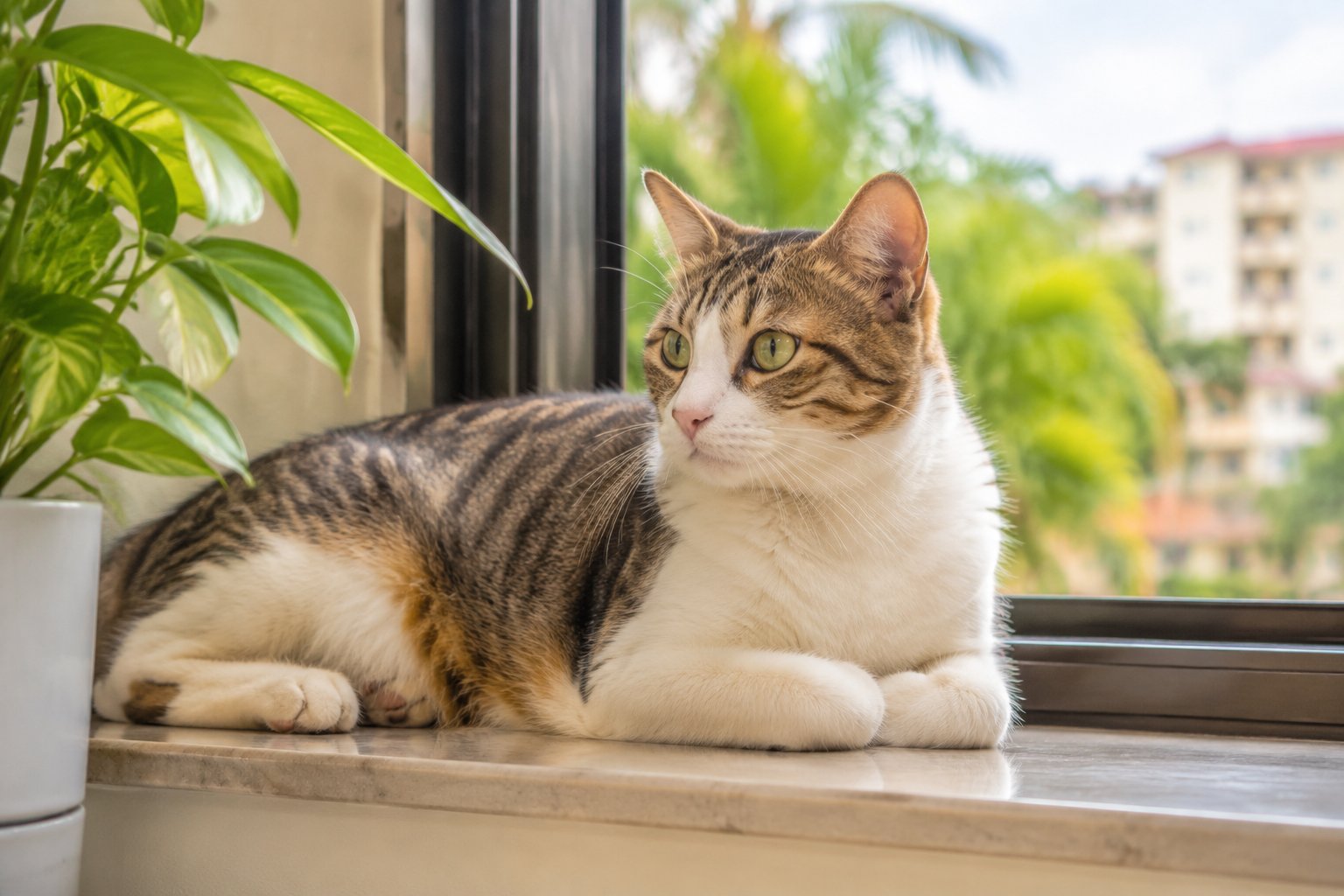
Cat aggression explained: start here
Cat aggression is a behaviour, not a personality flaw. It is how a cat communicates fear, pain, frustration or overstimulation. The first step is to stop thinking of the cat as "bad" and start asking what the behaviour achieves for the cat. Once you know the trigger, you can change the environment and the cat's emotional response. This guide covers the common types of aggression, warning signs, practical management for Malaysian homes, and when to involve a vet.
The main types of cat aggression
Aggression is not one thing. A cat that bites during play is different from a cat that guards a doorway. The table below summarises the common patterns.
| Type | Typical trigger | What you see | First step |
|---|---|---|---|
| Fear aggression | Stranger, loud noise, new object | Hissing, flattened ears, hiding, swiping if cornered | Give space and a safe retreat; never force interaction |
| Play aggression | Boredom, young age, hands used as toys | Stalking, pouncing, biting ankles or hands | Scheduled wand-toy play; no hand play |
| Redirected aggression | Cat sees or smells another cat but cannot reach it | Sudden attack on a person or nearby cat | Separate the trigger; do not pick up an aroused cat |
| Territorial aggression | New cat, visitor, outside cat at the window | Blocking, chasing, yowling, spraying | Manage sightlines; slow introductions |
| Status-related aggression | Competition over resources | Staring, blocking doorways, guarding food | Separate resources; increase vertical space |
| Petting-induced aggression | Too much or wrong touch | Tail twitching, skin rippling, sudden bite | Short petting sessions; stop at first warning |
| Pain-related aggression | Dental pain, arthritis, injury | Irritability when touched or moved | Vet examination |
| Maternal aggression | Queen protecting kittens | Hissing, swiping near nesting area | Limit handling; provide privacy |
Most real cases are mixed. A cat may be fearful and territorial at the same time. The table is a starting point, not a diagnosis.
Reading the warning signs early
Cats usually warn before they bite. The problem is that humans miss the early signals. Learn the sequence:
- Early signs: turning the head away, lip licking, yawning, slowing down, tail flicking.
- Mid-level signs: flattened ears, dilated pupils, hissing, growling, raised paw.
- Late signs: swiping, biting, lunging.
If you see early signs, stop what you are doing and give the cat an exit. Do not pick up a cat that is hissing or has flattened ears. Many bites happen because a person ignores the warning and continues to reach for the cat.
The body-language checklist
- Ears rotated sideways or flat back
- Tail puffed or thrashing
- Pupils wide in normal light
- Whiskers pushed forward
- Body crouched or stiff
- Hissing, growling or a low yowl
One sign may be nothing. A cluster of signs means back off.
Fear and anxiety: the most common driver
Fear is behind many bites. A fearful cat feels trapped. If it cannot flee, it fights. Common triggers include visitors, carriers, vet visits, loud renovations, new furniture and unfamiliar smells.
What helps:
- Provide escape routes. A cat should never be cornered. Add high shelves, cat trees and quiet rooms.
- Let the cat choose. Do not drag a hiding cat out. Sit nearby and let it approach.
- Use gradual exposure. If the cat fears visitors, have the visitor sit still and toss treats, starting at a distance.
- Keep routines predictable. Feeding, play and litter cleaning at similar times reduce anxiety.
- Consider pheromone products. Some owners find diffusers helpful, but they are not a cure and should be part of a broader plan.
In Malaysian apartments, the front door and corridor can be a hotspot. A cat may hear neighbours, lift doors or children and become fearful. A simple baby gate or a screen can create a buffer. A covered carrier left out as a bed also makes vet trips less frightening.
Play aggression and boredom
Young cats and indoor-only cats often have too much energy and too few outlets. Play aggression looks like stalking, pouncing and biting ankles or hands. It is normal behaviour directed at the wrong target.
Fix the setup, not the cat:
- Two or three short play sessions daily. Ten to fifteen minutes with a wand toy, ending with a small meal or treat.
- Never use hands or feet as toys. If teeth touch skin, stop play and walk away.
- Rotate toys. Keep some hidden and swap them weekly.
- Add puzzle feeders. These slow eating and provide mental work.
- Create a window perch. Watching outside can be enriching, but if it triggers aggression toward another cat, block the view or use frosted film.
A common mistake is rough play with kittens. It teaches them that hands are prey. The lesson is hard to undo later. If you already have a hand-biting cat, start using a long wand toy and end sessions before the cat gets overexcited.
Redirected aggression: when the target is you
Redirected aggression happens when a cat is highly aroused by one trigger but attacks something else. A classic example: a cat sees another cat through the window, cannot get to it, and then bites the owner who walks past.
What to do:
- Do not touch or pick up an aroused cat. Its arousal can last for hours.
- Separate the trigger. Close the curtain, block the window or move the outside cat away.
- Give the cat a quiet room with water, litter and a hiding spot.
- Reintroduce calmly once the cat is relaxed and responsive to food.
In a Johor terrace house, a neighbour's cat walking along the fence can set off a resident cat several times a day. Blocking the sightline with a privacy screen or keeping curtains closed during peak hours can reduce incidents. This is management, not punishment.
Territorial and status-related aggression
Cats are territorial. Adding a new cat, a new baby or a new flatmate can trigger aggression. Status-related aggression often involves resource guarding: one cat blocks doorways, stares at another, or guards food and litter.
Practical steps:
- Separate resources. One litter box per cat plus one extra, in different locations. Separate food and water stations.
- Increase vertical space. Shelves and cat trees give cats distance from each other.
- Use slow introductions. Scent swap first, then brief visual contact with a barrier, then supervised time together.
- Avoid stacking resources in one room. A cat should not have to pass another cat to eat or toilet.
- Reward calm coexistence. Treats when both cats are relaxed in the same room.
If fights cause injuries, urine marking or hiding, get help. A qualified behaviour professional can design a plan. In Malaysia, ask your vet for a referral to a behaviourist or a veterinarian with behaviour experience.
Petting-induced aggression
Some cats enjoy petting for a short time, then become overstimulated. The tail twitches, the skin ripples, and the cat bites. This is not random. It is a touch sensitivity issue.
How to reduce it:
- Keep sessions short, around five to ten seconds at first.
- Pet the head and cheeks, not the belly or base of the tail.
- Watch for early signs and stop before the tail flicks.
- Pair petting with treats so touch predicts good things.
- Let the cat initiate contact.
Never punish a cat for biting during petting. The cat is saying "enough". Respect the signal and the behaviour will become less necessary.
Medical causes you should not miss
Aggression can be a symptom of pain or illness. Cats are good at hiding discomfort. Consider a vet check if aggression is new, especially in an older cat, or if it comes with:
- Reduced appetite or weight loss
- Hiding or withdrawal
- Changes in litter box use
- Limping or reluctance to jump
- Drooling or bad breath
- Vocalising at night
- Skin or ear problems
Dental disease, arthritis, hyperthyroidism and neurological problems can all affect mood. A vet may recommend blood tests, a dental check or pain relief. Never give human medication to a cat.
A step-by-step plan for Malaysian homes
Malaysian homes vary from high-rise apartments to terrace houses with outdoor areas. The principles are the same: reduce triggers, provide choice, and reward calm behaviour.
- Log the incidents. Note time, place, who was present and what happened before. Patterns appear quickly.
- Remove the trigger where possible. Block sightlines, move furniture, separate cats at meal times.
- Create a safe room. A quiet room with litter, water, a bed and a hiding box.
- Set a routine. Regular play, feeding and quiet time.
- Avoid punishment. No hitting, shouting or spraying water. These increase fear.
- Reward calm. Treats and praise when the cat is relaxed near a trigger.
- Review after two weeks. If there is no improvement, seek professional help.
Example: Kuala Lumpur apartment
A cat in a high-rise apartment becomes aggressive when the owner comes home. The trigger is the sound of keys and the door. The cat has been alone all day and is bored. The fix: a puzzle feeder before the owner leaves, a window perch, a scheduled play session on return, and a calm greeting that ignores demanding behaviour until the cat settles. This is not about dominance; it is about meeting needs.
Example: Penang rainy season
During heavy rain, outdoor cats may shelter near windows, and a resident cat may become territorial and redirect aggression. Close windows, use curtains, and provide a distraction such as a food puzzle. If the cat is already aroused, do not pick it up.
When to see a vet
See a vet promptly if:
- Aggression starts suddenly in an adult or senior cat.
- A bite breaks the skin on a human or another pet.
- The cat shows pain, lameness, appetite loss or lethargy.
- The cat is unable to urinate or is straining in the litter box.
- There is a sudden change in behaviour or personality.
- The cat is pregnant or nursing and becomes aggressive.
A vet can rule out medical causes and advise on safety. If the behaviour is complex, ask for a referral to a qualified behaviour professional.
Safety first
Aggression can cause serious injury. Do not put your face near an aroused cat. Do not break up a cat fight with your hands; use a barrier, a loud noise or a blanket. Wash any bite or scratch immediately and seek medical advice, as cat bites can become infected.
If you have children, supervise interactions and teach them to leave a cat alone when it is eating, sleeping or hiding. A cat needs at least one high place it can reach to escape.
Final thoughts
Cat aggression is solvable in most cases, but it takes patience and a willingness to change the environment. Start with a vet check, identify the trigger, remove access to it, and give the cat more control. Punishment never works. Calm, consistent management does.
This article is general information only and is not a substitute for veterinary advice. If your cat is aggressive or unwell, consult a licensed veterinarian in Malaysia.
Related reading
- Cat Behaviour Guide Malaysia 2026: Decode 30 Signals, Fix the Environment First
- Cat Aggression Training Tips: A Practical Guide for Malaysian Owners
- Cat Belly Up in Malaysia: 4 Meanings & Whether You Can Touch
- Cat Biting Explained: Why Cats Bite and How to Stop It
- Cat Clicker Training: Practical Training Tips for Malaysian Cat Owners
- Cat Fear of Strangers: Training Tips That Actually Work
- Cat Hiding Training Tips: Why Cats Hide and How to Help Them Feel Safe
- Cat Night Activity Training Tips: How to Calm a Nocturnal Cat

