
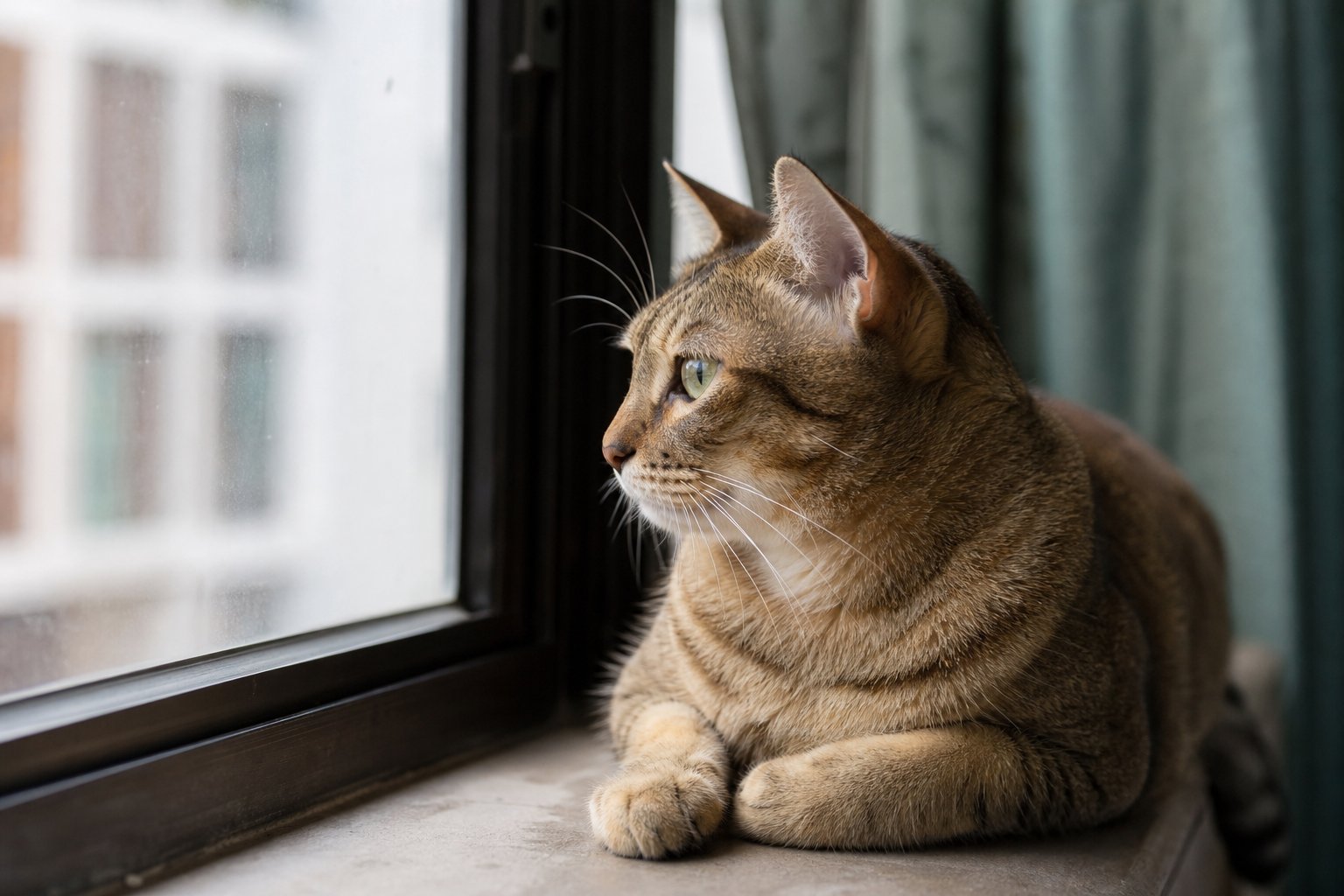
Quick answer: Put a tall, heavy scratcher within centimetres of the sofa arm, make the fabric unappealing with tape or a cover, and reward the instant your cat's claws hit the new surface. Keep that setup for four to six weeks and never punish after the fact. That is the method — the details below make it work.
Scratching is normal cat maintenance, not a discipline problem. Your job is to offer a better target, remove the reward from the old one, and reinforce the switch. Done consistently, most households see a clear change within a month.
Why the sofa keeps winning
A cat scratches to strip the dead outer sheath off each claw, stretch the muscles of the shoulder and back, and leave scent and visual marks from the glands in its paw pads. It is a full-body exercise with a satisfying finish, so the target has to feel right under the claws and allow a proper upward pull.
A sofa arm delivers all of that: firm woven fabric, a vertical edge at roughly shoulder height, and a position in the middle of the household's activity. It is not personal. The cat has simply picked the most convenient object that meets its needs, and it will keep picking it until something else scores higher on feel, height and position.
This is why the working plan has three parts — replace, block, reward — rather than one part called "stop". Trying to remove scratching altogether fails on two counts: the cat still needs to maintain its claws, and punishment delivered after the event teaches the cat only that you are unpredictable.
Step 1: Choose a scratcher that can beat the sofa
Most scratchers lose not because cats dislike them, but because they are too light, too short or too wobbly. Shop against these criteria:
| Feature | What to look for | Why it matters |
|---|---|---|
| Height | Taller than the cat's nose-to-paw reach when fully stretched | The upward stretch is the whole point of scratching |
| Stability | Heavy base; nothing that tips, slides or rocks on the first pull | Any wobble ends the attempt immediately |
| Material | Sisal rope, natural fibre or corrugated cardboard | Fibrous surfaces catch the claw and allow a deep grip |
| Orientation | One upright post plus one flat pad | Cats differ: some want vertical, some want horizontal |
| Base | Wide enough to hold the cat's weight as it pushes back | A narrow base tips under a hard stretch |
| Positioning | Freestanding, or braceable into a corner | A corner-braced post feels rock solid |
Height deserves special attention. A short desktop scratcher is abandoned after a couple of pulls because the cat runs off the top before it can stretch. The rule is simple: the scratcher must be taller than the cat's full stretch from nose to extended claws. Large breeds should be looking at 60 cm and above, and a floor-standing sisal post is usually the simplest answer.
Measure your cat while it stretches against the sofa, then buy bigger than you think you need. If a scratcher is too small, the cat simply outgrows it and returns to the object that never runs out — your furniture.
Offer both an upright post and a flat corrugated pad at the start. The pad is inexpensive, easy to swap once shredded, and works well beside a sleeping spot. If your cat ignores a flat pad, that does not mean scratching has lost its appeal; it means that angle and texture were rejected. Let the cat vote with its paws.
Step 2: Put it at the scene of the crime
Placement matters more than the price of the product. A brilliant scratcher left in a corner of a spare room will lose to a mediocre one sitting against the sofa arm.
- Set the first post directly beside the arm the cat has been targeting, as close as you reasonably can.
- Add a second option along the cat's route out of sleep — opposite the sofa, or beside the bed.
- In multi-cat homes, provide one per zone, and per floor in a landed house, so nobody has to queue or defend it.
- Keep food and water bowls away from the base. Cats dislike marking territory right where they eat, and the two activities compete for the same patch of floor.
- Once the cat has used the new post consistently for about two weeks, shift it gradually toward wherever you actually want it: 10 to 15 cm per move, every few days. Move it across the room in one go and the cat will not follow — the old habit returns within days.
In a Kuala Lumpur condominium, the sofa often sits against a shared wall with very little spare floor. Brace the post into the corner beside the arm instead of standing it in open space; a corner-anchored post feels far more solid and takes up less room.
For a Penang terrace house during the rainy season, when a cat spends far more hours indoors, the same scratcher does double duty as an activity outlet. Bored cats scratch harder, so a rainy stretch is exactly when play sessions beside the post matter most.
Step 3: Make the old target boring
Cats choose a target because it feels rewarding. Remove the reward and the sofa stops competing:
- Double-sided adhesive strips or tape on the damaged area. Cats dislike the sticky sensation under the claws.
- Aluminium foil or a smooth plastic sheet laid over the seat or arm. Both the texture and the sound are off-putting.
- Citrus- or mint-scented deterrent spray. Many cats avoid these smells. Effect varies from household to household, so treat it as an aid, never as the solution.
- A physical cover — a sofa cover, or a blanket pulled flat over the spot when you are not watching. Zero cost, immediate effect.
Two maintenance points are easy to miss. First, sprays fade quickly: for the first fortnight, reapply every few days, and check tape weekly for lint and dust that has killed the stickiness. Second, if the fabric already carries old scratch marks, clean that area with an enzymatic cleaner before you start. Cats return to the scent they left behind, so removing it wipes away the map that points them back.
Block the old route and open the new one in the same week. Protection on its own teaches nothing — the cat will simply move to the next piece of furniture. Local prices for tape, sprays and covers vary, so check with your retailer or veterinary clinic for what is stocked near you.
Step 4: Reward at the right second
Timing works in seconds, not minutes. For the cat to connect "claws on this surface" with "good things happen", the feedback has to arrive almost as the claws land.
- The moment you see the cat use the post: verbal praise immediately, or a small treat dropped at its base.
- Schedule one or two short play sessions daily with a wand toy beside the post, finishing the game against the post so it becomes the centre of fun.
- If you catch the cat reaching for the sofa, calmly lift it and place it against the post, then rake the post yourself with your hand to demonstrate. No shouting, no spraying, no sudden movements.
- Never punish afterwards. A cat cannot link a scolding several minutes earlier with the scratching it did; it links the scolding with you. The result is a cat that hides its scratching instead of stopping it.
Improvised deterrents such as a water spray or a booby-trapped tin are often suggested so the cat associates the sofa with an unpleasant surprise. In practice the timing is almost impossible to get right, and the cat usually learns something else instead — that your arrival home predicts trouble. For the first month, put all your effort into the rewarding side.
Everyone in the house must run the same rules. If one person allows the cat on the sofa and another does not, the cat receives mixed signals and the training stalls halfway.
Step 5: Hold the line for six weeks
- Trim claws every two to four weeks, taking only the sharp tips. This does not stop scratching, but it greatly reduces how deep the damage goes. Stop before the quick — the pale, pinkish area inside a light-coloured nail. If you are unsure, ask a vet or groomer to demonstrate once.
- Replace worn surfaces. Shredded cardboard loses its appeal, holds old scent, and can snag claws.
- Keep protection in place for at least four to six weeks. Remove it earlier and the old habit comes straight back.
- Match supply to the number of cats. Add one scratcher for each additional cat so a single individual cannot monopolise the good one.
- Check senior cats. An older cat that suddenly scratches less, or rises stiffly from its bed, may be avoiding the stretch because of joint discomfort rather than losing interest.
Your first weekend
- Buy a floor-standing sisal post and set it beside the targeted sofa arm.
- Apply double-sided tape or a cover to the damaged area the same day.
- Book two daily 10–15 minute play sessions that end at the post.
- Note the date. Review progress in four weeks.
- Agree the household rules in advance — no secret permissions.
Not working after three weeks? Check this list
- The post wobbles. Swap to a heavier floor model, or brace it into a corner and try for another week.
- It is too far away or hidden. Move it back beside the sofa and keep it there for two weeks before shifting again.
- Protection came off too early. Reapply for another fortnight and watch closely on removal day.
- The texture is wrong. Offer upright sisal and flat cardboard side by side and let the cat choose.
- Only prohibition, no reward. If nothing good happens when the cat uses the post, the behaviour has no reason to grow.
- Household inconsistency. Align everyone on one rule before restarting.
If none of those apply and progress is still flat after a month, change one variable at a time rather than all six — otherwise you will never learn which factor mattered.
When to see a vet
Scratching habits that change suddenly deserve medical attention. Contact a registered veterinarian if scratching increases sharply, spreads from one spot to random areas around the house, or comes with redness, swelling or bleeding on the paws, limping, litter box accidents, loss of appetite or hiding. These can signal an injured claw, joint pain, infection or significant stress. Older cats that suddenly scratch less or rise stiffly should also have their joints checked. Training advice does not replace an examination.
This article is for general information only and is not a substitute for advice from a registered veterinarian.
Related reading
- Cat Behaviour Guide Malaysia 2026: Decode 30 Signals, Fix the Environment First
- Why Your Cat Scratches the Sofa (and How to Stop It) — A Guide for Malaysian Cat Owners
- Cat Biting in Malaysia: A 6-Type Triage Table and a 5-Step Fix
- Cat Purring Meaning in Malaysia: Happy, Stressed or Hiding Pain?
- Why Does My Cat Purr? How to Respond the Right Way in Malaysia
- Cat Trust Signals in Malaysia: 7 Ways Your Cat Says It Trusts You
- Cat Trust Signs in Malaysia: 7 Signals Your Cat Trusts You (and How to Build It)
- Signs Your Cat Trusts You: A Seven-Step Guide for Malaysian Cat Owners
- Cat Anxiety in Malaysia: A 2-Week Checklist and 7 Home Fixes That Actually Work
- Cat Anxiety in Malaysia: Chronic-Anxiety Scorecard and 7 Home Fixes
- Cat Body Language Decoded: What 30 Common Behaviours Really Mean