
Quick answer
Scratching furniture is instinct, never spite: your cat is sharpening claws, leaving scent marks, stretching its shoulders and releasing tension — all at once. The sofa simply ticks every box: right height, right texture, right stability, right spot on the daily route. The workable fix is to set up a target your cat prefers over the sofa, not to try to stop scratching altogether.
Why your cat scratches at all
Before touching any product, it helps to understand what scratching actually delivers. Four separate needs are met in a single motion, which is why no amount of scolding will make the behaviour disappear.
Claw maintenance. A cat's claw grows in layers, and the worn outer sheath has to be shed before the sharp new claw underneath is exposed. A surface with resistance — woven upholstery, sisal rope, jute curtain — works like a filing tool. A smooth, slippery surface does almost nothing, which is exactly why cats ignore it.
Scent marking. The pads between a cat's toes contain scent glands. Every scratch leaves behind a chemical signature, and the visible scratches act as a visual notice for other cats. Your cat is not destroying your chair; it is posting a notice that says this home is occupied.
Stretching. When a cat plants its front paws high on a vertical surface and pushes backwards, it opens up the shoulder blades, forelimbs and back. This is the feline equivalent of a good morning stretch, and the height of a sofa armrest is conveniently perfect for a full-grown cat.
Stress relief. Scratching is also an emotional outlet. Cats scratch when they are overstimulated, when they have just been startled, when you have returned home, or when the household routine has shifted. Restricting the outlet generally increases the anxiety rather than reducing the scratching.
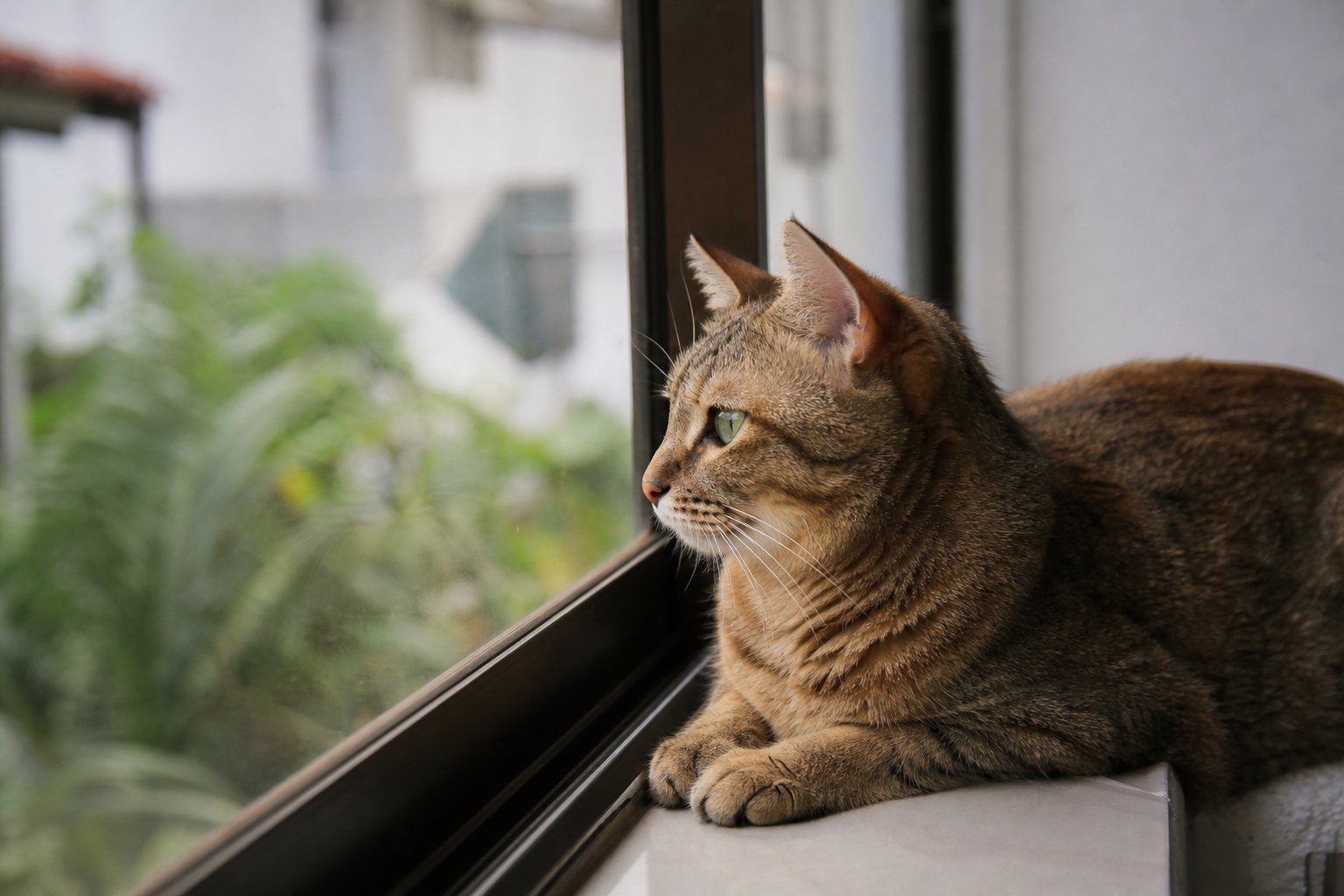
There is also a predictable timetable. Most cats cluster their scratching into three peaks: shortly after waking, right after eating, and the moment you walk through the front door. Understanding those peaks tells you exactly when to watch, and exactly where to position a post. A cat that wakes on a windowsill in a Kuala Lumpur apartment and immediately stretches against the sofa arm has already told you where the post belongs.
Why the sofa always wins
Owners often assume the cat chose the sofa to be difficult. In reality the sofa passes every test a cat applies when selecting a scratching site.
| What the cat is judging | Why the sofa wins | Why alternatives lose |
|---|---|---|
| Location | The owner sits here, so it carries the strongest scent in the room | Spare rooms and storage corners hold little value |
| Height | Standing on the seat cushion puts the armrest at perfect stretch height | Posts that are too short or too tall do not allow a full extension |
| Texture | Woven fabric grips and lets the claw sink in deeply | Leather, vinyl and polished wood offer almost no purchase |
| Stability | A heavy frame barely shifts under pressure | A light flat pad slides or flips the moment weight is applied |
| Traffic | It sits on the route between the sleeping spot and everything else | A post parked in a forgotten corner is never on the way |
The scent factor matters more than most people expect. A sofa absorbs your smell all day, which makes it the most valuable piece of territory in the house — and the most important place for a cat to announce itself. The wooden cabinet beside your bed, the dining chair you use every evening, and the arm of your favourite recliner are all high-risk targets for the same reason.
This is also the logic behind the common complaint that a deterrent spray did nothing. If a cat's job is to leave its mark on the most valuable surface available, and you remove only the smell, the job has not been reassigned. Once the scent of the spray fades, the cat resumes. Every anti-scratching plan therefore begins with the same first move: put a genuinely better target in place.
Which items get damaged first
Use this ranking to decide what to protect first and what to leave alone. Order matters when your budget and time are limited.
- Fabric sofas and armchairs — the best grip and the deepest damage; the top priority in almost every home.
- Jute, hemp or woven curtains — vertical, slightly mobile, and perfect for the pouncing style of scratch that some cats prefer.
- Wooden dining chair legs — the grain catches the claw, and the cat scents the territory while it works.
- Carpet edges and floor rugs — usually the spot a cat passes through the moment it wakes.
- Leather and vinyl upholstery — harder to damage, but once scored, the repair is far more expensive. A few cats actively enjoy the slippery resistance of leather, so never assume your cat is safe.
In a Penang terrace house during the rainy weeks, cats spend far more hours indoors and their scratching pressure climbs with the extra indoor time. That is the moment to audit the list above rather than after the curtains have already frayed.
If you are replacing a sofa, fabric choice is a genuine preventive measure. Short-pile, tightly woven fabrics such as microfibre give the claw nothing to hook into, which immediately lowers the risk. Loose weaves, chunky loops and open mesh are effectively an invitation. That single decision costs nothing extra in most showrooms and saves a great deal later.
Post basics: number, placement, quality
Three variables determine whether a scratching post gets used. Get all three wrong and the post becomes an expensive doorstop.
Number — cats plus one. Two cats need at least three posts, distributed across the rooms and levels they actually occupy. Every cat should be able to reach a suitable surface without walking past a competitor. Litter box rules apply here too: when resources are scarce, the sofa becomes the shared fallback.
Placement — at the scene of the crime. Put the post directly beside the armrest or table leg being damaged, offset slightly so it does not block the walkway. Position matters more than quality: a superb post in the far corner loses to a decent post within arm's reach of the sofa. The first thing your cat should encounter after waking is the post, not the temptation.
Quality — tall, heavy, right texture. An adult cat must be able to stretch to full length against it, which rules out most small flat pads. The base must not wobble or tip under a determined stretch; a post that moves once may never be trusted again. Sisal rope wrapped around a solid pillar is the most reliable general choice, and corrugated cardboard works well as a secondary horizontal option for cats that prefer to scratch flat surfaces.
Add an incentive layer. Rub a little catnip into the sisal, or hang a favourite wand toy from the top, so the post offers play as well as function. For the first fortnight, check the setup daily; the moment you see fresh shreds, offer a small treat immediately. Once the habit holds, drop to a weekly check.
One habit to break immediately: hiding the post on the balcony, in a utility area, or in any low-traffic zone because it looks untidy. To a cat, that is an instruction to walk a long distance before stretching — so it stretches against the nearest available object instead.
Deterrents, trimming and covers
Deterrent sprays, sticky tape on furniture edges, plastic sheeting and covers all have a role, but none of them work as standalone solutions. Think of them as temporary traffic control while the real alternative is being installed.
Sticky double-sided tape on a sofa arm is genuinely effective for some cats, because the texture is objectionable and the moment is interrupted. It only succeeds if a post sits right next to it, ready to catch the redirected scratch. Remove the tape after a few weeks and see whether the habit has moved.
Claw trimming is the other half of the plan. Short, blunt nails cause far less damage, and regular trimming is a normal part of indoor cat care. Have a Malaysian vet or groomer show you the quick-cutting technique before you attempt it yourself. Soft nail caps are an option for persistent cases while you work on placement and setup, though they need periodic replacement as the claw sheds.
One point that should not be negotiable: declawing is not a behavioural solution. It removes the tool rather than addressing the need, and most veterinary bodies worldwide consider it inappropriate for ordinary scratching problems. Discuss gentler medical options with your vet instead.
When to see a vet
Routine scratching needs no medical attention. A change in the pattern does. Arrange a veterinary consultation if you notice any of the following:
- Scratching volume suddenly surges far beyond the usual level
- Limping or favouring a paw after a scratching session
- Redness, swelling, discharge or bleeding around a claw or nail bed
- Hidden away, off food, or toileting outside the litter box at the same time
- An older cat that has stopped scratching and now moves stiffly
- Any cat that seems to flinch when a paw is touched
Sudden escalation can signal a torn claw sheath, a nail-bed infection, arthritis making stretching uncomfortable, or plain stress. In a multi-cat household, one cat frantically over-marking territory is often a sign that another cat is crowding its resources — the fix is to redistribute food, water, litter and resting places rather than to discipline the scratcher. This article is general information only; for anything unusual or painful, consult a registered Malaysian veterinarian.
What you can do today
- Watch your cat for one full day and note every scratching event: when, where, and how long the stretch lasted
- Audit each existing post: is it tall enough for a full stretch, and does the base stay put when pushed?
- Add a sturdy sisal-wrapped post directly beside the worst-hit piece of furniture
- Check the high-risk items — woven curtains, wooden chair legs, rug corners — and protect the top two
- Trim claws gently if you are confident, or book a demonstration
- If scratching has changed suddenly, book a veterinary check-up rather than buying another spray
Frequently asked questions
Why does my cat scratch the sofa instead of the post? Because the sofa outperforms the post on height, texture, stability and location. A post that is too short, too light or parked in a quiet corner never competes. Fix the post first, and the choice usually changes on its own.
How many scratching posts does a home need? One per cat, plus one spare. Two cats need at least three, spread across the rooms and floors they use. Scarce resources push cats back towards the furniture every time.
Where should I place a scratching post? Right beside the damaged furniture, on your cat's normal route — next to its sleeping spot, near the feeding area, or just inside the door you use most. On the way beats out of the way.
Do anti-scratch sprays work? Only as a temporary signal, and only when a usable alternative sits nearby. Without a better post, the cat waits for the smell to fade and returns. Sprays manage the symptom; placement solves the cause.
Should I trim my cat's claws or use nail caps? Gentle regular trimming is a solid preventive habit for indoor cats, and nail caps buy time while you adjust the setup. Ask a Malaysian vet or groomer to demonstrate the correct angle before trying it.
When should I see a vet? When scratching suddenly increases, or comes with limping, bleeding, swollen paws, hiding, appetite loss or litter-box accidents. A sudden shift in scratching volume points towards pain or stress, not mischief.
This article is for general education only and does not replace a physical examination. If your cat's scratching changes suddenly or you notice injury, swelling or pain, please consult a registered veterinarian in Malaysia.
Related reading
- Cat Behaviour Guide Malaysia 2026: Decode 30 Signals, Fix the Environment First
- Cat Biting in Malaysia: A 6-Type Triage Table and a 5-Step Fix
- Cat Purring Meaning in Malaysia: Happy, Stressed or Hiding Pain?
- Why Does My Cat Purr? How to Respond the Right Way in Malaysia
- Cat Trust Signals in Malaysia: 7 Ways Your Cat Says It Trusts You
- Cat Trust Signs in Malaysia: 7 Signals Your Cat Trusts You (and How to Build It)
- Signs Your Cat Trusts You: A Seven-Step Guide for Malaysian Cat Owners
- Multi-Cat Homes in Malaysia: Getting Cats to Coexist Without the Fights
- Cat Anxiety in Malaysia: A 2-Week Checklist and 7 Home Fixes That Actually Work
- Cat Anxiety in Malaysia: Chronic-Anxiety Scorecard and 7 Home Fixes