
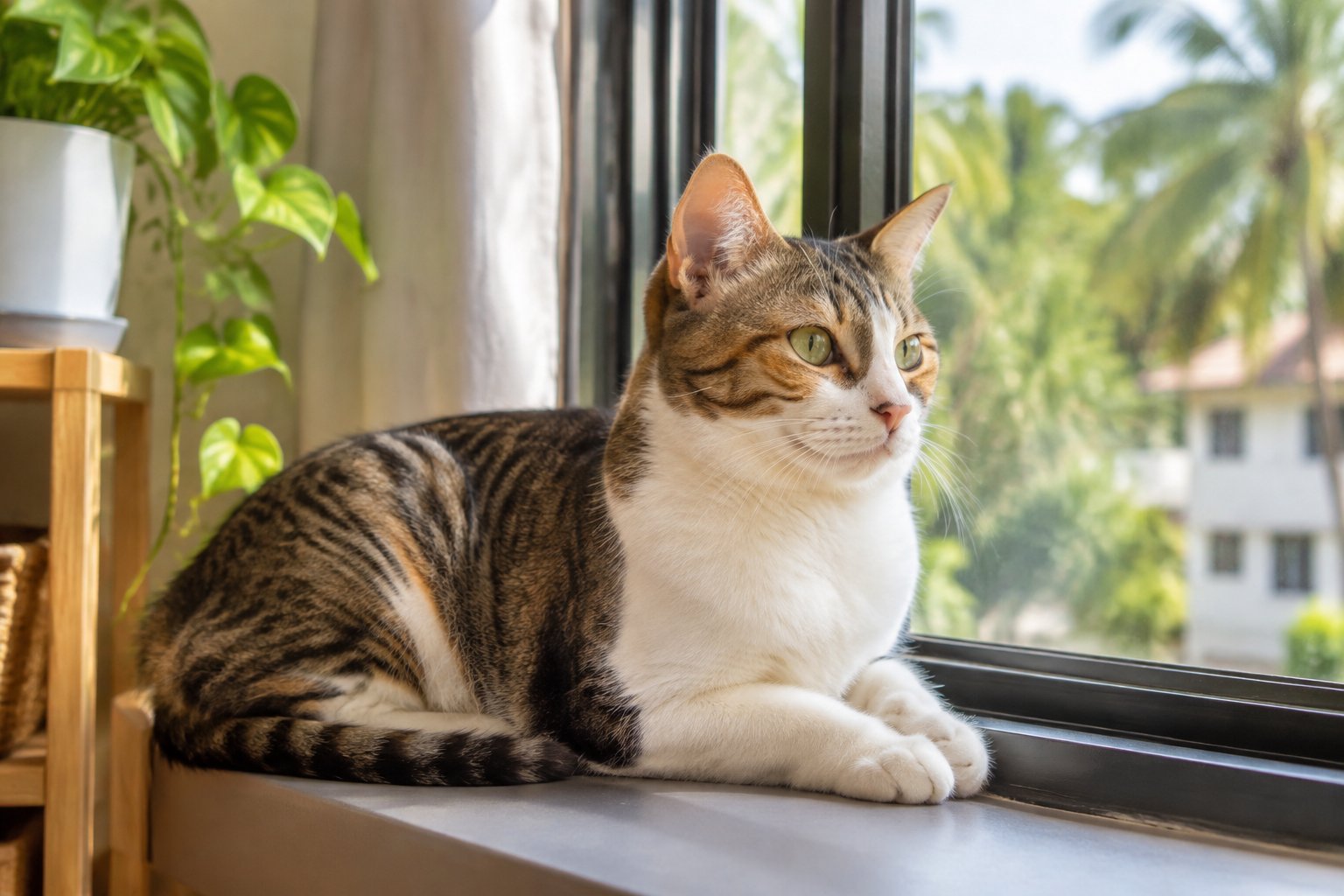
Why night activity in cats is normal
If your cat turns into a furry tornado at 3am, you are not alone. Night activity in cats is one of the most common complaints from Malaysian cat owners, especially those living in apartments. The good news is that it is usually normal behaviour, not a sign that something is wrong.
Cats are crepuscular, which means they are naturally most active around dawn and dusk. In the wild, these are the best times to hunt because prey is moving and the light is low. Domestic cats keep this rhythm even though they no longer need to hunt for survival. So when your cat gets the zoomies at night, it is often just their natural hunting instinct kicking in.
However, night activity can become a problem when it disrupts your sleep or affects your neighbours. In Malaysia, several local factors can make night activity more noticeable: warm nights, apartment living, daytime napping while you are at work, and a lack of evening stimulation. Understanding why your cat is active at night is the first step to managing it.
What counts as normal night activity?
Normal night activity includes:
- Short bursts of running or zooming around the house
- Pouncing on toys or imaginary prey
- Climbing, scratching or exploring
- Meowing or chirping for attention
- Following you around or sitting on your face
These behaviours are usually harmless and often happen in short bursts. Many cats have a burst of energy in the evening, then settle down. If your cat is healthy, eating well, using the litter tray normally and is not distressed, night activity is likely just normal behaviour.
When night activity becomes a problem
Night activity becomes a problem when it affects your sleep, your neighbours or your cat's wellbeing. Signs that it is becoming an issue include:
- Persistent loud meowing or yowling at night
- Scratching at doors or windows
- Knocking things over to get attention
- Pacing or restlessness that does not settle
- Aggression towards other pets or people at night
If your cat is suddenly more active at night and this is new behaviour, especially in an older cat, it could be a sign of an underlying health issue. We will cover that later.
Why Malaysian cats are active at night
1. Natural crepuscular rhythm
As mentioned, cats are naturally most active at dawn and dusk. In Malaysia, the sun sets around 7pm and rises around 7am, so your cat's natural active periods may fall in the evening and early morning. If you are asleep during these times, it can feel like your cat is nocturnal.
2. Warm, humid nights
Malaysia's tropical climate means nights are often warm and humid. Cats are sensitive to heat and may become restless if they are uncomfortable. During the day, they may sleep more to conserve energy and stay cool, then become active when it is cooler at night. If your home is not well ventilated or air-conditioned, your cat may be more active at night simply because it is more comfortable.
3. Daytime napping while you are out
Many Malaysian cat owners work long hours, and cats often sleep during the day when the house is quiet. By the time you come home, your cat is well-rested and ready to play. If you do not provide enough stimulation in the evening, that energy comes out at night.
4. Apartment living
Apartments in Kuala Lumpur, Penang and Johor Bahru often have limited space and fewer opportunities for cats to exercise. Indoor cats can get bored and frustrated, leading to more night activity. Without vertical space, scratching posts and interactive play, cats may direct their energy into night-time zoomies.
5. Hunger
Cats are creatures of habit. If your cat is used to being fed early in the morning, they may start waking you up before dawn to demand food. This is especially common if you feed your cat first thing in the morning, as they learn to associate your waking with food.
6. Attention-seeking
Cats are smart. If meowing at night gets you to get up, feed them or let them out, they learn that night activity works. Even negative attention, like shouting or pushing them away, can reinforce the behaviour because it is still attention.
7. Boredom and lack of enrichment
Indoor cats need mental and physical stimulation. Without enough toys, playtime and environmental enrichment, cats can become bored and restless, especially at night when there is nothing else to do.
How to reduce night activity: a practical plan
Step 1: Create a predictable evening routine
Cats thrive on routine. A consistent evening routine helps your cat know when to expect play, food and sleep. A good routine might look like this:
- Active play session (10-15 minutes) before bed. Use a wand toy, laser pointer (with a physical toy to catch at the end) or fetch. The goal is to tire your cat out mentally and physically.
- Feed a satisfying meal. A meal before bed can help your cat feel full and sleepy. Some cats also sleep better after eating.
- Quiet time. Dim the lights, reduce noise and give your cat a comfortable place to settle.
- Ignore night-time demands. If your cat meows or scratches, do not respond. This is the hardest part, but it is essential.
Step 2: Tire your cat out before bed
Play is one of the most effective ways to reduce night activity. Cats need both physical and mental exercise. A good play session should mimic hunting: stalk, chase, pounce and catch. End with a small treat or a meal so your cat feels like they have successfully "caught" their prey.
Aim for at least two play sessions a day, with one in the evening. If you are busy during the day, consider puzzle feeders or food-dispensing toys to keep your cat busy while you are out.
Step 3: Adjust feeding times
If your cat wakes you up for food, try adjusting their feeding schedule. Feed a larger meal later in the evening and consider using an automatic feeder for early morning meals. This can help break the association between your waking and food.
Step 4: Make the environment comfortable
Keep the room cool and well ventilated. Use fans or air-conditioning if possible. Provide cool, comfortable sleeping spots, such as a tile floor, a cooling mat or a shaded area. Make sure your cat has access to fresh water at all times.
Step 5: Provide enrichment
Indoor cats need stimulation. Provide:
- Vertical space: cat trees, shelves, window perches
- Scratching posts
- Interactive toys and puzzle feeders
- Safe window views (with secure screens)
- Rotate toys to keep them interesting
Step 6: Ignore night-time attention-seeking
This is easier said than done, but it is crucial. If your cat meows, scratches or knocks things over at night, do not get up, do not talk to them and do not feed them. Any reaction teaches your cat that night activity gets results. It may take one to two weeks of consistency, but most cats will learn.
If you are worried about neighbours, especially in apartments, explain the situation and ask for patience. You can also use white noise or earplugs to help you sleep.
Step 7: Consider a night-time safe space
If your cat is particularly active at night and you need sleep, you can create a safe, comfortable room for them with water, a litter tray, a bed and some toys. This is not the same as locking them in a small cage. The room should be safe and enriched. Some cats settle better in a smaller space at night, but others may become stressed. Observe your cat's behaviour and consult your vet if you are unsure.
Comparison table: common night activity triggers and solutions
| Trigger | What you might see | Practical solution |
|---|---|---|
| Natural crepuscular rhythm | Zoomies at dawn and dusk | Evening play session, predictable routine |
| Warm, humid nights | Restlessness, seeking cool surfaces | Ventilation, fans, cool sleeping spots |
| Daytime napping | High energy at night | Daytime enrichment, puzzle feeders, window perches |
| Hunger | Waking you early for food | Later evening meal, automatic feeder |
| Attention-seeking | Meowing, scratching at door | Ignore demands, reward calm behaviour |
| Boredom | Pacing, destructive behaviour | Toys, play, vertical space, rotation |
| Illness (senior cats) | Sudden yowling, confusion | Veterinary check-up |
Night activity in senior cats: when to worry
While night activity is normal in healthy cats, sudden changes in behaviour, especially in older cats, can be a sign of an underlying health issue. Senior cats may become more active at night due to:
- Pain: Arthritis or dental pain can make cats restless at night.
- Hyperthyroidism: An overactive thyroid can cause increased activity, vocalisation and weight loss.
- High blood pressure: Can cause night yowling and restlessness.
- Cognitive dysfunction syndrome: Similar to dementia in humans, this can cause confusion, night waking and vocalisation.
- Vision or hearing loss: Can make cats feel insecure at night, leading to vocalisation.
If your cat's night activity is new, sudden or accompanied by other signs such as weight loss, increased thirst, changes in appetite or confusion, see your vet.
When to see a vet
You should see a vet if your cat's night activity is accompanied by any of the following:
- Sudden onset of night yowling or restlessness, especially in a senior cat
- Weight loss despite a good appetite
- Increased thirst and urination
- Changes in appetite or eating habits
- Confusion, disorientation or staring at walls
- Aggression or irritability
- Difficulty jumping or moving around
- Any other signs of illness
A vet can rule out medical causes and advise on behaviour management. In Malaysia, you can consult a licensed veterinarian at a local clinic. Prices vary, so ask your vet for an estimate.
Local considerations for Malaysian cat owners
Apartment living in Kuala Lumpur
In Kuala Lumpur, many cats live in apartments with limited space. This can make night activity more noticeable. To manage it, focus on vertical space (cat trees, shelves), interactive play and a consistent evening routine. If you have neighbours, be mindful of noise and consider a night-time routine that keeps your cat quiet.
Warm nights in Penang
Penang's warm, humid nights can make cats restless. Keep your home well ventilated, use fans or air-conditioning, and provide cool sleeping spots. Some cats enjoy a cool tile floor or a damp towel to lie on.
Terrace houses in Johor
In Johor, many cats have access to outdoor areas or courtyards. If your cat goes outside, make sure they are safe from traffic, other animals and disease. Consider keeping your cat indoors at night to reduce night activity and keep them safe.
Frequently asked questions
Are cats nocturnal? No, cats are crepuscular, meaning they are most active around dawn and dusk. They can be active at night, but they are not strictly nocturnal. Night activity is normal hunting behaviour, not a sign of illness unless it starts suddenly in an older cat.
Why does my cat run around at night? Cats have natural energy peaks at dawn and dusk, and if they sleep all day they have energy to burn at night. Warm Malaysian nights, hunger, boredom and wanting attention can also trigger night zoomies. A predictable evening routine usually reduces it.
How can I stop my cat waking me at night? Tire your cat out with active play before bed, feed a satisfying meal, keep the room cool and dark, and do not respond to meowing or scratching. If you react, your cat learns that night activity gets attention. Consistency over one to two weeks is key.
Should I lock my cat in a room at night? Only if the room is safe, has water, a litter tray and a comfortable bed, and your cat is not distressed. Locking a cat in a small space can cause stress. A better approach is to give your cat a safe, enriched room or a comfortable night area with access to essentials.
Is night activity a sign of illness? Usually not. But sudden night yowling, restlessness or confusion in an older cat can signal pain, thyroid problems, high blood pressure or cognitive decline. If the behaviour is new, especially in a senior cat, see a vet.
Do Malaysian cats get more active at night because of the heat? Yes, warm, humid nights can make cats more active because they are uncomfortable or restless. Cats often sleep more during the hottest part of the day and become active when it cools down. Keeping the room ventilated and providing cool resting spots can help.
Final thoughts
Night activity in cats is normal, but it does not have to disrupt your sleep. By understanding why your cat is active at night and implementing a consistent evening routine, you can reduce night-time disturbances and improve your cat's wellbeing. Remember to be patient and consistent, and consult your vet if you are concerned about your cat's health.
This article is for general information only and is not a substitute for professional veterinary advice. If you have concerns about your cat's health or behaviour, consult a licensed veterinarian in Malaysia.
Related reading
- Cat Behaviour Guide Malaysia 2026: Decode 30 Signals, Fix the Environment First
- Cat Biting Training Tips: How to Stop Nips, Bites and Play Aggression
- Cat Clicker Training: Practical Training Tips for Malaysian Cat Owners
- Cat Over-Grooming Training Tips: Stop the Licking Before It Becomes a Habit
- How to Stop Cat Meowing at Night: A Malaysian Owner's Guide
- Separation Anxiety in Cats in Malaysia: Signs, Causes and Calming Plans
- Aggression in Cats in Malaysia: Why It Happens and How to Handle It
- Cat Aggression Explained: Why Cats Bite, Swipe and Hiss — and What to Do
- Cat Aggression Training Tips: A Practical Guide for Malaysian Owners

