
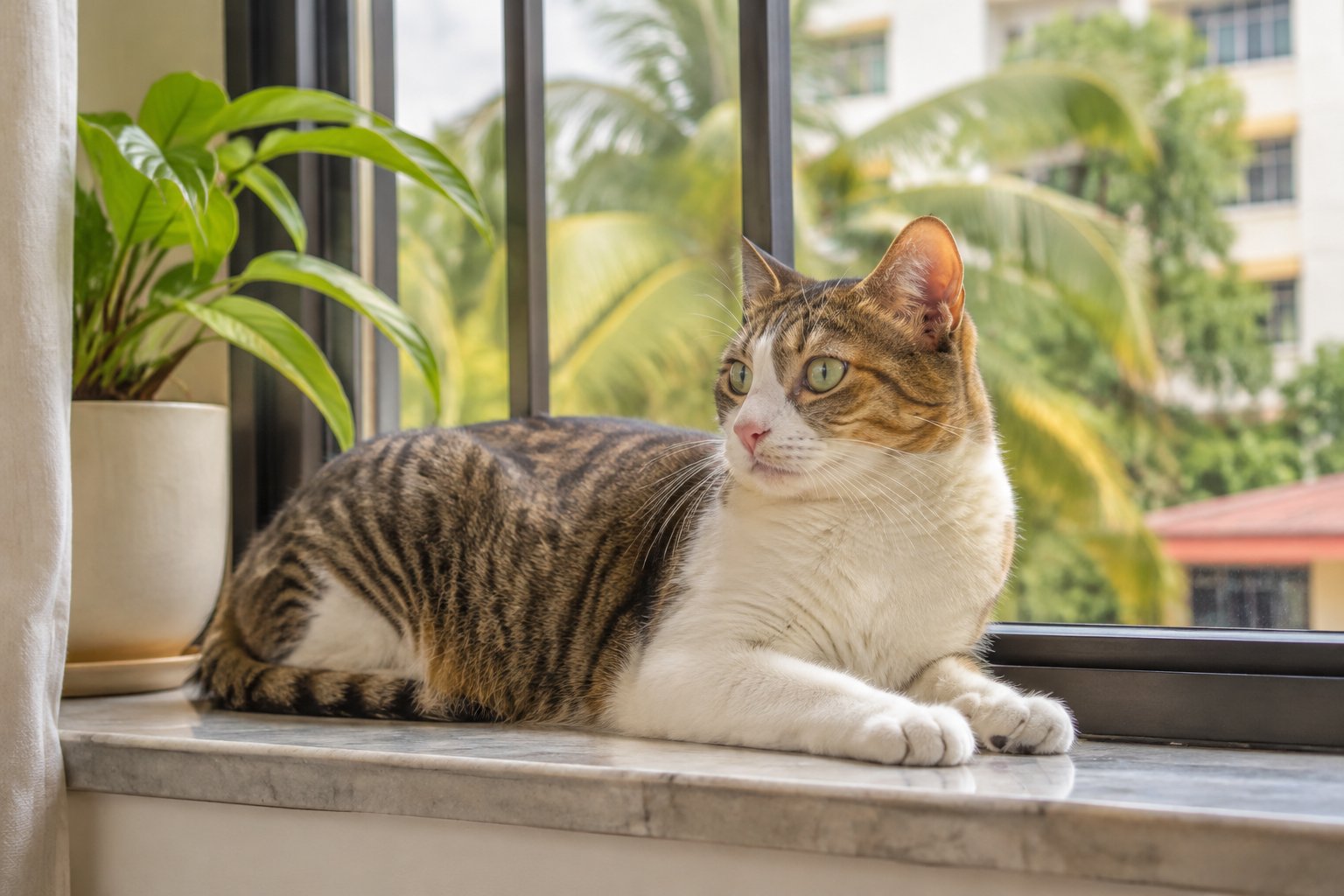
Why does my cat meow at night?
Cats meow at night because they are naturally most active around dawn and dusk, and because meowing is how they communicate with people. Hunger, boredom, attention-seeking, stress, and medical problems are the most common triggers. A sudden change in night vocalisation, especially in an older cat, deserves a vet visit.
Night meowing is one of the most common behaviour concerns cat owners raise. The good news is that most cases have an identifiable cause and a practical solution. This guide walks through the reasons, the red flags, and a step-by-step plan you can adapt to a Kuala Lumpur apartment, a Johor terrace house, or anywhere else in Malaysia.
The natural rhythm behind night meowing
Cats are crepuscular, meaning they are most active at dawn and dusk. This is a survival pattern inherited from wild ancestors that hunted small prey during low-light hours. In a home, this natural burst of energy often lands in the early morning or late evening, which can look like night-time meowing to a sleeping owner.
Domestic cats also learn quickly that meowing gets a response. If a meow at 3 a.m. leads to food, a door opening, or a play session, the behaviour is reinforced. This is not spite; it is learning. Understanding this helps you respond in a way that reduces the behaviour rather than rewards it.
Common causes of night meowing
Hunger
Hunger is one of the most common reasons cats meow at night. Cats fed once in the morning may be genuinely hungry by the early hours. A late-evening meal or a split feeding schedule can help. Avoid free-feeding all night if your cat is prone to weight gain; instead, divide the daily ration into smaller portions, with one before bed.
Boredom and excess energy
Indoor cats, especially in smaller homes, may not get enough physical and mental activity during the day. A cat that has slept for most of the afternoon may be ready to play at night. Short, frequent play sessions and puzzle feeders can help use up energy before bedtime.
Attention-seeking
Cats are social animals and some learn that meowing brings company. If your cat meows at your bedroom door and you open it, talk, or feed them, the behaviour is likely to repeat. The key is to give attention on your terms, not on demand, and to be consistent.
Stress and changes in routine
Moving house, a new baby, a new pet, renovations, or a change in work hours can all trigger night vocalisation. Cats are sensitive to routine. In Malaysia, festive periods with visitors, fireworks, or travel can also unsettle cats. Providing a quiet, safe room and keeping routines predictable helps.
Environmental factors
A bedroom that is too warm, too bright, or too noisy can keep a cat awake. In Malaysian homes, air-conditioning, ceiling fans, and open windows all affect comfort. Some cats also react to neighbourhood cats calling outside, especially in areas with many free-roaming cats.
Medical causes
Medical problems are an important cause of night meowing, particularly in older cats. Common conditions include:
- Hyperthyroidism: an overactive thyroid gland causes restlessness, increased appetite, weight loss, and night vocalisation.
- High blood pressure: can cause restlessness and vocalisation, and is often linked to kidney disease or hyperthyroidism.
- Pain: arthritis, dental disease, or abdominal pain can make cats restless and vocal at night.
- Vision or hearing loss: disorientation in the dark can lead to meowing.
- Cognitive dysfunction syndrome: similar to dementia in people, this affects older cats and often causes night-time vocalisation and confusion.
- Urinary or gastrointestinal issues: discomfort can disrupt sleep.
Any sudden change in night behaviour, especially in a cat over seven years old, warrants a vet check.
Night meowing in senior cats
Senior cats are more likely to meow at night, and the reasons are often medical. Cognitive dysfunction syndrome is common in cats over 11 years old and can cause night-time restlessness, loud vocalisation, and disorientation. Hyperthyroidism and high blood pressure are also more common in older cats and can cause similar signs.
A vet visit for an older cat with new night meowing should include a physical examination, blood tests, blood pressure measurement, and a discussion of diet and pain management. Early diagnosis makes a real difference to quality of life.
How to tell the difference between behaviour and illness
Use this checklist to help you decide whether to try behaviour changes first or book a vet visit.
| Sign | More likely behavioural | More likely medical |
|---|---|---|
| Age | Any age, often young | Often over 7 years old |
| Onset | Gradual, linked to routine | Sudden, no clear trigger |
| Appetite | Normal | Increased or decreased |
| Weight | Stable | Weight loss despite good appetite |
| Litter box | Normal | Changes in urination or defecation |
| Activity | Normal by day | Restless, confused, or withdrawn |
| Response to routine changes | Improves | No improvement |
If you tick any medical signs, see a vet before starting a behaviour plan.
A step-by-step plan to reduce night meowing
Step 1: Rule out medical causes
Book a vet check, especially if your cat is older or the behaviour is new. Ask about blood tests, blood pressure, and a dental check. This is the most important step because behaviour plans will not fix pain or disease.
Step 2: Build a late-evening routine
Cats thrive on routine. A predictable evening sequence signals that the day is ending. A simple routine might be:
- Play session with a wand toy or chase game for 10 to 15 minutes.
- A small meal or a portion of the daily ration.
- Grooming or quiet cuddle time.
- Lights down and a calm environment.
This mimics the natural hunt-eat-groom-sleep cycle and can help your cat settle.
Step 3: Use food puzzles and enrichment
Puzzle feeders and food-dispensing toys can keep cats occupied in the early evening and reduce boredom. Rotate toys to keep them interesting. Scratching posts, cat trees, and window perches give indoor cats more to do.
Step 4: Manage the bedroom environment
Keep the bedroom dark, quiet, and at a comfortable temperature. If your cat sleeps outside the bedroom, make sure they have a warm, comfortable bed and access to water and a litter box. White noise or a fan can mask outside sounds.
Step 5: Ignore attention-seeking meows consistently
This is hard but important. If you respond to meowing with food, play, or conversation, you teach your cat that meowing works. Ignore the meowing, but check that your cat is not in distress or unwell. Consistency across all household members is essential.
Step 6: Review the daytime routine
Increase daytime activity with play sessions, puzzle feeders, and safe outdoor access if available. A tired cat is more likely to sleep at night. If you work long hours, consider a midday play session or a cat sitter.
What not to do
- Do not punish your cat. Punishment increases stress and can make vocalisation worse.
- Do not shout or spray water. These methods damage trust and do not address the cause.
- Do not free-feed all night unless your vet advises it, as this can lead to weight gain and does not solve boredom.
- Do not ignore sudden changes in an older cat. Book a vet visit.
Adapting the plan to Malaysian homes
Living arrangements affect how you manage night meowing. In a Kuala Lumpur apartment, noise can carry to neighbours, so a consistent bedtime routine and white noise are especially useful. In a Johor terrace house, outside cats and night noises may trigger meowing, so closing windows or using curtains can help. During the Penang rainy season, cats may be more restless indoors, so extra enrichment and play can make a difference.
Malaysian homes often have tiled floors and ceiling fans, which can affect comfort. Make sure your cat has a warm, draft-free bed and access to fresh water. If you have a multi-cat household, provide separate feeding and resting areas to reduce competition and stress.
When to see a vet
See a vet if your cat:
- Starts meowing at night suddenly, especially if over seven years old.
- Shows weight loss, increased appetite, or increased thirst.
- Has changes in urination, defecation, or litter box habits.
- Appears disoriented, confused, or restless at night.
- Shows signs of pain, such as reluctance to move or touch sensitivity.
- Has a change in appetite or behaviour that lasts more than a few days.
Your vet can check for hyperthyroidism, high blood pressure, pain, and cognitive dysfunction, and advise on treatment or management.
Frequently asked questions
Is it normal for a cat to meow at night? Occasional night meowing is normal, especially around dawn and dusk when cats are naturally active. However, frequent or sudden night meowing, particularly in an older cat, can signal hunger, boredom, stress, or a medical problem and should be checked by a vet.
Why does my cat meow at night after I go to bed? Your cat may be hungry, bored, seeking attention, or reacting to a disrupted routine. Cats are crepuscular, so they are wired to be active at dawn and dusk. If the meowing started suddenly, pain or illness could be the cause.
How can I stop my cat meowing at night? Try a late-evening play session followed by a meal, keep the bedroom dark and quiet, and ignore attention-seeking meows consistently. Never punish your cat. If the behaviour persists or your cat is older, book a vet check to rule out medical causes.
Should I feed my cat before bed to stop night meowing? A small late-evening meal can help if hunger is the cause, but avoid free-feeding all night. Split the daily ration so your cat gets a portion before bed. If your cat is overweight, ask your vet for a suitable feeding plan.
Why is my senior cat meowing at night? Older cats often meow at night due to hyperthyroidism, high blood pressure, arthritis pain, vision or hearing loss, or cognitive dysfunction syndrome. A vet visit with blood tests is important to identify and manage the cause.
Can I let my cat sleep with me to stop night meowing? Some cats settle better when allowed in the bedroom, but this can reinforce attention-seeking if the meowing is for play or food. Keep the room dark and quiet, and avoid responding to meows with attention. Consistency matters more than location.
Vet disclaimer
This article is for general information only and is not a substitute for veterinary advice. Always consult a licensed veterinarian for diagnosis and treatment of your cat's health or behaviour problems.
Related reading
- Cat Behaviour Guide Malaysia 2026: Decode 30 Signals, Fix the Environment First
- Cat Meowing at Night: Training Tips That Actually Work
- How to Stop Cat Clicker Training: A Calm, Step-by-Step Guide for Malaysian Owners
- How to Stop Cat Meowing at Night: A Malaysian Owner's Guide
- Meowing at Night in Cats: Why It Happens and How to Help (Malaysia Guide)
- Cat Biting Training Tips: How to Stop Nips, Bites and Play Aggression
- Cat Clicker Training: Practical Training Tips for Malaysian Cat Owners
- Cat Night Activity Training Tips: How to Calm a Nocturnal Cat
- Cat Over-Grooming Training Tips: Stop the Licking Before It Becomes a Habit
- Cat Play Aggression Training Tips: A Practical Guide for Malaysian Owners
- Cat Separation Anxiety Training Tips: A Malaysian Guide to Helping Your Cat Feel Secure Alone

