
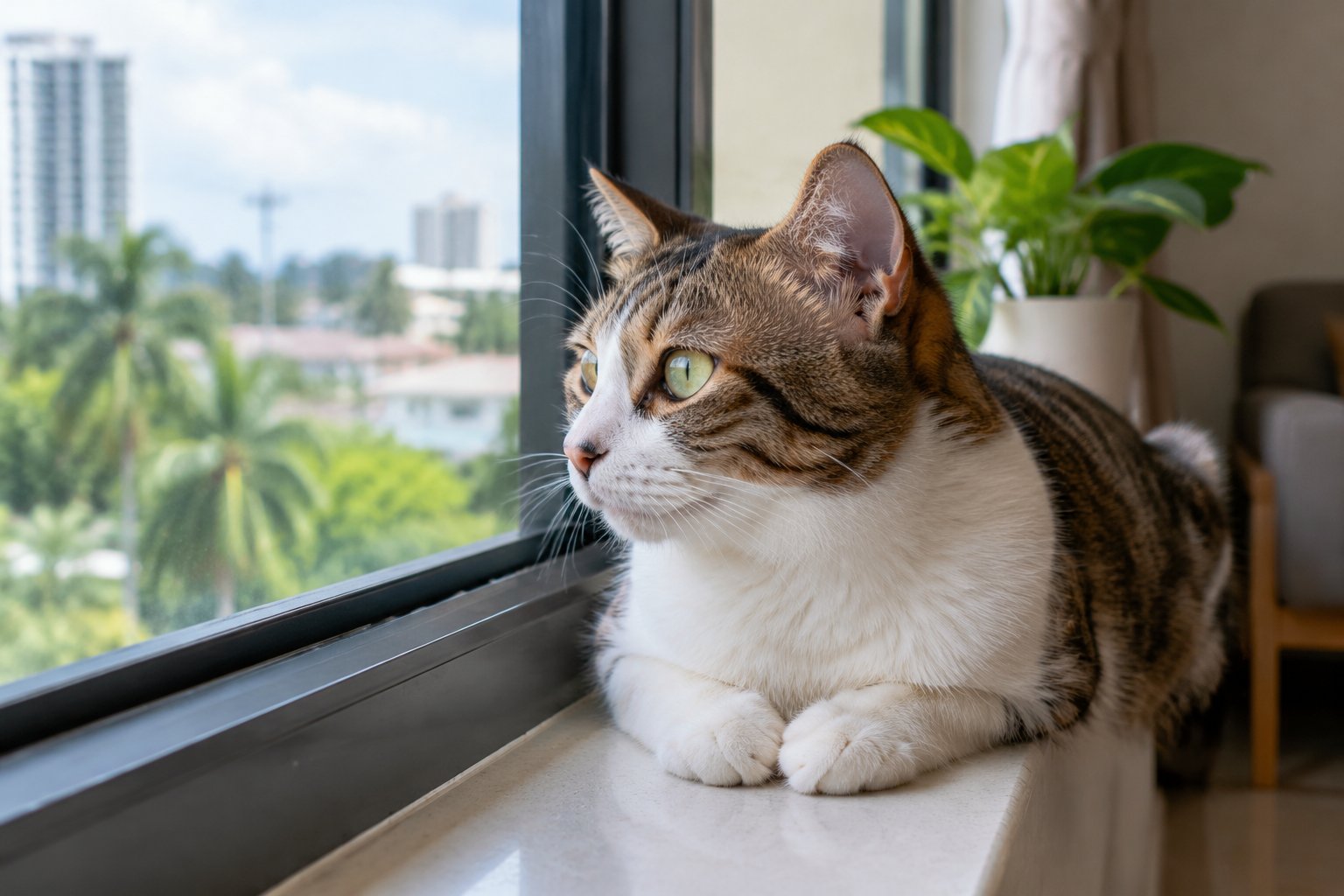
What is cat separation anxiety?
Cat separation anxiety is a stress response that some cats show when they are left alone or separated from a person they are strongly bonded to. It goes beyond the occasional meow at the door. Affected cats may cry persistently, scratch at exits, spray indoors, pace, over-groom or refuse food while alone. The behaviour usually starts within minutes to half an hour of the owner leaving and eases when they return.
While separation anxiety is more often discussed in dogs, cats are social animals and can form deep attachments. In Malaysia, where many cats live indoors in apartments or terrace houses, the condition can be easily missed or mistaken for mischief. Understanding the difference between normal independence and genuine distress is the first step to helping your cat.
Recognising the signs: what separation anxiety looks like in cats
Cats are subtle. They don't always howl like dogs. Watch for a cluster of behaviours that happen mainly when you're out or about to leave.
- Vocalisation: Excessive meowing, crying or yowling, often starting soon after you shut the door.
- Destructive behaviour: Scratching at doors, window frames or furniture near exits, sometimes causing damage to paint or wood.
- Indoor spraying or inappropriate urination: Spraying on walls, doors or your belongings, or urinating outside the litter box when alone.
- Pacing and restlessness: Walking back and forth, especially near the door or window.
- Over-grooming: Licking a patch of fur bald, often on the belly, flanks or legs.
- Changes in eating and drinking: Some cats won't eat until you return; others may drink more.
- Clinginess: Following you from room to room, demanding attention, or becoming distressed when you prepare to leave.
- Escape attempts: Bolting out the door or trying to squeeze through windows.
A key clue is timing. If these behaviours only happen when you're away or just before you leave, separation anxiety is a strong possibility. If they happen at other times too, consider other causes such as boredom, territorial stress or a medical issue.
Why some cats develop separation anxiety
There is no single cause. Several factors can contribute:
- Strong attachment: Cats that are very bonded to one person may struggle when that person is absent.
- Sudden routine changes: A return to office work after a long period at home, a move to a new house, or a change in work shifts can trigger anxiety.
- Early experiences: Cats adopted as kittens may have missed out on gradual independence, or they may have been rehomed multiple times.
- Loss of a companion: The death or departure of another pet or family member can unsettle a cat.
- Environmental stress: A new baby, renovation, or a noisy household can make a cat more dependent on a stable figure.
- Lack of enrichment: A cat with little to do may become overly focused on its owner for stimulation.
In Malaysia, many cats are kept strictly indoors for safety, which is good, but it means the owner is often the main source of entertainment. Without outlets for natural behaviour, some cats become anxious when that source disappears.
How to tell separation anxiety from other problems
It's easy to confuse separation anxiety with other feline issues. Use this table as a guide.
| Behaviour | Separation anxiety | Boredom | Medical problem | Territorial stress |
|---|---|---|---|---|
| Timing | Mainly when alone | Any time, especially when owner busy | Can be constant | Often when other animals nearby |
| Vocalisation | Crying at door soon after departure | Occasional meowing | May cry when urinating or eating | Hissing, growling at other cats |
| Spraying | On exits or owner's items when alone | Rare | Possible with urinary issues | On walls, furniture, especially near doors/windows |
| Grooming | Over-grooming when alone | Normal | May groom if itchy or in pain | Normal or stress-related |
| Appetite | May not eat when alone | Normal | Often changes | May change |
If you're unsure, a vet can help rule out medical causes. Urinary problems, dental pain and thyroid issues can all cause behaviour changes that look like anxiety.
Practical ways to help your cat feel secure
1. Build a predictable routine
Cats thrive on routine. Try to feed, play and clean the litter box at similar times each day. Predictability reduces uncertainty. If your work schedule changes, introduce the new routine gradually where possible.
2. Make departures and returns low-key
Don't make a big fuss when leaving or coming home. A calm, brief goodbye and a quiet hello are better than long cuddles that heighten emotion. This teaches your cat that your absence is normal and you always come back.
3. Practise short absences
Start with leaving for a few minutes, then gradually increase the time. Do this on weekends or days off. The goal is to show your cat that short absences are safe and that you return. Keep greetings neutral.
4. Provide environmental enrichment
A bored cat is more likely to become anxious. Offer:
- Puzzle feeders or food-dispensing toys.
- Climbing shelves or a cat tree near a window (ensure windows are secured with mesh).
- Scratching posts in different rooms.
- Safe, rotate toys to keep novelty.
- A cozy hiding spot where your cat can retreat.
In a Kuala Lumpur apartment, vertical space is especially valuable. Wall-mounted shelves or a tall cat tree can double your cat's usable territory without taking up floor space.
5. Leave a scent and sound comfort
Leave an item of clothing that carries your scent in your cat's favourite resting spot. Some cats respond well to calming music or a radio left on low. Avoid loud TV or sudden noises.
6. Consider a companion carefully
Getting another cat is not a quick fix. A new cat can add stress if introductions are rushed. Only consider a second cat if your cat is generally sociable and you can manage a slow, supervised introduction. The anxiety is about you, not about being alone per se, so focus on building independence first.
7. Use pheromone products
Synthetic feline facial pheromone diffusers or sprays may help some cats feel calmer. These are available from pet retailers and vets. They are not a cure but can support a behaviour plan.
8. Talk to your vet about severe cases
If your cat is injuring itself, not eating, or showing extreme distress, a vet may recommend medication alongside behaviour modification. Never give human anti-anxiety drugs to a cat; some are toxic.
Creating a cat-friendly home in Malaysian living spaces
Malaysian homes vary from high-rise apartments to terrace houses. Here are some location-specific tips:
- Kuala Lumpur apartment: Use vertical space. Install secure window mesh so your cat can watch the outside world safely. Set up a quiet corner away from the door where your cat can retreat when you leave.
- Johor terrace house: If you have a garden, ensure it is cat-proofed before letting your cat out. Many cats in terrace houses are indoor-only, so provide a catio or window perch. The heat can be intense; always leave fresh water in multiple spots.
- Penang rainy season: During heavy rains, cats may feel more anxious due to thunder and changes in routine. Create a safe, dark hiding place and keep windows closed to muffle sound. Pheromone diffusers can help during storms.
When to see a vet
See a vet if your cat:
- Stops eating or drinking when left alone.
- Injures itself (e.g., raw paws from scratching, bald patches from over-grooming).
- Sprays or urinates outside the litter box frequently.
- Shows signs of pain, such as crying when urinating or reluctance to move.
- Has sudden behaviour changes, especially in older cats.
- Does not improve with home management.
Your vet can rule out medical conditions and, if needed, refer you to a veterinary behaviourist. In Malaysia, the Department of Veterinary Services (DVS) provides resources on pet care, and organisations like SPCA Selangor offer behaviour advice.
Frequently asked questions
Do cats really get separation anxiety? Yes. While more commonly associated with dogs, cats can develop separation anxiety. They are social animals and some form very strong attachments to their owners, showing distress when left alone.
What are the most common signs of separation anxiety in cats? Frequent meowing or crying when you leave, destructive scratching at doors, indoor spraying, pacing, over-grooming and not eating while alone are common signs.
How can I help my cat with separation anxiety? Establish a predictable routine, provide enrichment like puzzle feeders and climbing shelves, practise short absences, and avoid making departures dramatic. For severe cases, consult a vet for a behaviour plan.
Should I get another cat to keep my cat company? Not necessarily. A new cat can add stress if introductions are rushed. Separation anxiety is about attachment to you, so focus on building your cat's confidence and independence first.
Can medication help a cat with separation anxiety? In severe cases, a vet may prescribe anti-anxiety medication alongside behaviour modification. Never give human medication to a cat without veterinary advice.
When should I see a vet for my cat's anxiety? If your cat stops eating, injures itself, sprays constantly or shows distress that doesn't improve with home changes, see a vet to rule out medical causes and discuss treatment.
This article is for general information only and is not a substitute for professional veterinary advice. Always consult a licensed veterinarian for diagnosis and treatment of your cat.
Related reading
- Cat Behaviour Guide Malaysia 2026: Decode 30 Signals, Fix the Environment First
- Cat Anxiety in Malaysia: Chronic-Anxiety Scorecard and 7 Home Fixes
- Cat Anxiety in Malaysia: A 2-Week Checklist and 7 Home Fixes That Actually Work
- Cat Body Language Decoded: What 30 Common Behaviours Really Mean
- Cat Belly-Up in Malaysia: What It Really Means, and When You Can Touch
- Cat Carrier Training Explained: A Calm, Step-by-Step Guide for Malaysian Cat Owners
- Cat Carrier Training: Training Tips for Malaysian Cat Owners
- Cat Fear of Strangers Explained: Why Your Cat Hides and How to Help