
Answer first
To stop cat clicker training, you do not need to undo everything you taught. Decide why you are stopping, then fade the clicker by replacing it with a verbal marker such as "yes", gradually reduce treat frequency, keep short daily practice sessions, and reward good behaviour with praise, play or access to favourite spots. Never punish your cat. If training has caused stress, pause and speak to a veterinarian.
Why you might want to stop clicker training
Clicker training is a positive reinforcement method. You click at the exact moment your cat does something you want, then give a treat. Over time, the click becomes a promise of reward. It is a useful tool, but it is not compulsory. Many owners stop for practical or welfare reasons.
Common reasons include:
- The clicker sound startles your cat. Some cats are sensitive to sharp noises. A clicker can be aversive for them.
- **You keep forgetting the clicker.** Training only works when you are consistent. If you cannot carry it, a verbal marker is easier.
- Your cat is already fluent. Once a behaviour is learned, you may not need a clicker to maintain it.
- Treat management is difficult. If your cat has a medical condition, is overweight, or is on a prescription diet, frequent treats may be a problem.
- Training has become stressful for you or your cat. Sessions should be fun. If they are not, it is reasonable to stop or change approach.
- You want to use life rewards. Some owners prefer to reward with play, brushing or opening a door rather than food.
Stopping clicker training does not mean abandoning training. It means changing the marker and reward system so it fits your cat and your household.
First, check your cat's welfare
Before you change any training plan, make sure your cat is healthy and comfortable. Pain, illness and stress can affect learning and behaviour. Signs to watch for include:
- Hiding more than usual
- Changes in appetite or litter box habits
- Irritability or aggression when approached
- Over-grooming or restlessness
- Avoiding the training area
If you notice these signs, stop training and consult a veterinarian. Training should never be used to mask a medical problem.
How to fade the clicker step by step
Fading means gradually reducing the clicker while keeping the behaviour strong. Do not remove everything at once. Use this plan over one to two weeks.
Step 1: Choose a replacement marker
Pick a short, consistent word such as "yes" or "good". Say it in a calm, upbeat tone. The word must always mean "a reward is coming". Practise saying it when your cat is relaxed, then give a treat. Repeat a few times a day in short sessions.
Step 2: Pair the clicker and the word
For a few sessions, click and say "yes" at the same time, then treat. This teaches your cat that the word predicts the same thing as the click.
Step 3: Use the word more, the clicker less
Start using "yes" for easy behaviours your cat already knows, such as sitting or coming when called. Use the clicker only for new or difficult tasks. Gradually reduce clicker use to once or twice per session.
Step 4: Drop the clicker for known behaviours
Once your cat responds reliably to "yes", stop using the clicker for behaviours they have mastered. Keep the clicker only for teaching something new, or retire it completely if you prefer.
Step 5: Reduce treats gradually
Treats do not need to stop, but they can become less frequent. Move from a treat every time to every second or third time. Then use treats occasionally, and fill the gap with praise, petting, play or a favourite activity.
Step 6: Keep sessions short and positive
Aim for two to five minutes, once or twice a day. End while your cat is still interested. Short, successful sessions are better than long, frustrating ones.
Comparison table: clicker versus verbal marker
| Feature | Clicker | Verbal marker ("yes") |
|---|---|---|
| Sound | Sharp, consistent click | Human voice, varies in tone |
| Best for | New behaviours, precise timing | Known behaviours, everyday use |
| Portability | Needs to be carried | Always available |
| Cat sensitivity | Some cats find it startling | Generally softer, but tone matters |
| Owner learning curve | Easy to use, but must click at the right moment | Easy, but consistency is key |
| Treat dependence | Often paired with food | Can be paired with food or life rewards |
What to do with the clicker itself
You do not have to throw it away. Keep it in a drawer. You might use it again for a new behaviour, such as training your cat to accept a carrier or to settle on a mat. If your cat found the sound unpleasant, retire it and use a verbal marker instead.
Keep good behaviour without a clicker
Behaviour is maintained by consequences. If you stop rewarding a behaviour entirely, it may fade. To keep the behaviours you like, reward them occasionally and consistently.
Practical ways to maintain good behaviour:
- Ask for a sit before meals. Reward with the meal itself.
- Reward coming when called. Use a happy voice and a small treat or a gentle stroke.
- Use play as a reward. A short wand toy session can be a powerful reward for many cats.
- Use environmental rewards. Opening a door to a balcony or letting your cat onto a favourite perch can reward behaviour.
- Keep cues consistent. Use the same word and hand signal each time.
- Avoid punishment. Punishment can increase fear and aggression and damage your relationship with your cat.
Managing treats in a Malaysian home
Treats are useful, but they should not make up a large part of your cat's diet. In Malaysia, many cats live indoors in apartments and terrace houses, where exercise may be limited. Extra calories can add up quickly.
Tips for treat management:
- Use small pieces, about the size of a pea.
- Break treats into smaller bits rather than giving a whole one.
- Subtract treat calories from your cat's daily food allowance, or ask your veterinarian for guidance.
- Use part of your cat's regular kibble as training rewards.
- Choose treats suitable for your cat's health needs, especially if they have kidney, urinary or weight issues.
- Keep treats out of reach and store them in a sealed container to avoid overfeeding.
If you are unsure how much to feed, ask your veterinarian. Local prices for treats and food vary, so compare options at pet shops or online retailers in Malaysia.
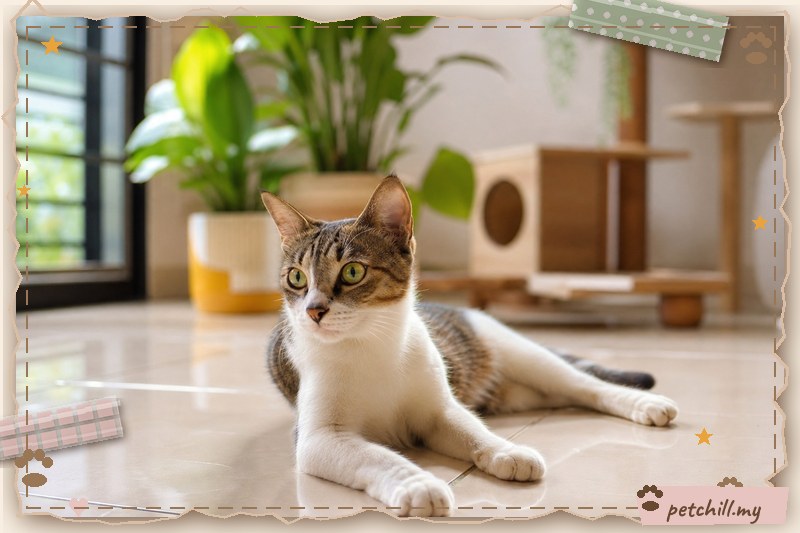
Training in small Malaysian spaces
Many Malaysian cats live in apartments or smaller terrace houses. You do not need a large space to train. Short sessions in a quiet room, on a mat, or in a hallway work well.
Examples:
- Kuala Lumpur apartment: Use a hallway or a quiet corner of the living room for two-minute sessions. Reward your cat for sitting calmly while you prepare food.
- Johor terrace house: Use the shaded area near the back door for a short session. Reward your cat for coming when called before letting them out into a secure area.
Avoid training during the hottest part of the day. In Penang's rainy season, indoor play and training can help prevent boredom when outdoor time is limited.
When to see a vet
See a veterinarian if your cat shows any of the following:
- Sudden changes in behaviour, such as aggression or fearfulness
- Loss of appetite or weight change
- Hiding, lethargy or reluctance to move
- Over-grooming or skin problems
- House-soiling or changes in litter box use
- Signs of pain, such as flinching when touched
- Stress that does not settle after you stop training
A veterinarian can rule out medical causes and advise on behaviour. If behaviour problems are complex, ask for a referral to a qualified behaviour professional.
Common mistakes when stopping clicker training
- Stopping all rewards at once. This can weaken learned behaviours. Fade rewards gradually.
- Using punishment to speed things up. Punishment can cause fear and aggression.
- Changing the marker word often. Pick one word and stick to it.
- Training for too long. Short sessions are better.
- Ignoring stress signals. If your cat hides or avoids training, stop and reassess.
- Forgetting to check health. Pain and illness can look like behaviour problems.
A simple two-week fading plan
| Day | Action |
|---|---|
| 1-2 | Choose your verbal marker. Pair it with treats when your cat is relaxed. |
| 3-4 | Click and say the marker together for easy behaviours. |
| 5-7 | Use the marker more, clicker less. Reward every correct response. |
| 8-10 | Use the clicker only for new behaviours. Use the marker for known ones. |
| 11-12 | Reduce treats to every second or third correct response. |
| 13-14 | Use the marker and occasional treats. Keep sessions short and positive. |
This plan is a guide, not a rule. Adjust to your cat's pace. If your cat seems confused, slow down and reward more often for a few days.
Final thoughts
Stopping clicker training is not a failure. It is a choice about the tools you use. What matters is that your cat remains healthy, comfortable and able to learn. Use a verbal marker, keep rewards meaningful, and keep training short and kind. If you are unsure, ask your veterinarian for advice.
Vet disclaimer: This article is for general information only and is not a substitute for veterinary advice. Always consult a licensed veterinarian about your cat's health and behaviour.
Related reading
- Cat Behaviour Guide Malaysia 2026: Decode 30 Signals, Fix the Environment First
- Cat Biting Training Tips: How to Stop Nips, Bites and Play Aggression
- Cat Meowing at Night: Training Tips That Actually Work
- Cat Night Activity Training Tips: How to Calm a Nocturnal Cat
- Cat Over-Grooming Training Tips: Stop the Licking Before It Becomes a Habit
- Cat Play Aggression Training Tips: A Practical Guide for Malaysian Owners
- Cat Scratching Furniture: Training Tips That Actually Work
- Cat Separation Anxiety Training Tips: A Malaysian Guide to Helping Your Cat Feel Secure Alone
- Cat Aggression Training Tips: A Practical Guide for Malaysian Owners

