
What is over-grooming in cats?
Over-grooming, also called excessive grooming or psychogenic grooming, is when a cat spends far more time than usual licking, chewing or pulling at its fur. All cats groom to stay clean, but when it becomes obsessive, it can lead to bald patches, skin irritation and even open sores. It's not just a cosmetic issue — it's a sign that something is wrong, either physically or emotionally.
In Malaysia, cats are popular pets in apartments and landed homes alike. Over-grooming can happen in any cat, but it's often overlooked because owners assume their cat is just being tidy. Recognising the difference between normal grooming and over-grooming is the first step to helping your cat.
Normal grooming vs over-grooming: how to tell the difference
Normal grooming is part of a cat's daily routine. Cats typically groom after meals, after using the litter box, and before sleep. They use their tongue to clean their fur, and the rough papillae (tiny hooks) on the tongue help remove dirt and loose hair. This is healthy behaviour.
Over-grooming, on the other hand, is excessive in duration and intensity. Signs include:
- Bald patches, especially on the belly, inner thighs, flanks and sometimes the front legs. The fur may look uniformly short or completely missing.
- Red, inflamed or broken skin where the cat has licked repeatedly.
- Frequent licking that interrupts normal activities like eating or playing.
- Grooming in secret or when you're not looking, which can make it harder to spot.
- Hairballs becoming more frequent due to increased swallowing of fur.
If you notice any of these, it's time to investigate. A simple way to check is to part your cat's fur gently and look at the skin underneath. Bald patches with no obvious cause (like fleas) warrant a vet visit.
The medical causes of over-grooming
Many people assume over-grooming is purely behavioural, but medical issues are common triggers. In fact, vets often see over-grooming as a symptom of an underlying physical problem. Here are the main medical causes:
Allergies
Allergies are a major cause of itchy skin in cats. The three main types are:
- Flea allergy dermatitis (FAD): Some cats are allergic to flea saliva. Even a single flea bite can cause intense itching, leading to over-grooming, especially around the tail base and back.
- Food allergies: Cats can develop allergies to ingredients in their food, often proteins like chicken or beef. This can cause itching, especially around the head and neck, but also generalised scratching.
- Environmental allergies (atopy): Pollen, dust mites, mould and other environmental allergens can cause itching. In Malaysia's humid climate, mould and dust mites are common indoor allergens.
Allergies often cause itching that leads to over-grooming. The cat may lick its paws, face and belly excessively.
Parasites
Fleas, mites (such as ear mites or Demodex), and lice can all cause itching. Fleas are common in Malaysia year-round due to the warm climate. Regular flea prevention is essential, but some owners may miss the signs if their cat is indoor-only. Fleas can hitch a ride on clothing or other pets.
Skin infections
Bacterial or fungal infections (like ringworm) can make the skin itchy and uncomfortable. Cats may lick the affected area, spreading the infection or causing further damage. Ringworm is zoonotic (can spread to humans), so it's important to get a diagnosis.
Pain
Cats are experts at hiding pain. Arthritis, dental disease, or abdominal pain can cause a cat to lick the painful area. For example, a cat with arthritis in the hips may lick its flank or hind legs. This is a form of self-soothing, but it can lead to bald patches.
Hormonal imbalances
Conditions like hyperthyroidism or Cushing's disease can affect the skin and coat, though they are less common. These usually come with other symptoms like weight loss or increased appetite.
The behavioural causes of over-grooming
When medical causes are ruled out, over-grooming may be behavioural. This is often called psychogenic alopecia, though the term is used less now because it implies a purely psychological cause. Behavioural over-grooming is usually linked to stress, anxiety or compulsive disorder.
Common stressors for cats include:
- Changes in environment: Moving house, new furniture, renovations, or a new baby.
- New pets or people: Adding another cat or dog to the household can cause territorial stress.
- Lack of stimulation: Boredom and insufficient play can lead to compulsive behaviours.
- Conflict with other cats: Even subtle tension, like sharing resources (food bowls, litter boxes) in a multi-cat home, can cause stress.
- Owner stress: Cats are sensitive to their owners' emotions and household atmosphere.
In Malaysia, many cats live in apartments with limited space. Without enough vertical territory (cat trees, shelves) and interactive play, they can become stressed. Similarly, in landed homes with outdoor access, cats may encounter other cats, leading to territorial disputes.
Behavioural over-grooming often targets the belly, inner thighs and forelegs. The cat may lick in a trance-like state, sometimes pulling out tufts of fur.
How over-grooming is diagnosed
Diagnosing over-grooming requires a systematic approach. Your vet will start with a thorough history: when did the grooming start? Are there bald patches? Any changes in the home? Then a physical examination to check for fleas, skin lesions, and pain.
Tests may include:
- Skin scrapings to check for mites.
- Flea combing and inspection for flea dirt.
- Fungal culture for ringworm.
- Blood tests to check for underlying disease.
- Food trial (elimination diet) if food allergy is suspected.
- Allergy testing (though not always reliable in cats).
If all medical tests are negative, a behavioural cause is considered. Your vet may refer you to a veterinary behaviourist.
What you can do at home
While you need a vet to diagnose the cause, there are things you can do to support your cat and reduce over-grooming:
1. Rule out fleas and parasites
Use vet-recommended flea prevention year-round. In Malaysia, fleas are a year-round problem. Check for flea dirt (black specks) by combing your cat over a white paper towel. If you see specks that turn red when wet, that's flea dirt (digested blood).
2. Reduce stress with environmental enrichment
- Vertical space: Add cat trees, shelves or window perches. Cats feel safer when they can climb and observe from above.
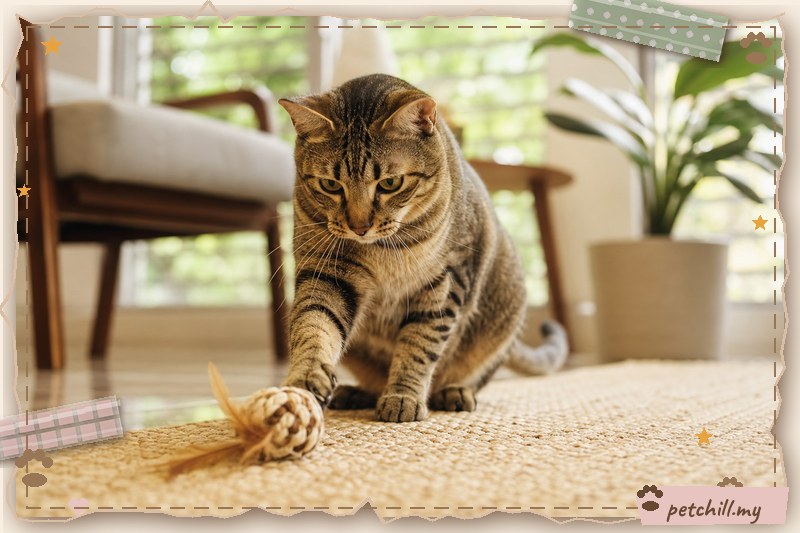
- Interactive play: Set aside 10-15 minutes twice a day for play with wand toys. This mimics hunting and reduces stress.
- Puzzle feeders: Make mealtime more engaging.
- Safe hiding spots: Provide boxes or covered beds where the cat can retreat.
- Pheromone products: Synthetic pheromone diffusers (e.g., Feliway) can help reduce anxiety in some cats. These are available in Malaysia but ask your vet for advice.
3. Keep a routine
Cats thrive on predictability. Feed at the same times, keep litter boxes clean, and avoid sudden changes. If you must change something, do it gradually.
4. Avoid punishment
Never punish your cat for over-grooming. Punishment increases stress and worsens the problem. Instead, redirect the behaviour gently.
5. Consider diet
If food allergy is suspected, your vet may recommend a hypoallergenic or elimination diet. Don't switch foods without veterinary guidance.
When to see a vet
You should see a vet if:
- You notice bald patches or red, inflamed skin.
- Your cat is licking excessively, especially in one area.
- There are other signs like vomiting, diarrhoea, weight loss or lethargy.
- The behaviour starts suddenly or worsens.
- You've tried basic stress reduction but see no improvement.
A vet will help rule out medical causes and guide you on the next steps. In Malaysia, you can find a vet through the Department of Veterinary Services (DVS) or local veterinary associations. Always choose a licensed vet.
Comparison table: medical vs behavioural over-grooming
| Feature | Medical over-grooming | Behavioural over-grooming |
|---|---|---|
| Common areas | Anywhere, often where it itches (tail base, head, neck) | Belly, inner thighs, forelegs |
| Skin appearance | Redness, bumps, crusts, fleas | Often normal skin, but may be red from licking |
| Other signs | Scratching, hair loss, infections | Stress-related behaviours (hiding, aggression) |
| Onset | Often gradual, may be seasonal | Often linked to a stressful event |
| Response to treatment | Improves with medical treatment | Improves with behaviour modification |
Prevention tips for Malaysian cat owners
- Regular flea control: Use vet-approved products monthly.
- Groom your cat: Brushing helps remove loose fur and gives you a chance to check for skin problems.
- Provide a stimulating environment: Rotate toys, provide climbing opportunities, and consider a catio if you have outdoor space.
- Watch for changes: New pets, moving house, or renovations can trigger stress. Introduce changes slowly.
- Schedule annual vet checks: Even indoor cats benefit from yearly examinations.
Conclusion
Over-grooming is a complex issue that can have both medical and behavioural roots. It's not a behaviour to ignore — it's a cry for help. By working with your vet, you can identify the cause and take steps to help your cat feel better. Remember, patience and observation are key. With the right approach, most cats can overcome over-grooming and return to a healthy, comfortable life.
Disclaimer: This article is for informational purposes only and does not replace professional veterinary advice. If you suspect your cat is over-grooming, consult a licensed veterinarian in Malaysia.
Related reading
- Cat Behaviour Guide Malaysia 2026: Decode 30 Signals, Fix the Environment First
- How to Stop Cat Over-Grooming: A Practical Guide for Malaysian Cat Owners
- Over-Grooming in Cats in Malaysia: Causes, Signs and How to Help
- Cat Over-Grooming Training Tips: Stop the Licking Before It Becomes a Habit
- Carrier Training in Cats Malaysia: A Practical Guide for Calm Vet Visits
- Cat Aggression Training Tips: A Practical Guide for Malaysian Owners
- Cat Belly Up in Malaysia: 4 Meanings & Whether You Can Touch
- Cat Biting Training Tips: How to Stop Nips, Bites and Play Aggression
- Cat Carrier Training Explained: A Calm, Step-by-Step Guide for Malaysian Cat Owners
- Cat Clicker Training Explained: A Practical Guide for Malaysian Cat Owners
- Cat Clicker Training: Practical Training Tips for Malaysian Cat Owners
- Cat Climbing Training Tips: Safe Vertical Play for Malaysian Homes

