
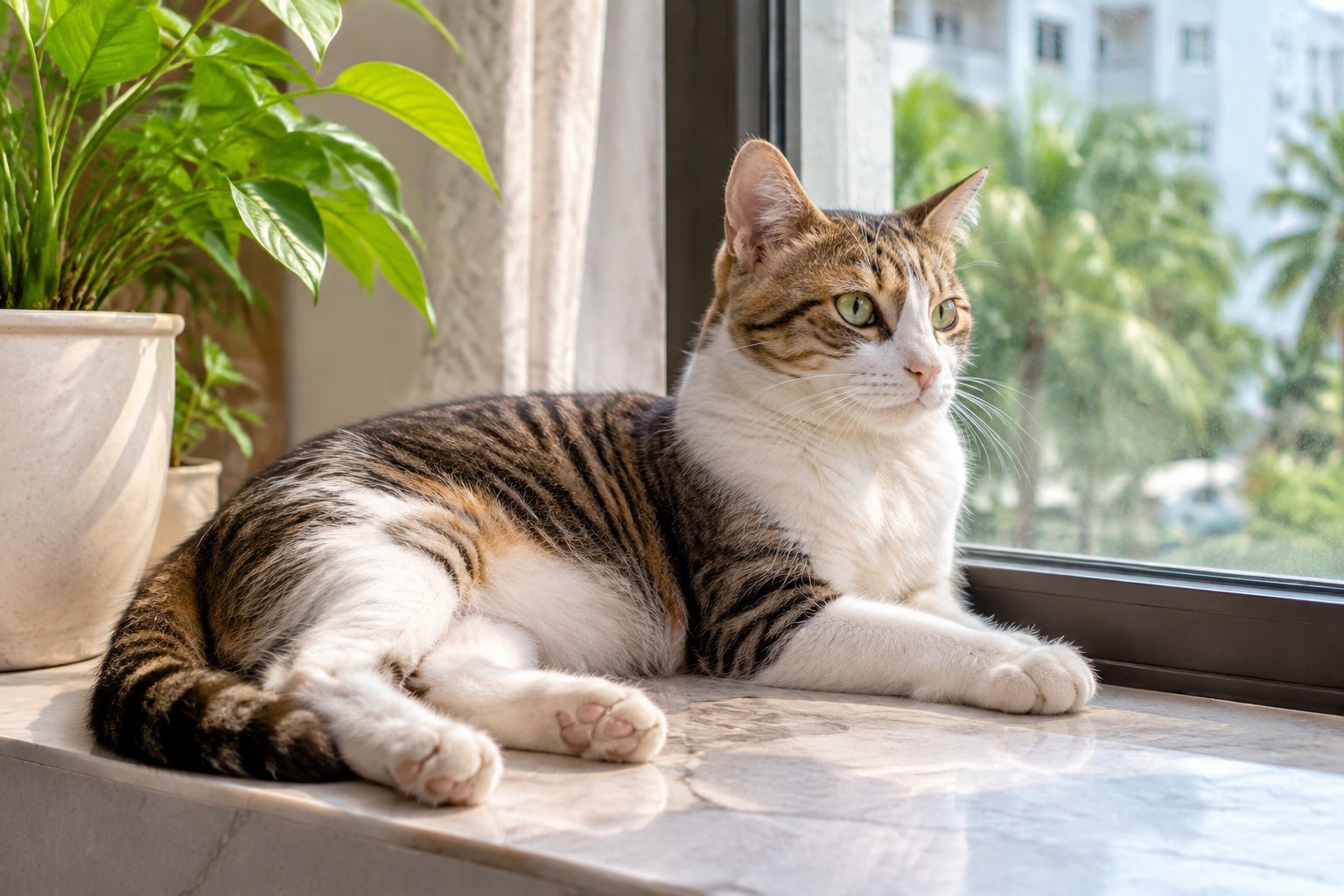
The short answer
Night meowing is rarely about a cat being naughty. It is usually a routine, hunger, comfort or health problem. The fix is a predictable evening routine, a tired cat, a late meal, a dark quiet room, and zero attention for night cries. If the behaviour is new or comes with other signs, see a vet first.
This guide walks you through a humane training plan you can run in a Malaysian apartment, terrace house or kampung home, with checklists, a comparison table and clear red flags.
Why cats meow at night
Cats are crepuscular, meaning they are naturally most active around dawn and dusk. A house cat with nothing to do during the day often shifts that energy to the night. Common causes include:
- Boredom and unused energy. A cat that sleeps all day will look for action at night.
- Hunger. Cats fed early in the evening may be hungry again by 2am.
- Attention habit. If meowing once got a response, your cat learned it works.
- Discomfort or illness. Pain, dental disease, arthritis, thyroid problems, kidney disease and cognitive changes in older cats can all cause night vocalisation.
- Environment. Noise, light, other cats outside, or an uncomfortable room can keep a cat restless.
- Litter box or thirst issues. A cat that needs to toilet more often may wake and call.
- Stress. A new pet, a move, or building works nearby can unsettle a cat.
Before you start any training, rule out the health causes with your vet. Training a sick cat will not work and delays treatment.

Step 1: Build a predictable evening routine
Cats thrive on routine. The goal is to teach your cat that night means sleep. A simple evening plan:
- Late afternoon play. A 10 to 15 minute session with a wand toy.
- Dinner. Feed the main meal in the early evening.
- Quiet time. Let your cat groom and settle while the house winds down.
- Pre-bed play. A longer 15 to 20 minute hunt-style play session right before bed.
- Late snack. A small meal or a portion of wet food after play.
- Lights down. Dim the lights and keep the bedroom calm.
This sequence mimics a cat's natural hunt-eat-groom-sleep cycle. Many cats settle within a week once the pattern is consistent.
Checklist: evening routine
- Two play sessions, one long one before bed
- Main meal in the early evening
- Small late snack after play
- Litter box scooped before bed
- Fresh water in every room the cat can access
- Lights dimmed at a fixed time
- Same routine every day, including weekends
Step 2: Tire your cat out properly
A tired cat sleeps. But not all play tires a cat. Cats need hunting-style play where they stalk, chase, pounce and catch. Wand toys with feathers or fabric strips work well. Let your cat catch the toy at the end so the hunt feels complete.
Avoid laser pointers as the only toy, because some cats become frustrated when they never catch anything. If you use a laser, finish with a real toy or a treat so the cat gets a catch.
Food puzzles and scatter feeding also help. Instead of a bowl, scatter some dry food on a clean floor or use a puzzle feeder in the evening. This uses energy and slows eating.
Checklist: enrichment for night settling
- Wand toy play twice a day
- One puzzle feeder or scatter feed in the evening
- A window perch or cat tree for daytime watching
- Scratching post near the sleeping area
- Rotate toys so they feel new
Step 3: Feed a late meal
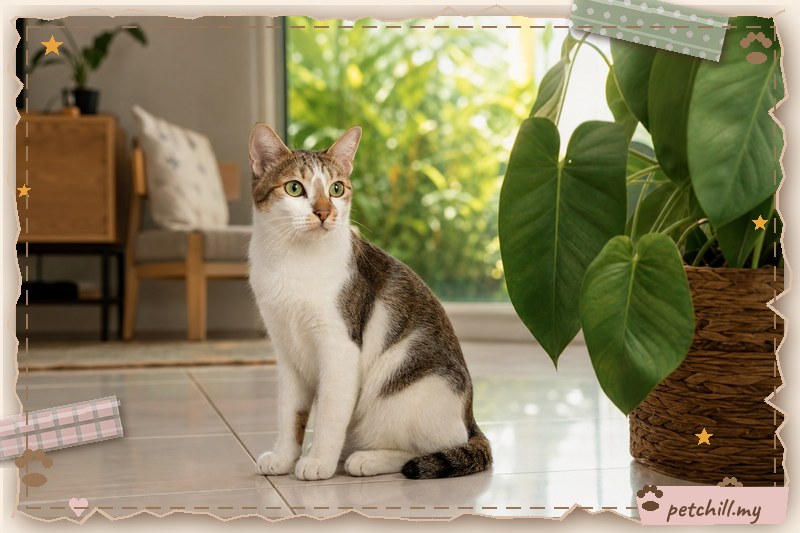
Hunger is one of the most common reasons cats wake their owners. A cat fed at 6pm may genuinely be hungry at 3am. A small late meal, especially wet food, can help. Wet food also adds water, which is useful for cats that do not drink much.
If your cat is on a prescription diet or has a medical condition, ask your vet before changing meal timing. Do not free-feed unlimited dry food to fix night meowing, because this can lead to weight gain.
Step 4: Make the night environment boring and comfortable
A dark, quiet, comfortable room tells your cat it is sleep time. Practical steps:
- Use curtains or blinds to block street lights and early dawn light.
- Keep the bedroom cool and well ventilated.
- Provide a comfortable bed, ideally in a quiet corner.
- Keep the litter box clean and accessible.
- Leave fresh water available.
- Reduce noise from televisions, phones and appliances.
In a Malaysian apartment, outside corridors and neighbouring units can be noisy. A white noise machine or a fan can mask sudden sounds. In a terrace house, cats may hear other cats outside at night. Closing windows or using screens can reduce this trigger.
Step 5: Stop rewarding night meowing
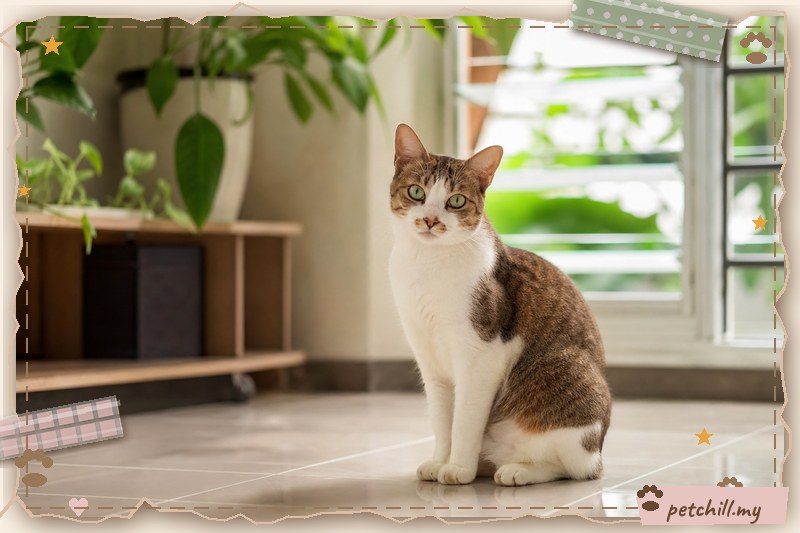
This is the hardest step for most owners. Any response, including getting up, talking, shouting or feeding, teaches your cat that meowing works. Even negative attention is attention.
The rule is simple: night meows get nothing. No eye contact, no talking, no touching, no food. In the morning, when your cat is quiet, give attention, play and food.
Expect an extinction burst. When a behaviour stops working, cats often try harder before giving up. The meowing may get louder for a few nights. If you give in during this phase, you teach your cat that persistence pays.
Checklist: ignoring night meows
- Everyone in the house agrees to ignore night cries
- Earplugs or white noise ready
- No shouting or punishment
- Morning attention only when the cat is quiet
- Plan for three to five noisy nights
Step 6: Decide where your cat sleeps
There are three common setups. Each has pros and cons.
| Setup | Pros | Cons | Best for |
|---|---|---|---|
| Cat sleeps in your bedroom | Comfort, easy monitoring, strong bond | Disturbed sleep, harder to ignore meows | Cats that settle quickly and owners who sleep deeply |
| Cat sleeps in another room with door closed | Clear routine, easier to ignore cries | Crying at the door at first, needs enrichment | Most training plans |
| Cat has free run of the house | Freedom, less door crying | May wake you at the door or roam noisily | Confident cats with good enrichment |
If you choose to close a door, make the room safe and interesting. Include water, a litter box, a bed, a scratching post and a few toys. Do not use this as punishment. Introduce it gradually with treats and play so the room feels positive.
Step 7: Handle early-morning waking
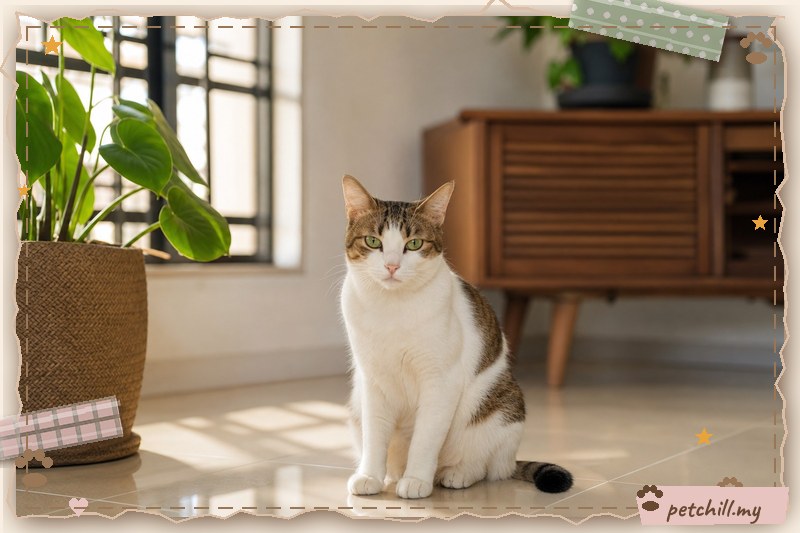
Many cats wake their owners at 4am or 5am. This is close to their natural active time, so it is harder to fix. The same rules apply: no attention until your chosen wake-up time. Use an alarm and get up at the same time every day. If you get up at 5am one day and 8am the next, your cat learns that persistence sometimes works.
If your cat is fed in the morning, consider a timed feeder that opens at a set time. This can break the link between you and breakfast. Start with the feeder opening a little later each week.
Step 8: Manage multi-cat households
In homes with more than one cat, night meowing can be caused by conflict, resource guarding or one cat bullying another. Make sure there are enough resources: one litter box per cat plus one spare, separate feeding spots, and multiple resting places. If one cat is being chased at night, separate them and speak to your vet or a qualified behaviourist.
Step 9: Keep a simple log
A short log helps you spot patterns and gives your vet useful information. Record:
- What time the meowing starts
- What happened just before
- Whether the cat ate, played or used the litter box
- How long it lasted
- What you did
After two weeks, you will see whether the routine is working or whether a vet visit is needed.
What not to do
- Do not punish. Shouting, spraying water or hitting increases fear and stress and does not teach the cat what to do instead.
- Do not free-feed to stop crying. This can cause obesity and does not fix the routine problem.
- Do not use a laser pointer as the only play. Some cats become frustrated.
- Do not lock a cat out without water, litter and shelter.
- Do not ignore sudden new meowing in an older cat. This can be a health sign.
When to see a vet
See a vet if any of the following apply:
- The meowing is new or sudden.
- It comes with weight loss, increased appetite or increased thirst.
- Your cat is urinating more often or outside the litter box.
- There is vomiting, diarrhoea or reduced appetite.
- Your cat seems disoriented, restless or confused, especially at night.
- Your cat is older and the behaviour has changed.
- There is pain, limping or difficulty jumping.
- The meowing continues despite a consistent routine for several weeks.
Older cats commonly develop night vocalisation due to pain, thyroid disease, kidney disease or cognitive dysfunction. Early diagnosis makes a big difference. Your vet may recommend blood tests, a urine test and a blood pressure check.
Malaysian context
In a Kuala Lumpur apartment, close windows and use screens to reduce noise from corridors and neighbouring units. In a Johor terrace house, other cats roaming outside can trigger night meowing, so keep curtains closed and consider blocking the view at night. During the Penang rainy season, cats may be more restless indoors, so add extra play and puzzle feeders on rainy days.
Sample two-week plan
| Day | Morning | Evening | Night |
|---|---|---|---|
| 1-3 | Play 10 min, breakfast | Play 15 min, dinner, late snack | Ignore meows, dark room |
| 4-7 | Same routine | Same routine, add puzzle feeder | Ignore meows, note times |
| 8-10 | Same routine | Longer pre-bed play | Ignore meows, review log |
| 11-14 | Same routine | Same routine | If no improvement, book vet visit |
Final thoughts
Night meowing is a solvable behaviour problem in most cats. The formula is simple but needs consistency: tire the cat out, feed a late meal, make the night boring and comfortable, and never reward night cries. If the behaviour is new, sudden or comes with other signs, see your vet first. With patience and a steady routine, most owners see real improvement within a few weeks.
This article is general information only and is not a substitute for veterinary advice. If your cat is unwell or the behaviour is new, consult a licensed veterinarian in Malaysia.
Related reading
- Cat Behaviour Guide Malaysia 2026: Decode 30 Signals, Fix the Environment First
- Cat Biting Training Tips: How to Stop Nips, Bites and Play Aggression
- Cat Clicker Training: Practical Training Tips for Malaysian Cat Owners
- Cat Night Activity Training Tips: How to Calm a Nocturnal Cat
- Cat Over-Grooming Training Tips: Stop the Licking Before It Becomes a Habit
- Cat Play Aggression Training Tips: A Practical Guide for Malaysian Owners
- Cat Separation Anxiety Training Tips: A Malaysian Guide to Helping Your Cat Feel Secure Alone
- How to Stop Cat Clicker Training: A Calm, Step-by-Step Guide for Malaysian Owners
- Cat Aggression Training Tips: A Practical Guide for Malaysian Owners
- Cat Fear of Strangers: Training Tips That Actually Work
- Cat Hiding Training Tips: Why Cats Hide and How to Help Them Feel Safe

