
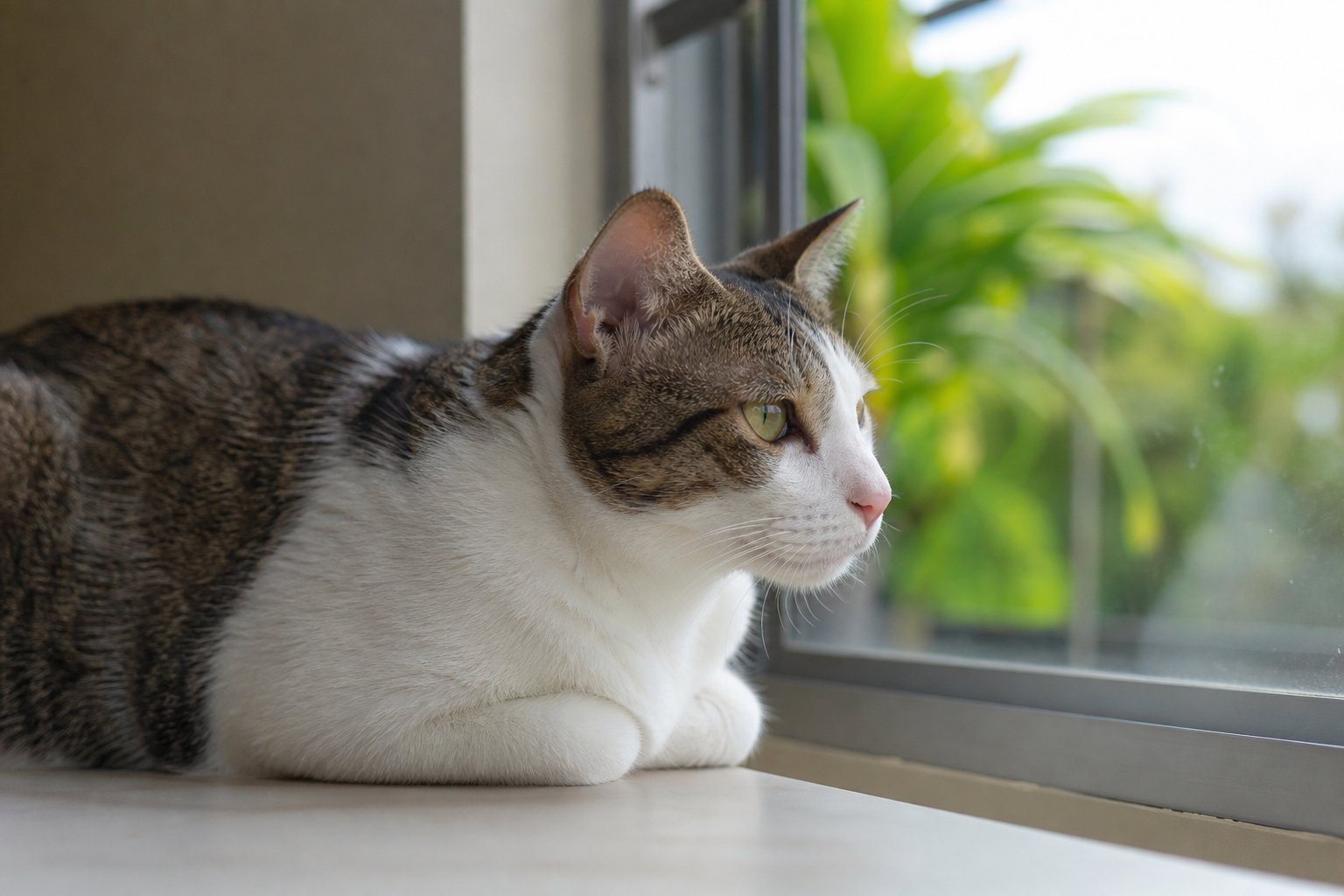
What is cat separation anxiety?
Separation anxiety in cats is a stress response that happens when they are separated from a person or companion they feel attached to. It's not just 'neediness'—it's genuine distress. While it's more commonly discussed in dogs, cats can and do suffer from it. In Malaysia, where many cats live indoors in apartments or terrace houses, the condition can be easily overlooked because owners may not see the signs until they become severe.
Cats are creatures of routine. When that routine is disrupted—by a return to the office, a new baby, a move, or the loss of another pet—some cats struggle to cope. The good news is that separation anxiety is treatable with patience and the right training approach.
Recognising the signs
Not all cats with separation anxiety destroy furniture. Signs can be subtle. Watch for these behaviours, especially when they only happen when you're away or preparing to leave:
- Vocalisation: Excessive meowing, crying, or yowling shortly after you leave.
- Destructive behaviour: Scratching at doors, window frames, or furniture near exits.
- Indoor toileting: Urinating or defecating outside the litter box, often on your bed or clothing.
- Pacing and restlessness: Inability to settle, often near the door.
- Over-grooming: Licking themselves bald, particularly on the belly or legs.
- Loss of appetite: Not eating when alone, but eating normally when you're home.
- Escape attempts: Trying to dash out when you open the door.
It's important to rule out medical causes first. A cat with a urinary tract infection might toilet outside the box; a cat with dental pain might stop eating. A vet check is always the first step.
Why cats develop separation anxiety
Understanding the root cause helps you tailor your training. Common triggers include:
- Changes in your schedule: Returning to work after a long period at home.
- Moving house: Unfamiliar surroundings can make a cat clingy.
- Loss of a companion: A fellow pet or a family member moving out.
- Boredom and lack of enrichment: A cat with nothing to do may become overly focused on your presence.
- Genetics and early experiences: Some cats are naturally more anxious.
In Malaysia, many cats are kept indoors for safety, which is great, but it means the owner is often the main source of entertainment. When you're away, the cat may feel bored and anxious.
Setting up a safe space
Before you start training, create a designated 'safe room' or zone where your cat feels secure. This should be a quiet area with everything they need: litter box, water, food, scratching post, and a comfortable bed. Include enrichment items like puzzle feeders, cat trees, and window perches (if safe).
For example, in a Kuala Lumpur apartment, a spare bathroom or a corner of the living room away from the main door can work. In a Johor terrace house, a quiet bedroom with the door closed might be ideal. The goal is to make this space associated with good things, not punishment.
Start by feeding your cat there and playing with them in that space. Leave a piece of your clothing with your scent. Use a pheromone diffuser if you find it helpful (consult your vet first).
Training tips: gradual desensitisation
The core of separation anxiety training is gradual desensitisation—teaching your cat that being alone is safe by starting with very short absences and slowly increasing the time. Here's a step-by-step plan:
- Practise 'fake' departures: Pick up your keys, put on your shoes, then sit back down. Repeat until your cat no longer reacts. This desensitises them to your departure cues.
- Start with seconds: Leave the room and close the door for 5 seconds, then return. Reward calm behaviour with a treat or praise. Repeat until your cat stays relaxed.
- Increase gradually: Extend to 10 seconds, 30 seconds, 1 minute, 5 minutes, and so on. Only move to the next step when your cat remains calm at the current duration.
- Vary the duration: Once you can leave for 10 minutes calmly, mix it up—sometimes 2 minutes, sometimes 15. This teaches your cat that your return is unpredictable but always happens.
- Use a cue: Say a calm phrase like 'be good' before you leave, and use it consistently. Over time, this becomes a signal that you'll return.
- Keep departures and returns low-key: Don't make a big fuss when you leave or come home. A calm 'hello' is fine, but avoid high-energy greetings that amp up anxiety.
Remember, if your cat shows distress at any step, you've moved too fast. Go back to the last successful duration and practise there for a few more days.
Enrichment: keeping your cat busy
A bored cat is more likely to be anxious. Provide activities that engage their mind and body while you're away:
- Puzzle feeders: Hide kibble or treats in puzzle toys so your cat works for food.
- Cat trees and shelves: Vertical space gives cats a sense of security and something to climb.
- Window perches: If you have a safe window (with a screen), a perch offers entertainment.
- Interactive toys: Leave out toys that dispense treats or make noise.
- Background noise: Leave a radio or TV on low volume to mask outside sounds.
In a Penang rainy season, when windows are closed and it's gloomy, extra enrichment is especially important to prevent boredom.
What not to do
- Don't punish: Punishment increases fear and worsens anxiety. If you come home to a mess, clean it up calmly.
- Don't get another cat as a quick fix: A companion can help some cats, but it can also cause stress. Introduce any new pet slowly and consider your cat's personality.
- Don't crate your cat for long periods: Cats need space to move, stretch, and use the litter box. Crating for hours is not appropriate.
- Don't ignore severe signs: If your cat is injuring themselves or not eating, seek professional help.
When to see a vet
If your cat's anxiety is severe—causing self-injury, loss of appetite, or extreme distress—consult a veterinarian. They can rule out medical issues and discuss behavioural therapy or medication if needed. In Malaysia, look for a vet with an interest in behaviour, or ask for a referral. Never start medication without veterinary guidance.
Comparison table: signs of separation anxiety vs. normal behaviour
| Behaviour | Separation anxiety (only when alone) | Normal behaviour (any time) |
|---|---|---|
| Vocalisation | Excessive meowing/crying when you leave | Occasional meowing for attention |
| Scratching | At doors/windows, often near exits | Scratching post or furniture regularly |
| Toileting | Outside litter box, often on your bed | Consistent use of litter box |
| Grooming | Over-grooming to bald patches when alone | Normal grooming |
| Appetite | Not eating when alone | Eating normally |
| Pacing | Restless, especially near door | Relaxed or playful |
Creating a departure routine
Cats thrive on routine. A predictable departure routine can reduce anxiety. For example:
- 15 minutes before you leave, play with your cat to tire them out.
- Give them a puzzle feeder or a long-lasting treat.
- Turn on a radio or white noise machine.
- Say your cue phrase calmly and leave without drama.
When you return, greet your cat calmly and give them a treat after they settle. This reinforces that being alone is followed by good things.
Using pheromones and calming aids
Some owners find pheromone diffusers (like Feliway) helpful, but evidence is limited. They can be part of a broader plan. Always consult your vet before using any product. In Malaysia, these products are available at some pet stores and online, but availability varies. Ask your vet for advice.
Managing multi-cat households
If you have multiple cats, separation anxiety can be more complex. One cat may be anxious while another is fine. Ensure each cat has their own resources (litter box, food bowl, bed) to reduce competition. If the anxious cat is bonded to another cat, they may be less anxious when that cat is present. However, if the companion is the source of stress, you may need to separate them during training.
Case examples from Malaysian homes
Kuala Lumpur apartment: A young professional adopted a rescue cat during the pandemic. When she returned to the office, the cat started meowing loudly and scratching the front door. She set up a safe room with a cat tree and puzzle feeders, and practised 5-second absences. After 6 weeks, the cat could stay alone for 4 hours calmly.
Johor terrace house: A family cat began urinating on the parents' bed after the children went back to school. The vet ruled out medical issues. The family created a routine: morning play session, puzzle feeder before leaving, and a calm departure. They also left a radio on. Within a month, the inappropriate toileting stopped.
Final thoughts
Cat separation anxiety is challenging but manageable. With patience, consistency, and a step-by-step training plan, you can help your cat feel secure alone. Remember to rule out medical issues first, and don't hesitate to seek professional help if needed. Every cat is different—some progress quickly, others need more time. Celebrate small wins.
Disclaimer: This article is for informational purposes only and does not replace professional veterinary advice. If you suspect your cat has separation anxiety or any health issue, consult a licensed veterinarian.
Related reading
- Cat Behaviour Guide Malaysia 2026: Decode 30 Signals, Fix the Environment First
- Cat Meowing at Night: Training Tips That Actually Work
- Cat Play Aggression Training Tips: A Practical Guide for Malaysian Owners
- How to Stop Cat Clicker Training: A Calm, Step-by-Step Guide for Malaysian Owners
- Cat Anxiety in Malaysia: Chronic-Anxiety Scorecard and 7 Home Fixes
- Cat Biting Training Tips: How to Stop Nips, Bites and Play Aggression
- Cat Clicker Training: Practical Training Tips for Malaysian Cat Owners
- Cat Night Activity Training Tips: How to Calm a Nocturnal Cat
- Cat Over-Grooming Training Tips: Stop the Licking Before It Becomes a Habit
- Cat Scratching Furniture: Training Tips That Actually Work
- Cat Aggression Training Tips: A Practical Guide for Malaysian Owners
- Cat Anxiety in Malaysia: A 2-Week Checklist and 7 Home Fixes That Actually Work