
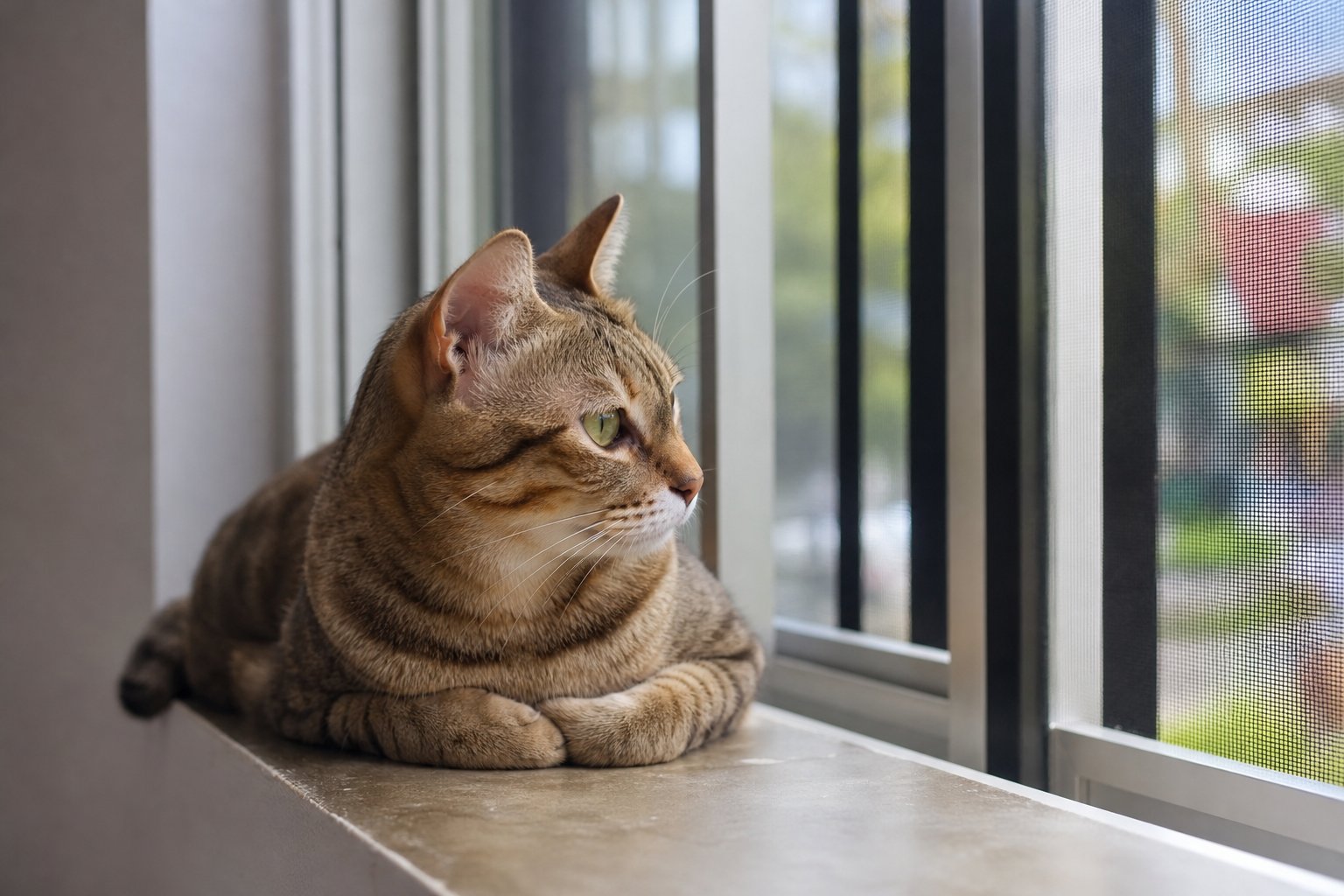
Why you might need to stop carrier training
Carrier training is meant to make vet visits and travel less stressful for your cat. But if your cat is terrified, the training can backfire. You might see your cat hiding when the carrier appears, struggling violently, or even injuring themselves. In those cases, continuing the same approach is not kind or effective. This article explains how to recognise when to stop, how to reset, and what alternatives exist. It is written for Malaysian cat owners living in apartments, terrace houses, or anywhere else where space and climate affect training.
Signs your cat needs a break from carrier training
Cats are subtle. They rarely complain loudly until they are extremely stressed. Watch for these signals:
- Hiding when the carrier is visible, or avoiding the room where it is kept.
- Flattened ears, dilated pupils, tense body when near the carrier.
- Hissing, growling, or swatting as you approach with the carrier.
- Refusing treats that your cat normally loves.
- Trembling, drooling, or panting (panting is especially serious in cats).
- Eliminating outside the litter box during or after sessions.
- Aggression toward you or other pets after a session.
If you see any of these, stop training immediately. Do not push through. A single traumatic session can set back progress by weeks.
How to stop training safely: a step-by-step reset
Stopping does not mean giving up forever. It means pausing and changing your approach. Follow these steps:
- End the current session calmly. Do not scold or punish. Put the carrier away and leave the room.
- Give your cat space. Allow at least 24 hours of no carrier interaction. Let your cat initiate contact.
- Remove the carrier from sight for a few days. Store it in a room your cat does not use often, or cover it with a light cloth.
- Reintroduce the carrier as furniture. After a few days, place the carrier in a common area with the door removed or tied open. Put a soft blanket inside.
- Do not force entry. Let your cat investigate on their own. Drop treats near the carrier, then inside.
- Restart with micro-steps. Once your cat eats treats near the carrier, try one treat inside. Then close the door for one second. Build up gradually.
- Keep sessions under 2 minutes. End on a positive note. If your cat walks away, that is fine.
If your cat still shows fear after a week of gentle reintroduction, consult your vet. There may be an underlying medical issue or a need for behavioural medication.
Common mistakes that make carrier training worse
Many owners accidentally increase fear. Avoid these:
- Forcing the cat into the carrier. This is the fastest way to create a lasting phobia.
- Using the carrier only for vet visits. If the carrier appears only when something unpleasant happens, your cat will learn to fear it.
- Punishing fear. Never yell or tap your cat for resisting. This adds stress.
- Training when your cat is already anxious. Choose times when your cat is relaxed and playful.
- Ignoring pain. A cat in pain may resist handling. Rule out health issues with your vet.
Alternative carrier styles and setups
Sometimes the carrier itself is the problem. Consider these options:
| Carrier type | Pros | Cons | Best for |
|---|---|---|---|
| Hard plastic clamshell | Sturdy, easy to clean | Can feel enclosed; door may rattle | Cats who like small spaces |
| Soft-sided | Lightweight, often top-loading | Less secure; can collapse | Cats who prefer open views |
| Top-loading | Easy to place cat inside | Can be bulky | Cats who hate being pushed in from front |
| Backpack | Hands-free | Limited ventilation; can be scary | Short trips only |
| Basket with blanket | Familiar smell | Not secure for travel | Home training only |
In Malaysia, soft-sided carriers are popular for short car rides, but ensure they have secure zips and good ventilation. For cats who panic, a top-loading carrier can be less stressful because you can lower them in rather than push them through a small door.
When to see a vet
Carrier training should never cause injury or extreme distress. Seek veterinary advice if:
- Your cat injures themselves trying to escape (broken claws, bleeding gums).
- Your cat stops eating or drinking for more than 24 hours after a session.
- Your cat shows aggression toward family members.
- Your cat has a pre-existing medical condition (e.g., heart disease) that makes stress dangerous.
- You need to transport your cat but cannot do so safely.
Your vet can assess your cat's health, rule out pain, and discuss options such as calming pheromones, gentle handling techniques, or short-term medication for necessary travel. Never give human sedatives to cats.
Building a calm carrier routine for Malaysian homes
Malaysian homes vary widely: high-rise apartments in Kuala Lumpur, terrace houses in Johor, and older shophouses in Penang. Each has different space and climate considerations.
- Apartment living: Keep the carrier in a quiet corner of the living room. Avoid placing it near noisy appliances. In small apartments, the carrier can double as a cozy bed when left open.
- Terrace houses: If you have multiple floors, keep a carrier on each floor so your cat sees them as normal furniture. This reduces the novelty effect.
- Rainy season: Penang's rainy season can make cats more restless. Use treat puzzles or play sessions before carrier training to burn off energy.
- Hot weather: Avoid training during the hottest part of the day. Cats can overheat quickly. Train in the morning or evening.
- Car travel: In Malaysia, car rides are often necessary for vet visits. Practise short, positive car trips (engine off, then engine on, then a short drive) only after your cat is comfortable with the carrier indoors.
Using pheromones and calming aids
Synthetic feline pheromones (e.g., Feliway) are available in Malaysia and can help some cats feel calmer. Spray the carrier 15 minutes before training. Other aids include:
- Calming collars (some contain pheromones or herbs).
- Soft music or white noise to mask scary sounds.
- A blanket that smells like you inside the carrier.
These are not magic solutions. They work best alongside gradual training. If your cat is severely fearful, pheromones alone will not fix it.
How to handle necessary vet visits during a training pause
If you must take your cat to the vet while you are not actively training, do not force the carrier. Instead:
- Use a towel wrap. Wrap your cat snugly in a thick towel, leaving the head free. Place the bundle in a secure box or carrier.
- Ask your vet for advice. Some clinics offer house calls or can prescribe a mild sedative for the trip.
- Keep the trip short. Cover the carrier with a light cloth to reduce visual stress.
- Reward calm behaviour. After the visit, give treats and quiet time.
Never skip a necessary vet visit because of carrier fear. Your vet can help you find a safe way to transport your cat.
Rebuilding trust after a bad training experience
If your cat had a frightening experience, trust takes time. Focus on positive interactions that have nothing to do with the carrier:
- Play with wand toys daily.
- Hand-feed treats near the carrier area.
- Use clicker training for simple behaviours like touching a target stick.
- Let your cat approach you rather than reaching for them.
After a week or two, reintroduce the carrier as described above. If your cat remains fearful, consider consulting a veterinary behaviourist. In Malaysia, your vet can refer you to a qualified behaviourist if needed.
Carrier training for kittens vs adult cats
Kittens are often more adaptable, but they also have sensitive periods. Adult cats can learn new habits, but progress may be slower. The principles are the same: go slowly, reward calm behaviour, and never force. For kittens, keep sessions very short (30 seconds) and frequent. For adult cats, be patient and consistent. If an adult cat has been fearful for years, a vet check is essential to rule out pain or illness.
What if your cat is fine with the carrier but hates the car?
Some cats tolerate the carrier but panic in the car. In that case, stop car training and work on the carrier first. Then introduce the car in stages:
- Sit with your cat in the parked car, engine off, for 1 minute. Reward.
- Turn on the engine for 10 seconds. Reward.
- Move the car a few metres. Reward.
- Take a short drive around the block.
If your cat shows stress at any stage, go back a step. Never drive with a loose cat in the car. Always secure the carrier with a seatbelt or place it on the floor behind a seat.
Final thoughts
Stopping carrier training is not failure. It is a smart response to stress. By pausing, reassessing, and using a gentler approach, you can help your cat feel safer. Remember that every cat is an individual. Some take days, others take months. If you are unsure, ask your vet. They can guide you on safe handling and rule out medical issues.
Vet disclaimer: This article is for general information only and does not replace professional veterinary advice. Always consult your veterinarian for concerns about your cat's health or behaviour.
Related reading
- Cat Behaviour Guide Malaysia 2026: Decode 30 Signals, Fix the Environment First
- Cat Hiding Training Tips: Why Cats Hide and How to Help Them Feel Safe
- Cat Over-Grooming Training Tips: Stop the Licking Before It Becomes a Habit
- Cat Spraying Training Tips: How to Stop Your Cat From Spraying Indoors
- Fear of Strangers in Cats in Malaysia: Why Your Cat Hides and How to Help
- How to Stop Cat Over-Grooming: A Practical Guide for Malaysian Cat Owners
- Over-Grooming in Cats in Malaysia: Causes, Signs and How to Help
- Cat Aggression Training Tips: A Practical Guide for Malaysian Owners

