
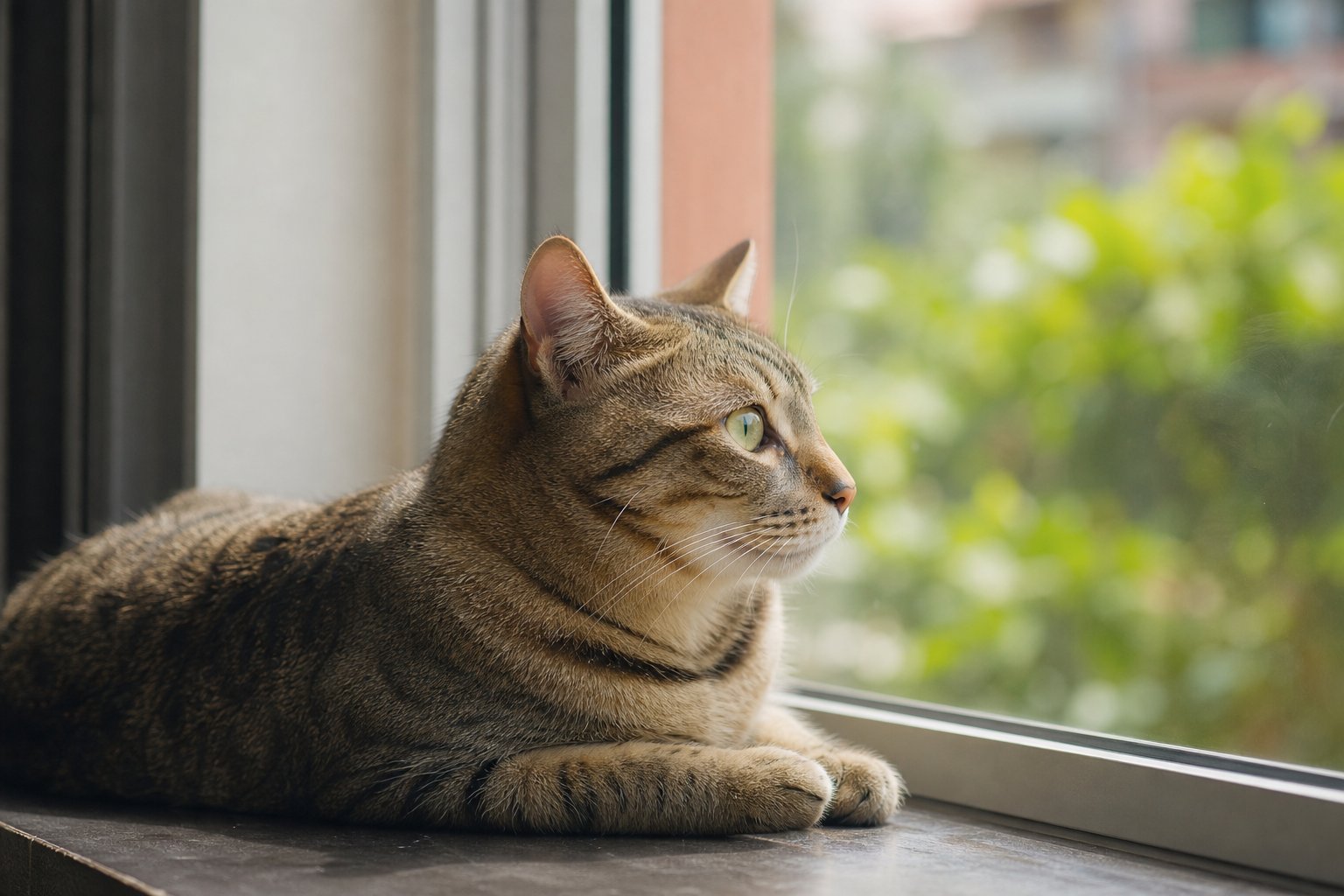
The short answer
Cats fear strangers because unfamiliar people break the predictable, territory-based world a cat relies on. A stranger brings unknown smells, unpredictable movement, direct eye contact and noise. For a cat, that reads as risk. Hiding, crouching, flattened ears, a puffed tail and dilated pupils are normal fear responses, not bad behaviour. With patience, safe spaces and calm introductions, most cats can learn to tolerate visitors, and some become genuinely friendly.
This guide explains the causes, the body language to watch, and a practical plan you can run in a Malaysian home, whether you live in a high-rise apartment or a terrace house.
Why cats are wary of unfamiliar people
Cats are territorial by nature
A cat's sense of security is tied to place. Its home is mapped by scent, routine and known escape routes. A visitor changes that map instantly: new shoes, new perfume, a loud voice, a bag placed on the floor. Even a friendly guest can feel like an intrusion at first.
Routine is safety
Cats are creatures of pattern. They learn when food appears, when the house is quiet, and which chair is safe. Guests often arrive at unpredictable times and disrupt the calm. A cat that is fine with family can still panic when the doorbell rings.
Early socialisation matters
Kittens have a sensitive period in their early weeks when meeting different people shapes their adult confidence. Cats who met few people as kittens, or who had limited handling, often stay cautious. Rescue cats may also carry bad experiences with humans.
Fear can be learned
One frightening event, such as a guest dropping something loudly or a child chasing the cat, can teach a cat that visitors are dangerous. Fear is quick to learn and slow to unlearn.
Some cats are simply shy
Temperament varies. Some cats are bold greeters; others prefer to observe from a distance. A shy cat is not broken. It just needs a different approach.
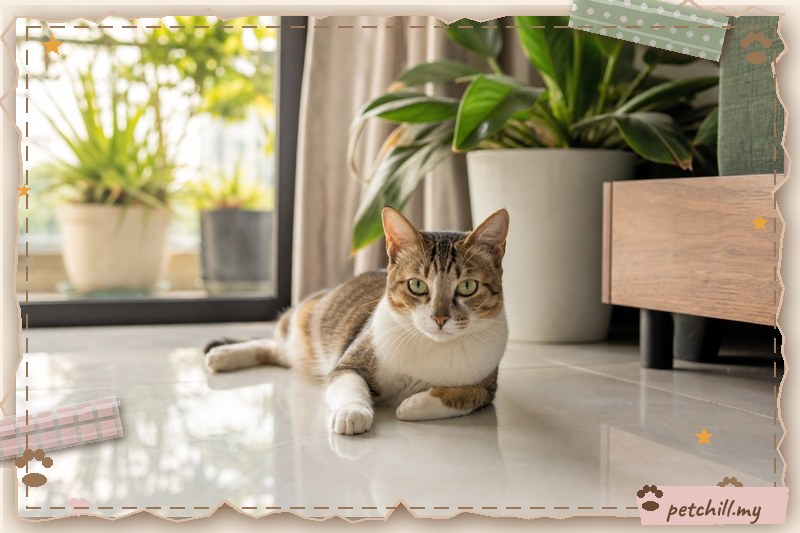
Signs your cat is afraid of strangers
Watch the whole body, not just one signal.
| Signal | What it looks like | What it means |
|---|---|---|
| Hiding | Under the bed, in a cupboard, behind the sofa | Seeking safety; very common first response |
| Crouching low | Body pressed to the floor, head lowered | Trying to look small and avoid notice |
| Ears flattened or turned back | Ears pinned sideways or back | Fear or defensive stress |
| Dilated pupils | Wide black pupils in normal light | Arousal and fear |
| Tail tucked or puffed | Tail wrapped around body or bristled | Defensive fear |
| Twitching tail tip | Sharp flicking while watching a guest | Irritation building toward fear |
| Hissing or growling | Vocal warning | Defensive, asking for space |
| Freezing | Sudden stillness mid-movement | Assessing threat; do not corner |
| Over-grooming | Bald patches, especially belly and legs | Chronic stress sign |
| Avoiding food | Not eating while guests are present | High stress; take seriously |
A cat that hides but eats and uses the litter tray normally is coping. A cat that stops eating for more than a day needs attention.
What not to do
- Do not drag your cat out from under the bed to meet a guest.
- Do not let visitors pick up, kiss or loom over a nervous cat.
- Do not punish hissing or swatting. These are warnings, and punishment removes the warning without removing the fear.
- Do not invite a crowd at once. One calm visitor is enough to start.
- Do not stare directly into a fearful cat's eyes. Slow blinking is friendlier.
- Do not assume a cat that hides is being dramatic. Fear is real and physical.
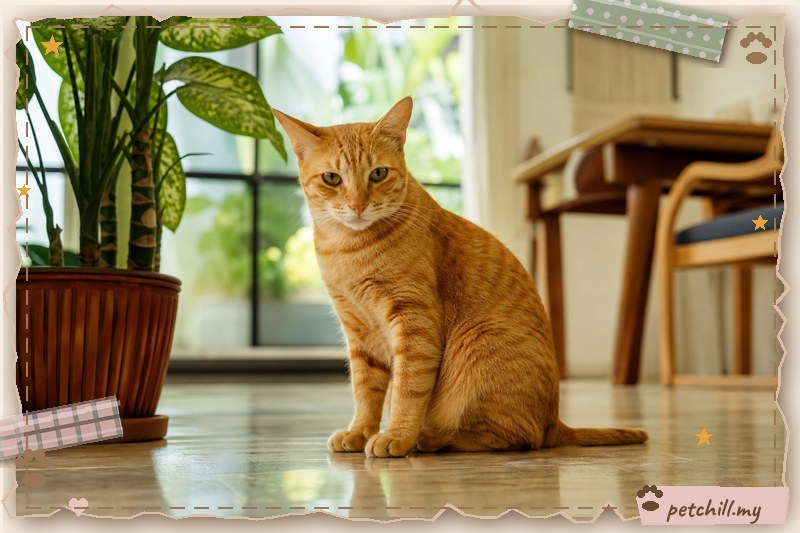
A step-by-step plan to help your cat
Step 1: Build a safe room
Set up a quiet room with water, a litter tray, a scratching post and a hiding box. This is your cat's base camp during visits. In a Kuala Lumpur apartment, a small utility room or bedroom works well. In a Johor terrace house, a back room away from the front door is ideal. The point is distance from the noise and a clear escape route.
Step 2: Control the arrival
Ask guests to text when they arrive so you can settle your cat first. Put the cat in its safe room before the doorbell rings. Keep the room door closed but not locked, and let the cat hear normal household sounds so it does not associate guests with total silence and tension.
Step 3: Let the cat choose
Once guests are seated and calm, open the safe room door. Do not carry the cat out. Let it decide whether to peek, approach or stay hidden. A cat that stays hidden is still learning by listening and smelling.
Step 4: Coach your visitors
Give guests simple instructions:
- Sit down and stay seated.
- Ignore the cat completely at first.
- Avoid direct eye contact.
- Keep voices low and movements slow.
- Let the cat sniff a hand only if the cat comes forward.
- Never reach over the cat's head.
Step 5: Use food wisely
Ask the visitor to drop a high-value treat on the floor without reaching toward the cat. Repeat a few times, then stop. The goal is a simple association: guest equals good things. If your cat will not eat, it is too stressed, so increase distance and try again another day.
Step 6: Keep sessions short
Five to ten minutes of calm exposure is plenty at first. End on a good note, before the cat becomes overwhelmed. Repeat over several weeks. Progress is often slow, and that is normal.
Step 7: Reward calm behaviour
Praise or treat your cat when it stays relaxed, sniffs a guest, or chooses to sit nearby. Never reward hiding with a fuss if the cat is genuinely frightened; instead, leave it alone and let it settle.
A comparison: forced vs gradual introduction
| Approach | What happens | Likely outcome |
|---|---|---|
| Forcing the cat to meet guests | Cat is picked up or cornered | Increased fear, scratches, bites, long-term distrust |
| Ignoring the cat and letting it choose | Cat observes from safety | Gradual confidence, cat approaches on its own |
| Treats from a distance | Guest tosses food without reaching | Positive association builds over weeks |
| Crowded, noisy gatherings | Many people, loud voices | Overwhelm, hiding, possible stress-related illness |
| One calm visitor at a time | Predictable, quiet sessions | Steady progress and a calmer cat |
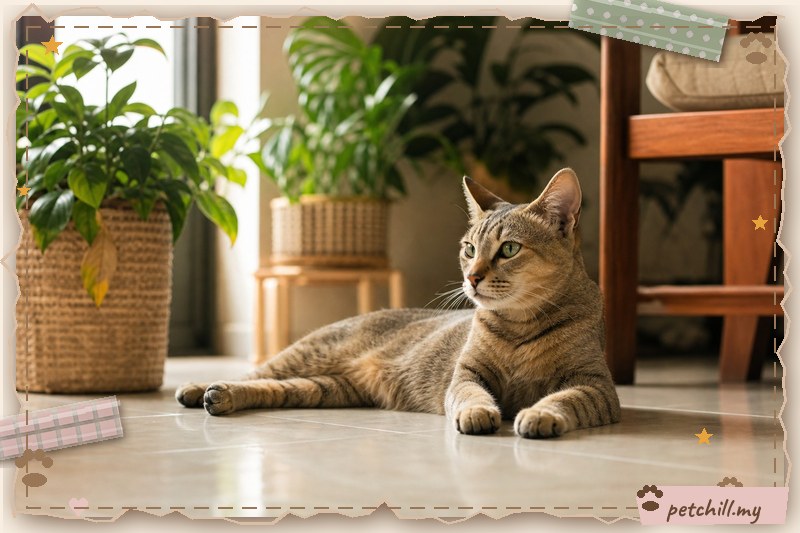
Helping a fearful cat in different Malaysian homes
High-rise apartments
In a Kuala Lumpur apartment, the front door opens into a small hallway, so guests arrive close to the cat's space. Use a bedroom as the safe room and keep the corridor clear. Ask guests to remove shoes outside and speak softly in the lift lobby. If your unit has a balcony, make sure it is securely screened so a startled cat cannot slip out.
Terrace houses and landed homes
In a Johor terrace house, the front door and car porch are busy zones. A fearful cat may bolt toward the back of the house when the gate opens. Keep the back door closed during visits, and set up the safe room away from the front entrance. If you have a garden, check fences and gates before guests arrive, because a frightened cat can move fast.
Rainy season and thunderstorms
Penang's rainy season brings thunder and sudden noise. A cat already wary of strangers may be more reactive during storms. Schedule visits on calmer days, and give the cat a covered hiding spot with soft bedding. White noise or a quiet fan can mask outdoor sounds.
Multi-cat households
If you have several cats, do not assume they share the same comfort level. One may greet guests while another hides. Give each cat its own escape route and separate resources, including food, water and litter, so a nervous cat is not blocked by a bolder housemate.
When fear becomes a welfare problem
Some fear is normal. Some fear needs help. Watch for these red flags:
- The cat stops eating or drinking when guests are around, or for a full day.
- Hiding becomes constant, even when no one is visiting.
- The cat over-grooms to the point of bald patches or sore skin.
- House soiling starts outside the litter tray.
- The cat becomes aggressive, especially if it draws blood.
- An older cat suddenly becomes fearful after years of confidence.
- The cat shows signs of pain, such as limping, reluctance to jump, or changes in appetite.
Sudden behaviour change in an older cat deserves a vet check, because pain, dental disease, thyroid problems and other medical issues can look like fear.
When to see a vet
Book a vet visit if your cat's fear is severe, worsening, or affecting basic needs like eating, drinking, grooming and using the litter tray. See a vet urgently if your cat has not eaten for more than 24 hours, is straining in the litter tray, is breathing oddly, or has injured itself while trying to escape. A vet can rule out medical causes and discuss behaviour support, including pheromone products and, in some cases, medication. Ask your Malaysian vet about local options and follow their guidance rather than copying advice meant for another country.
Practical checklist for visitors
- Confirm the visit time in advance so you can prepare the safe room.
- Put the cat in its safe room before the doorbell rings.
- Provide water, litter and a hiding box in that room.
- Ask guests to sit still and ignore the cat.
- Keep voices low and avoid sudden movements.
- Let the cat approach first, if it chooses.
- Offer treats from a distance, never by hand at first.
- Keep the visit short and end calmly.
- Check that the cat eats and uses the litter tray after guests leave.
- Repeat with the same calm visitor before adding new people.
Building long-term confidence
Confidence grows through small, repeated wins. Offer your cat predictable meals, play sessions and quiet time. Use scratching posts and high shelves so the cat can observe from above. A cat that feels in control of its space is less likely to panic when the doorbell rings.
If you are planning to adopt, ask about the cat's history with people. A cat that was rarely handled may need months of patience. That is not a reason to give up; it is a reason to plan.
Finally, accept your cat's personality. Some cats will always prefer a quiet corner when guests arrive. A cat that feels safe enough to stay in the same room, even at a distance, is already making progress.
This article is general information, not veterinary advice. If your cat's fear is severe or affecting its health, consult a licensed veterinarian in Malaysia.
Related reading
- Cat Behaviour Guide Malaysia 2026: Decode 30 Signals, Fix the Environment First
- How to Stop Cat Fear of Strangers: A Step-by-Step Desensitisation Plan for Malaysian Homes
- Cat Belly Up in Malaysia: 4 Meanings & Whether You Can Touch
- Cat Carrier Training Explained: A Calm, Step-by-Step Guide for Malaysian Cat Owners
- Cat Fear of Strangers: Training Tips That Actually Work
- Cat Hiding Training Tips: Why Cats Hide and How to Help Them Feel Safe
- Cat Trust Signs in Malaysia: 7 Signals Your Cat Trusts You (and How to Build It)
- Carrier Training in Cats Malaysia: A Practical Guide for Calm Vet Visits
- Cat Aggression Training Tips: A Practical Guide for Malaysian Owners
- Cat Anxiety in Malaysia: A 2-Week Checklist and 7 Home Fixes That Actually Work

