
Quick answer
Spraying is a marking behaviour, not a litter box problem. To stop it, first rule out medical issues with a vet, then clean soiled spots with an enzymatic cleaner, reduce territorial stress, provide enough resources, and consider pheromone products or behaviour modification. Consistency matters more than any single product.
What is spraying, and how is it different from urinating?
Spraying is when a cat deposits a small amount of urine on a vertical surface, often a wall, door, furniture leg, or curtain. The cat usually stands with its tail raised and quivering, and may tread with its back legs. The amount is small, and the surface is usually vertical. Normal urination is a larger volume on a horizontal surface, usually in a litter box.
Spraying is a communication tool. Cats use urine marks to leave scent information about territory, status, and reproductive state. Both male and female cats can spray, though entire males spray most often. Neutered cats can also spray, especially in multi-cat households or when they feel threatened.
It helps to distinguish spraying from other urine problems. If your cat is urinating outside the litter box in large amounts on horizontal surfaces, that may be a litter box aversion, a medical issue, or stress. If your cat is spraying small amounts on vertical surfaces, that is marking. The distinction matters because the solutions differ.
Why cats spray: common triggers
Spraying is almost always a response to something. Common triggers include:
- Territorial pressure: new cats in the home, neighbourhood cats visible through windows, or a new person or baby.
- Stress and anxiety: changes in routine, moving house, renovations, or loud noises.
- Multi-cat conflict: even subtle tension can trigger marking.
- Medical issues: urinary tract disease, cystitis, or other conditions can cause discomfort and marking.
- Sexual hormones: entire males and females spray more, especially during breeding season.
- Litter box issues: not enough boxes, poor hygiene, or boxes in undesirable locations can contribute to marking.
In Malaysia, many cats live in apartments or terrace houses where they may see other cats through windows or doors. This can create territorial stress even if the cats never meet. Urban areas with many free-roaming cats can increase this pressure.
Step 1: Rule out medical causes
Before you treat spraying as a behaviour problem, take your cat to a veterinarian. Urinary tract infections, cystitis, crystals, and other medical conditions can cause a cat to urinate outside the box or mark. Your vet may recommend a urinalysis, and possibly blood tests or imaging.
This is especially important if your cat is straining, crying while urinating, licking its genital area excessively, or if there is blood in the urine. These signs suggest discomfort and need prompt veterinary attention. Do not delay a vet visit to try behavioural fixes first.
Step 2: Clean soiled areas properly
Cat urine contains uric acid, which is not fully removed by regular household cleaners. If the scent remains, your cat may return to the same spot. Use an enzymatic cleaner designed for pet urine. These products break down uric acid. Avoid ammonia-based cleaners because ammonia smells like urine and can encourage re-marking.
For hard surfaces, wipe down and then clean with an enzymatic cleaner. For carpets and upholstery, saturate the area, let it sit according to the product instructions, then blot and allow to air dry. You may need to repeat. If the urine has soaked into padding or flooring, consider professional cleaning or replacing the affected material.
After cleaning, you can place a temporary barrier, such as foil or double-sided tape, over the spot to discourage return. But cleaning is the first step.
Step 3: Reduce territorial stress
Since spraying is often territorial, reducing your cat's perception of threat is key. Practical steps include:
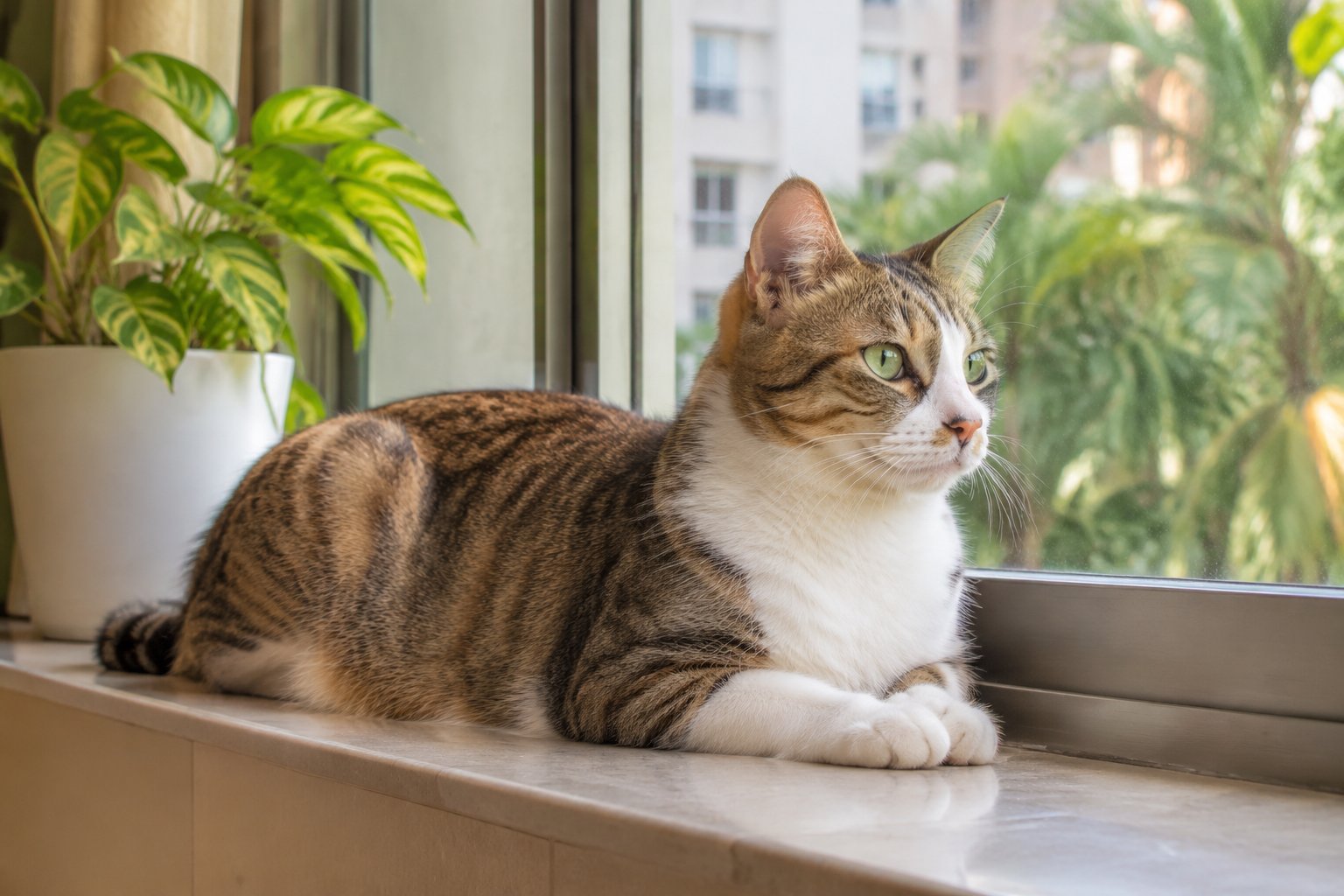
- Manage outdoor cats: if your cat can see neighbourhood cats through windows or glass doors, use frosted film, blinds, or curtains to block the view. This is especially useful in Malaysian terrace houses and apartments where cats may pass by.
- Limit access to triggering areas: if your cat sprays near a particular door or window, restrict access when you are not home, or make the area less appealing.
- Provide vertical space: cat trees, shelves, and high perches give cats a sense of security and allow them to avoid conflict.
- Use pheromone products: synthetic feline facial pheromone diffusers or sprays may help reduce stress-related marking. These are available in pet shops and online. They are not a cure-all but can support other measures.
- Keep routines stable: feed, play, and clean at consistent times. Predictability reduces anxiety.
Step 4: Optimise litter box setup
The general rule is one litter box per cat plus one extra. So a two-cat household should have at least three boxes. Boxes should be placed in quiet, accessible locations, away from food and water. In multi-storey Malaysian homes, put a box on each floor so cats do not have to travel far.
Scoop daily and change litter regularly. Most cats prefer fine, unscented clumping litter, but preferences vary. Avoid covered boxes if your cat seems hesitant, as some cats feel trapped. If you have recently changed litter or moved a box, your cat may be stressed. Try offering a choice of boxes and litter types.
Step 5: Manage multi-cat households
Conflict between cats is a common cause of spraying. Even cats that seem to get along may have subtle tension. Signs include staring, blocking, and avoiding shared resources. Increase resources: separate feeding stations, multiple water bowls, and plenty of resting spots. Provide separate litter boxes in different locations.
If you are introducing a new cat, do it gradually with scent swapping and controlled introductions. If tension is severe, consult a qualified behaviourist. In Malaysia, your veterinarian can refer you to a behaviour specialist, though availability varies.
Step 6: Behaviour modification and enrichment
Increase environmental enrichment to reduce stress and give your cat alternative outlets. Interactive play sessions, puzzle feeders, and climbing structures can help. Cats that are bored or anxious may be more likely to mark.
If your cat sprays in specific locations, you can try to make those spots less appealing. For example, place food bowls or scratching posts near marked areas, as cats generally avoid soiling where they eat. However, do not punish your cat; punishment increases stress and can worsen the problem.
Step 7: Consider neutering
Neutering (castration for males, spaying for females) reduces spraying in many cats, especially if done before the behaviour becomes habitual. Entire males are the most likely to spray, and neutering can significantly reduce marking. However, it is not a guaranteed cure, especially if the behaviour is stress-related or has been practiced for a long time. Neutering also has health and population benefits, so discuss timing with your vet.
Comparison table: spraying vs. normal urination
| Feature | Spraying | Normal urination |
|---|---|---|
| Amount | Small | Larger volume |
| Surface | Vertical (walls, doors, furniture) | Horizontal (floor, litter box) |
| Posture | Tail raised, quivering, standing | Squatting |
| Frequency | Can be repeated in same spots | Usually in litter box |
| Cause | Territorial, stress, hormonal, medical | Litter box aversion, medical, stress |
| Solution focus | Reduce stress, manage territory, vet check | Litter box management, vet check |
When to see a vet
See a vet if your cat is spraying and also shows any of these signs: straining to urinate, crying during urination, blood in urine, frequent licking of the genital area, urinating outside the box in large amounts, or changes in appetite or behaviour. These could indicate a urinary tract problem or other medical condition. Also see a vet if the spraying started suddenly in an older cat, as this can be a sign of underlying illness. If you have tried behavioural measures for several weeks without improvement, your vet can help rule out medical causes and may refer you to a behaviourist.
Practical examples for Malaysian homes
Kuala Lumpur apartment: A cat in a high-rise apartment sprays on the front door after seeing a neighbour's cat in the corridor. Solution: block the view with frosted film, place a pheromone diffuser near the door, and provide a tall cat tree away from the door. Clean the door with an enzymatic cleaner.
Johor terrace house: A multi-cat household in a terrace house has three cats and two litter boxes. One cat sprays on the living room curtain. Solution: add a third litter box on the ground floor, separate feeding stations, and increase vertical space with shelves. Clean the curtain thoroughly and use a temporary barrier.
Penang rainy season: During heavy rains, outdoor cats may seek shelter near windows, increasing territorial stress for indoor cats. Solution: keep windows closed or use blinds, and provide indoor enrichment to reduce stress.
Prevention checklist
- Rule out medical issues with a vet.
- Clean all soiled areas with an enzymatic cleaner.
- Provide one litter box per cat plus one extra.
- Place boxes in quiet, accessible locations.
- Scoop daily and change litter regularly.
- Reduce view of outdoor cats with blinds or frosted film.
- Provide vertical space and hiding spots.
- Use pheromone diffusers if helpful.
- Neuter if not already done.
- Manage multi-cat resources (food, water, litter, resting spots).
- Increase play and enrichment.
- Avoid punishment.
- Consult a behaviourist if needed.
Conclusion
Stopping cat spraying requires patience and a systematic approach. Start with a vet visit to rule out medical causes, then focus on cleaning, stress reduction, and resource management. Every cat is different, so you may need to try several strategies. With consistency, most cats can improve. If the problem persists, seek professional help.
Disclaimer: This article is for general information only and is not a substitute for veterinary advice. Always consult a licensed veterinarian for diagnosis and treatment of your cat.
Related reading
- Cat Behaviour Guide Malaysia 2026: Decode 30 Signals, Fix the Environment First
- Carrier Training in Cats Malaysia: A Practical Guide for Calm Vet Visits
- Cat Spraying Explained: Why Cats Mark, How to Tell It Apart from Peeing, and What Actually Helps
- Cat Spraying Training Tips: How to Stop Your Cat From Spraying Indoors
- Spraying in Cats in Malaysia: Why It Happens and How to Stop It
- Biting in Cats in Malaysia: Why Cats Bite and How to Stop It
- Cat Aggression Training Tips: A Practical Guide for Malaysian Owners
- Cat Anxiety in Malaysia: A 2-Week Checklist and 7 Home Fixes That Actually Work
- Cat Clicker Training Explained: A Practical Guide for Malaysian Cat Owners
- Cat Climbing Explained: Why Cats Climb and How to Manage It
- Cat Climbing Training Tips: Safe Vertical Play for Malaysian Homes
- Do Cats Hold Grudges? How Cat Memory Works and How to Rebuild Trust

