
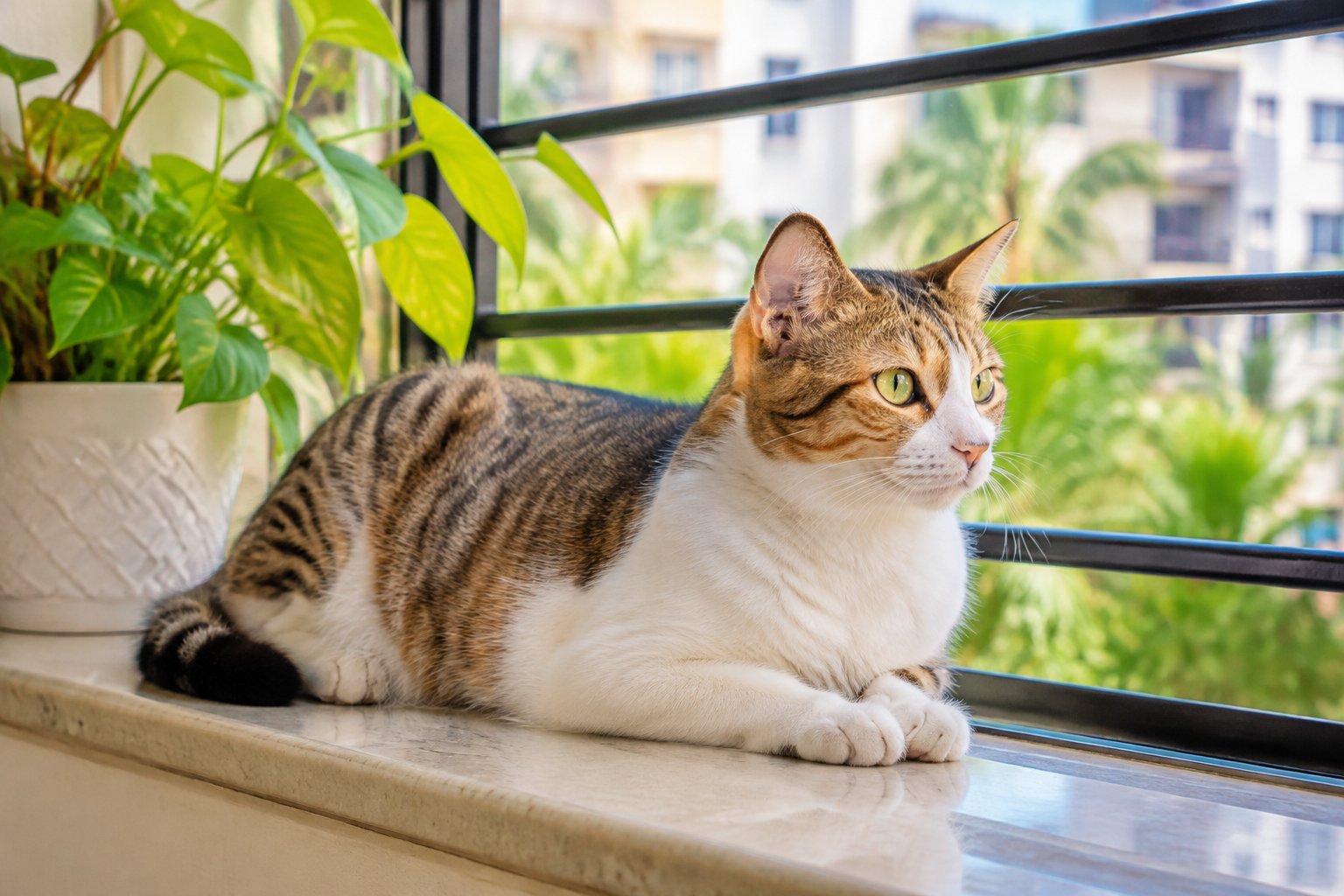
Why is your cat active at night?
If your cat turns into a furry tornado after dark, you're not alone. Many Malaysian cat owners experience midnight zoomies, early-morning meows, and paws batting at bedroom doors. The good news: this behaviour is usually normal. Cats are crepuscular – most active around dawn and dusk – and their natural hunting instincts drive them to be busy when prey would be out. In our homes, that translates to bursts of energy at times that don't always suit us.
Understanding the reasons behind night activity is the first step to managing it. In this guide, we'll explain the science, the common triggers, and practical steps you can take in a Malaysian apartment, terrace house, or anywhere else. We'll also cover when nighttime restlessness might signal a health problem that needs a vet's attention.
The natural rhythm of cats: crepuscular, not nocturnal
Cats are often called nocturnal, but that's not quite accurate. They are crepuscular, meaning their peak activity occurs at dawn and dusk. This timing helps them hunt when prey like rodents and birds are most active. Domestic cats retain this instinct even though they no longer need to hunt for survival.
In the wild, a cat's day might involve short bursts of hunting, eating, grooming, and sleeping. They sleep for around 12 to 16 hours a day, often in short naps. This pattern means they have plenty of energy stored up for active periods. When we bring them into our homes, their internal clock still says "party time" at 5 a.m. and 8 p.m.
However, cats are adaptable. They can adjust their schedule to some extent based on their environment and routine. If you're up and about during the day, your cat may learn to be more active then. But if you're away at work all day, your cat may sleep more and save energy for when you're home – which can be late at night.
Common reasons for nighttime activity in cats
Several factors can contribute to a cat's nighttime activity. Here are the most common:
1. Natural instinct
As crepuscular hunters, cats are wired to be active at dawn and dusk. This is the strongest driver. Even well-fed indoor cats will still feel the urge to hunt, explore, and play during these times.
2. Boredom and lack of stimulation
If your cat sleeps all day while you're at work, they may have pent-up energy at night. Indoor cats need mental and physical stimulation. Without it, they'll find their own entertainment – often at 3 a.m.
3. Hunger
Cats are natural grazers and may feel hungry at night. If their last meal was early in the evening, they might wake up hungry. Some cats also learn that meowing at night gets them fed.
4. Attention-seeking
Cats quickly learn what gets results. If you get up to feed, play, or even just talk to them when they cry at night, you may inadvertently reinforce the behaviour.
5. Disrupted routine
Changes in your schedule, moving house, or new pets can upset your cat's routine and cause restlessness.
6. Environmental factors
Noise, light, or other animals outside can trigger night activity. In Malaysia, stray cats or dogs roaming at night might provoke your cat.
7. Health issues
Pain, hyperthyroidism, cognitive dysfunction in senior cats, or other medical problems can cause increased nighttime activity. If the behaviour is new or accompanied by other signs, see a vet.
How to reduce nighttime activity: practical steps
You can't change your cat's natural instincts, but you can shape their routine to encourage more sleep at night. Here's a step-by-step approach.
Step 1: Increase daytime play and enrichment
A tired cat is a sleepy cat. Schedule at least two play sessions a day, ideally in the morning and evening. Use interactive toys like wand toys, laser pointers (with a physical toy to catch at the end), or puzzle feeders. Rotate toys to keep things interesting.
For cats in apartments, vertical space is key. Cat trees, shelves, and window perches give them exercise and mental stimulation. You can also hide treats around the house for them to find during the day.
Step 2: Adjust feeding schedule
Feed your cat a satisfying meal right before your bedtime. This can help them sleep through the night. Some cats do well with a timed feeder that dispenses a small meal in the early morning, which can reduce early waking. Avoid free-feeding if your cat tends to overeat, as boredom eating can lead to weight gain.
Step 3: Establish a consistent bedtime routine
Cats thrive on routine. Create a predictable sequence: play, then a small meal, then lights out. Over time, your cat will learn that this sequence means sleep time. Keep the routine consistent, even on weekends.
Step 4: Ignore nighttime demands
If your cat cries or scratches at the door at night, try to ignore it. Any attention – even negative – can reinforce the behaviour. Make sure your cat has everything they need (food, water, litter box, comfortable sleeping spots) before you go to bed. If you must respond, keep it boring and minimal.
Step 5: Optimise the environment
Provide a comfortable, safe sleeping area. Some cats prefer a cozy bed in a quiet corner; others like to be near you. If your cat is kept out of the bedroom, make sure they have a warm spot and perhaps a ticking clock or soft radio for company. Close curtains to block out early morning light, which can trigger activity.
Step 6: Consider a vet check
If nighttime activity is new, intense, or accompanied by other signs like weight loss, increased appetite, or confusion, see your vet. They can rule out medical causes.
Creating a cat-friendly night environment in Malaysian homes
Malaysian homes vary widely – from high-rise apartments in Kuala Lumpur to terrace houses in Johor. Here are some tips tailored to local living.
In a Kuala Lumpur apartment
Space may be limited, so use vertical space. A cat tree by a window gives your cat a view and entertainment. Keep the balcony secure if you let your cat out – mesh or netting is essential to prevent falls. At night, close windows to reduce noise from outside and block light with curtains. If your apartment is small, designate a quiet corner for your cat's bed and litter box away from your bedroom.
In a Johor terrace house
You may have more space, but also more potential for night activity if your cat has access to the garden. Consider keeping your cat indoors at night to protect wildlife and reduce exposure to other animals. Provide a screened-in area or a catio if possible. Ensure the house is secure and that your cat can't slip out. Use fans or air conditioning to keep the room comfortable – Malaysian nights can be warm and humid.
During the rainy season
Penang's rainy season can mean more time indoors for everyone. Cats may become more restless without outdoor stimulation. Increase indoor play and rotate toys. The sound of rain can also mask outside noises, which might help some cats relax.
Comparison table: normal vs. concerning night activity
| Behaviour | Normal | Concerning |
|---|---|---|
| Zoomies | Occasional bursts, especially after meals | Constant pacing, unable to settle |
| Vocalisation | Some meowing, especially at feeding time | Loud, persistent crying, especially in senior cats |
| Appetite | Normal | Increased or decreased appetite |
| Litter box use | Normal | Changes in frequency or behaviour |
| Interaction | Seeks play, responds to you | Disorientation, doesn't recognise you |
When to see a vet
Nighttime activity is usually behavioural, but it can sometimes indicate a health problem. Consult a veterinarian if you notice any of the following:
- Sudden onset of nighttime restlessness in a previously calm cat.
- Increased vocalisation, especially in older cats (could be hyperthyroidism, hypertension, or cognitive dysfunction).
- Weight loss despite increased appetite.
- Disorientation, confusion, or staring at walls.
- Changes in litter box habits or accidents outside the box.
- Pain or discomfort when moving.
- Any other worrying signs.
Your vet can perform a physical exam and recommend tests. Early detection of health issues can make a big difference.
Frequently asked questions
Why is my cat so active at night? Cats are crepuscular, meaning they are naturally most active around dawn and dusk. Nighttime activity is often an instinctive hunting behaviour. Boredom, hunger, or a disrupted routine can make it worse.
Are cats nocturnal? No, cats are not strictly nocturnal. They are crepuscular, with peak activity at dawn and dusk. They can adapt to be more active at night if their routine encourages it.
How can I stop my cat from waking me at night? Increase daytime play, offer a late evening meal, and avoid rewarding nighttime demands. Provide puzzle feeders and a comfortable sleeping spot. Keep the routine consistent for best results.
Should I ignore my cat when it cries at night? If your cat is healthy and the behaviour is attention-seeking, ignoring it can help. But if the crying is new or accompanied by other signs like restlessness or appetite changes, consult a vet first.
Is it normal for older cats to be active at night? Increased nighttime activity in senior cats can be normal, but it can also signal pain, cognitive dysfunction, or hyperthyroidism. A vet check is recommended to rule out medical issues.
Can I train my cat to sleep at night? Yes, you can shape your cat's routine with consistent play, feeding, and ignoring nighttime demands. Cats are creatures of habit, so a predictable schedule helps.
Final thoughts
Nighttime activity in cats is a common challenge, but it's usually manageable with patience and consistency. By understanding your cat's natural rhythms and providing appropriate stimulation, you can help them adjust to a schedule that works for both of you. Remember that every cat is an individual – what works for one may not work for another. If you're concerned about your cat's behaviour, don't hesitate to seek professional advice.
Disclaimer: This article is for informational purposes only and does not replace veterinary advice. Always consult a qualified veterinarian for health concerns.
Related reading
- Cat Behaviour Guide Malaysia 2026: Decode 30 Signals, Fix the Environment First
- Biting in Cats in Malaysia: Why Cats Bite and How to Stop It
- Carrier Training in Cats Malaysia: A Practical Guide for Calm Vet Visits
- Cat Clicker Training Explained: A Practical Guide for Malaysian Cat Owners
- Cat Climbing Explained: Why Cats Climb and How to Manage It
- Cat Climbing Training Tips: Safe Vertical Play for Malaysian Homes
- Cat Scratching Furniture: Training Tips That Actually Work
- Clicker Training in Cats Malaysia: A Practical Guide for Malaysian Pet Owners
- How to Stop Cat Spraying: A Practical Guide for Malaysian Homes

