
Quick answer
If your cat is trembling, start by keeping it warm, calm, and away from obvious hazards. Mild shivering from cold or stress often stops once the cat feels safe. But trembling that is constant, severe, one-sided, or paired with weakness, vomiting, or seizures needs a vet urgently. Never give human medicine. A Malaysian vet will look for the underlying cause and treat that, not just the shaking.
What trembling in cats actually means
Trembling is a symptom, not a diagnosis. It can be a small shiver from a cold floor, a stress response, or a sign of something serious such as poisoning or a neurological problem. The key is the pattern: when it started, how long it lasts, whether it affects the whole body or one side, and what else is happening.
Cats are good at hiding illness, so trembling is often the first visible clue. In Malaysia, where many homes are air-conditioned and rainy-season dampness is common, cold is an easy suspect. But do not assume cold is the whole story, especially if your cat is also off food or behaving differently.
Common causes of trembling in cats
Cold and temperature stress
Short-haired cats, kittens, and senior cats lose heat quickly. A cat that has been on a wet balcony during a Penang rainy season, or in a strongly air-conditioned room, may shiver. Moving it to a warm, dry spot usually helps within minutes.
Fear, stress, and anxiety
Loud thunderstorms, visitors, fireworks, car trips, and new pets can trigger shaking. Stress tremors often come with hiding, dilated pupils, flattened ears, and a low body posture. Reducing the trigger and giving a quiet safe space is the first step.
Pain
Dental pain, arthritis, abdominal pain, and injuries can cause trembling. A cat in pain may also be restless, grumpy when touched, or reluctant to jump. Pain relief must come from a vet, because many human painkillers are toxic to cats.
Low blood sugar
Kittens, diabetic cats on insulin, and cats that have not eaten can develop low blood sugar. Signs include weakness, wobbliness, trembling, and confusion. This is a veterinary concern, especially in very young or very thin cats.
Poisoning and toxins
This is one of the most urgent causes. Common household dangers include permethrin flea products made for dogs, some plants, human medicines, and certain foods. Trembling after exposure to a toxin needs immediate veterinary attention. Do not wait to see if it passes.
Infections and illness
Fever, infections, and metabolic problems can cause shivering that looks like trembling. Cats with a high temperature may shiver as the body tries to regulate heat. A vet can check temperature and general health.
Neurological problems
Tremors can come from problems in the brain, spinal cord, or nerves. Signs may include head bobbing, unsteady walking, or trembling that worsens with movement. These cases need a proper neurological examination.
Diet-related thiamine deficiency
A diet heavily based on raw fish or otherwise incomplete can lead to thiamine (vitamin B1) deficiency, which causes neurological signs including tremors. Feeding a complete and balanced commercial cat food is the simplest prevention.
Comparison table: common trembling patterns
| Pattern | Common causes | Urgency | What to do |
|---|---|---|---|
| Mild shivering, stops when warm | Cold, mild stress | Low | Warm, quiet space; observe |
| Shaking during storms or visitors | Fear, anxiety | Low to moderate | Safe hiding spot, reduce noise |
| Trembling with weakness or not eating | Low blood sugar, illness, pain | Moderate to high | Call vet same day |
| Trembling after flea product or possible poison | Toxin exposure | Emergency | Go to vet immediately |
| One-sided trembling or head tilt | Neurological problem | High | Vet assessment urgently |
| Trembling with seizure or collapse | Seizure, severe illness | Emergency | Emergency vet now |
What you can do at home (safely)
- Stay calm. Your cat picks up on your stress. Speak softly and move slowly.
- Check the environment. Is it cold, wet, noisy, or crowded? Move your cat to a warm, quiet, dim room.
- Do not force food or water into a trembling cat. A cat that cannot swallow properly can choke.
- Remove hazards. Put away dog flea products, human medicines, and toxic plants. If you suspect exposure, keep the packaging for the vet.
- Observe and note. Record when the trembling started, how long it lasts, and any other signs. A short phone video can help your vet.
- Do not give human medicine. Paracetamol and ibuprofen are dangerous to cats. Never use dog flea treatments on cats.
- Keep your cat warm and contained. A carrier with a blanket is safer than letting a shaky cat roam near stairs or open windows.
When to see a vet
Seek veterinary care promptly if any of these apply:
- Trembling is continuous or gets worse.
- Your cat cannot stand, walk straight, or seems weak.
- There is vomiting, diarrhoea, drooling, or unusual breathing.
- You suspect poisoning or a reaction to a flea product.
- Your cat has a seizure, collapses, or loses consciousness.
- Trembling affects one side of the body or comes with a head tilt.
- Your cat is a kitten, senior, pregnant, or has a known illness such as diabetes.
- Your cat stops eating or drinking.
If you are unsure, call your vet and describe what you see. It is better to ask than to wait.
What a vet will do
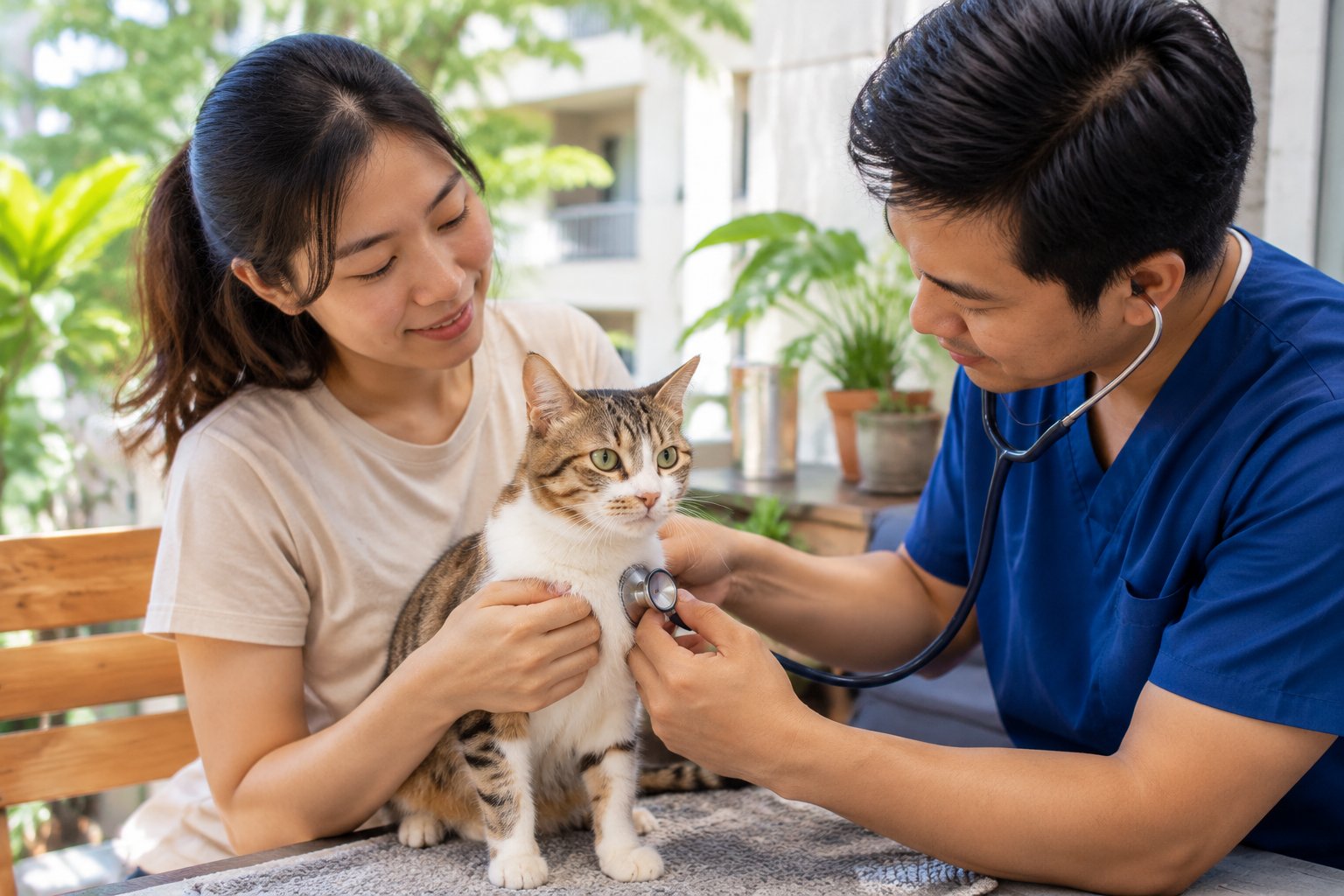
Your vet will start with a full history: when the trembling began, possible exposures, diet, and other signs. They will examine your cat, including temperature, heart rate, and a neurological check. Depending on findings, they may recommend blood tests, urine tests, or imaging. Treatment depends on the cause: warming and fluids for cold or dehydration, glucose for low blood sugar, specific therapy for poisoning, or medication for seizures or neurological disease. In Malaysia, costs vary by clinic and procedure, so ask your vet for an estimate before tests or treatment.
Preventing trembling where possible
- Feed a complete balanced diet. Avoid raw fish-heavy diets that can cause thiamine deficiency.
- Use cat-safe flea products only. Never apply dog products to cats.
- Keep cats indoors or in secure enclosures. This reduces fights, road accidents, and exposure to poisons.
- Provide warm, dry resting spots. Especially during rainy season or in air-conditioned rooms.
- Manage stress. Provide hiding places and a predictable routine.
- Book regular vet checks. Early detection of diabetes, dental pain, and arthritis helps.
Malaysian context
In a Kuala Lumpur apartment, a cat may shiver on a cold tiled floor in an air-conditioned room. In a Johor terrace house, a cat may tremble after being caught in the rain or after exposure to a neighbour's dog flea product. These everyday situations show why observation and quick, calm action matter. Local prices for consultations, tests, and medicines vary, so ask your Malaysian vet for a clear estimate.
Vet disclaimer
This article is general information for Malaysian cat owners and is not a substitute for veterinary advice. Every cat is different. If your cat is trembling, contact a licensed veterinarian for a proper examination and treatment plan.
Related reading
- Cat Health Guide Malaysia: Symptom Check, Red-Flag Triage & When to See a Vet
- Arthritis in Cats in Malaysia: Signs, Diagnosis and Home Care
- Blood Test for Cats in Malaysia: What It Checks, Costs and When You Need One
- Cat Arthritis Treatment in Malaysia: A Practical Owner's Guide
- Cat Fever Treatment in Malaysia: What to Do When Your Cat Is Hot
- Cat Pale Gums Treatment in Malaysia: What to Do When Your Cat's Gums Turn White
- Cat Poisoning Treatment in Malaysia: What to Do, What to Expect, and How to Prevent It
- Cat Seizures Treatment in Malaysia: What to Do, Causes & Vet Care
- Cat Weight Loss Treatment in Malaysia: A Practical Guide for Owners
- Heatstroke in Cats: Causes, Signs and Care (Malaysia Guide)
- Heatstroke in Cats in Malaysia: Signs, First Aid & Prevention
- Heatstroke Prevention for Cats in Malaysia: A Practical Owner's Guide

