
The short answer
Ear mites are tiny crab-like parasites that live in the ear canal and feed on wax and skin debris. They are one of the most common causes of itchy ears in cats, especially kittens and cats that live in groups. In Malaysia's warm, humid climate, mites spread easily between pets in the same household, at shelters, in boarding facilities and through shared bedding. The good news is that ear mites are very treatable once a vet confirms the diagnosis. The catch is that treatment must be done properly and for long enough, or the mites come back.
This guide explains what ear mites look like, how they differ from other ear problems, how vets diagnose and treat them, and what you can do at home to stop reinfection.
What are ear mites and why are they common in Malaysia?
Ear mites, most often Otodectes cynotis, are microscopic parasites that spend their whole life on or near the host. They are not insects but arachnids, related to ticks. They crawl around the ear canal, feed on debris and lay eggs. The itching they cause is intense, and the scratching can lead to secondary bacterial or yeast infections.
Malaysia's climate does not create ear mites, but warmth and humidity help them survive and spread. Mites can live for a short time off the cat, so bedding, carriers, grooming tools and furniture can act as bridges between pets. Cats that live in multi-cat homes, shelters, catteries or boarding facilities are at higher risk. Kittens are especially vulnerable because their immune systems are still developing and they often arrive in new homes already infested.
Ear mites are not a sign of poor hygiene. Even well-cared-for indoor cats can pick them up from a new kitten, a foster cat, a grooming visit or a stay at a boarding facility.
Signs your cat may have ear mites
The classic sign is a cat that scratches its ears constantly, shakes its head and has dark, crumbly debris in the ear canal. But not every cat shows the same pattern. Watch for:
- Intense ear scratching, sometimes until the skin around the ear is raw.
- Head shaking or tilting the head to one side.
- Dark brown or black debris in the ear that looks like coffee grounds.
- Redness or swelling of the ear flap and canal.
- A bad smell from the ear, which may mean a secondary infection.
- Hair loss or scabs around the ear base from scratching.
- Restlessness or irritability, especially at night.
- Aural haematoma, a blood-filled swelling of the ear flap caused by violent head shaking.
Some cats, especially older cats, carry mites with mild signs. Others develop severe inflammation quickly. Kittens may be more systemically unwell and can have mites on the head, neck and rump as well as in the ears.
Ear mites vs other ear problems: a comparison
Ear mites are not the only cause of itchy, dirty ears. The table below compares the most common possibilities. This is a guide only; a vet needs to examine your cat to confirm the diagnosis.
| Feature | Ear mites | Yeast infection | Bacterial infection | Ear wax build-up | Foreign body |
|---|---|---|---|---|---|
| Main sign | Intense scratching, head shaking | Itching, greasy discharge | Pain, discharge, smell | Mild itch, visible wax | Sudden violent scratching |
| Discharge | Dark, crumbly, coffee-ground | Brown-yellow, greasy | Yellow or green, pus-like | Light brown wax | Usually none, or blood |
| Smell | Mild to none | Musty | Strong, unpleasant | Mild | None |
| Both ears? | Often both | Often both | Can be one or both | Often both | Usually one ear |
| Contagious to other pets? | Yes | No | Sometimes | No | No |
| Confirmed by | Microscopy of debris | Cytology | Cytology and culture | Otoscopy | Otoscopy |
A cat can have more than one problem at once. Mites can damage the ear canal and allow yeast or bacteria to overgrow, which is why a vet may treat several issues together.
How vets diagnose ear mites
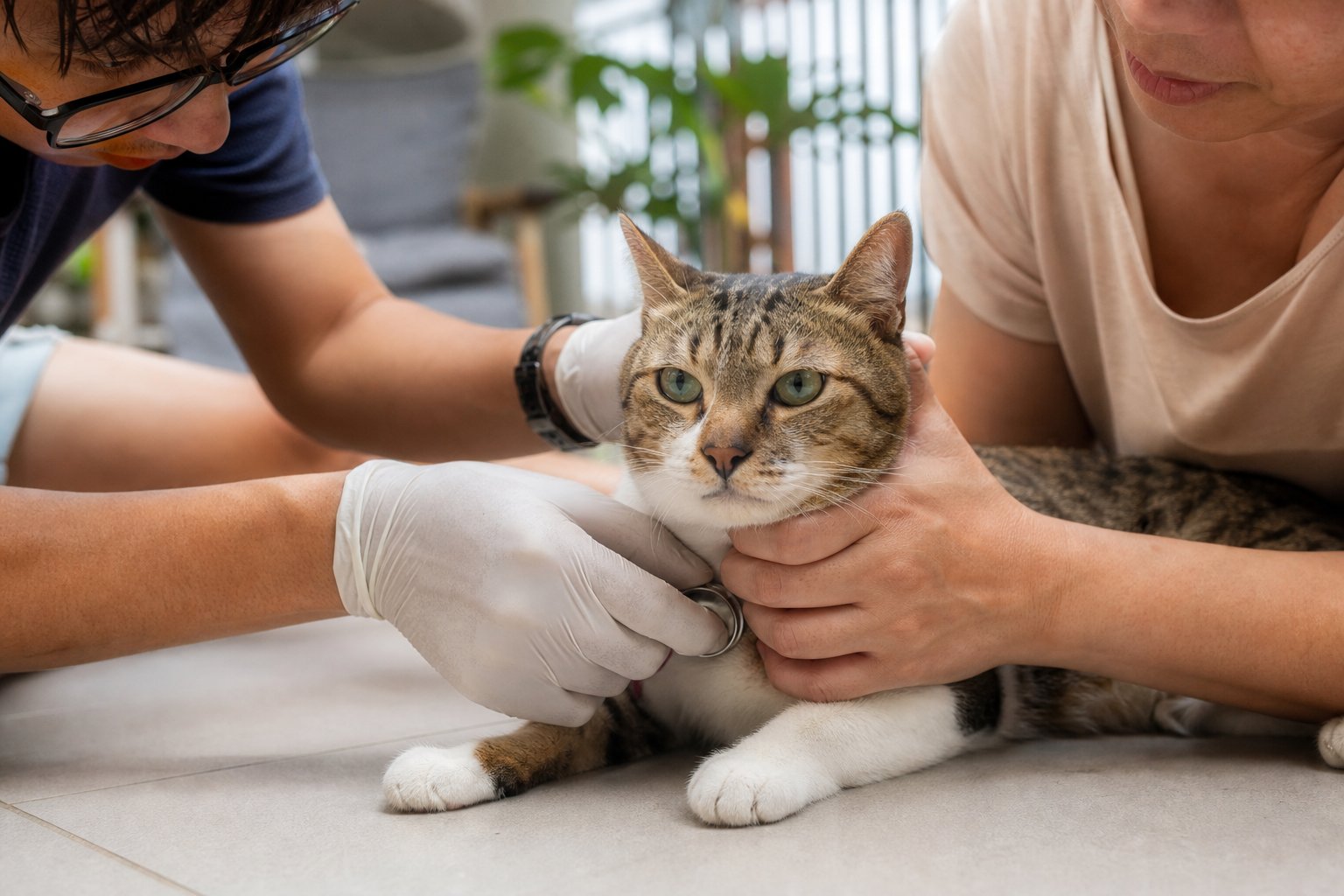
Diagnosis is usually straightforward. Your vet will look inside the ear with an otoscope and take a sample of debris on a cotton swab. The sample is examined under a microscope, where mites and their eggs are visible. In some cases, the vet may see mites moving during the ear exam.
If the ears are very painful or swollen, the vet may need to clean them gently first or use a short course of anti-inflammatory medication before a full examination. If a secondary infection is suspected, the vet may send a sample for cytology to identify bacteria or yeast.
Do not try to diagnose ear mites at home with a phone torch or cotton bud. You can easily push debris deeper or damage the ear canal. If your cat resists ear handling, let the vet do the examination.
How ear mites are treated
Treatment has two goals: kill the mites at every life stage and control the itching and secondary infection. Because mite eggs hatch after the first treatment, a single dose is rarely enough.
Prescription ear drops
Most vets prescribe medicated ear drops that kill adult mites and eggs. The usual course runs for three to four weeks, with rechecks. Some products are applied daily, others weekly, depending on the active ingredient. Follow your vet's instructions exactly, even if the ears look clean after a few days.
Whole-body parasite control
Many modern spot-on products and some injectable or oral parasite treatments also kill ear mites. Your vet may recommend treating the whole body, not just the ears, because mites can live on the skin around the head and neck. This is especially important in multi-cat homes.
Ear cleaning
Your vet may clean the ears in the clinic and send you home with a cleaning solution. Clean only as directed, usually before applying drops. Never use cotton buds inside the canal; wipe the visible outer fold with a soft pad.
Treating every pet in the house
If one cat has ear mites, every cat and dog in the household should be checked and treated at the same time. Mites can move between species. Rabbits and ferrets can also carry mites, so mention all pets to your vet.
Environmental cleaning
Wash bedding, blankets and soft toys in hot water. Wipe down carriers, grooming tools and hard surfaces. Vacuum carpets and furniture. Mites do not survive long off the host, but cleaning reduces the chance of reinfection during treatment.
What about home remedies?
Home remedies such as coconut oil, olive oil, garlic or vinegar are popular online, but they are not reliable. Oils may smother some adult mites, but they do not kill eggs, do not penetrate the ear canal properly and can trap debris and worsen infection. Some substances irritate the ear lining. Given that prescription treatment is effective and affordable when compared with the cost of repeated failed attempts, it is better to have the diagnosis confirmed and use a vet-recommended product.
Preventing ear mites in Malaysian homes
Prevention is mostly about new pets and shared spaces. Use this checklist:
- Quarantine new cats and kittens. Keep a new arrival separate for at least two weeks and have a vet check the ears before introducing them to resident pets.
- Check ears weekly. Look inside the ear flap for dark debris and watch for scratching or head shaking.
- Treat all pets together. If one pet has mites, treat every cat and dog in the home at the same time.
- Wash bedding regularly. Hot-water washing and thorough drying help in humid weather.
- Clean carriers and grooming tools. Wipe them after visits to clinics, groomers or boarding facilities.
- Ask about parasite prevention. Some monthly parasite products cover ear mites. Ask your vet whether your cat's current product does.
- Be careful at shelters and boarding. Ask staff about their health checks and isolation policies.
In Malaysia's humid climate, ears that stay damp can also develop yeast infections. Dry your cat's ears gently after a bath or swim, and avoid pouring water or oil into the canal.
When to see a vet
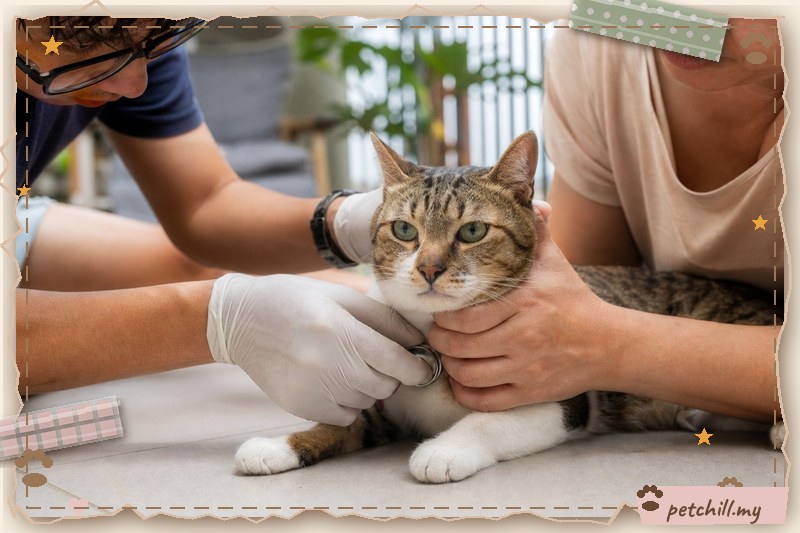
See a vet promptly if your cat is scratching its ears intensely, shaking its head, has dark debris or a bad smell, or has developed a swollen ear flap. Also seek help if the cat is off food, lethargic or has discharge from the ear. Kittens and older cats should be seen quickly because they can become unwell faster. Do not wait for home remedies to work; ear problems can worsen and cause lasting damage to the ear canal.
Living with ear mites in a Malaysian home
Ear mites are manageable, but they test your routine. In a Kuala Lumpur apartment with two cats and a balcony, mites can spread quickly through shared beds and carriers. In a Johor terrace house with cats that spend time in a covered courtyard, new kittens or visiting pets can bring mites in. The principles are the same: confirm the diagnosis, treat every pet, clean the environment and recheck.
During the rainy season in Penang, bedding and soft furniture stay damp longer, so wash and dry items thoroughly. Keep parasite prevention up to date and check ears weekly. If you foster or board cats, build ear checks into your intake routine.
Key takeaways
- Ear mites cause intense itching, head shaking and dark coffee-ground debris.
- Only a vet can confirm mites by examining ear debris under a microscope.
- Treatment usually lasts three to four weeks and must include every pet in the home.
- Home remedies are unreliable and can make things worse.
- Clean bedding, carriers and grooming tools to reduce reinfection.
- See a vet early if your cat is in discomfort or the ear is swollen.
This article is general information for Malaysian cat owners and does not replace veterinary advice. If you suspect ear mites, have your cat examined by a licensed veterinarian.

