
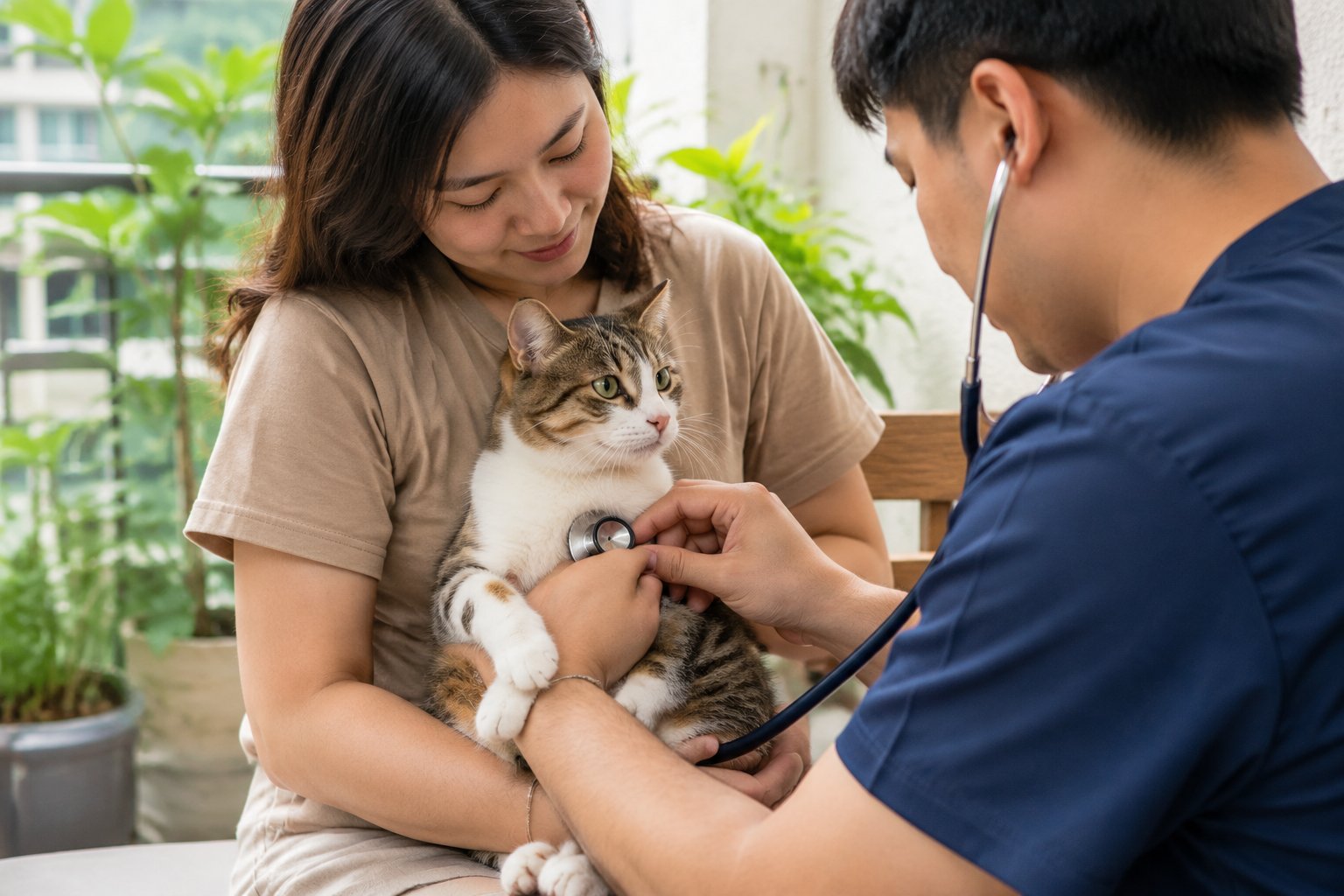
What is fever in cats?
Fever is a rise in body temperature above the normal range, usually as part of the body's response to infection or inflammation. In cats, normal body temperature is roughly 38.1–39.2°C. A temperature above about 39.2°C is generally considered a fever, though mild elevations can occur with stress or hot weather. Unlike humans, cats do not sweat to cool down effectively, and a high fever can be dangerous.
Fever itself is a symptom, not a disease. It tells you something is going on inside your cat's body. The key is to find the underlying cause and to know when home observation is safe and when a vet visit is urgent.
How to tell if your cat has a fever
You cannot reliably tell by touching your cat's nose or ears. A warm nose or ears can be normal, and a cat with a fever may feel normal to the touch. The only accurate way to measure temperature is with a thermometer, usually rectally at the vet. Some vets use ear thermometers, but rectal is more reliable.
Look for these signs, which often accompany fever:
- Hiding or withdrawing from family
- Reduced appetite or refusing food
- Lethargy, sleeping more, weakness
- Shivering or trembling
- Warm ears and dry, warm nose (not reliable alone)
- Fast breathing or panting
- Dehydration – tacky gums, skin that stays tented when gently pinched
- Vomiting or diarrhoea
- Eye or nose discharge
- Sensitivity to touch or crying when picked up
If you see several of these signs, especially in combination, contact your vet.
Normal vs fever: a quick reference
| Temperature | Interpretation | Action |
|---|---|---|
| Below 37.8°C | Hypothermia (too low) | Emergency – see vet immediately |
| 37.8–39.2°C | Normal range | Monitor if unwell |
| 39.2–39.7°C | Mild fever | Book vet visit if other signs present |
| 39.7–40.0°C | Moderate fever | See vet same day |
| Above 40.0°C | High fever | Emergency – risk of organ damage |
Note: These ranges are general guides. Your vet will interpret your cat's temperature alongside other findings.
Common causes of fever in cats
Fever can be caused by many different problems. In some cats, especially young ones, the cause may not be found immediately.
Infections
- Viral infections such as feline herpesvirus, calicivirus, feline panleukopenia, feline leukaemia virus (FeLV) and feline immunodeficiency virus (FIV).
- Bacterial infections including abscesses from cat bites, urinary tract infections, pneumonia, and dental infections.
- Fungal infections such as ringworm (usually skin) or systemic fungal disease (less common in Malaysia but possible).
- Parasitic infections like toxoplasmosis or tick-borne diseases.
Non-infectious causes
- Inflammatory conditions such as pancreatitis or inflammatory bowel disease.
- Immune-mediated diseases where the body attacks its own tissues.
- Cancer (less common but possible).
- Tissue damage from trauma or surgery.
- Reaction to medication or vaccines (mild and short-lived).
Fever of unknown origin (FUO)
When a cat has a persistent fever and initial tests are inconclusive, vets may call it fever of unknown origin. Further testing, sometimes including imaging and specialised blood tests, may be needed.
How vets diagnose fever in cats
Your vet will start with a thorough history and physical examination. They will ask about appetite, behaviour, vomiting, diarrhoea, coughing, sneezing, urinary habits, and any possible exposure to other cats or toxins. They will take your cat's temperature rectally.
Depending on findings, tests may include:
- Complete blood count (CBC) to check for infection and inflammation.
- Blood chemistry panel to assess organ function.
- Urinalysis to check for urinary infection or crystals.
- Faecal examination for parasites.
- X-rays or ultrasound to look for abscesses, fluid or organ changes.
- Specific tests for FeLV, FIV, or other infectious diseases.
- Fine needle aspirate or biopsy if a mass is found.
Diagnosis can take time. Your vet may treat symptoms while waiting for results.
What to do at home if you suspect fever
- Do not give human medication. Paracetamol and ibuprofen are toxic to cats. Never use them.
- Offer water. Encourage drinking but do not force. Dehydration worsens fever.
- Keep your cat comfortable. Provide a quiet, cool place away from direct sun and noise.
- Monitor appetite and litter box use. Note any changes.
- Take note of other signs – vomiting, diarrhoea, breathing changes, behaviour changes.
- Call your vet for advice. They may ask you to bring the cat in.
If your cat is stable, eating a little and not in distress, your vet may advise monitoring for 24 hours. But if any red flags appear, go in immediately.
When to see a vet
Seek veterinary care immediately if your cat shows any of these signs:
- Temperature above 40°C (if you have measured it) or you suspect high fever.
- Difficulty breathing, fast breathing, or open-mouth breathing.
- Not eating for more than 24 hours or refusing water.
- Repeated vomiting or diarrhoea, especially with blood.
- Seizures, collapse, or extreme weakness.
- Pale or yellow gums, or cold extremities.
- Crying when touched or signs of severe pain.
- Known exposure to toxins or a recent fight wound.
If you are unsure, call your vet. It is better to be safe.
Treatment of fever in cats
Treatment depends on the cause. Your vet may:
- Treat the underlying infection with antibiotics, antivirals or antifungals as appropriate.
- Provide supportive care such as intravenous fluids for dehydration, anti-nausea medication, or appetite stimulants.
- Use fever-reducing medication only if prescribed by the vet. Never use human drugs.
- Drain abscesses or perform surgery if needed.
- Manage pain with cat-safe medication.
Hospitalisation may be needed for severe cases. Most cats with mild fever recover well with prompt treatment.
Preventing fever in cats
While not all fevers can be prevented, you can reduce risk:
- Regular vet check-ups – at least once a year, more often for seniors.
- Vaccinations as recommended by your vet (core vaccines for feline herpesvirus, calicivirus, panleukopenia).
- Parasite control – flea, tick and worm prevention.
- Keep cats indoors or in secure enclosures to reduce fights and exposure to infectious cats.
- Isolate sick cats from healthy ones.
- Prompt wound care – clean and monitor any bite or scratch.
- Dental care – regular dental checks to prevent dental abscesses.
- Good nutrition and hydration to support immune health.
Fever in cats in Malaysia: local considerations
Malaysia's hot and humid climate can affect cats. Heatstroke is a risk if cats are left in hot cars or confined spaces without shade and water. Heatstroke can cause high body temperature, but it is not a true fever; it is a medical emergency. Always provide shade and fresh water.
In urban areas like Kuala Lumpur, cats in apartments may be more exposed to stress from noise and confined spaces, which can affect appetite and immune response. In Johor terrace houses, cats that go outdoors may encounter other cats and risk fight abscesses. In Penang during the rainy season, damp conditions can worsen skin problems and respiratory infections. Keeping cats indoors or in secure enclosures reduces these risks.
Mosquitoes are present year-round in Malaysia and can transmit heartworm, which may cause fever and respiratory signs. Talk to your vet about heartworm prevention.
Frequently asked questions
Q: Can I use a human thermometer on my cat? A: A digital rectal thermometer designed for pets is best. Human thermometers can work but must be labelled for rectal use and cleaned properly. Ask your vet for guidance.
Q: Is fever contagious to other cats? A: Fever itself is not contagious, but the underlying infection may be. Keep a sick cat isolated until your vet advises otherwise.
Q: How long does fever last in cats? A: It depends on the cause. With treatment, many fevers resolve within a few days. Persistent fever needs further investigation.
Q: Can I feed my cat if it has a fever? A: Offer small, tempting meals. If your cat refuses food for more than 24 hours, see a vet. Never force-feed.
Q: Are some cats more prone to fever? A: Young kittens, senior cats, and cats with weakened immune systems are more vulnerable. Unvaccinated cats are at higher risk of infectious diseases.
Q: What should I bring to the vet? A: Bring a note of symptoms, when they started, any changes in food or litter, and a list of any medications. If you have a stool sample, bring it.
Final thoughts
Fever in cats is a sign that something is wrong. While mild fever can sometimes be managed with veterinary guidance, high fever or accompanying serious signs require urgent care. Never give human medication. Work with your vet to find the cause and provide appropriate treatment. With prompt attention, most cats recover well.
Disclaimer: This article is for general information only and is not a substitute for professional veterinary advice. Always consult a licensed veterinarian for diagnosis and treatment of your cat's condition.
Related reading
- Constricted Pupils in Cats Malaysia: Causes, When to Worry & What to Do
- Coughing in Cats in Malaysia: Causes, When to Worry & What to Do
- Signs of Fever in Cats in Malaysia: How to Tell and What to Do
- Cat Constipation Treatment in Malaysia: A Practical Owner's Guide
- Cat Constricted Pupils Treatment in Malaysia: What to Do When Your Cat's Eyes Look Pinpoint
- Cat Diabetes Treatment in Malaysia: A Practical Owner's Guide
- Cat Diarrhea Treatment in Malaysia: A Practical Owner's Guide
- Cat Itching Treatment in Malaysia: A Practical Guide for Itchy Cats
- Cat Kidney Disease Treatment in Malaysia: A Practical Owner's Guide

