
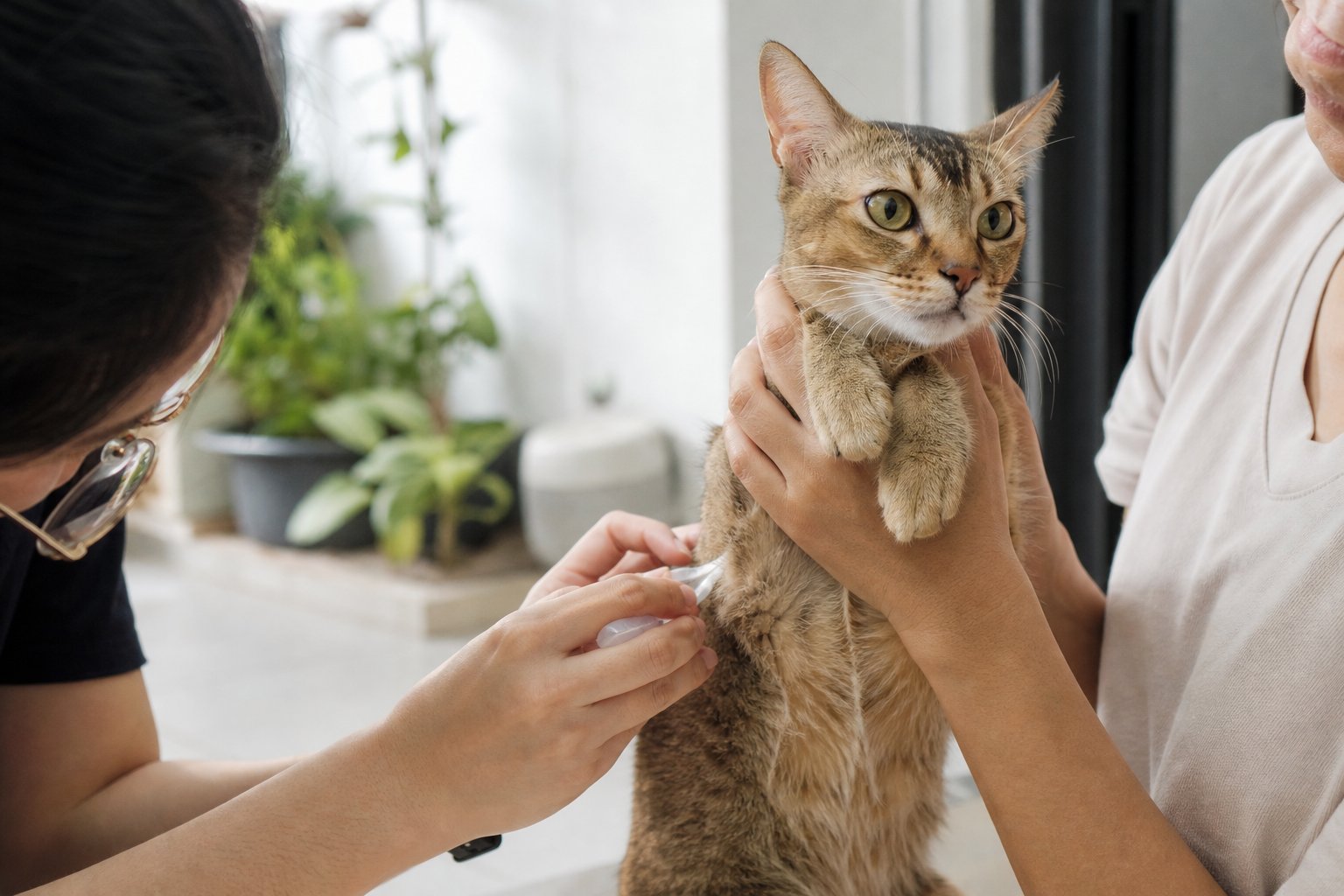
What to expect when you start giving pills
Giving a cat a pill is a skill, not a personality test. Expect some resistance at first: cats are sensitive to smell, texture, and being held. Most owners succeed with a calm routine, a quiet room, and a plan for what to do if the pill comes back out. This guide explains what to expect step by step, how to give tablets and capsules safely, how to hide them, and when to call your vet.
Before you start: set up for success
Prepare everything before you touch the cat. Rushing creates stress for both of you.
- Read the label and your vet's instructions. Confirm the dose, timing, and whether it should be given with food.
- Wash your hands. Have a towel, the pill, a pill popper if you have one, and a syringe of water or a small amount of wet food ready.
- Choose a quiet, non-slip surface. A bathroom or a small room with the door closed prevents the cat from hiding under a bed.
- Keep sessions short. If it takes more than a minute or two, pause and reset.
- Reward afterwards. A small treat or a gentle brush helps the cat associate the routine with something positive.
If you have never given a pill before, ask your vet or vet nurse to show you the technique. Many clinics are happy to demonstrate. In Malaysia, you can also ask your regular vet for a written schedule if you are managing multiple medicines.
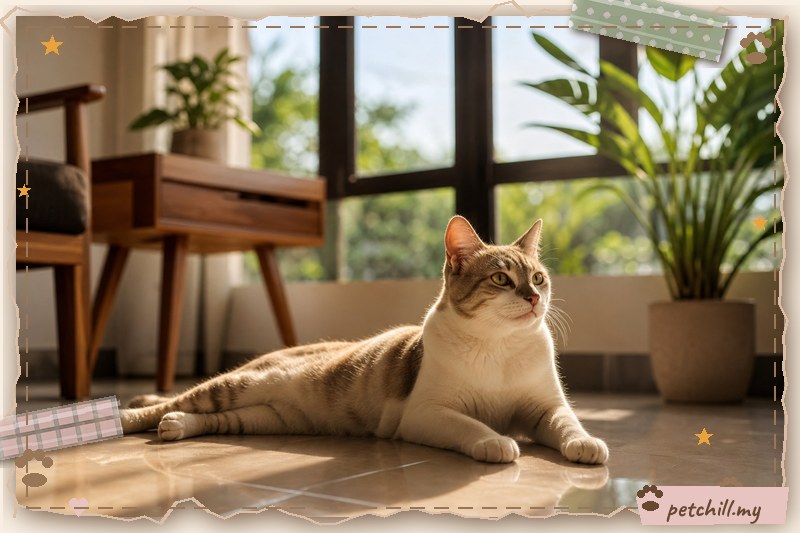
What to expect at each step
Catching and holding
Expect the cat to sense something is different. Some cats will walk away; others will freeze. Do not chase. Close the door calmly and approach from the side. A towel wrap can keep claws away from your hands and stop the cat from backing out.
Opening the mouth
Expect resistance here. Most cats do not like fingers near their mouth. The goal is to open the mouth gently, not to pry it. If the cat clamps down, stop and try again after a short break.
Placing the pill
Expect the pill to feel slippery and the cat to try to push it out with the tongue. Place it as far back as you safely can, then close the mouth and stroke the throat or blow gently on the nose to encourage swallowing. Do not put your fingers deep into the mouth; cats can bite down hard.
Confirming the swallow
Expect to check. Look at the mouth, the floor, and the cat's bedding. Some cats hide pills in their cheek and spit them out later. If you are not sure, watch for a minute. Never give a second dose unless you are certain the first was lost.
After the pill
Expect some drooling, especially with bitter medicines. Offer water or a small amount of wet food. Some cats will hide for a while; that is normal. Keep the environment calm and avoid loud noises.
Safe techniques for tablets and capsules
The two-person method
One person holds the cat gently against their body with a towel; the other gives the pill. This is often the easiest method for strong cats or first-timers. Keep the cat's head slightly up, not tilted back.
The towel wrap (burrito)
Wrap the cat's body in a towel, leaving the head free. This prevents scratching and helps the cat feel secure. Do not wrap too tightly. Release immediately after the pill is given.
The pill popper
A pill popper is a plastic syringe-like tool that places the pill at the back of the mouth without your fingers going in. It is useful for cats that bite or for owners who are nervous. Ask your vet or pet shop about availability; local stock varies.
The syringe and water follow-up
After a pill, some vets recommend a small syringe of water to help it go down and prevent irritation. Ask your vet if this is appropriate for your cat's medicine. Never squirt water forcefully; go slowly.
What not to do
- Do not crush or split pills unless your vet approves. Many tablets are coated or timed-release.
- Do not open capsules unless directed.
- Do not mix medicine into a full bowl of food unless the vet says it is safe; the cat may eat around it or refuse the whole meal.
- Do not use force that scares the cat. Fear makes the next dose harder.
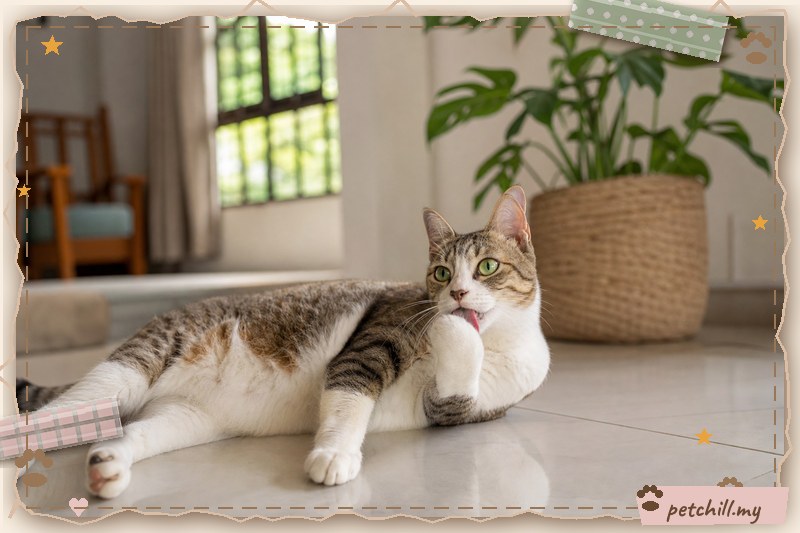
Hiding pills: what works and what to avoid
Hiding a pill works best with a strong-smelling, soft food that the cat already likes. Give a small test portion without the pill first. If the cat eats it quickly, try a second portion with the pill hidden inside. Watch to confirm the cat swallows it.
| Method | Good for | Watch out for |
|---|---|---|
| Vet-approved pill paste | Most cats; easy to control dose | Some cats dislike the texture; check with your vet |
| Small piece of plain cooked chicken | Cats that love meat | Do not use bones or seasoned meat |
| Strong-smelling wet food | Cats that eat wet food quickly | The cat may eat around the pill; use a small amount |
| Pill pockets (commercial) | Cats that accept chewy treats | Check the ingredient list; some are high in calories |
| Crushed pill in food (only if vet approves) | Some bitter medicines | Never crush timed-release or coated tablets |
Avoid milk, chocolate, onion, garlic, grapes, raisins, and xylitol. These are unsafe for cats. Tuna is salty and not a balanced food; use it only occasionally and in small amounts. If your cat is on a prescription diet, ask your vet before using treats.
When your cat refuses or spits out the pill
Expect some failed attempts. Stay calm and reset.
- Check the mouth and the floor. The pill may be stuck in the cheek or dropped.
- Try a different method: towel wrap, pill popper, or a hiding paste.
- Give a short break. A stressed cat will not swallow well.
- If you cannot confirm the dose, call your vet. Do not guess.
If your cat vomits soon after the pill, call your vet. Some medicines are irritant, and vomiting may mean the dose was lost. Do not give another dose without advice.
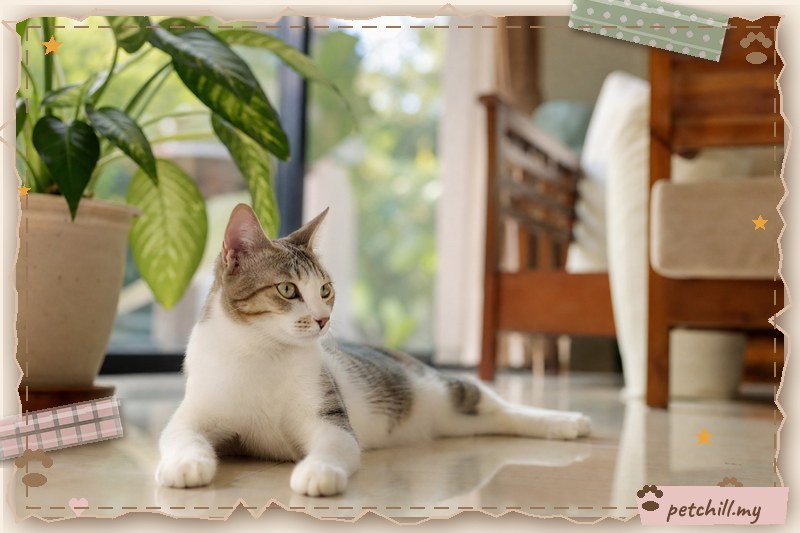
What to expect over the first week
Most cats improve with repetition. Expect the first few days to be the hardest. Keep a simple log of time, dose, and whether the pill was swallowed. This helps you spot patterns and gives your vet useful information.
Some cats become more cooperative when they learn the routine ends with a treat. Others remain suspicious but tolerate it. If your cat becomes more fearful, hides more, or stops eating, talk to your vet about alternatives such as liquid medicine, a transdermal gel, or an injectable given at the clinic.
When to see a vet
Contact your vet if:
- Your cat vomits repeatedly or cannot keep food or water down.
- Your cat refuses food for more than 24 hours.
- Your cat has difficulty breathing, swelling of the face, or severe drooling after a pill.
- You cannot give the medicine at all and the condition is worsening.
- You are unsure whether the dose was swallowed.
- Your cat shows signs of pain, collapse, or unusual behaviour.
For emergencies, call your vet clinic first to confirm they can see your cat. In Malaysia, clinic hours vary, so keep your regular vet's number and an after-hours contact saved in your phone.
Practical Malaysian contexts
In a Kuala Lumpur apartment, space is limited, so a small bathroom or a closed bedroom works well as a calm pill-giving area. Keep the towel and pill popper in a drawer nearby so you are not searching while the cat waits.
In a Johor terrace house, cats may have more places to hide. Close doors to bedrooms and keep the routine in one room. If you have multiple cats, give the pill away from the others to avoid competition and stress.
During the Penang rainy season, cats may be indoors more and more restless. Use the extra indoor time to practise a calm handling routine, even on days without medicine, so the cat is used to being touched and wrapped.
A simple checklist
- Confirm dose and timing with your vet.
- Prepare towel, pill, water, and treat.
- Choose a quiet room with the door closed.
- Use a towel wrap or a second person.
- Place the pill at the back of the mouth, close the mouth, encourage swallowing.
- Check the mouth and floor.
- Offer water or a small treat.
- Log the dose.
- Reward and let the cat settle.
Comparison: methods at a glance
| Method | Difficulty | Stress level | Best for |
|---|---|---|---|
| Two-person hold | Medium | Medium | Strong cats, first-timers |
| Towel wrap | Medium | Low to medium | Cats that scratch or wriggle |
| Pill popper | Low to medium | Low | Owners nervous about fingers |
| Hiding in food | Low | Low | Cats that eat quickly and are not fussy |
| Liquid medicine (vet-approved) | Medium | Medium | Cats that cannot take tablets |
Final reminders
Giving pills is a routine that improves with practice. Expect some mess and some resistance, but keep sessions calm and short. Never crush or split a pill without veterinary approval. If you are struggling, ask your vet for help; there is no shame in needing a demonstration or an alternative formulation. Your cat's health depends on getting the right dose safely, not on doing it perfectly the first time.
This article is general information for Malaysian cat owners and does not replace veterinary advice. Always follow your vet's instructions for your cat's specific medicine and condition.
Related reading
- Cat Health Guide Malaysia: Symptom Check, Red-Flag Triage & When to See a Vet
- Giving Pills for Cats Step by Step: A Calm, Practical Guide for Malaysian Owners
- How to Treat Dental Pain in Cats at Home: Safe Relief and When to See a Vet
- Signs of Eye Infection in Cats in Malaysia: What Owners Should Look For
- Vaccination Side Effects for Cats in Malaysia: What's Normal, What's Not
- Cat Vaccination Side Effects: What Malaysian Owners Should Expect
- Anemia in Cats: Causes, Signs and Care (Malaysia Guide)
- Anemia in Cats in Malaysia: Signs, Causes, and What to Do
- Anemia Prevention for Cats: A Practical Guide for Malaysian Owners
- Arthritis in Cats: Causes and Care (Malaysia Guide)

