Quick answer
Many common household cleaning products can poison or injure cats. The main risks are corrosive ingredients, essential oils, and concentrated chemicals. Keep cats out of the area while cleaning, rinse surfaces well, store products securely, and choose pet-safe alternatives when possible. If you suspect exposure, contact a veterinarian immediately.
Why cats are especially vulnerable
Cats are not small dogs. Their bodies process chemicals differently. They lack certain liver enzymes that help break down many toxins, so substances that are mild for humans or dogs can be dangerous for cats. Cats also groom themselves frequently, so anything on their fur or paws can be swallowed. Their small size means even a tiny amount of a concentrated product can cause serious harm.
In Malaysian homes, cats often roam kitchens, bathrooms, and balconies. Cleaning products are stored under sinks, in buckets, or on shelves. A curious cat can knock over a bottle, walk through a spill, or lick a freshly cleaned floor. Understanding the risks helps you prevent accidents.
Common household cleaning products and their risks
Bleach (sodium hypochlorite)
Bleach is a common disinfectant. It is corrosive in concentrated form and can cause chemical burns to the mouth, throat, and paws. Inhaling fumes can irritate the airways. Never mix bleach with ammonia or acids, as this releases toxic gases. If you use bleach, dilute it properly, rinse surfaces thoroughly, and keep cats away until dry.
Disinfectants (quaternary ammonium compounds, phenols)
Many disinfectants contain quaternary ammonium compounds (quats) or phenols. These are toxic to cats. Phenols are especially dangerous because cats cannot metabolise them well. Products labelled for floors, toilets, or general disinfection may contain these ingredients. Always check the label. Even after drying, residue can remain on surfaces cats lick.
Essential oils
Essential oils are increasingly used in cleaning products and diffusers. Cats are highly sensitive to many oils, including tea tree, eucalyptus, citrus, peppermint, pine, and wintergreen. Exposure can cause drooling, vomiting, tremors, and liver damage. Avoid oil diffusers and cleaning sprays containing essential oils in homes with cats.
Detergents and surfactants
Laundry detergents, dish soaps, and surface cleaners contain surfactants. These can cause gastrointestinal upset if ingested. Some also contain enzymes that can irritate skin and eyes. Keep cats away from open containers and rinse surfaces after use.
Glass cleaners and ammonia
Ammonia-based glass cleaners are irritating to cats' respiratory tracts. The smell can be overwhelming. Use ammonia-free products and ensure good ventilation.
Drain cleaners and oven cleaners
These are highly corrosive. Even a tiny splash can cause severe burns. Store them in locked cabinets and never leave them unattended while in use.
Air fresheners and candles
Plug-in air fresheners, scented candles, and incense can release volatile organic compounds that irritate cats' lungs. Some contain essential oils. Use them sparingly or not at all in homes with cats.
How cats are exposed
Cats can be exposed through:
- Ingestion: licking paws, grooming fur, eating from contaminated bowls, drinking from toilet bowls with cleaning products.
- Skin contact: walking on wet floors, brushing against treated surfaces.
- Inhalation: breathing fumes from strong cleaners, especially in small, poorly ventilated spaces like bathrooms.
- Eye contact: splashes from sprays or mists.
Signs of poisoning
Signs vary by product but may include:
- Drooling
- Vomiting
- Diarrhoea
- Pawing at the mouth
- Red or irritated skin, paws, or mouth
- Coughing or sneezing
- Difficulty breathing
- Lethargy
- Tremors or seizures
- Burns or ulcers in the mouth
If you see any of these signs after cleaning, treat it as an emergency.
Safe cleaning practices for Malaysian homes
1. Confine your cat during cleaning
Put your cat in a separate room with water, litter, and a comfortable spot. Close the door. Do not let your cat back into the cleaned area until surfaces are dry and well ventilated.
2. Ventilate
Open windows and use fans to clear fumes. Malaysian humidity can make smells linger, so allow extra time for drying.
3. Rinse thoroughly
After using any cleaner, rinse surfaces with clean water. This is especially important for floors, counters, and food bowls. Dry with a clean cloth.
4. Store products securely
Keep all cleaning products in closed cabinets, preferably locked or high up. Never store them in unlabelled containers. Cats can knock over bottles, so secure them.
5. Choose pet-safe products
Look for cleaners labelled pet-safe or use simple alternatives like diluted white vinegar, baking soda, and unscented castile soap. Always check ingredients.
6. Avoid essential oils and strong fragrances
Skip oil diffusers, scented sprays, and strong air fresheners. Use unscented products.
7. Clean food and water bowls separately
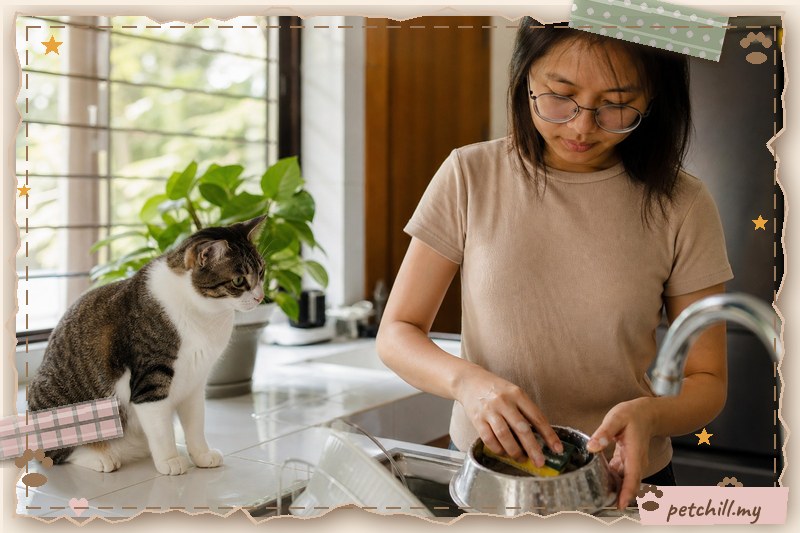
Wash pet bowls with hot water and a pet-safe soap. Rinse well. Do not use the same sponge or cloth used for floors or toilets.
8. Be careful with litter boxes
Use a mild, unscented soap to clean litter boxes. Rinse and dry completely before refilling.
9. Wipe paws after cleaning
If your cat walks on a cleaned floor, wipe their paws with a damp cloth once dry. This removes residue.
10. Keep toilet lids closed
Toilet bowl cleaners can be toxic. Keep lids down and store cleaners out of reach.
Pet-safe cleaning alternatives
| Product | Use | Safety notes |
|---|---|---|
| White vinegar (diluted) | General cleaning, glass, floors | Low risk once dry; avoid strong concentrations; do not mix with bleach |
| Baking soda | Deodorising, scouring | Safe if ingested in small amounts; keep out of reach to avoid overeating |
| Castile soap (unscented) | Dishes, surfaces, pet bowls | Rinse well; some cats may be sensitive to certain plant oils in scented versions |
| Hydrogen peroxide (3%) | Stain removal | Toxic if ingested; use with caution and rinse thoroughly |
| Steam cleaning | Floors, tiles | Uses only water; effective and safe when dry |
Always test any new product on a small area first and keep cats away until dry.
Product comparison: risk levels
| Product type | Risk to cats | Safe use tips |
|---|---|---|
| Bleach | High (corrosive, fumes) | Dilute, rinse, ventilate, keep cats away until dry |
| Phenol disinfectants | High (toxic) | Avoid; choose phenol-free products |
| Quat disinfectants | High (irritant, toxic) | Avoid or rinse thoroughly; keep cats off wet surfaces |
| Essential oil cleaners | High (toxic) | Avoid entirely |
| Ammonia glass cleaners | Moderate (irritant) | Use ammonia-free, ventilate |
| Dish soap | Low (irritant if ingested) | Rinse well |
| Laundry detergent | Moderate (irritant) | Store securely, rinse |
| Drain cleaner | Very high (corrosive) | Use with extreme caution, keep cats away |
| Vinegar (diluted) | Low | Use diluted, dry before access |
| Baking soda | Low | Safe if small amounts ingested |
What to do if your cat is exposed
- Remove your cat from the area. Move to fresh air.
- Prevent grooming. If product is on fur or paws, wipe with a damp cloth. Do not let your cat lick it off.
- If ingested: rinse the mouth with water if safe. Do not induce vomiting unless instructed by a vet.
- If on skin or eyes: flush with lukewarm water for several minutes.
- Contact your vet immediately. Bring the product container or label.
- Do not wait for symptoms. Some poisons act quickly.
When to see a vet
Seek veterinary care immediately if your cat shows any of these signs after exposure to a cleaning product:
- Drooling, vomiting, or diarrhoea
- Pawing at the mouth or face
- Red, burnt, or ulcerated mouth or skin
- Coughing, wheezing, or difficulty breathing
- Lethargy or weakness
- Tremors, seizures, or collapse
- Eye redness or discharge
Even if your cat seems fine, call your vet for advice. Some toxins cause delayed effects.
Special considerations for Malaysian homes
- Humidity: Damp conditions can prolong drying times. Ensure surfaces are completely dry before letting cats back in.
- Open-plan living: Cats may have access to kitchens and bathrooms. Use baby gates or close doors during cleaning.
- Balconies and corridors: Cats may walk on floors cleaned by building management. Wipe paws if they come in contact with unknown cleaners.
- Frequent cleaning: In shared apartments, cleaning may be more frequent. Coordinate with household members to keep cats safe.
Building a cat-safe cleaning routine
- Plan ahead: Choose a time when you can confine your cat.
- Read labels: Check for toxic ingredients.
- Use the least toxic product: Start with water, vinegar, or steam.
- Ventilate: Open windows and use fans.
- Rinse and dry: Remove residue.
- Store safely: Lock up products.
- Monitor: Watch your cat for signs of illness after cleaning.
Conclusion
Keeping your cat safe from household cleaning products is about awareness and routine. By choosing safer products, confining your cat during cleaning, and rinsing thoroughly, you can reduce the risk of poisoning. If an accident happens, act quickly and contact your vet. Your cat's health depends on the small choices you make every day.
Disclaimer: This article is for general information only and is not a substitute for professional veterinary advice. Always consult a licensed veterinarian for diagnosis and treatment.
Related reading
- Cat Health Guide Malaysia: Symptom Check, Red-Flag Triage & When to See a Vet
- Anemia in Cats: Causes, Signs and Care (Malaysia Guide)
- Cat Eye Infection Treatment in Malaysia: A Practical Owner's Guide
- Cat Vomiting Treatment in Malaysia: What to Do and When to See a Vet
- Diarrhea in Cats in Malaysia: Causes, Home Care and When to See a Vet
- Ear Mites in Cats: Causes and Care (Malaysia Guide)
- Eye Infection in Cats in Malaysia: Causes, Signs, Treatment & Prevention
- Flea Treatment for Cats: What to Expect (Malaysia Guide)
- Giving Pills for Cats Step by Step: A Calm, Practical Guide for Malaysian Owners
- How to Prevent Chocolate Poisoning Around Cats: A Practical Guide for Malaysian Homes
- How to Prevent Electrical Cables Around Cats: A Practical Safety Guide for Malaysian Homes