
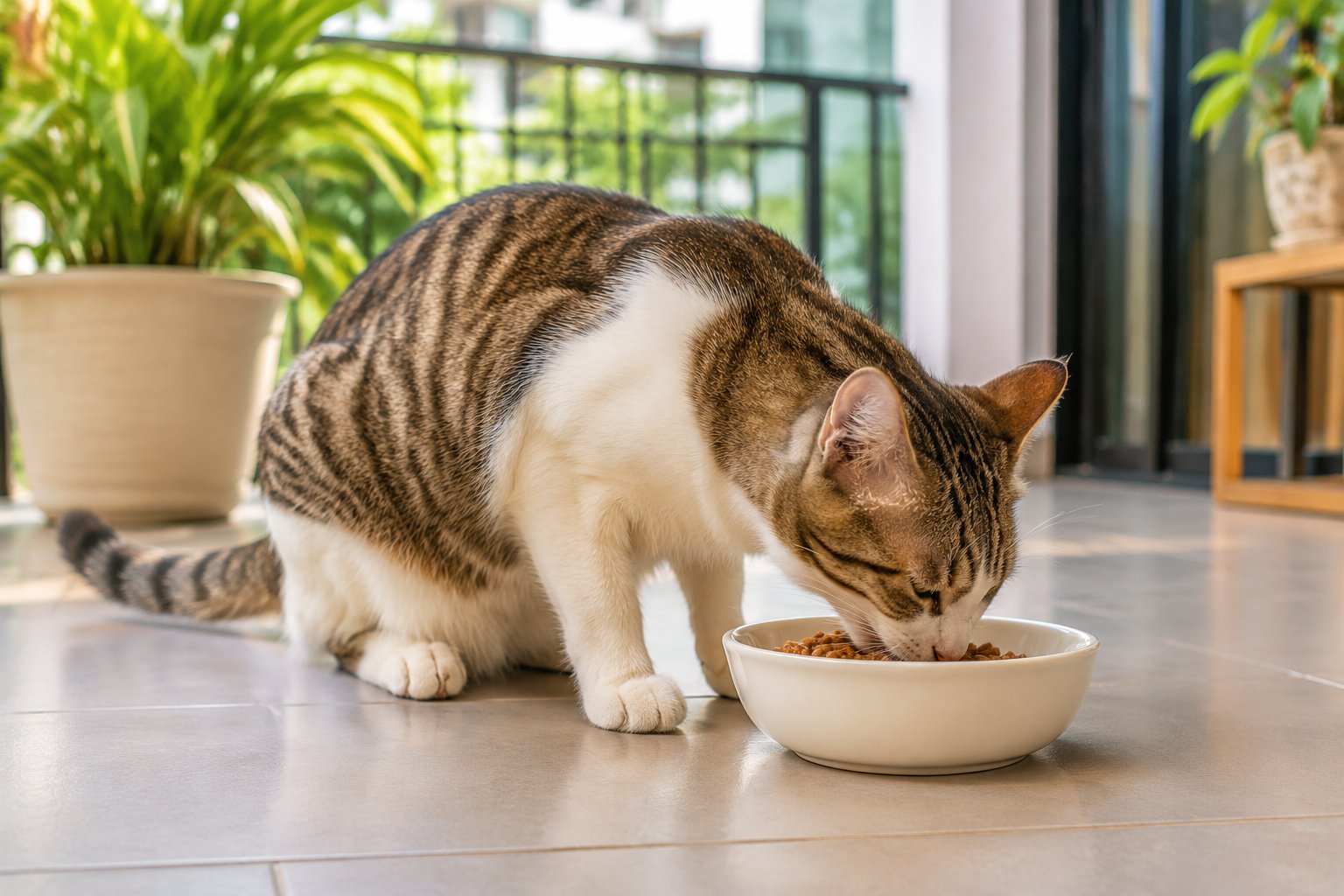
The short answer
Most cats do not need milk after weaning. If you still want to offer a milk treat, choose a product made for cats that is lactose-reduced or lactose-free, introduce it in tiny amounts, and stop at the first sign of loose stools. For orphaned kittens, use a proper kitten milk replacer, not cow's milk and not a homemade mix.
This guide walks through the types of milk you will see on shelves and online, how to read a label, how to introduce a milk safely, and the situations where milk is the wrong tool entirely.
Why ordinary cow's milk is a poor default
Cats are not small humans and they are not calves. After weaning, most cats produce less lactase, the enzyme that breaks down lactose, the sugar in milk. Undigested lactose travels to the large intestine, where bacteria ferment it. The result is gas, cramping, loose stools and sometimes vomiting.
This does not mean every cat will react dramatically. Some cats tolerate small amounts of dairy. But you cannot tell by looking at a cat, and repeated loose stools are unpleasant for the cat and for whoever cleans the litter tray. In a warm, humid Malaysian home, a cat with diarrhoea also loses fluid quickly, which is a real concern for kittens and older cats.
There is a second issue: cow's milk is nutritionally wrong for cats. It is low in the amino acid taurine and in several vitamins and minerals cats need, and it is high in lactose and fat relative to what a cat's digestive system expects. It is not a meal, and it is not a substitute for water.
The main types of milk you will encounter
1. Commercial cat milk (lactose-reduced or lactose-free)
These are sold as treats, usually in small cartons or bottles, and are formulated to be lower in lactose. They are the safest off-the-shelf option for a cat that enjoys a creamy treat. They are still a treat: they do not replace complete food, and they should not be free-fed.
2. Kitten milk replacer
This is a different product category. Kitten milk replacers are designed to approximate queen's milk for orphaned or rejected kittens and for kittens that need supplementary feeding. They are not a casual treat for adult cats. If you are hand-rearing a kitten, follow the mixing instructions precisely and get a feeding plan from a vet.
3. Goat's milk
Goat's milk is often marketed as gentler than cow's milk. It still contains lactose, though usually at a slightly different profile. Some cats tolerate it better; many do not. Treat it as a dairy product with the same caution, and do not assume "goat" means "safe for cats".
4. Plant milks (soy, oat, almond, rice, coconut)
These are made for people, not cats. Many contain added sugar, salt, oils, thickeners, flavourings or sweeteners. Some, such as those containing xylitol, are unsafe. Plant milks are also nutritionally inappropriate as a cat feed. Do not offer them as a milk substitute.
5. Condensed milk, evaporated milk and cream
These are concentrated dairy products with high sugar or fat content and no role in cat nutrition. Avoid them.
6. Human lactose-free milk
This is a reasonable emergency stand-in only if you have nothing else and a vet has confirmed it is acceptable. It is not formulated for cats, and it is not a long-term solution. Ask a Malaysian vet before using it.
| Milk type | Lactose level | Suitable as a cat treat? | Suitable for orphan kittens? | Notes |
|---|---|---|---|---|
| Commercial cat milk (lactose-reduced) | Low | Yes, in small amounts | No | Formulated as a treat; read the label |
| Kitten milk replacer | Varies by product | No | Yes, when mixed as directed | Vet guidance strongly advised |
| Cow's milk | High | No | No | Common cause of diarrhoea |
| Goat's milk | Moderate to high | Caution only | No | Not automatically gentler |
| Plant milks | None (but additives) | No | No | Additives and sweeteners are a risk |
| Condensed or evaporated milk | High, plus sugar | No | No | Avoid |
| Human lactose-free milk | Low | Emergency only | No | Not formulated for cats |
How to read a cat milk label
Labels are where most mistakes happen. Use this checklist before you buy.
- Species suitability. Does the label say it is for cats, or for kittens? A product aimed at people is not a cat product.
- Lactose statement. Look for "lactose-reduced" or "lactose-free". If lactose is not mentioned, assume it is present.
- Ingredient order. Ingredients are listed by weight. A product whose first ingredient is sugar, syrup or a plant oil is not a good choice.
- Added sugar and sweeteners. Avoid added sugar, glucose, corn syrup and any sweetener. Xylitol is a serious hazard.
- Additives. Thickeners, gums, colourings and flavourings are unnecessary in a simple milk treat.
- Nutritional adequacy claim. Cat milk treats are not complete foods. Do not let a treat displace a complete diet.
- Storage and shelf life. Once opened, follow the label's refrigeration and use-by instructions. In Malaysia's climate, do not leave opened milk sitting out.
- Pack size. Buy small. A large carton that sits in the fridge for weeks is a waste and a food-safety risk.
If a label is vague, or the product is sold loose with no ingredient list, skip it. Local prices vary, so compare a few products and ask a Malaysian retailer or vet for guidance rather than relying on a single online listing.
How to introduce cat milk safely
A slow introduction protects your cat's digestion and tells you quickly whether the product suits them.
- Check the baseline. Only start when your cat has normal stools and is eating and drinking normally.
- Offer a tiny amount. One or two teaspoons in a saucer is enough for the first trial.
- Watch for 24 to 48 hours. Look for loose stools, gas, vomiting, itching, swelling or changes in appetite.
- Stop at the first sign of trouble. Do not "push through" a reaction.
- If all is well, keep it occasional. A small serving once or twice a week is plenty for most cats.
- Never use milk to replace water. Fresh water should always be available.
- Keep a note. Record the product name and your cat's response, so you can repeat what worked and avoid what did not.
A simple trial log helps:
| Date | Product | Amount offered | Stool normal? | Vomiting? | Other signs | Decision |
|---|---|---|---|---|---|---|
| Day 1 | Lactose-reduced cat milk | 2 teaspoons | Yes | No | None | Continue trial |
| Day 3 | Same product | 1 tablespoon | Soft | No | Gas | Reduce or stop |
| Day 7 | Different brand | 1 teaspoon | Yes | No | None | Keep as occasional treat |
Kittens are a different case
If you are caring for an orphaned or rejected kitten, milk is not a treat, it is the whole diet, and getting it wrong is dangerous. Use a commercial kitten milk replacer, mix it exactly as directed, and feed at the correct temperature and frequency for the kitten's age. Weigh the kitten daily and track weight gain.
Do not make your own formula from cow's milk, egg and sugar. Do not dilute a replacer to "stretch" it. Do not feed a kitten cow's milk as a sole food. If you are unsure, contact a vet promptly; hand-rearing is demanding and small mistakes compound quickly.
Milk, hydration and picky drinkers
Some owners offer milk because their cat seems to drink little water. Milk is a weak solution to that problem. Cats evolved to get much of their water from prey, and many do well on wet food. Practical steps that work better than milk:
- Offer fresh water in several places, away from the litter tray and food bowl.
- Try a water fountain; some cats prefer moving water.
- Add a little warm water to wet food to increase moisture intake.
- Wash bowls daily; cats can be put off by stale water.
- In hot weather, refresh bowls more often.
If your cat is persistently drinking more or less than usual, that is a health signal, not a milk problem. Increased drinking, for example, can accompany several medical conditions and deserves a vet visit.
Special situations
Pregnant or nursing queens. These cats have higher energy and nutrient needs. Do not improvise with milk; feed a diet formulated for gestation and lactation and follow veterinary advice.
Senior cats. Older cats may have dental issues, reduced appetite or kidney concerns. A milk treat is not a fix for poor appetite. If a senior cat is losing weight, see a vet.
Cats with a history of pancreatitis, inflammatory bowel disease or food sensitivity. Avoid dairy treats unless a vet has specifically approved them.
Multi-cat households. One cat may tolerate milk while another does not. Feed separately so you know who ate what, and never leave a shared saucer down.
Common mistakes to avoid
- Assuming a cat "needs" milk because it meows at the fridge.
- Using cow's milk as a cheap kitten feed.
- Offering plant milk because it is dairy-free.
- Free-feeding a large bowl of milk.
- Continuing a milk treat after diarrhoea has started.
- Relying on milk to hydrate a cat that avoids water.
- Buying a large carton that spoils before it is used.
When to see a vet
Contact a veterinarian if any of the following occur after milk or at any other time:
- Diarrhoea lasting more than 24 hours, or diarrhoea in a kitten.
- Vomiting, especially repeated vomiting.
- Blood in the stool or vomit.
- Lethargy, weakness or hiding.
- Refusal to eat or drink.
- Swelling of the face, lips or eyelids, or difficulty breathing after a new food.
- A kitten that is not gaining weight or is crying persistently after feeds.
- Any sign of dehydration: tacky gums, skin that stays tented when gently pinched, or sunken eyes.
Kittens, elderly cats and unwell cats deteriorate faster than healthy adults. When in doubt, call your vet rather than waiting.
A practical buying checklist for Malaysian owners
- Confirm the product is labelled for cats or kittens.
- Confirm lactose is reduced or absent.
- Check for added sugar, sweeteners and unnecessary additives.
- Buy a small pack and store it as the label directs.
- Introduce slowly and keep a trial log.
- Keep fresh water available at all times.
- Ask a Malaysian vet or retailer about suitable options; local prices and stock vary.
Milk is optional for most cats. Clean water, a complete diet and a watchful eye matter far more.
This article is general information and is not a substitute for veterinary advice. Always consult a licensed veterinarian about your cat's diet and health.
Related reading
- Cat Food Guide Malaysia 2026: How to Choose Dry, Wet & Prescription Food
- Best Cat Milk for Cats in Malaysia: What to Buy and What to Avoid
- Best Food Transition for Cats in Malaysia: A Step-by-Step Guide
- Best Grain-Free Cat Food for Cats in Malaysia: What to Look For
- Best Hairball Control Food for Cats in Malaysia: A Practical Buying Guide
- Best High-Protein Cat Food in Malaysia: How to Choose (2025 Guide)
- Cat Care in Malaysia: A Complete Guide for New and Experienced Owners
- Cat Milk Feeding Guide for Cats: What Malaysian Owners Need to Know
- Food Transition for Cats in Malaysia: A Safe, Step-by-Step Guide
- Kitten Food Feeding Guide for Cats in Malaysia: How Much, How Often, and What to Feed
- Wet vs Dry Cat Food in Malaysia: Water, Cost and How to Choose

