What is heatstroke in cats?
Heatstroke (also called heat exhaustion or hyperthermia) happens when a cat's body temperature rises above its normal range and the cat cannot cool itself down. A cat's normal body temperature is roughly 38.1°C to 39.2°C. When it climbs above about 40°C, cells and organs start to suffer. Above 41°C, it becomes an emergency.
Cats are not as good at cooling themselves as dogs. They sweat only through their paw pads and nose, and they pant less efficiently than dogs. They rely heavily on finding a cool spot, grooming, and limiting activity. In a hot, humid climate like Malaysia's, this can fail quickly, especially in apartments without air-conditioning, in cages, or in cars.
Heatstroke is not just about feeling hot. It can cause dehydration, blood clotting problems, kidney damage, brain swelling, and death. Even a cat that seems to recover after cooling can deteriorate hours later. That is why home treatment is only the first step, and veterinary assessment is essential.
Recognising the signs: how do you know it's heatstroke?
Early signs are easy to miss. Cats are subtle. Watch for:
- Heavy or open-mouth panting (cats rarely pant unless stressed or ill)
- Drooling or thick saliva
- Restlessness or seeking cool surfaces
- Bright red gums and tongue
- Rapid heartbeat
- Warm to the touch, especially ears and paws
As heatstroke progresses, you may see:
- Weakness, wobbliness, or collapse
- Vomiting or diarrhoea (sometimes with blood)
- Confusion, disorientation, or seizures
- Tremors or muscle twitching
- Unconsciousness
If you see any of these, act immediately. Do not wait to see if your cat improves on its own.
Immediate first aid at home: step-by-step
The goal of home first aid is to start cooling your cat safely while you arrange veterinary care. Do not try to manage heatstroke entirely at home.
Step 1: Move to a cool area
Take your cat to the coolest place available: an air-conditioned room, a shaded area with a fan, or a well-ventilated bathroom. Avoid direct sunlight. Keep the environment quiet to reduce stress.
Step 2: Wet the fur with cool water
Use cool tap water, not ice-cold water. Wet the fur thoroughly, especially on the back of the neck, armpits, belly, and inner thighs. These areas have more blood flow and cool faster. You can use a sponge, cloth, or gentle spray. Do not submerge your cat in water, as this can cause shock or drowning if the cat is weak.
Step 3: Fan gently
Use a handheld fan or a floor fan on a low setting. Moving air helps water evaporate and cool the skin. Keep the fan at a distance so you don't frighten your cat.
Step 4: Offer small sips of water
If your cat is conscious and can swallow, offer small amounts of cool water in a bowl. Do not force water into the mouth. If your cat is vomiting or unable to swallow, do not give water by mouth.
Step 5: Check temperature if you can
If you have a pet thermometer, you can take a rectal temperature. Normal is around 38.1–39.2°C. Stop cooling when the temperature drops to about 39.5°C to avoid overcooling. If you don't have a thermometer, cool for a few minutes and then head to the vet.
Step 6: Call your vet immediately
Phone your vet or an emergency clinic while you cool your cat. Tell them you suspect heatstroke and follow their instructions. If you don't have a regular vet, call ahead to the nearest clinic that handles emergencies.
What NOT to do
- Do not use ice or ice-cold water. It constricts blood vessels and can trap heat inside the body. It can also cause shivering, which generates heat.
- Do not leave your cat unattended in a car. Even with windows cracked, a car can heat up rapidly.
- Do not force water into the mouth. This can cause choking or water entering the lungs.
- Do not cover your cat with wet towels and leave them. Towels can trap heat if they warm up. Use them to wet the fur, then remove or re-wet.
- Do not give human medications. Never give aspirin, paracetamol, or any human fever medicine to a cat without veterinary advice. Many are toxic.
- Do not delay veterinary care. Home cooling is not a substitute for professional treatment.
Cooling methods compared
| Method | Safe? | How to use | Cautions |
|---|---|---|---|
| Cool tap water on fur | Yes | Wet neck, armpits, belly, thighs | Avoid ice-cold water |
| Fanning | Yes | Gentle airflow over wet fur | Keep fan at a distance |
| Ice packs | No | Do not use directly on skin | Can cause vasoconstriction and shivering |
| Cold water immersion | No | Do not submerge | Risk of shock, drowning |
| Alcohol rub | No | Do not use | Toxic if licked, can cause rapid cooling |
| Wet towels | With care | Use to wet fur, then remove | Do not leave on if they warm up |
| Drinking water | Yes (if conscious) | Offer small sips | Do not force |
After cooling: what to expect at the vet
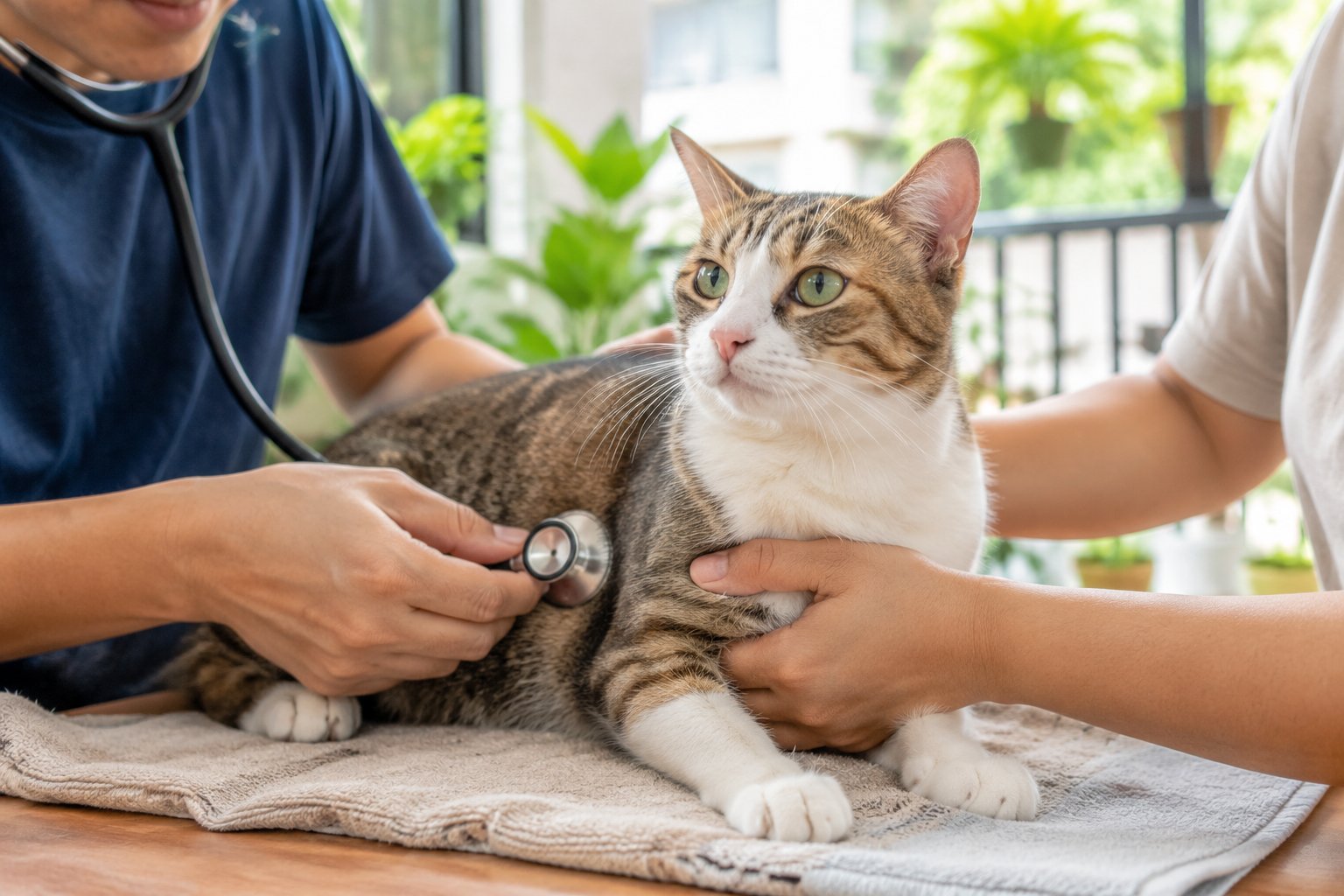
Your vet will assess your cat's temperature, hydration, and organ function. They may give intravenous fluids, oxygen, and medications to support circulation and reduce brain swelling. Blood tests may be needed to check for organ damage. Some cats need to stay in the clinic for monitoring. The sooner you get your cat to the vet, the better the chance of recovery.
Preventing heatstroke in Malaysian homes
Malaysia's hot and humid climate makes heatstroke a real risk, especially during the hotter months or in homes without air-conditioning. Here are practical steps:
- Provide constant shade and ventilation. Keep windows open or use fans. If you use air-conditioning, ensure your cat can move away from direct cold drafts.
- Always provide fresh, cool water. Use multiple bowls in different rooms. Change water daily.
- Avoid midday heat. Walk or play with your cat in the early morning or evening. Keep outdoor time short.
- Never leave your cat in a car. Even for a few minutes.
- Be careful with cages and carriers. Do not leave a cat in a carrier in direct sun or in a hot car. Use a well-ventilated carrier.
- Groom regularly. Mats and excess fur can trap heat. Regular brushing helps.
- Watch at-risk cats. Flat-faced breeds (like Persians), overweight cats, senior cats, and cats with heart or breathing problems are more vulnerable.
- Create cool spots. Tiled floors, bathrooms, or a shaded balcony can be cooler. Provide a cooling mat if available.
Local examples
- In a Kuala Lumpur apartment with afternoon sun, close curtains during the hottest part of the day and use a fan to keep air moving. Cats often seek the bathroom floor, so keep that area accessible and water available.
- In a Johor terrace house, ensure your cat has access to a shaded corridor or a room with cross-ventilation. Avoid leaving cats in a covered patio or cage where heat can build up.
When to see a vet
Heatstroke is always an emergency. See a vet immediately if your cat shows any of these signs:
- Heavy panting that does not stop
- Drooling, bright red gums
- Weakness, wobbliness, or collapse
- Vomiting or diarrhoea
- Confusion, seizures, or tremors
- Body temperature above 40°C
Even if your cat seems to recover after cooling, see a vet. Internal damage may not be obvious. Do not wait for symptoms to worsen.
Frequently asked questions
Can I treat heatstroke in my cat at home without a vet? No. Heatstroke can cause internal organ damage that you cannot see. Home cooling is first aid only. Always contact a vet immediately, even if your cat seems to improve.
What is the first thing I should do if my cat has heatstroke? Move your cat to a cool, shaded, ventilated area and start wetting the fur with cool water while fanning. Then call your vet or pet ambulance.
Should I use ice or ice-cold water to cool my cat? No. Ice and ice-cold water can constrict blood vessels and trap heat, and may cause shivering which raises body temperature. Use cool tap water instead.
**How do I know if my cat has heatstroke?** Signs include heavy panting, drooling, bright red gums, weakness, wobbliness, vomiting, diarrhoea, confusion, seizures, and collapse. Normal cats do not pant heavily.
Can I give my cat water to drink during heatstroke? Offer small amounts of cool water to drink if your cat is conscious and can swallow. Do not force water into the mouth, as it can cause choking or aspiration.
How can I prevent heatstroke in my cat in Malaysia? Provide constant shade and ventilation, fresh water, avoid midday heat, never leave cats in cars or cages in direct sun, and keep indoor areas cool with fans or air-conditioning.
Vet disclaimer
This article is for general information only and is not a substitute for professional veterinary advice. If you suspect your cat has heatstroke, contact a veterinarian immediately. Always follow your vet's instructions for treatment and prevention.
Related reading
- Cat Fever Treatment in Malaysia: What to Do When Your Cat Is Hot
- Cat Pale Gums Treatment in Malaysia: What to Do When Your Cat's Gums Turn White
- Cat Poisoning Treatment in Malaysia: What to Do, What to Expect, and How to Prevent It
- Cat Seizures Treatment in Malaysia: What to Do, Causes & Vet Care
- Heatstroke in Cats: Causes, Signs and Care (Malaysia Guide)
- Heatstroke Prevention for Cats in Malaysia: A Practical Owner's Guide
- How to Prevent Paracetamol Poisoning Around Cats: A Malaysian Safety Guide
- How to Treat Limping in Cats at Home: Safe Steps for Malaysian Owners