

Start with the scale, not the bowl
If your cat looks thinner, the first useful thing you can do at home is measure the change rather than guess at it. Weigh your cat once a week, at the same time of day, ideally before the first meal. A baby scale works well; otherwise weigh yourself holding the cat, then weigh yourself alone and subtract.
Write the numbers down. A single reading tells you very little, but four weekly readings tell you whether your cat is stable, drifting down slowly, or dropping fast. That trend is the single most useful piece of information you can bring to a vet.
As a working rule, a loss of more than about 5% of body weight in a month deserves a vet visit. For a 4 kg cat, that is roughly 200 g. Any steady loss over several weeks, even if each week looks small, also deserves investigation.
Home care has a real role, but it is supportive care, not diagnosis. You can improve nutrition, reduce stress, manage mealtimes and track progress. You cannot rule out thyroid disease, kidney disease, diabetes or intestinal disease from your kitchen.
What home care can and cannot fix
It helps to be honest about the split.
| Situation | Home care role | Vet role |
|---|---|---|
| Recent food change, cat eating less for a few days | Transition back slowly, offer familiar food, warm it slightly | Only if loss continues past a week |
| Multi-cat household, one cat being pushed off the bowl | Separate feeding stations, supervised meals, microchip feeder if needed | Confirm the bullied cat has no underlying illness |
| Senior cat getting thinner but bright | Higher-calorie complete food, smaller more frequent meals, dental check | Blood tests, thyroid check, dental exam |
| Cat eating well but losing weight | Record intake and weight, offer calorie-dense food | Urgent: blood and stool tests |
| Vomiting, diarrhoea, hiding, poor appetite | Keep water available, note frequency | Urgent |
| Sudden loss with lethargy or jaundice | None beyond comfort and transport | Emergency |
Notice that most rows end with a vet. That is not a cop-out; it reflects how cat weight loss actually behaves. Cats are good at hiding illness, and appetite change is often the last thing owners notice.
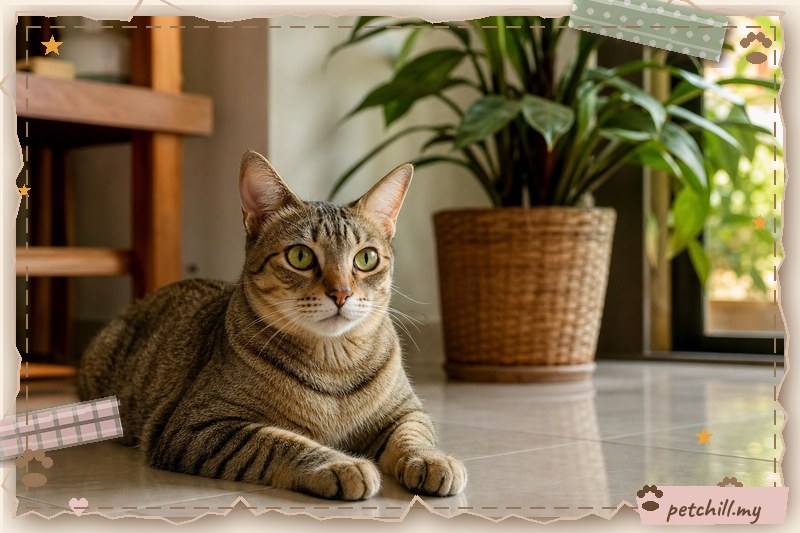
Step 1: Measure what actually goes in
Underfeeding is common in homes where food is topped up rather than measured, and so is overfeeding in homes where several people feed the same cat. Both distort the picture.
Do this for two weeks:
- Pick one complete food as the base and read the feeding guide on the pack.
- Use a kitchen scale or a measuring cup, not a scoop-and-guess approach.
- Write down every meal, every treat and every human-food snack.
- Note who fed the cat and when, especially in households with children or helpers.
- Count treats as part of the daily total, not as extras.
The feeding guide on the pack is a starting point, not a law. It assumes a typical activity level. An indoor cat in a Kuala Lumpur apartment that sleeps most of the day may need less than the guide suggests, while a young active cat may need more. Adjust gradually and let the weekly weight trend guide you.
If your cat is losing weight and eating less than the guide suggests, the goal is to raise intake safely. If your cat is losing weight while eating at or above the guide, stop adjusting food and book a vet appointment.
Step 2: Make the food easier to eat
A cat with a sore mouth, a blocked nose or low appetite will often eat more if the food is more appealing. Small changes are worth trying before you assume the problem is behavioural.
- Warm wet food slightly to body temperature. Aroma drives feline appetite more than flavour does.
- Offer smaller meals more often. Four small meals can work better than two large ones for a cat with a small stomach capacity.
- Try a pate or loaf texture if your cat has dental discomfort and struggles with chunks.
- Add a little warm water to wet food to make it easier to lap.
- Keep food fresh. In Malaysian heat, wet food left out spoils quickly, so offer it and remove what is not eaten within about half an hour.
- Keep the water bowl clean and refill it daily. Hydration matters more than many owners realise, especially for cats with kidney concerns.
Do not add oils, supplements or human calorie products without veterinary advice. Some are unsafe for cats, and adding fat to the diet of a cat with an undiagnosed condition can make things worse.
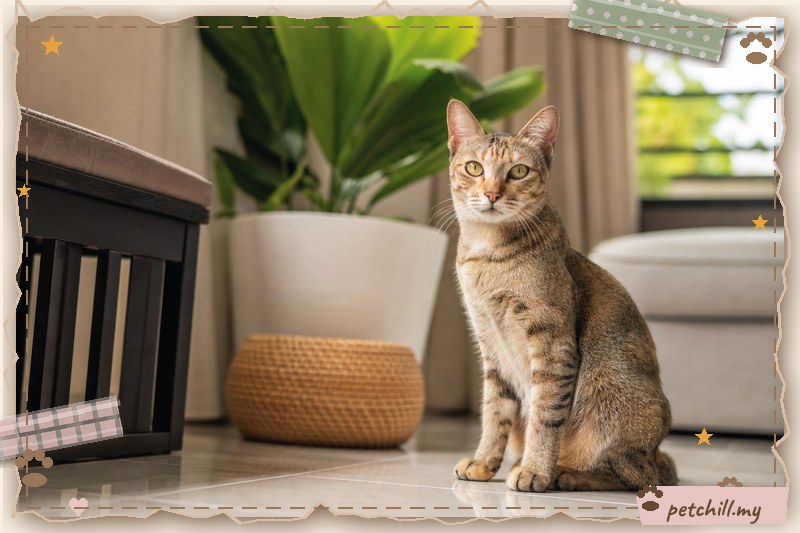
Step 3: Fix mealtime stress and competition
Stress is an underrated cause of gradual weight loss. Cats that are bullied at the bowl, startled by a new pet, or living through building works often eat less without their owners noticing.
Practical fixes:
- Feed cats in separate rooms or at opposite ends of a room with a visual barrier.
- Supervise meals for the thinner cat and remove the bowl when it walks away.
- Place bowls away from noisy appliances, busy doorways and litter trays.
- Give a shy cat a quiet feeding spot with an escape route.
- If one cat guards food, consider a microchip-activated feeder so each cat gets its own portion.
- Keep meal times predictable. Cats are routine-driven, and unpredictability reduces intake.
In a Johor terrace house with several cats sharing a kitchen, this is often the single biggest change an owner can make. In a Penang apartment with one cat, the equivalent issue is usually boredom or a feeding spot next to a noisy balcony or washing machine.
Step 4: Choose the right food, not just more food
More of the wrong food is not a plan. Look for a complete food that states it meets a recognised nutritional standard, and match it to your cat's life stage.
| Cat profile | Food direction | What to track |
|---|---|---|
| Adult cat, mild recent loss, otherwise well | Complete adult maintenance food, measured portions | Weekly weight, appetite, stool quality |
| Senior cat (roughly 8+ years) | Senior or all-life-stages complete food, often more digestible protein | Weight, water intake, blood tests from vet |
| Cat with dental pain | Soft pate or loaf, warmed | Eating speed, dropping food, pawing at mouth |
| Cat recovering from illness | Vet-recommended recovery or high-calorie diet | Weight, hydration, energy level |
| Fussy cat refusing food | Strong-smelling wet food, gentle warming | How much is actually eaten, not just offered |
If your vet has diagnosed a specific condition, follow their diet advice over any general guide, including this one. Kidney disease, diabetes and intestinal disease each have different nutritional priorities, and a diet that suits one can be wrong for another.
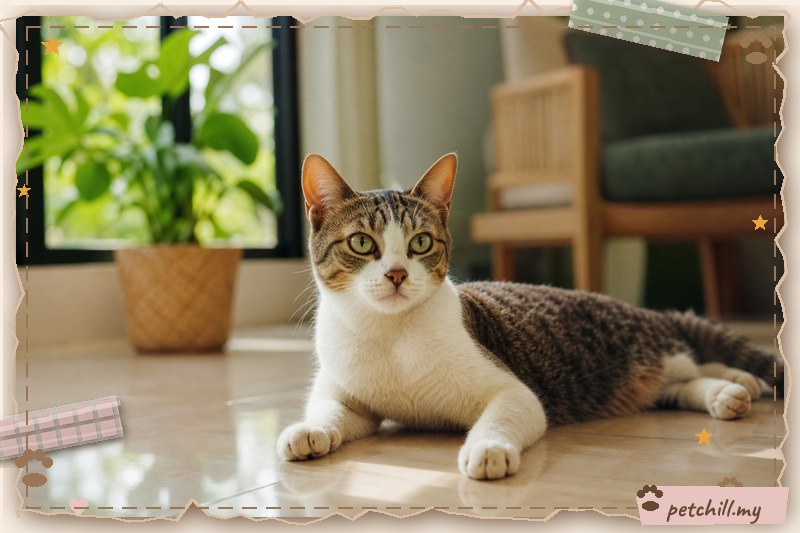
Step 5: Build a simple home monitoring sheet
A notebook or phone note is enough. Record:
- Date and weight
- Food offered and food eaten (roughly, in grams or fractions of a tin)
- Appetite score: good, fair, poor, refusing
- Water intake, if you can estimate it
- Stool and urine changes
- Vomiting or diarrhoea, with frequency
- Energy and behaviour changes
- Any new medication, supplement or food
Two weeks of this is far more useful to a vet than a vague memory. It also protects you from the trap of changing five things at once and not knowing which one helped.
Step 6: Know the red flags that end home care
Stop home management and arrange a vet visit promptly if you see any of the following:
- Weight loss above about 5% in a month, or steady loss over several weeks
- Eating well but still losing weight
- Noticeable increase in appetite and thirst together
- Vomiting more than occasionally, or any diarrhoea lasting more than a day or two
- Drooling, dropping food, chewing on one side, or bad breath
- Hiding, withdrawal, or reluctance to be handled
- Yellow tinge to the gums, ears or skin
- Panting, weakness, or collapse
- A mass or swelling anywhere on the body
- Sudden refusal to eat for more than 24 hours
A cat that stops eating entirely is a genuine concern. Cats can develop serious liver problems after several days of not eating, so prolonged refusal is not something to wait out at home.
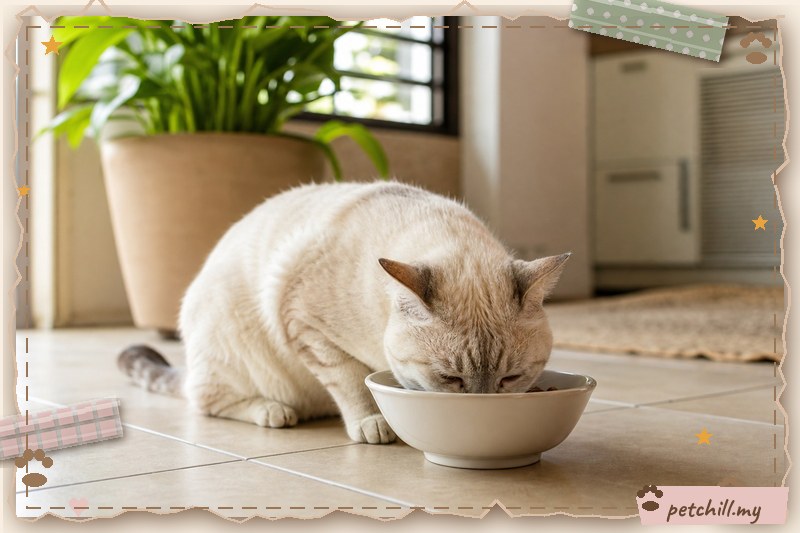
When to see a vet
Book a vet visit for any unexplained weight loss, and treat the following as urgent: loss of more than 5% of body weight in a month, weight loss with a normal or increased appetite, vomiting or diarrhoea that persists, jaundice, laboured breathing, a cat that has not eaten for a day, or a cat that is hiding and withdrawn.
At the clinic, expect a physical examination including a dental check and body condition scoring. Blood tests, a thyroid check for older cats, urine testing and stool examination are common next steps. Bring your weight log and food record; it helps the vet decide what to test first.
For travel and identification questions, the Department of Veterinary Services Malaysia portal is a useful reference, and the Malaysian Veterinary Council website lists registered veterinarians if you need to find a clinic in an unfamiliar area.
Common mistakes Malaysian owners make
- Free-feeding dry food and assuming the cat eats enough. In multi-cat homes, one cat may eat most of it.
- Switching foods abruptly. Sudden changes cause diarrhoea and reduced intake. Transition over seven to ten days.
- Treating weight loss with treats. Treats are usually incomplete nutrition and can crowd out proper food.
- Leaving wet food out all day. In Malaysian humidity, this spoils fast and can cause food aversion or stomach upset.
- Assuming a thin senior cat is just old. Age-related muscle loss is real, but so is thyroid disease and kidney disease. Both need testing.
- Delaying the vet because the cat seems happy. Cats compensate well and often seem normal until disease is advanced.
A realistic two-week home plan
Week one: weigh your cat, read the food label, start measuring portions, separate feeding stations if you have multiple cats, and begin the monitoring sheet. Do not change the food yet unless it is clearly inappropriate.
Week two: review the sheet. If intake is low and the cat is otherwise well, try warming food, smaller more frequent meals, and a palatable wet food. Weigh again at the end of the week.
If the weight is stable or rising and the cat is bright, continue and reweigh weekly. If the weight is still falling, or any red flag appears, book the vet and bring your records. That is the point where home care has done its job: it has given you clean data and ruled out the simple fixes.
The bottom line
Home treatment of cat weight loss is really home monitoring plus good nutrition plus stress reduction, backed by timely veterinary diagnosis. You can do a great deal at home, but you cannot replace blood tests with a better bowl of food. Weigh weekly, measure meals, remove competition, watch for red flags, and let the trend decide when to call the clinic.
This article is general information for cat owners and is not a substitute for veterinary examination, diagnosis or treatment. Always consult a licensed veterinarian about your cat's health, diet and medication.
Related reading
- Cat Health Guide Malaysia: Symptom Check, Red-Flag Triage & When to See a Vet
- Diarrhea in Cats: Causes and Care (Malaysian Owner's Guide)
- How to Treat Arthritis in Cats at Home: A Practical Guide for Malaysian Owners
- Signs of Diabetes in Cats Malaysia: Early Symptoms Owners Miss
- Anemia Prevention for Cats: A Practical Guide for Malaysian Owners
- Arthritis in Cats: Causes and Care (Malaysia Guide)
- Arthritis in Cats in Malaysia: Signs, Diagnosis and Home Care

