The short answer
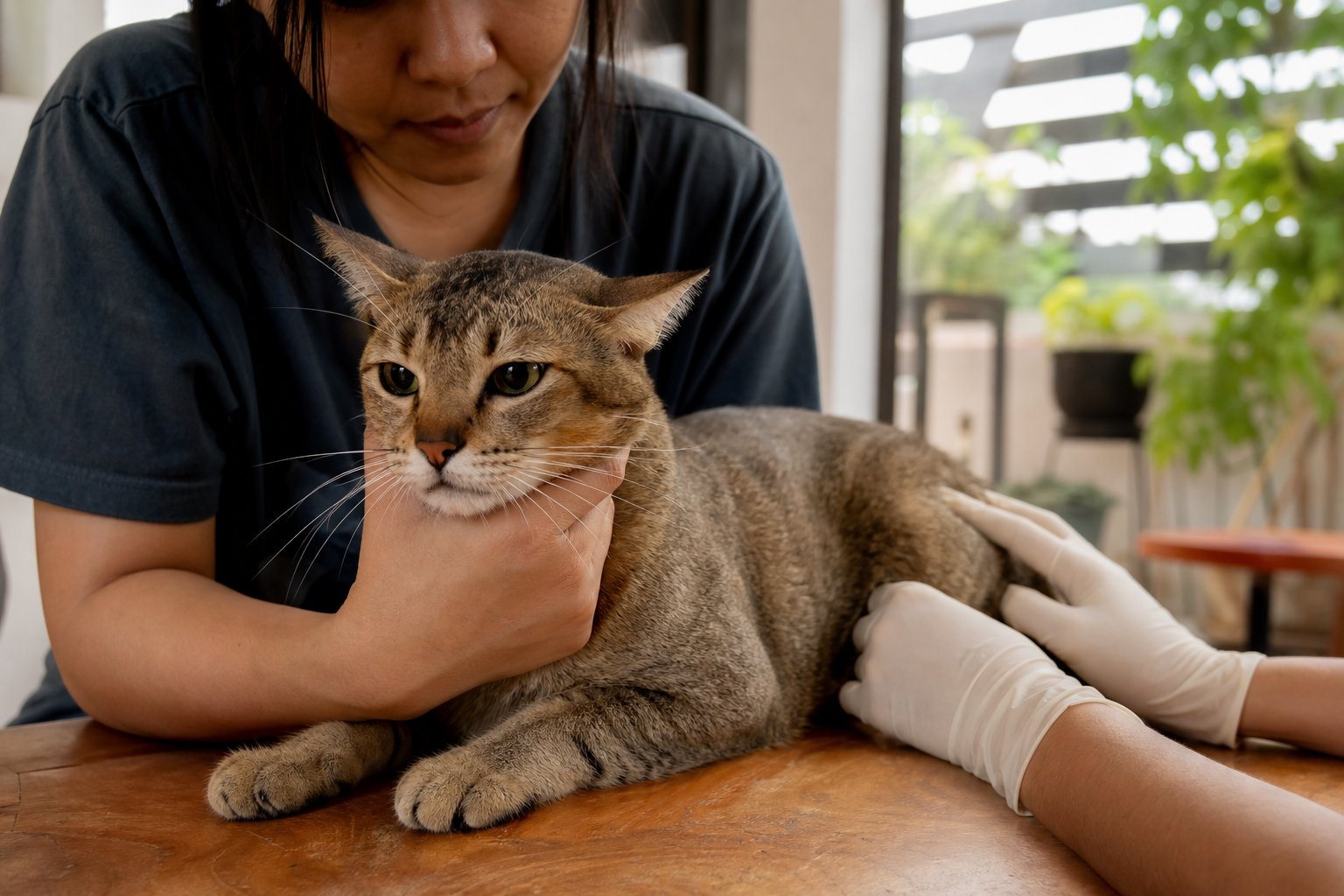
Poisoning in cats is often an emergency, and cats are more vulnerable than their size suggests because they groom themselves, walk on treated surfaces and lick their paws. If you think your cat has eaten, inhaled or touched something toxic, move it away from the source, keep the packaging, and phone a veterinarian straight away. Do not wait for symptoms and do not try home remedies unless a vet guides you.
This guide covers the toxins Malaysian cat owners most often meet, how poisoning looks, what you can safely do while getting help, and how to make a home safer.
Why cats are easily poisoned
Cats are small, curious and fastidious. A cat that walks through a spilled cleaner or a treated garden will lick its paws later. Cats also lack some liver enzymes that help other species break down certain chemicals, which is why some products that are safe for dogs are dangerous for cats.
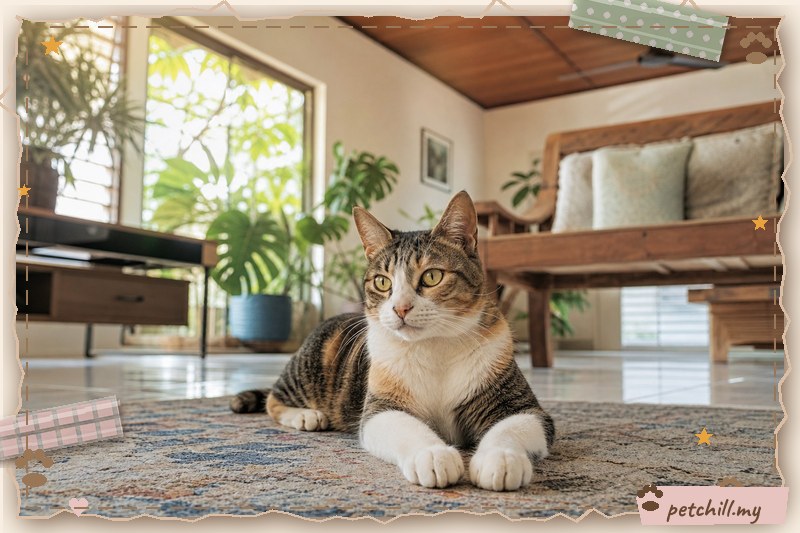
Indoor cats are not automatically safe. Many poisonings happen inside the home: medicines left on a counter, cleaning products in an open bucket, lilies in a vase, or a dog in the same house wearing a flea treatment. Outdoor and free-roaming cats add risks such as rodent bait, snail pellets, antifreeze, garden plants and rubbish.
Common poisons in Malaysian homes
Permethrin and dog flea products
This is one of the most serious cat poisons. Many dog spot-on flea and tick treatments contain permethrin or related pyrethroids. Cats are extremely sensitive to these chemicals, and exposure can cause tremors, twitching, drooling, wobbling, seizures and dangerously high body temperature. Exposure can happen when a product is applied to a cat by mistake, when a cat grooms a treated dog, or when a cat sleeps on bedding shared with a recently treated dog.
Never apply a dog product to a cat. If you have dogs and cats, ask your vet for a flea plan that is safe for every animal in the house, and keep treated dogs away from cats until the product has dried and your vet confirms it is safe.
Rodenticides
Rat and mouse baits are a major risk in Malaysian homes, shops and gardens. Most baits are designed to be attractive and are placed in corners where cats hunt. Depending on the active ingredient, rodenticide can cause bleeding, brain swelling, seizures or kidney damage. Signs may be delayed for days, so a cat that has eaten bait can look normal at first.
Secondary poisoning is also possible if a cat eats a poisoned rodent. Keep bait in tamper-resistant boxes that cats cannot reach, record where bait is placed, and tell your vet the product name if you suspect exposure.
Human medicines
Paracetamol is particularly dangerous to cats and can cause fatal blood changes and liver damage. Other common risks include ibuprofen and other anti-inflammatory painkillers, aspirin, antidepressants, ADHD medicines, cold and flu preparations, and topical creams. Cats may chew blister packs or lick spilled pills.
Never give a cat human medicine unless your vet has prescribed it and given you the dose. Store medicines in closed drawers, not on open counters or bedside tables.
Household cleaners and chemicals
Bleach, drain cleaner, oven cleaner, toilet cleaner, disinfectant concentrates, kerosene, paint thinner and antifreeze are all hazardous. Corrosive cleaners burn the mouth and throat. Hydrocarbons can be inhaled into the lungs and cause breathing problems. Antifreeze has a sweet taste that attracts animals and can cause kidney failure.
Keep cats out of the room while cleaning, rinse surfaces with water, store chemicals in closed cupboards, and never leave a bucket of cleaner unattended. Wipe up spills immediately.
Plants
True lilies are the best-known plant danger for cats. Easter lilies, tiger lilies, Asiatic lilies and Oriental lilies can cause severe kidney injury, and even a small amount of pollen or vase water may be enough. Other plants to keep out of reach include oleander, azalea, rhododendron, sago palm, dieffenbachia, philodendron, pothos and some bulbs.
If you are unsure whether a plant is safe, keep it away from your cat and ask your vet. A cat that has chewed a plant may show drooling, vomiting, mouth irritation or wobbliness.
Human foods
Onions, garlic, chives and leeks damage red blood cells in cats. Chocolate, coffee, energy drinks and tea contain stimulants that cats cannot handle well. Alcohol, grapes and raisins, xylitol-sweetened products, salty snacks and mouldy food are also risky. Cooked bones can splinter and cause internal injury, which is a physical hazard rather than a poison but just as urgent.
Keep food preparation areas clear, secure bins with lids, and tell guests not to feed the cat.
Essential oils and insect repellents
Some essential oils, especially tea tree oil, eucalyptus, citrus and peppermint, can cause drooling, vomiting, wobbliness and skin irritation in cats. Diffusers, concentrated oils and insect repellents should not be used around cats. Never apply a mosquito repellent made for people to a cat.
Signs of poisoning in cats
Signs vary with the poison, the amount and the time since exposure. Watch for:
- Drooling, pawing at the mouth or mouth ulcers
- Vomiting or diarrhoea, sometimes with blood
- Tremors, twitching, wobbliness or seizures
- Weakness, collapse or unusual sleepiness
- Fast or noisy breathing
- Pale, yellow or muddy gums
- Small or no urine, or drinking much more than usual
- Bruising, nosebleeds or blood in stools
- Agitation, restlessness or sensitivity to touch
- Burns or redness around the mouth, paws or skin
Some poisons cause delayed damage, so a cat that seems fine an hour after exposure can still become seriously ill. When in doubt, call a vet.
What to do first
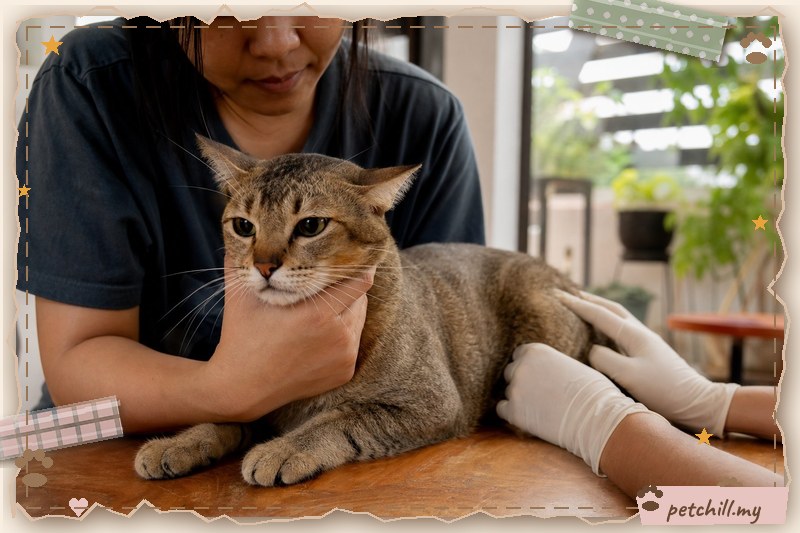
- Move the cat away from the source and into a safe, quiet space.
- Keep the packaging, plant material, vomit or a sample of the substance so the vet can identify it.
- Note the time of exposure and any signs you have seen.
- Phone a veterinary clinic immediately and describe what happened.
- Do not induce vomiting unless a vet tells you to. It is dangerous with corrosives, hydrocarbons and sharp objects.
- Do not give milk, oil, salt water or home remedies.
- If the poison is on the skin or coat, ask the vet whether to rinse with lukewarm water. Avoid harsh scrubbing and keep the cat warm and dry afterwards.
- If the cat is having a seizure, clear the area of hard objects, do not put your hands in its mouth, and get help.
What not to do
- Do not wait for symptoms before calling.
- Do not give human medicines, including painkillers or antihistamines.
- Do not use dog flea products on cats or near cats.
- Do not try to make the cat vomit with salt water, which can itself be toxic.
- Do not scold or punish the cat; stress makes handling harder.
- Do not assume a natural or plant-based product is safe.
Comparing common risks
| Risk | Typical source | Signs to watch | Urgency |
|---|---|---|---|
| Permethrin | Dog flea spot-on, treated bedding | Tremors, drooling, wobbliness, seizures | Emergency |
| Rodenticide | Rat bait, poisoned rodents | Bleeding, weakness, seizures, delayed signs | Emergency |
| Paracetamol | Human painkillers, cold remedies | Pale or muddy gums, swelling, breathing trouble | Emergency |
| Lilies | Bouquets, garden plants, vase water | Drooling, vomiting, reduced urine, lethargy | Emergency |
| Corrosive cleaners | Bleach, drain and oven cleaner | Mouth burns, drooling, refusal to eat | Emergency |
| Onion and garlic | Table scraps, seasoned food | Weakness, pale gums, dark urine | Call vet promptly |
| Essential oils | Diffusers, concentrated oils, repellents | Drooling, vomiting, wobbliness, skin redness | Call vet promptly |
| Spoiled food | Rubbish, old meat, mouldy food | Vomiting, diarrhoea, tremors | Call vet promptly |
Making your home safer
In the kitchen
Store medicines in a closed drawer, not beside the sink. Keep onions, garlic and chocolate out of reach. Use bins with lids and empty them often. Clean up spills before the cat walks through them.
In the bathroom and laundry
Keep bleach, toilet cleaner, disinfectant and detergent in closed cupboards. Do not leave buckets of water or cleaner open. Close the washing machine and dryer doors, and check inside before starting a load.
In the garden and carport
Use bait stations that cats cannot open, or avoid rodenticide altogether and use traps placed where pets cannot reach them. Store antifreeze, fuel, paint and pesticides in sealed containers. Remove lilies and other toxic plants, or keep them in a room the cat cannot enter.
With dogs in the house
Choose flea products that are safe for cats, treat dogs in a separate room, and keep cats away until the product is dry. Ask your vet before combining treatments.
For indoor cats in flats
High-rise living reduces traffic risk but not poisoning risk. A Kuala Lumpur apartment cat can still reach cleaning products, lilies from a gift bouquet or a neighbour's pest bait on the balcony. Check balconies for bait stations and keep plants cat-safe.
For free-roaming cats
In a Johor terrace house, a cat that goes outside may meet snail pellets, rat bait, antifreeze and toxic plants. Supervise outdoor time, keep the cat indoors at night, and ask neighbours to tell you if they use pest control.
When to see a vet
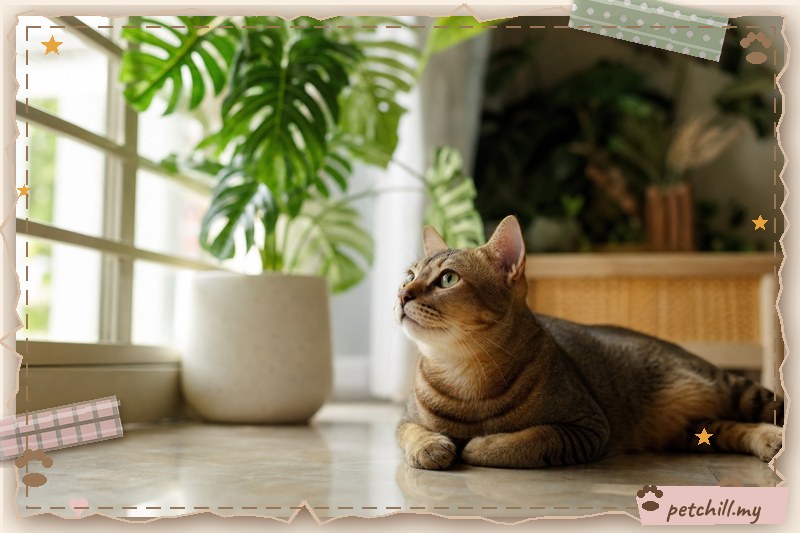
Call a veterinarian immediately if your cat has eaten or touched any known toxin, even if it looks well. Seek urgent care for tremors, seizures, collapse, breathing difficulty, pale or yellow gums, repeated vomiting, mouth burns, reduced urine, bleeding or a swollen face. Do not wait to see whether signs develop. Bring the packaging or a photo of the product, and tell the vet the time of exposure and your cat's weight.
If you are unsure whether something is toxic, phone the clinic and ask. Veterinary teams would rather answer a worried call than treat a delayed poisoning.
Preventing repeat incidents
After a suspected poisoning, review how the cat reached the substance. Was a cupboard left open, a bait station placed within reach, or a dog treated in the same room? Fix the access point, tell everyone in the household, and keep a note of the product name and the vet's advice. If you rent, tell your landlord about pest control so bait is placed safely.
A calm, prepared approach
Poisoning in cats is frightening, but quick action helps. Know the main risks in your home, keep products sealed, use cat-safe flea treatments, and save your vet's number where you can find it fast. If exposure happens, stay calm, keep the evidence and call for professional advice rather than trying home remedies.
This article is general information and not a substitute for veterinary advice. If you suspect poisoning, contact a veterinarian immediately.
Related reading
- Cat Health Guide Malaysia: Symptom Check, Red-Flag Triage & When to See a Vet
- Cat Fever Treatment in Malaysia: What to Do When Your Cat Is Hot
- Cat Poisoning Treatment in Malaysia: What to Do, What to Expect, and How to Prevent It
- Cat Seizures Treatment in Malaysia: What to Do, Causes & Vet Care
- Cat Trembling Treatment in Malaysia: Causes, Home Care and When to See a Vet
- Chocolate Poisoning and Cats in Malaysia: What Every Owner Should Know
- Heatstroke in Cats: Causes, Signs and Care (Malaysia Guide)
- Heatstroke in Cats in Malaysia: Signs, First Aid & Prevention
- Heatstroke Prevention for Cats in Malaysia: A Practical Owner's Guide
- How to Prevent Paracetamol Poisoning Around Cats: A Malaysian Safety Guide