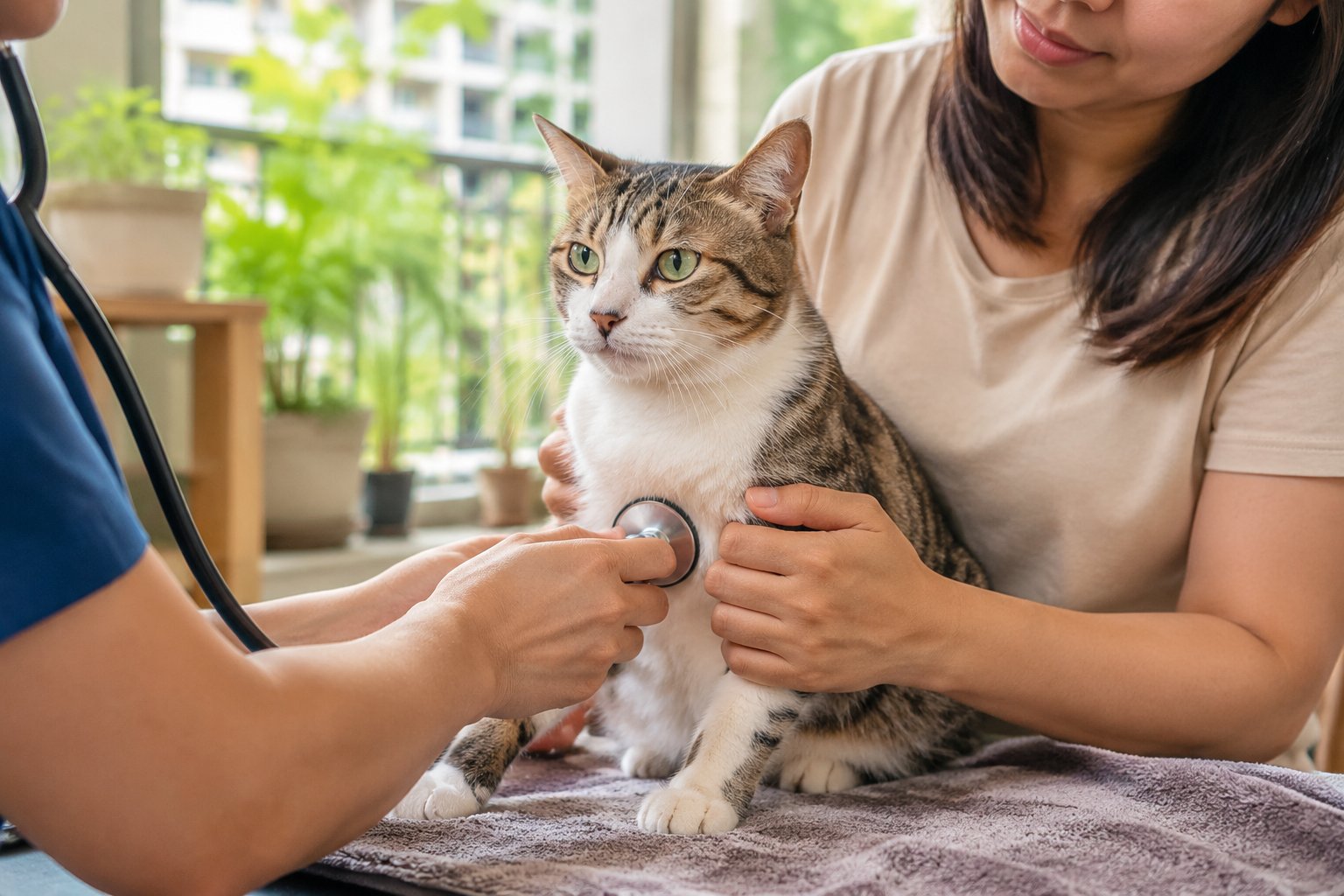
What to do when your cat has a seizure
Watching your cat have a seizure is terrifying. One moment they're fine, the next they're convulsing or stiff. Your instinct might be to grab them, but that's the wrong move. Here's what you need to know: seizures in cats are relatively uncommon compared to dogs, but they do happen. The key is to stay calm, keep your cat safe, and get veterinary help. This guide covers the causes, first aid, diagnosis, treatment, and long-term care for seizures in cats, with practical advice for Malaysian cat owners.
What is a seizure?
A seizure is a sudden, uncontrolled electrical disturbance in the brain. It can cause changes in behavior, movements, or consciousness. In cats, seizures can be brief and subtle or severe and prolonged. There are two main types:
- Generalized seizures: Affect the whole body. The cat may fall over, stiffen, paddle its legs, drool, or lose consciousness.
- Focal seizures: Affect one part of the body, like twitching of the face or a single limb. These can be harder to spot.
Some cats have cluster seizures (two or more within 24 hours) or status epilepticus (a seizure lasting more than 5 minutes or repeated without recovery). Both are emergencies.
Causes of seizures in cats
Finding the cause is like detective work. Vets classify causes into two broad categories: intracranial (inside the brain) and extracranial (outside the brain).
Extracranial causes (outside the brain)
- Toxins: This is a big one. Common culprits include permethrin (found in some dog flea products), human medications (like antidepressants or painkillers), household cleaners, and certain plants. In Malaysia, permethrin exposure is a known risk if owners use dog flea treatments on cats.
- Metabolic disorders: Low blood sugar (hypoglycemia), low calcium, liver disease, kidney disease, and electrolyte imbalances can all trigger seizures.
- Infections: Toxoplasmosis, feline infectious peritonitis (FIP), and other infections can affect the brain.
- Head trauma: Injuries from falls or accidents.
- Heatstroke: In Malaysia's hot climate, heatstroke can cause seizures.
Intracranial causes (inside the brain)
- Epilepsy: The most common cause of recurrent seizures in cats, especially between 1 and 5 years old. It's often idiopathic (no identifiable cause).
- Brain tumors: More common in older cats.
- Inflammatory brain disease: Meningitis or encephalitis.
- Vascular events: Strokes or bleeding in the brain.
In many cases, no cause is found, and the cat is diagnosed with idiopathic epilepsy.
First aid during a seizure
What you do in the first few minutes matters. Here's a step-by-step guide:
- Stay calm. Your cat needs you to be composed.
- Clear the area. Move furniture or sharp objects away. Don't try to hold your cat down—you could get hurt, and restraint can make the seizure worse.
- Dim the lights and reduce noise. Seizures can be triggered by sensory overload.
- Do not put anything in your cat's mouth. Cats do not swallow their tongues during seizures. You risk being bitten.
- Time the seizure. Note the start and end time. This is crucial information for your vet.
- Observe and record. If possible, video the seizure on your phone. This helps your vet see what happened.
- Keep your cat cool. In Malaysia's heat, overheating is a risk. Move them to a shaded, ventilated area.
- After the seizure (post-ictal phase): Your cat may be confused, wobbly, or temporarily blind. Keep them in a quiet, safe space and offer water. Don't handle them too much.
When to call the vet immediately:
- Seizure lasts more than 5 minutes.
- Multiple seizures in a row (cluster).
- Your cat doesn't regain consciousness.
- It's your cat's first seizure.
- The seizure happened after exposure to a toxin.
Diagnosing seizures in cats
Your vet will start with a thorough history and physical exam. They'll ask about the seizure pattern, possible toxin exposure, and your cat's overall health. Tests may include:
- Blood tests: Complete blood count, biochemistry panel, and thyroid levels.
- Urinalysis: To check kidney function and screen for toxins.
- Blood pressure: High blood pressure can cause seizures.
- Imaging: X-rays or ultrasound for extracranial causes; MRI or CT for brain imaging.
- Cerebrospinal fluid analysis: To check for infection or inflammation.
In Malaysia, not all clinics have MRI or CT scanners. Your vet may refer you to a specialist center in Kuala Lumpur or other major cities. Be prepared for this possibility.
Treatment options
Treatment depends on the cause. If a toxin is identified, decontamination and supportive care are priorities. For metabolic disorders, managing the underlying condition often stops the seizures.
For epilepsy, anti-seizure medication is the mainstay. Common drugs include phenobarbital and levetiracetam. Your vet will tailor the choice to your cat. Medication is usually started if seizures are frequent, severe, or causing distress.
Important: Never give human anti-seizure drugs to your cat without veterinary guidance. Dosages are very different and can be dangerous.
Living with an epileptic cat
Caring for a cat with epilepsy requires commitment. Here are practical tips for Malaysian homes:
- Medication routine: Give drugs at the same time daily. Use pill pockets or compounded liquids if your cat is difficult to pill.
- Reduce stress: Stress can trigger seizures. Keep a predictable routine, provide hiding spots, and use pheromone diffusers if helpful.
- Safety-proof your home: Block off stairs, keep doors closed, and pad sharp corners. During a seizure, your cat may fall or bump into things.
- Monitor and log: Keep a seizure diary with dates, times, duration, and what happened. Bring it to every vet visit.
- Diet and exercise: Feed a balanced diet and avoid sudden changes. Some vets recommend specific diets, but there's no universal epilepsy diet for cats.
- Regular check-ups: Blood tests to monitor medication levels and organ function are essential.
Table: Common anti-seizure medications for cats
| Medication | Common brand | Typical use | Notes |
|---|---|---|---|
| Phenobarbital | Generic | First-line for epilepsy | Requires regular blood monitoring; can affect liver |
| Levetiracetam | Keppra | Add-on or alternative | Fewer liver effects; can be used in emergencies |
| Zonisamide | Zonegran | Alternative | Used when other drugs don't work |
| Diazepam | Valium | Emergency control | Not for long-term use in cats; can cause liver issues |
Note: This table is for information only. Your vet will choose the best medication for your cat based on its health and seizure pattern.
Prognosis and outlook
Many cats with epilepsy live normal lives with medication. The goal is to reduce seizure frequency and severity, not necessarily eliminate them. Some cats become seizure-free; others have occasional breakthroughs. Regular vet care and a loving home make a big difference.
When to see a vet
Seizures are always a reason to see a vet. Seek immediate veterinary attention if:
- Your cat has a seizure for the first time.
- The seizure lasts more than 5 minutes.
- Your cat has more than one seizure in 24 hours.
- Your cat is pregnant or has other health issues.
- You suspect toxin exposure.
- Your cat seems painful or distressed after the seizure.
For ongoing management, schedule regular check-ups as advised by your vet.
Frequently asked questions
Q: What should I do if my cat has a seizure? A: Stay calm, clear the area, dim lights, and keep noise down. Do not restrain your cat or put anything in its mouth. Time the seizure and call your vet immediately if it lasts over 5 minutes or repeats.
Q: What causes seizures in cats? A: Common causes include epilepsy, toxins (like permethrin or human medications), metabolic disorders (low blood sugar, liver disease), brain tumors, infections, and head trauma. A vet exam is needed to find the cause.
Q: Can seizures in cats be cured? A: Some seizures are cured if the underlying cause (e.g., toxin exposure) is resolved. Epilepsy is usually managed, not cured, with medication to reduce frequency and severity. Regular vet monitoring is essential.
Q: Are seizures painful for cats? A: Cats are usually unconscious during a seizure and do not feel pain. However, they may be confused or disoriented afterward. The experience can be distressing for owners, but the cat is not suffering during the event.
Q: How are seizures diagnosed in cats? A: Vets use physical and neurological exams, blood tests, urinalysis, and imaging (MRI/CT) to rule out causes. A definitive diagnosis of epilepsy is made by excluding other conditions.
Q: Can I prevent seizures in my cat? A: You can reduce risk by keeping toxins out of reach, managing underlying health conditions, and following vet advice. For epileptic cats, consistent medication and a low-stress environment help prevent seizures.
Vet disclaimer
This article is for informational purposes only and does not replace professional veterinary advice. Always consult a licensed veterinarian for diagnosis and treatment of your cat's condition. If you suspect your cat is having a medical emergency, contact your vet or an emergency animal hospital immediately.
Related reading
- Cat Fever Treatment in Malaysia: What to Do When Your Cat Is Hot
- Cat Pale Gums Treatment in Malaysia: What to Do When Your Cat's Gums Turn White
- Cat Poisoning Treatment in Malaysia: What to Do, What to Expect, and How to Prevent It
- Cat Seizures Treatment in Malaysia: What to Do, Causes & Vet Care
- Cat Trembling Treatment in Malaysia: Causes, Home Care and When to See a Vet
- Constricted Pupils in Cats: Prevention and What They Mean
- Heatstroke in Cats: Causes, Signs and Care (Malaysia Guide)
- Heatstroke Prevention for Cats in Malaysia: A Practical Owner's Guide
- How to Prevent Paracetamol Poisoning Around Cats: A Malaysian Safety Guide
- How to Treat Heatstroke in Cats at Home: First Aid, Cooling Steps and When to Get Help