
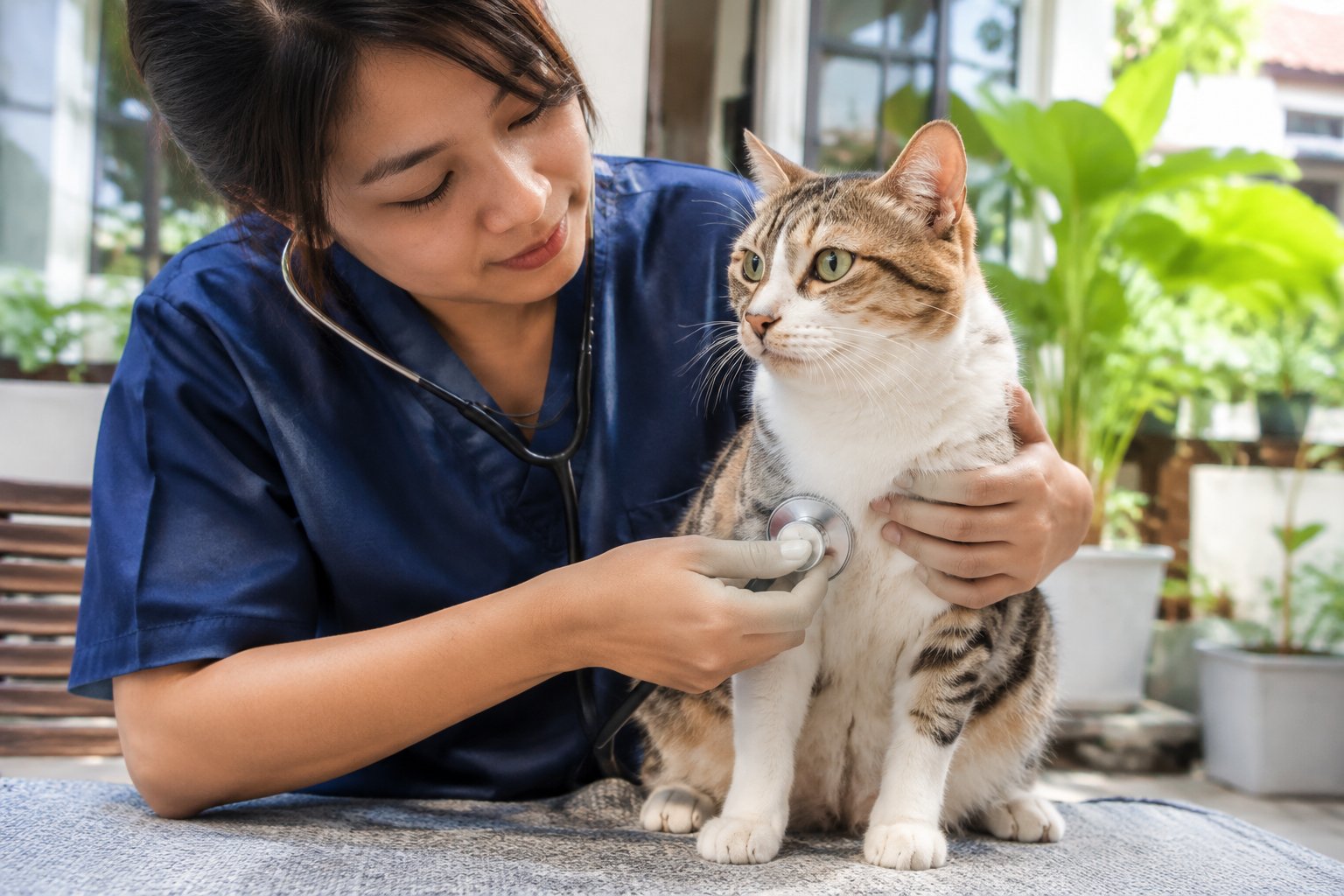
What are seizures in cats?
A seizure is a sudden, uncontrolled burst of electrical activity in the brain. In cats, it can look like anything from a brief twitch to a full-body convulsion. Seizures are not a disease themselves; they are a sign of an underlying problem, whether that is epilepsy, a metabolic issue, poisoning, or a brain lesion.
Malaysian cat owners often share videos of cats twitching or collapsing and ask whether it is a seizure. Recognising the signs early helps you get the right veterinary care quickly. This guide covers the signs, types, causes, first aid, and when to see a vet.
Recognising the signs: what a seizure looks like
Seizures in cats can be subtle or dramatic. The classic convulsion is easy to spot, but many seizures are quieter and easily missed.
Common physical signs during a seizure
- Sudden collapse or falling over
- Body stiffening (tonic phase)
- Paddling or jerking limbs (clonic phase)
- Drooling or foaming at the mouth
- Loss of bladder or bowel control
- Eye movements, dilated pupils, or staring
- Vocalisation such as yowling or crying
- Chomping or chewing motions
Subtle signs you might miss
Some cats have focal seizures that affect only part of the body or behaviour. Watch for:
- Twitching of the face, ears, or one limb
- Sudden staring spells or appearing "spaced out"
- Head pressing or circling
- Unexplained aggression or fear
- Excessive grooming or fly-catching behaviour
- Brief episodes of confusion
The three phases of a seizure
Many seizures follow a pattern:
- Pre-ictal phase (aura): Before the seizure, a cat may hide, become restless, vocalise, or seek attention. This can last minutes to hours.
- Ictal phase (the seizure itself): The actual seizure, lasting seconds to a few minutes.
- Post-ictal phase: After the seizure, the cat may be disoriented, wobbly, blind, or sleepy. This can last minutes to days.
Types of seizures in cats
Vets classify seizures in several ways. Knowing the type helps your vet plan tests.
| Type | Description | What owners may see |
|---|---|---|
| Generalised (tonic-clonic) | Affects the whole brain and body | Collapse, stiffening, paddling, drooling, loss of consciousness |
| Focal (partial) | Starts in one area of the brain | Twitching of one limb, facial twitching, unusual behaviour |
| Complex focal | Focal seizure with altered consciousness | Staring, confusion, repetitive movements |
| Cluster seizures | Two or more seizures within 24 hours | Repeated episodes; emergency |
| Status epilepticus | Seizure lasting over 5 minutes or repeated without recovery | Continuous or repeated seizures; life-threatening |
What causes seizures in cats?
There are many possible causes. Your vet will work through them systematically.
Common causes
- Epilepsy (primary): Recurrent seizures with no identifiable underlying cause. Often starts in young adulthood.
- Metabolic disorders: Liver disease, kidney disease, low blood sugar, low calcium, or electrolyte imbalances.
- Toxins: Poisoning from household products, plants, human medications, or pesticides. In Malaysia, common household toxins include certain cleaning agents, insecticides, and some ornamental plants.
- Brain disease: Tumours, inflammation (encephalitis), stroke, or trauma.
- Infectious diseases: Some infections can affect the brain. Your vet may test for relevant diseases based on your cat's history and location.
- Head trauma: Injury from falls or accidents.
- Heatstroke: In Malaysia's hot climate, overheating can trigger seizures.
Breed and age considerations
Some breeds may have a higher risk of certain neurological conditions. Age also matters: young cats are more likely to have epilepsy or infectious causes, while older cats are more likely to have tumours or metabolic disease.
First aid: what to do during a seizure
Watching your cat seize is frightening. Stay calm and follow these steps.
- Keep the area safe. Move furniture or objects that could injure your cat. Do not move the cat unless it is in danger.
- Dim the lights and reduce noise. A quiet, dark environment can help.
- Do not restrain your cat. Holding a seizing cat can cause injury to you or the cat.
- Do not put anything in the mouth. Cats cannot swallow their tongue, and objects can cause choking or bites.
- Time the seizure. Note the start and end time. This is crucial information for your vet.
- Record a video if safe. A short clip helps your vet see the seizure type.
- Keep other pets and children away.
- After the seizure, keep your cat warm and quiet. Let them recover in a safe, confined space.
When to call the vet immediately
- Seizure lasts longer than 2 minutes
- Multiple seizures in a row
- Your cat does not regain consciousness
- Seizure happens in water or near heat
- Your cat is pregnant or has a known health condition
- First-ever seizure
Diagnosing seizures in cats
Your vet will start with a full history and physical examination. They will ask about the seizure itself, your cat's environment, diet, and any possible toxin exposure.
Common tests
- Blood tests (complete blood count, biochemistry, electrolytes)
- Urine tests
- Blood pressure measurement
- Infectious disease testing as appropriate
- Imaging such as X-rays, ultrasound, or referral for MRI/CT
- Electroencephalogram (EEG) in specialised centres
Keeping a seizure diary
Record each episode: date, time, duration, signs, and what happened before and after. This helps your vet assess frequency and response to treatment.
Treatment and management
Treatment depends on the cause. If an underlying disease is found, treating it may stop the seizures. If no cause is found (epilepsy), medication may be prescribed.
Anti-seizure medication
Vets may prescribe medication if seizures are frequent, severe, or prolonged. Common drugs include phenobarbital and levetiracetam, among others. Never start or stop medication without veterinary guidance.
Lifestyle adjustments
- Reduce stress: provide hiding spots, routine, and quiet areas.
- Avoid known toxins: keep cleaning products, medications, and toxic plants out of reach.
- Manage heat: ensure access to cool, shaded areas and fresh water.
- Regular vet check-ups: monitor blood levels if on medication.
Living with an epileptic cat in Malaysia
Malaysian homes vary widely, from high-rise apartments to terrace houses. Here are practical considerations.
In a Kuala Lumpur apartment
- Keep balconies secured to prevent falls during a seizure.
- Avoid slippery floors where possible; use rugs or mats.
- Inform neighbours so they can alert you if they hear unusual sounds.
In a Johor terrace house
- Ensure gates and doors are closed so a seizing cat cannot escape.
- Keep the cat indoors during thunderstorms, which can be stressful.
- Identify a quiet, safe room for recovery.
During the rainy season in Penang
- Thunderstorms can stress cats and lower seizure threshold.
- Provide a covered, dry area and keep the cat indoors.
- Have a plan for power outages if your cat needs refrigerated medication.
Preventing seizures where possible
Not all seizures are preventable, but you can reduce risks.
- Cat-proof your home: Store medications, cleaning products, and pesticides securely. Avoid toxic plants.
- Provide a balanced diet: Avoid sudden diet changes and ensure fresh water.
- Manage heat and stress: In Malaysia's climate, keep your cat cool and provide enrichment.
- Regular veterinary care: Annual check-ups help catch metabolic issues early.
- Use parasite prevention safely: Follow vet advice and avoid overdosing.
When to see a vet
See a vet if your cat has any seizure-like episode, even if brief. Seek emergency care if a seizure lasts more than two minutes, if seizures repeat, or if your cat does not recover. Also see a vet if you notice subtle signs such as staring spells, twitching, or unusual behaviour. Early assessment improves outcomes.
Related reading
- Cat Fever Treatment in Malaysia: What to Do When Your Cat Is Hot
- Cat Pale Gums Treatment in Malaysia: What to Do When Your Cat's Gums Turn White
- Cat Poisoning Treatment in Malaysia: What to Do, What to Expect, and How to Prevent It
- Cat Seizures Treatment in Malaysia: What to Do, Causes & Vet Care
- Constricted Pupils in Cats: Prevention and What They Mean
- Heatstroke in Cats: Causes, Signs and Care (Malaysia Guide)
- Heatstroke Prevention for Cats in Malaysia: A Practical Owner's Guide
- How to Prevent Paracetamol Poisoning Around Cats: A Malaysian Safety Guide

